
Caterpillar Number 7 Worksheet: 6 Superb Garden Puzzles
Continue beyond seven with all ten clean garden sheets in one numbered PDF. Revisit the caterpillar activity or choose another garden character.
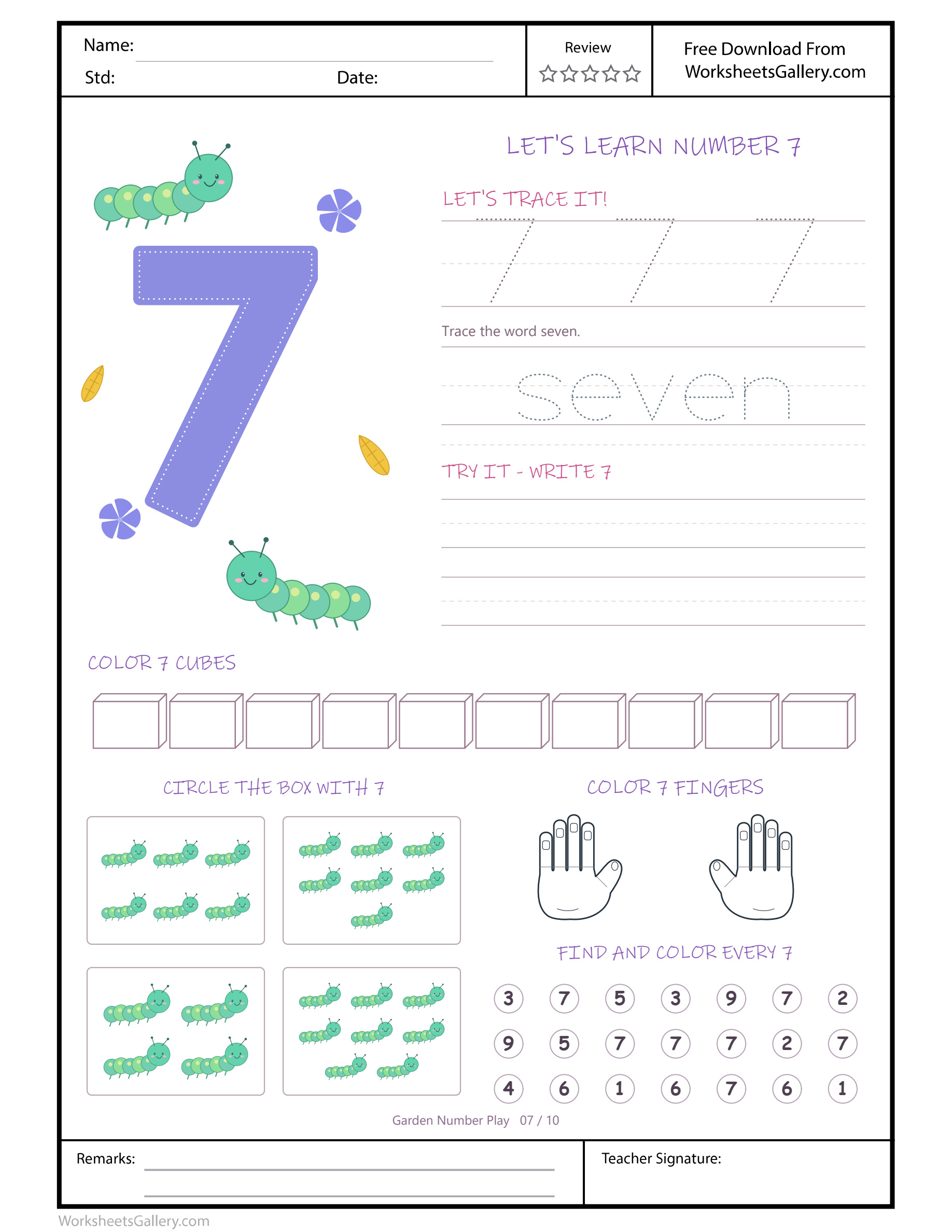
A pretend parcel order gives Tess a reason to count seven. On the Number 7 Worksheet, she can carry that careful count into the garden. A child who loves caterpillars can start by looking carefully at one creature, then transfer that attention to counting seven distinct animals. The large purple model and pale traces offer a steady writing reference. A kindergarten learner who is eager to find the character may enjoy hunting first. Give them a separate moment to explain which whole insects they included before they circle a box.
Counting caterpillars head first with Number 7 Worksheet
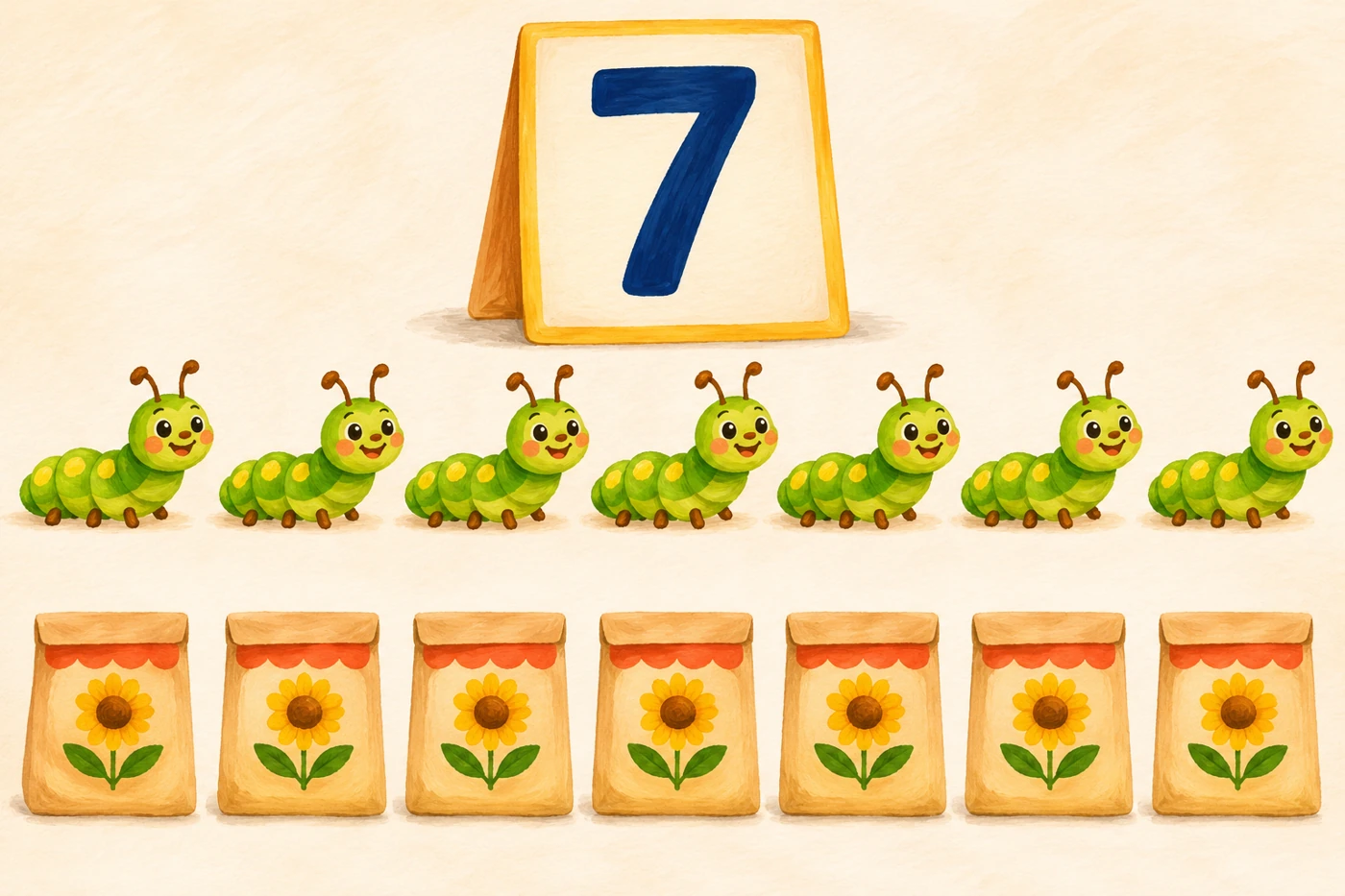
Tess starts a delivery route with seven packages for a make-believe seed shop. Tess delivers packets to a shelf with a space for seven. The empty space makes the missing packet visible. Add it and ask her to read the order back using the number name once. When an extra packet arrives, leave it outside the shelf and compare the two totals before coloring anything.
Put seven paper packets in Tess's order and turn over the label as she reads it. A child can use seven to name the whole order once all the packets have arrived. If you have two sets, spread one out and keep the other compact. Ask which order looks larger, then verify both with an accurate count.
Tap the high bar before tracing down
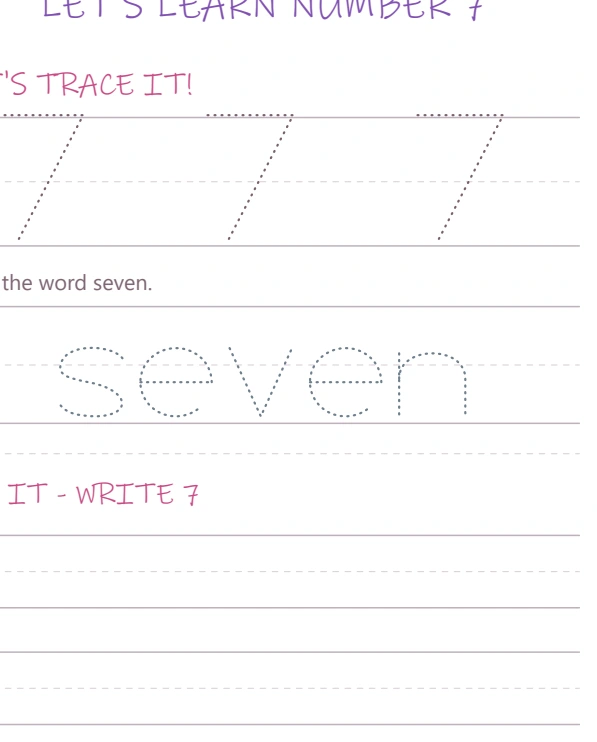
For the numeral form shown, pause over the horizontal part of 7. Then guide a finger through the long slant. If the slant goes the other way in the Try It lane, compare the endpoints of the line with the printed model and try again below it.
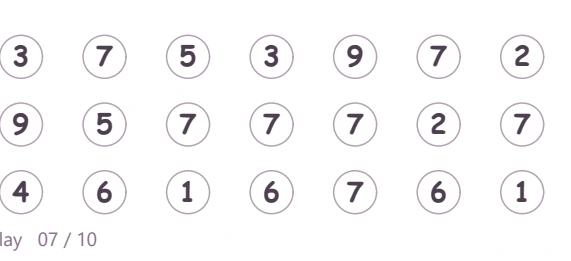
There are seven correct choices for 7 in the twenty-one circles on the caterpillar page. For the caterpillar hunt, use a strip of paper to reveal one row at a time if the child wants help keeping the search in order.
Ask Tess to use the 7 label when checking an earlier decision in the caterpillar hunt.
Track a row break without dropping the count
Find the row boundary within the seven-caterpillar box. A pupil might end one row on four and say one for the first creature below. Have them keep the last number in mind between rows. Using one head as a pointing spot clarifies exactly what one unit means here.
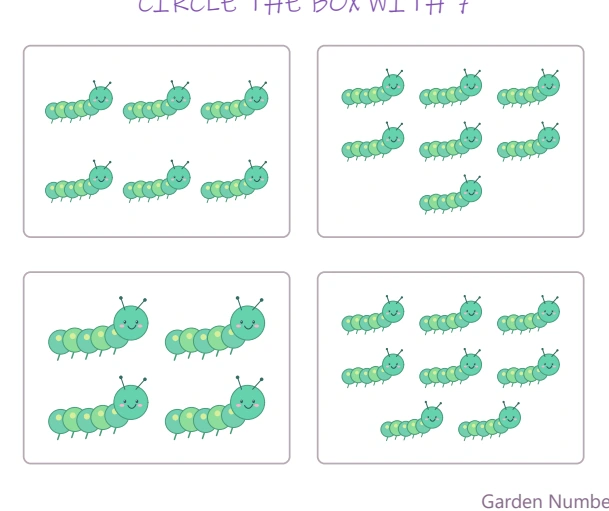
Allow pointing through the caterpillars before anyone picks up a crayon. For adult review, the four counts on the caterpillar sheet read 6, 7, 4, 8 in reading order. The upper right box supplies 7. Let the caterpillar illustration draw the learner in, then direct the count to the framed pictures.
Check the counted unit. A child can point out a whole caterpillar picture in the count. Model pointing without picking out decorative details such as wings. Then allow the learner to choose a direction and maintain it until the 7 task is finished. The completed ring should surround a matching box.
How Tess can return to the caterpillar task tomorrow
When the child counts body bumps, move the pointer to the head of each caterpillar and repeat the agreed unit as you model the first two tags.
When Tess returns to a classroom delivery shelf, offer a choice of moving paper strips, tracing the numeral, or describing the picture count. Date that attempt so there is a record of the chosen 7 activity to revisit.
| Moment | What to watch | Prompt or setup |
|---|---|---|
| Starting the caterpillar count | Point to one unit in the collection before using the word seven. | Use the first couple of objects from a classroom delivery shelf for a demonstration. |
| Writing 7 | Check the pale example where the child paused before trying a second copy. | Give the caterpillar page its own clear space on the tabletop. |
| Looking for 7 | Have the child show a choice they skipped and explain its shape. | Keep the 7 label beside the top of the paper. |
Model a delivery route in a small group
Tell three children that Tess has seven markers to deliver. One pupil reads the order, another slides a marker for each delivery, and the third reports how many arrived. Take a small detour to see if the mover can continue the count after bringing supplies from the other side of the table.
During picture counting, a helper can point out the first head in the top row. The learner decides how to get across every pictured caterpillar once. Then offer either a pencil-and-paper job or an oral hunt check while the helper finds the directions. End by inviting one child to report how many creatures the group counted.
The strong top edge in the printed 7 offers a starting landmark for the diagonal. Try drawing that shape in the air, then hand over the pencil after the learner can show the intended endpoints. A class model with an added cross stroke can come up later. Use the large printed form for the immediate matching exercise.
Start high on the caterpillar’s 7
On the caterpillar page, look for a top bar and descending diagonal in the large example. Follow one pale guide with a finger before reaching for a pencil. Say seven once while looking at the result. Ask the child to show the corresponding word with a fingertip. If they are still following whole number words by sight, pronounce the word naturally as they trace it instead of asking for separate letter names.
Use the caterpillar head as the landing point if the rows of insects are difficult to navigate. For classroom practice, arrange seven drawings under removable strips. One child removes a strip at a time while another continues the sequence. When a strip reveals a picture already counted, the helper can cover it again and explain why.
Use seven instead of a lucky guess
Let Tess label paper strips as packets for a make-believe shop. Hand over six and keep one behind the order form. A talkative child can explain why adding that packet finishes the order. A child who wants to watch first can point to the spot where an item is still missing.
Build six counters, add a seventh and then check what happens when an eighth joins the group. Compare all three totals with labels.
Whole creatures and complete counts
- Object tracking. The caterpillar picture choices offer a chance to keep track of what was touched and what still needs a count.
- Fine motor work. Following the supplied 7 model and then circling a group puts long pencil strokes and slower turning movements within the same lesson.
- Listening and speaking. Invite a complete sentence about the caterpillars. Saying which amount is shown gives the learner language for comparing the two situations.
- Visual recognition. Looking from the big 7 to crowded symbols encourages a closer comparison of the numeral’s shape.
- Self-checking. The caterpillar page offers a chance to pause and use the printed instruction to decide whether a selection is finished.
- Quantity. Stopping at seven gives the learner a reason to track what was selected, especially when the row keeps going.
Listen for seven used as a total after the last picture. Trace how the learner chooses a pointing spot on each caterpillar. The hunt asks for recognition among competing marks, and the writing model calls for a change from horizontal to slanted movement. A child who explains where a new row starts is practicing useful location words as well.
Tell a story about a customer who needs seven flags to mark their planting spots. One flag ends up on a different table. Have the child decide whether the delivery is missing a flag or whether it is simply in a new place. That small uncertainty gives them a reason to count across boundaries.
Play ideas that carry the caterpillar count into the room
Order seven garden flags
Write a 7 marker at the delivery table and match one flag to each waiting peg.
Count the puppet guests
Let head silhouettes stand for caterpillars so each guest gets one name in the count.
The next packet
Offer six envelopes and let Tess explain which change would bring the order to seven.
Trace the high edge
Use a tiny dry-erase board and draw a route with a short flat start and long slant.
What to open after the caterpillar practice
Choose the next page by listening to how Tess counted. For another way of matching objects and numerals, try a different picture theme for counting through ten after seven. If the adult heard a steady count but saw difficulty with pencil direction, use number-word and digit tracing alongside the caterpillar sheet to spend more time on written shapes. Children who want to show a number without a pencil can go on to other finger representations to compare with 7. Compare their spoken count with the amount they can show after moving the supplies.
Adults planning a sequence past the caterpillar page can read the What Works Clearinghouse guide to early math. Its progression can help you decide whether to spend another session on recognizing a small set, accurately counting it, or comparing its size with a second group.
Choose the caterpillar PDF edition
Choose the free download for the original caterpillar page with its printed site credit. The individual clean PDF is available through the worksheet’s eligible membership download. Open the attached $3 package if you want the whole set of ten clean pages. The caterpillar page remains an individual one-page activity in either option.
Use US Letter paper in portrait orientation and choose Actual Size or 100% when the printer can accommodate the margins. Start with a single test copy and check the fine tracing guides around 7. Paper, a pencil and a crayon are enough for a first turn, with paper strips handy only if you want to extend the session.
Related Topics
Popular Worksheets
Printable resources families and teachers are downloading now.
 Free
 Free
 Free
 Free