
8 Fantastic Steps for Number 5 Tracing: Early Math Mastery

Discovering the Number Five with Engaging Tracing Activities
Number 5 Tracing gives learners focused practice. Number 5 Tracing gives learners focused practice. Introducing children to foundational numbers is a crucial step in their early education journey. Our printable worksheet, designed specifically for Number 5 Tracing, offers a delightful and effective way for preschoolers to learn and practice this essential numeral. This activity sheet goes beyond simple tracing, integrating various exercises that cater to different learning styles and reinforce number recognition, counting, and fine motor skills. Ultimately, it's a comprehensive tool for both parents and teachers looking to provide a solid start in mathematics.
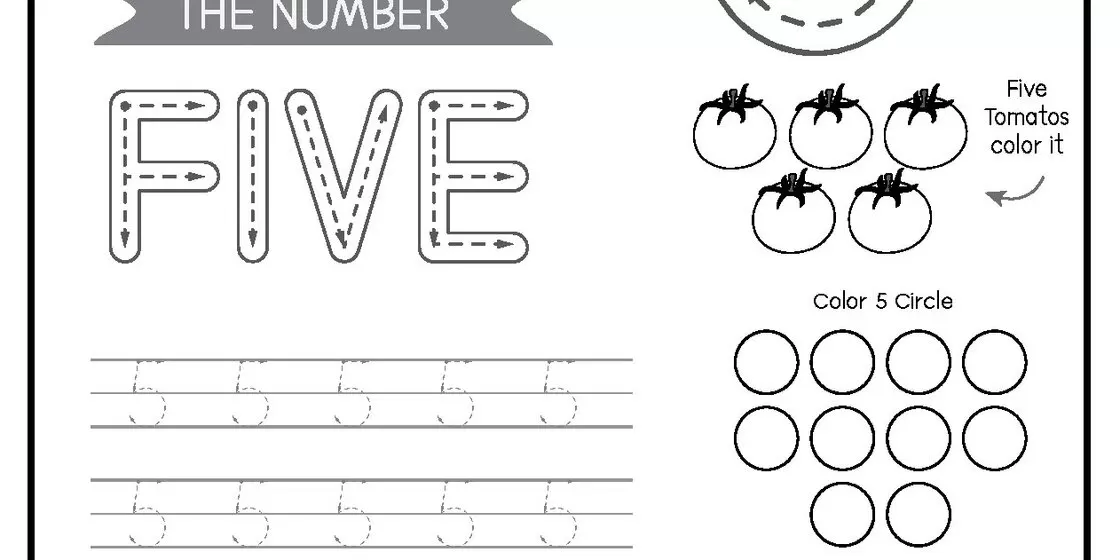
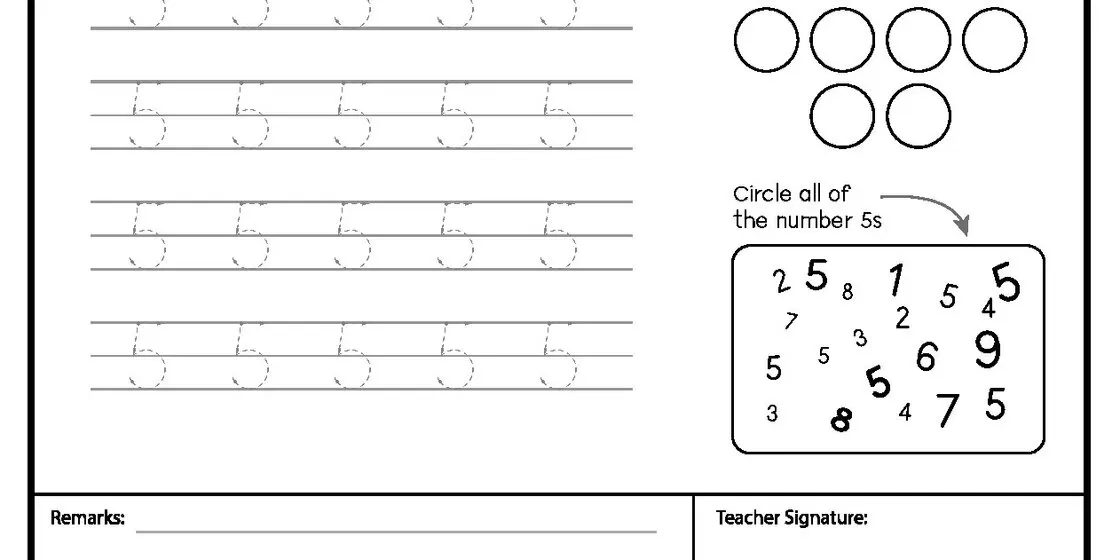
Number 5 Tracing gives learners focused practice. Furthermore, the worksheet presents the number five in multiple formats, from large, guided tracing paths to smaller, repetitive practice rows. Children will also engage in fun counting activities, associating the numeral with a corresponding quantity, and a number search game that sharpens their visual discrimination. This multi-faceted approach ensures a deeper understanding and retention of the number five, making learning an enjoyable and interactive experience.
Why Early Number Recognition is Vital
Number 5 Tracing gives learners focused practice. Developing strong number sense early on sets the stage for future mathematical success. When children can confidently recognize, write, and count numbers like five, they build a critical foundation for more complex arithmetic concepts. Therefore, this worksheet specifically targets these foundational skills, ensuring that learners are not just memorizing a shape but understanding its meaning and value.
- ✓Builds confidence in numerical understanding.
- ✓Prepares them for school-level math.
- ✓Enhances problem-solving abilities.
- ✓Fosters a positive attitude towards learning mathematics.
Age Group Suitability: Who Benefits Most?
Number 5 Tracing gives learners focused practice. This Number 5 Tracing worksheet is ideally suited for children aged 3-5 years old. At this developmental stage, preschoolers are actively developing their fine motor skills, hand-eye coordination, and cognitive abilities necessary for recognizing and forming numbers. The large tracing guides and engaging activities are perfectly tailored to their learning pace and attention spans, making it an accessible and rewarding experience.
Number 5 Tracing gives learners focused practice. For younger children, parental or teacher guidance will be beneficial, especially during the initial tracing attempts. Conversely, older children within this range might find the tracing easier and can focus more on the counting and identification games, further solidifying their understanding of the number five.
Step-by-Step Activities for Learning Number Five Tracing

This worksheet is thoughtfully designed with a sequence of activities that progressively build skills. Here's how to guide your child through each section:
1. Guided Tracing of the Large Number Five
At Home:
Sit with your child and demonstrate how to follow the dotted lines of the large number five. Use your finger first, then a crayon or pencil. Emphasize starting at the top and following the directional arrows. Make it a fun game, perhaps saying "Slide down, around, and a hat on top!" as they trace.
In the Classroom:
Project the worksheet or use a large printout. Guide the class through the tracing together, ensuring everyone understands the stroke order. Provide individual assistance as needed, gently guiding hands if necessary. Encourage students to say the number "five" aloud as they trace.
2. Counting and Coloring Five Tomatoes
At Home:
Ask your child to count the tomatoes one by one. Once they've counted to five, encourage them to color each tomato. This activity reinforces the one-to-one correspondence between the numeral and its quantity. You can even bring out real tomatoes or other objects to count to five.
In the Classroom:
Lead a group counting session for the tomatoes. Discuss the color red (or any color they choose) and encourage neat coloring within the lines. This also serves as a short break from tracing, engaging a different set of fine motor skills.
3. Tracing Rows of the Number Five
This section provides ample opportunity for repetitive practice, which is key to solidifying number formation. Specifically, the worksheet includes multiple rows of the number five for tracing, allowing children to refine their strokes.
At Home:
Encourage your child to trace each number five carefully. If they make a mistake, reassure them it's okay and encourage them to try again. Focus on consistency rather than perfection. You might say, "Look how many fives you're making! You're getting so good!"
In the Classroom:
Monitor students as they trace, offering gentle corrections on pencil grip and stroke direction. This is an excellent time for individual feedback. Additionally, you can play soft background music to create a calm, focused atmosphere during this repetitive task.
4. Coloring Five Circles
At Home:
Similar to the tomatoes, have your child count out five circles and color them. This reinforces counting in a different visual context, helping them generalize the concept of 'five' beyond specific objects.
In the Classroom:
Use this as another quick counting and fine motor activity. For example, you could ask students to use a specific color for these circles to add an extra instruction-following element.
5. Circling All the Number Fives
At Home:
This is a fun visual discrimination game. Challenge your child to find all the number fives hidden among other numerals. Encourage them to say "five!" each time they spot one and circle it. This helps them distinguish the number five from similar-looking digits.
In the Classroom:
Turn this into a mini-competition or a timed activity to boost engagement. Remind students to look carefully and not rush. Afterward, you can review the correct answers together as a class.
Key Learning Benefits from This Worksheet
This comprehensive worksheet offers a multitude of benefits for early learners:
- ★Fine Motor Skill Development: The act of tracing and coloring strengthens the small muscles in the hand and wrist, which are essential for handwriting and other daily tasks.
- ★Number Recognition: Repeated exposure to the numeral '5' in various contexts helps children quickly identify it.
- ★One-to-One Correspondence: Counting tomatoes and circles reinforces the understanding that each number represents a specific quantity.
- ★Visual Discrimination: The number search activity hones their ability to differentiate the number five from other numerals, an important pre-reading skill.
- ★Concentration and Focus: Completing the activities requires sustained attention, helping children develop crucial concentration skills.
- ★Pre-Writing Skills: Tracing the number five prepares children for writing letters and more complex numbers, building muscle memory.
- ★Early Math Concepts: Beyond just writing, children grasp the concept of 'how many' when working with the number five, laying groundwork for addition and subtraction.
Common Mistakes and How to Address Them
It's natural for young learners to encounter challenges. Here are some common mistakes and supportive ways to help:
| Mistake | Solution/Encouragement |
|---|---|
| Incorrect stroke order for the number five. | Gently guide their hand, emphasizing the directional arrows. Moreover, practice air-tracing the number five before using a pencil. |
| Difficulty distinguishing '5' from other numbers (e.g., '2' or 'S'). | Use flashcards or tactile numbers. Point out the unique features of the number five (e.g., "It has a straight back and a tummy!"). |
| Rushing through tracing or coloring. | Encourage a slower pace by making it a game: "Can you trace this five as slowly as a snail?" Praise effort over speed. |
| Inconsistent pencil grip. | Suggest using a triangular pencil grip or shorter pencils. Demonstrate the proper tripod grip frequently. |
Creative Ways to Extend Learning Beyond the Worksheet
Learning doesn't stop when the worksheet is complete! Here are some engaging ideas to reinforce the number five concept:
- ●Five Finger Counting Song: Sing songs like "Five Little Monkeys" or "Five Green Speckled Frogs" to make counting to five interactive and memorable. Use their own fingers to count along.
- ●Number Five Scavenger Hunt: Hide five small objects around the room and have your child find them, counting each one as they discover it. You can even label the objects with the number 5.
- ●Play-Doh Number Five: Provide Play-Doh and encourage them to roll out "snakes" to form the number five. This tactile activity strengthens fine motor skills and number formation.
- ●Five-Senses Exploration: Talk about the five senses. "What five things can you hear right now? What five things can you see?" This connects the number to their everyday experience.
- ●Story Time with Five: Read books that feature the number five, such as "Five Little Ducks" or "Pete the Cat: I Love My White Shoes" (counting buttons).
- ●Counting in the Kitchen: Involve your child in simple cooking tasks that require counting to five, like adding five scoops of flour or five grapes to a snack.
For more number practice, explore our other resources like the Exciting Number 3 Tracing worksheet or the Fun Number 4 Tracing guide.
Encouraging Consistent Practice
Regular, short bursts of practice are more effective than infrequent, long sessions. Here’s how to keep the momentum going:
- ◈Positive Reinforcement: Always praise effort and progress, not just perfection. "You really focused on tracing that five!" or "I love how you tried your best!" goes a long way.
- ◈Make it a Routine: Integrate number practice into daily routines. Perhaps after breakfast, or as a quiet activity before nap time.
- ◈Vary Activities: Don't stick to just one type of activity. Mix tracing with counting games, number hunts, and creative play to keep things fresh and engaging. Our free worksheet library offers a wide variety of options.
- ◈Child-Led Choices: Allow your child to choose which part of the worksheet they want to do first, or which color crayon to use. This gives them a sense of control and ownership over their learning.
- ◈Celebrate Milestones: When they successfully trace the number five or correctly identify it, celebrate their achievement, no matter how small. A high-five or a special sticker can be very motivating.
Why Children Enjoy Learning with This Worksheet
Children thrive on engaging and interactive learning experiences. This worksheet is designed to be enjoyable for several reasons:
- ✦Clear Visuals: The large, clear illustrations and guided paths make it easy for young eyes to follow and understand.
- ✦Variety of Tasks: Switching between tracing, coloring, and searching keeps boredom at bay and maintains engagement.
- ✦Sense of Accomplishment: Successfully completing each section provides a sense of achievement, boosting their confidence and motivation to learn more.
- ✦Hands-On Learning: The tactile nature of tracing and coloring appeals to young children who learn best by doing.
- ✦Relatable Objects: Using familiar objects like tomatoes for counting makes the abstract concept of numbers more concrete and understandable.
These elements combine to create a positive learning environment where children feel supported and excited to explore the world of numbers.
Downloading Your Free Number 5 Tracing Worksheet
Getting started with this fantastic learning resource is simple. Our Number 5 Tracing worksheet is available for instant download, completely free of charge. We believe in providing high-quality educational materials without any barriers.
- →No Watermarks: The downloaded PDF will be clean and ready for immediate use, without any distracting watermarks.
- →Ad-Free Experience: Enjoy a seamless download process with no pop-ups or intrusive advertisements.
- →Printable Format: The worksheet is provided in a standard PDF format, ensuring easy printing on any home or classroom printer.
- →High Quality: Expect crisp lines and clear images, perfect for little hands to trace and color.
Simply click the download button, print the worksheet, and start your child's journey to mastering the number five today. For more number practice, consider our Master Number 2 Tracing worksheet or the Essential Number 1 Tracing guide.
Popular Worksheets
Printable resources families and teachers are downloading now.
 Free
Free
 Free
Free
 Free
Free
 Free
Free