
Grasshopper Number 9 Worksheet: 6 Brilliant Near-Ten Clues
Continue beyond nine with all ten clean garden sheets in one numbered PDF. Revisit the grasshopper activity or choose another garden character.
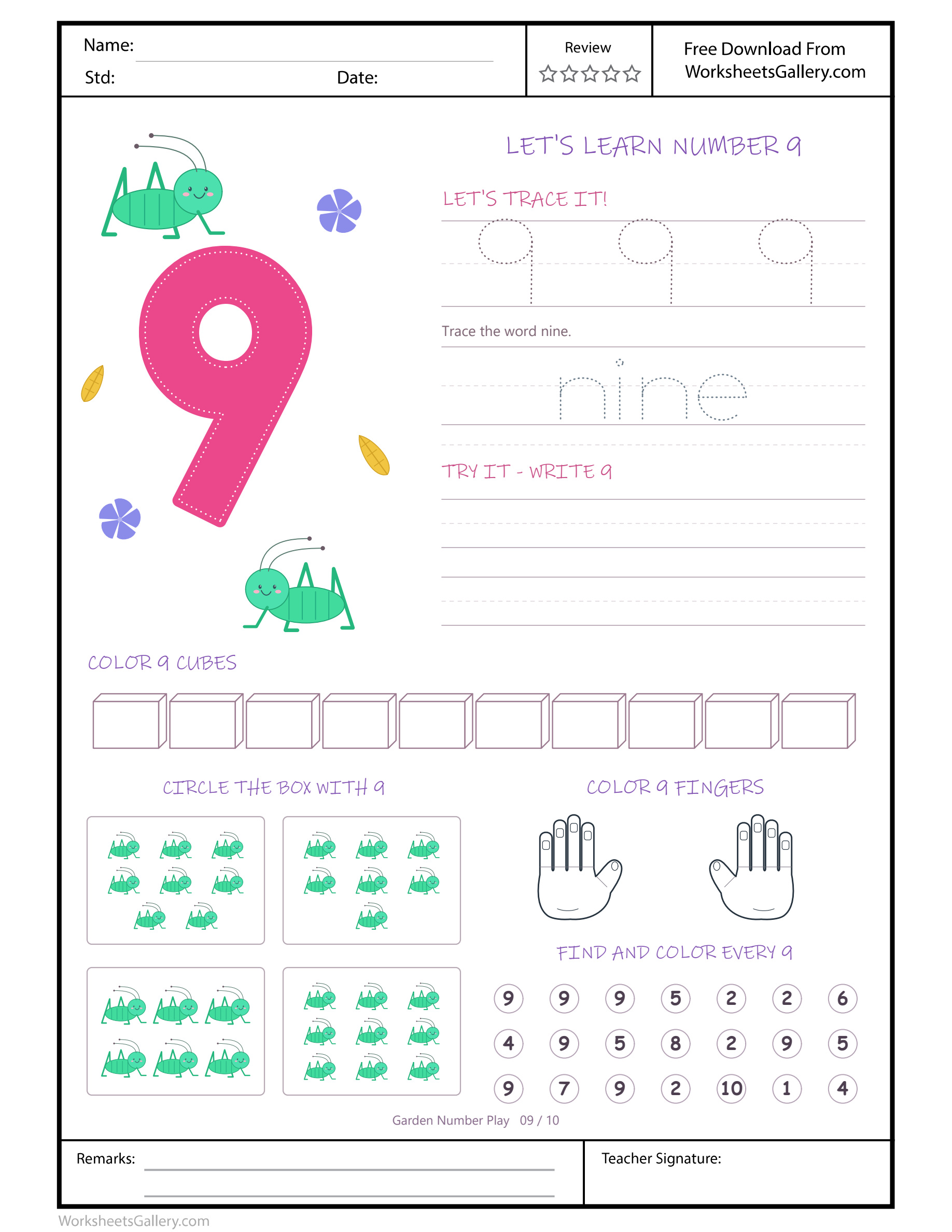
An unfilled stepping spot lets Enzo see how close nine is to ten. The Number 9 Worksheet offers a similar clue. Nine comes with a useful clue. After filling the requested cubes, one outline remains, giving a child something specific to show during a recount. For a kindergarten learner familiar with small counts, the larger grasshopper group adds a useful tracking challenge. Read the direction, let the child choose a starting picture, and return to the pink numeral whenever the paper hunt seems to be moving too quickly.
A grasshopper saves the last spot with Number 9 Worksheet
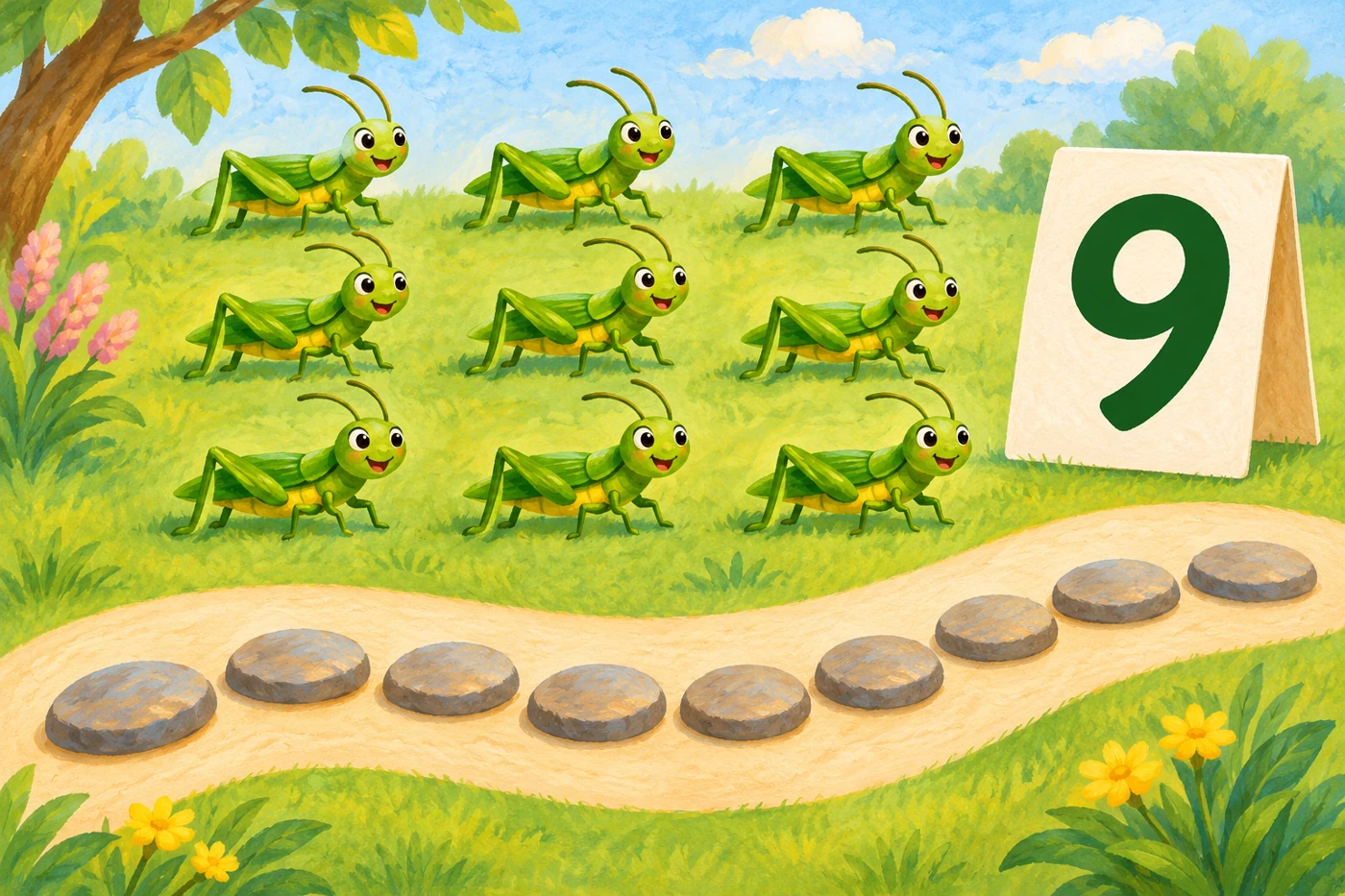
Enzo leaves a final stepping spot empty for a visitor in a grasshopper story. Enzo makes a path using nine of ten paper squares and saves the spare for tomorrow's visitor. Ask him to point to what is present before talking about the gap. Count the nine again after moving the unused square nearer. The nearby tenth can be easy to include by mistake.
Put a strip of ten spaces on the table and ask Enzo to cover nine. Wait until the child finishes counting to ask about the blank. Then rotate the strip and locate the spare space again. Nine has the same relation to the complete set if the opening appears at the beginning, in the middle or at the end.
How far is the count from full?
Color 9 cubes and see a single empty cube beside the selection. This is useful after the child has counted the marks. The remaining space can provide a quick way to detect eight marks or a full row. It also gives the child a reason to talk about which spaces are empty.
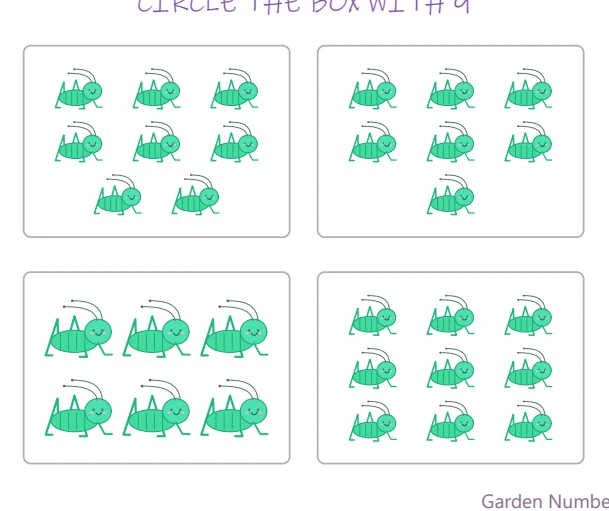
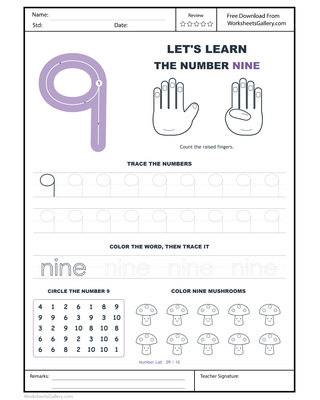
Allow pointing through the grasshoppers before anyone picks up a crayon. For adult review, the four counts on the grasshopper sheet read 8, 7, 6, 9 in reading order. The lower right box supplies 9. Let the grasshopper illustration draw the learner in, then direct the count to the framed pictures.
Check the counted unit. A child can point out a whole grasshopper picture in the count. Model pointing without picking out decorative details such as wings. Then allow the learner to choose a direction and maintain it until the 9 task is finished. The completed ring should surround a matching box.
Count what is present, describe what remains
- Listening and speaking. Invite a complete sentence about the grasshoppers. Saying which amount is shown gives the learner language for comparing the two situations.
- Visual recognition. Looking from the big 9 to crowded symbols encourages a closer comparison of the numeral’s shape.
- Self-checking. The grasshopper page offers a chance to pause and use the printed instruction to decide whether a selection is finished.
- Quantity. Stopping at nine gives the learner a reason to track what was selected, especially when the row keeps going.
- Object tracking. The grasshopper picture choices offer a chance to keep track of what was touched and what still needs a count.
- Fine motor work. Following the supplied 9 model and then circling a group puts long pencil strokes and slower turning movements within the same lesson.
Nine is an opportunity to name two ideas precisely: the amount selected and the empty spot. Moving the pointer over a crowded group exercises tracking, while the round top and tail on the 9 give the writing hand a different job. The child can use the word nine when pointing at the whole result or when reading the traceable name.
Have an adult pretend that the spare space is a grasshopper home. The child must explain the count using only occupied spaces. Later, send the visitor away again and ask why the answer changes. Keep the number of physical frames separate from the number of visitors inside them.
The lower part of the mark matters
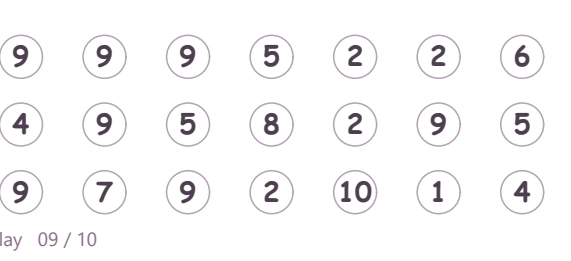
A rounded upper section by itself might be interpreted in several ways. Bring the learner's eyes down the tail of the big 9, then compare the print in the hunt. Invite the child to show the part of the symbol they used before explaining why a different digit was skipped.
There are seven correct choices for 9 in the twenty-one circles on the grasshopper page. For the grasshopper hunt, use a strip of paper to reveal one row at a time if the child wants help keeping the search in order.
Ask Enzo to use the 9 label when checking an earlier decision in the grasshopper hunt.
How Enzo can return to the grasshopper task tomorrow
The end of a row may invite the child to color the last cube from habit. Have them stop at their final number word, point to the empty space, and explain its role.
When Enzo returns to a ten-slot garden path, offer a choice of moving paper squares, tracing the numeral, or describing the picture count. Date that attempt so there is a record of the chosen 9 activity to revisit.
| Moment | What to watch | Prompt or setup |
|---|---|---|
| Starting the grasshopper count | Point to one unit in the collection before using the word nine. | Use the first couple of objects from a ten-slot garden path for a demonstration. |
| Writing 9 | Check the pale example where the child paused before trying a second copy. | Give the grasshopper page its own clear space on the tabletop. |
| Looking for 9 | Have the child show a choice they skipped and explain its shape. | Keep the 9 label beside the top of the paper. |
Set an extra space beside the counters at home
Cut a strip of ten small paper squares and draw a travel path under it. Enzo can fill nine squares and leave the spare visibly separate. Keep the empty parts in view if the child has to check their place. At another visit, draw the same number of spaces in two rows and ask which positions are occupied.
Ask 'How many would fill the row?' after the nine are already counted. Give the child one extra counter to test their answer.

A tail gives the grasshopper’s 9 its shape
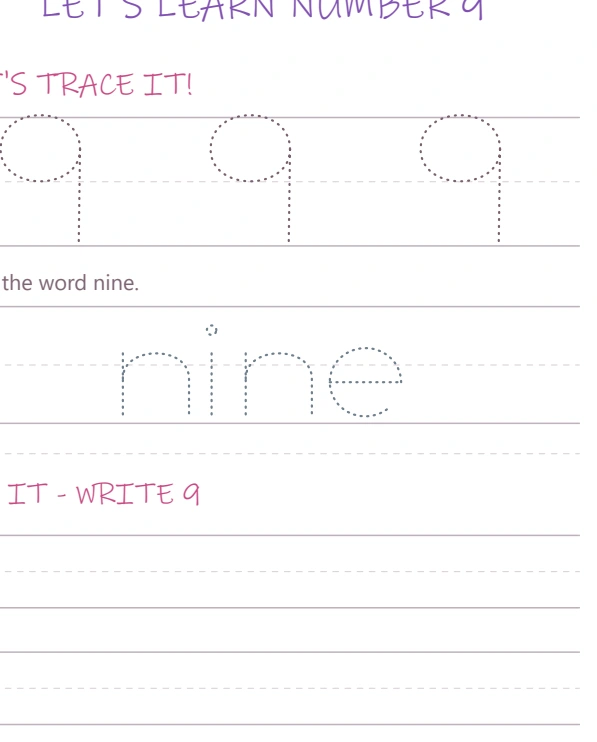
On the grasshopper page, look for a closed upper loop with a descending stroke in the large example. Follow one pale guide with a finger before reaching for a pencil. Say nine once while looking at the result. Ask the child to show the corresponding word with a fingertip. If they are still following whole number words by sight, pronounce the word naturally as they trace it instead of asking for separate letter names.
Hand out six counters to a small group. Ask each child to draw a simple route from that amount through seven, eight and nine, adding one counter at a time. This makes a comparison page more visible than reciting the sequence by itself. Choose a child to report the change in the group at each new stop.
Reserve one place in the shared path
Give a small group a strip with ten spaces. Have one partner position a marker where the path should end and another add enough flat pieces to make nine. Explain that a blank is allowed on purpose. When a child gets eight, invite them to look at how many places are still free.
On the worksheet a partner can count the grasshoppers and read their number aloud. Compare the full strip with the sheet’s picture boxes. Ask someone to describe how a group of eight can resemble the desired group until a pointing count distinguishes them. Keep any optional challenge about adding one for after they are comfortable with the nine.
Ask a learner who counts nine well to switch to the written hunt and explain the low tail of the numeral. If the pencil mark leaves a shape they cannot identify later, return to the round part first and then trace the tail direction. A focused second attempt can take less than a minute.
Play ideas that carry the grasshopper count into the room
Leave the tenth square free
Have Enzo build nine counters in a ten-space path. Move the empty spot without changing the selected amount.
Grasshopper bus stop
Draw nine passenger spaces for toy travelers. Explain why an empty seat changes how many passengers are aboard.
Count from eight
Set out a close group of eight and challenge a partner to show exactly what changes when one more joins.
Spot the round top
Set a large 9 beside a 6 and turn each upright, pointing to the position of the closed part.
A hop for each marker
Have a paper hopper move once past each of nine marks and set its final stop beside the printed number word.
What to open after the grasshopper practice
Choose the next page by listening to how Enzo counted. For another way of matching objects and numerals, try a different picture theme for counting through ten after nine. If the adult heard a steady count but saw difficulty with pencil direction, use number-word and digit tracing alongside the grasshopper sheet to spend more time on written shapes. Children who want to show a number without a pencil can go on to other finger representations to compare with 9. Compare their spoken count with the amount they can show after moving the supplies.
Adults planning a sequence past the grasshopper page can read the What Works Clearinghouse guide to early math. Its progression can help you decide whether to spend another session on recognizing a small set, accurately counting it, or comparing its size with a second group.
Set out the grasshopper printable
Choose the free download for the original grasshopper page with its printed site credit. The individual clean PDF is available through the worksheet’s eligible membership download. Open the attached $3 package if you want the whole set of ten clean pages. The grasshopper page remains an individual one-page activity in either option.
Use US Letter paper in portrait orientation and choose Actual Size or 100% when the printer can accommodate the margins. Start with a single test copy and check the fine tracing guides around 9. Paper, a pencil and a crayon are enough for a first turn, with paper squares handy only if you want to extend the session.
Related Topics
Popular Worksheets
Printable resources families and teachers are downloading now.
 Free
 Free
 Free
 Free