
Essential Letter E Tracing: 5 Amazing Steps to Early Writing Success!

Embark on an exciting journey into early literacy with our specially designed worksheet focusing on Letter E Tracing. This engaging printable provides a structured yet fun approach for young children to master the uppercase 'E', a crucial step in developing pre-writing skills and alphabet recognition. From guided strokes to independent practice, this resource is crafted to build confidence and precision in every little hand.
Understanding the Importance of Letter Tracing for Early Development
Letter tracing is far more than just copying shapes; it's a foundational activity that primes children for successful handwriting and reading. When children trace letters, they are actively engaging multiple cognitive and motor skills simultaneously. This repetitive action helps them internalize the correct formation of each letter, creating muscle memory that will be vital as they transition to independent writing.
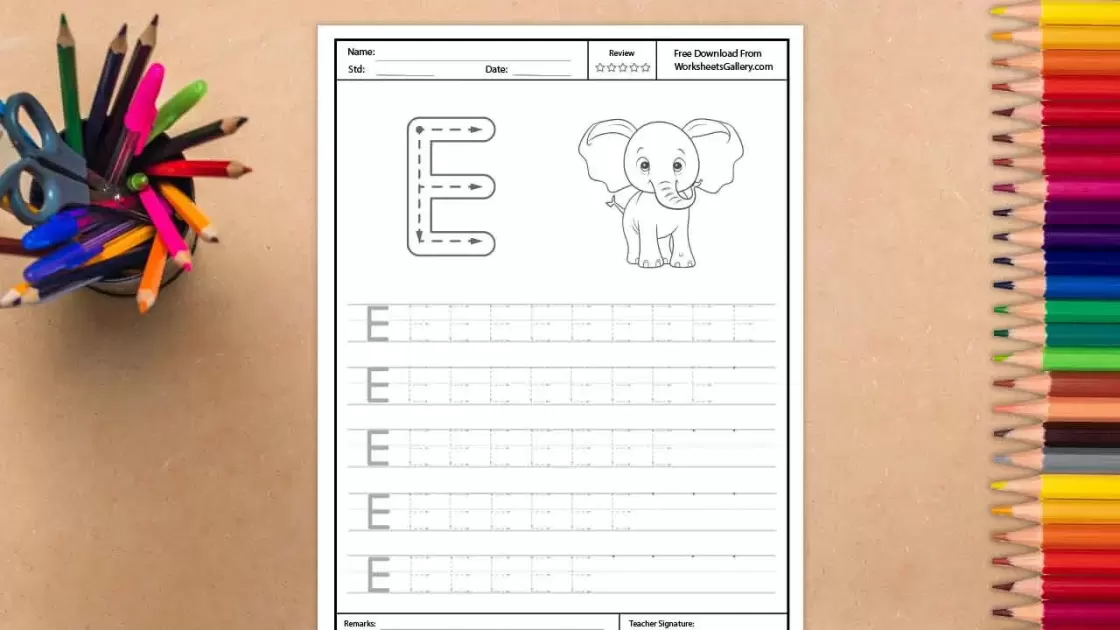
Our Letter E tracing worksheet introduces children to the specific strokes required to form the uppercase 'E'. The visual cues, such as dotted lines and directional arrows, act as gentle guides, preventing common errors and fostering a sense of accomplishment. This guided practice reduces frustration and encourages a positive attitude towards learning to write.
The Role of Visual-Motor Integration in Letter Formation
Visual-motor integration, the ability to coordinate visual information with motor actions, is a cornerstone of handwriting. When a child looks at the dotted lines of the 'E' and then attempts to replicate those lines with their pencil, they are strengthening this crucial skill. The worksheet's clear design, featuring a large, traceable 'E' at the top and multiple rows for practice, optimizes this integration process. The friendly elephant illustration also adds a delightful visual element, making the learning experience more enjoyable and memorable.
Did You Know?
Consistent tracing practice helps children recognize letter shapes quickly, which is a critical pre-reading skill. The more familiar they are with letter forms, the easier it becomes to decode words.

Key Benefits of Practicing Letter E Tracing
- Enhanced Fine Motor Skills: Holding a pencil correctly and controlling its movement along dotted lines significantly strengthens the small muscles in the hand and wrist. This precision is essential for all future writing tasks.
- Improved Hand-Eye Coordination: Children learn to coordinate what their eyes see (the dotted lines) with what their hands do (moving the pencil). This synergy is vital for accuracy in writing and many other daily activities.
- Boosted Letter Recognition: Repetitive tracing of the Letter E solidifies its shape in a child's mind, making it easier for them to identify the letter in books and other contexts. The association with an elephant further aids this recognition.
- Developed Pre-Writing Skills: The structured strokes required for the 'E' (vertical lines, horizontal lines) are fundamental components of many other letters, laying a strong groundwork for forming the entire alphabet.
- Increased Concentration and Focus: Completing tracing tasks requires sustained attention, helping children develop their ability to concentrate on a single activity for an extended period.
- Fostered Confidence and Independence: Successfully tracing letters provides a sense of accomplishment, encouraging children to tackle more complex writing tasks and fostering a positive attitude towards learning.
How to Effectively Use This Letter E Tracing Worksheet
This versatile worksheet can be easily integrated into both home and classroom settings. Here's how to maximize its effectiveness:
At Home: A Fun Learning Session
Scenario: A parent wants to introduce their 4-year-old to the letter 'E' in a relaxed, engaging way after preschool.
- Preparation: Print several copies of the Letter E Tracing worksheet. Gather a variety of writing tools: crayons, washable markers, and pencils.
- Introduction: Start by pointing to the large 'E' at the top and the friendly elephant. Say, "This is the letter E, and E is for Elephant! Can you make the 'E' sound?" Trace the large 'E' with your finger first, explaining each stroke.
- Guided Practice: Encourage your child to use a crayon or thick marker for the first few rows, as these are easier to grip. Guide their hand if necessary, emphasizing the correct stroke order shown by the arrows.
- Independent Practice: As they gain confidence, switch to a pencil. Allow them to trace the remaining rows independently. Offer praise for effort and neatness.
- Creative Extension: After tracing, encourage them to color the elephant. You could also ask them to name other words that start with 'E'.
In the Classroom: A Structured Literacy Center
Scenario: A kindergarten teacher is running a literacy center focused on alphabet recognition and handwriting readiness.
- Setup: Designate a 'Letter of the Week' station. Provide a stack of Letter E Tracing worksheets, pencils, and erasers. Include a visual aid displaying words that start with 'E'.
- Demonstration: Before sending students to the center, conduct a brief whole-group demonstration on the whiteboard, showing the correct formation of the uppercase 'E'. Emphasize starting points and stroke directions.
- Independent Work: Students rotate to the center and work on their worksheets. The clear layout allows for independent practice, freeing the teacher to assist other groups.
- Peer Review/Self-Correction: Encourage students to check their work. Provide magnifying glasses for a fun way to inspect their tracing lines.
- Reinforcement: After completing the worksheet, students can move to another activity, such as building the letter 'E' with playdough or finding 'E's in a picture book.
Common Mistakes and How to Guide Children
Even with clear guides, children might make a few common errors. Recognizing these and offering gentle correction can make a big difference:
- Incorrect Stroke Order: Children might draw the horizontal lines before the vertical one, or start from the bottom. Gently remind them to follow the arrows and start from the top. You can use phrases like, "Big line down first, then three little lines across!"
- Lifting the Pencil Too Often: Some children lift their pencil mid-stroke, creating disjointed lines. Encourage them to try and make each segment of the 'E' with a continuous motion.
- Lack of Pressure Control: Pressing too hard or too lightly can affect legibility. Encourage a firm but not overly forceful grip.
- Poor Pencil Grip: Continuously observe their pencil grip. If it's incorrect, offer a pencil grip aid or demonstrate the tripod grip again. Consistent practice with the correct grip is crucial.
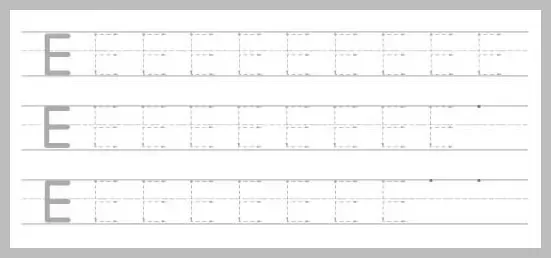
This close-up view of the Letter E Tracing lines clearly shows the dotted guides and directional arrows, which are instrumental in helping children learn the correct stroke order and formation. The consistent spacing and size of the letters across multiple rows provide ample opportunity for repetition and mastery, making it an ideal tool for developing fine motor control and letter recognition.
Why Children Will Enjoy This Activity
Children are naturally curious and love to explore. This worksheet taps into that innate desire by providing a clear goal (forming the letter 'E') within a playful context. The friendly elephant character adds an element of fun and storytelling, making the task less daunting and more inviting. The immediate feedback of seeing a recognizable letter form under their own hand is incredibly rewarding, boosting their self-esteem and motivation to continue learning.
The repetitive nature, while educational, can also be meditative for some children, allowing them to focus and find a rhythm in their movements. The sense of mastery over a new skill, like tracing the Letter E, is a powerful motivator that encourages them to engage with similar activities in the future. For more alphabet fun, explore our collection of alphabet worksheets.
Skills Developed Through Letter E Tracing
Cognitive Skills
- Pattern Recognition
- Visual Discrimination
- Memory Retention
- Problem-Solving (correcting errors)
Motor Skills
- Fine Motor Control
- Pencil Grip Development
- Hand-Eye Coordination
- Bilateral Coordination (stabilizing paper with one hand, writing with the other)
Language Skills
- Letter Name and Sound Association
- Vocabulary Expansion (e.g., elephant, eagle, egg)
- Phonological Awareness (identifying initial sounds)
Extended Activities for the Letter E
Learning doesn't stop with tracing! Here are some fun ways to extend the Letter E experience:
- "E" Hunt: Go on a scavenger hunt around the house or classroom to find objects that start with the letter 'E' (e.g., eggs, envelopes, eraser).
- Elephant Story Time: Read books featuring elephants or stories where the letter 'E' is prominent. Encourage children to point out every 'E' they see.
- Sensory Tracing: Have children trace the letter 'E' in sand, shaving cream, or finger paint. This provides a tactile learning experience.
- Letter E Craft: Create an 'E is for Elephant' craft using construction paper, glue, and googly eyes. This reinforces the letter-object association.
- Matching Game: Create flashcards with uppercase 'E' and pictures of 'E' words. Have children match them. For more early learning resources, check out our preschool worksheets.
Encouraging Regular Practice and Celebrating Progress
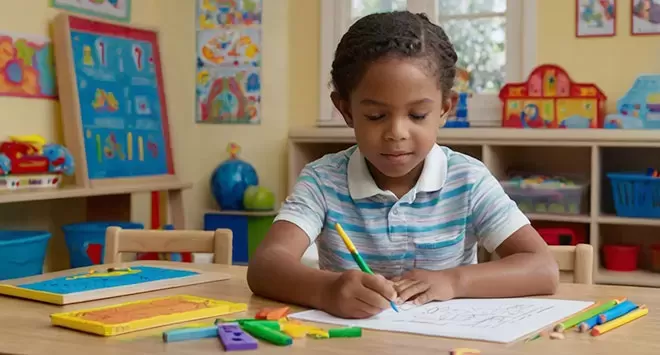
Consistency is key when it comes to developing new skills. Make tracing a regular, but not overly long, part of your child's routine. Short, focused sessions are often more effective than long, drawn-out ones. Celebrate every effort, not just perfection. A crooked line is still an attempt, and that effort deserves recognition.
Use positive reinforcement: "Wow, look at how carefully you made that line!" or "You're really getting good at making the letter E!" Display their completed worksheets proudly. This visible recognition motivates children and shows them that their hard work is valued. Remember, learning should be an enjoyable journey. Our kindergarten worksheets offer additional challenges as they progress.
Download Your Free Letter E Tracing Worksheet Today!
Ready to help your child master the Letter E? This high-quality, printable worksheet is available for instant download. It comes without any watermarks or distracting advertisements, ensuring a clean and focused learning experience. Simply click the download button, print as many copies as you need, and start your tracing adventure!
This worksheet is provided in a standard PDF format, making it easy to print from any home or school printer. It's perfect for parents seeking educational resources and teachers looking for reliable classroom materials. Get started on building strong foundational writing skills today!
Popular Worksheets
Printable resources families and teachers are downloading now.
 Free
Free
 Free
Free
 Free
Free
 Free
Free