
Amazing Letter D Tracing: 5 Fun Ways to Conquer This Skill!

Welcome to an exciting exploration of the letter 'D'! This printable worksheet is a fantastic tool for young learners embarking on their literacy adventure. It's thoughtfully crafted to make the process of learning to write the letter D engaging and effective. By focusing on the unique curves and lines that form this important character, children build a strong foundation for future reading and writing success. This isn't just about tracing; it's about building confidence, developing essential skills, and fostering a love for learning right from the start. Get ready to dive into the wonderful world of the letter D!
The Power of the Letter D Tracing Worksheet
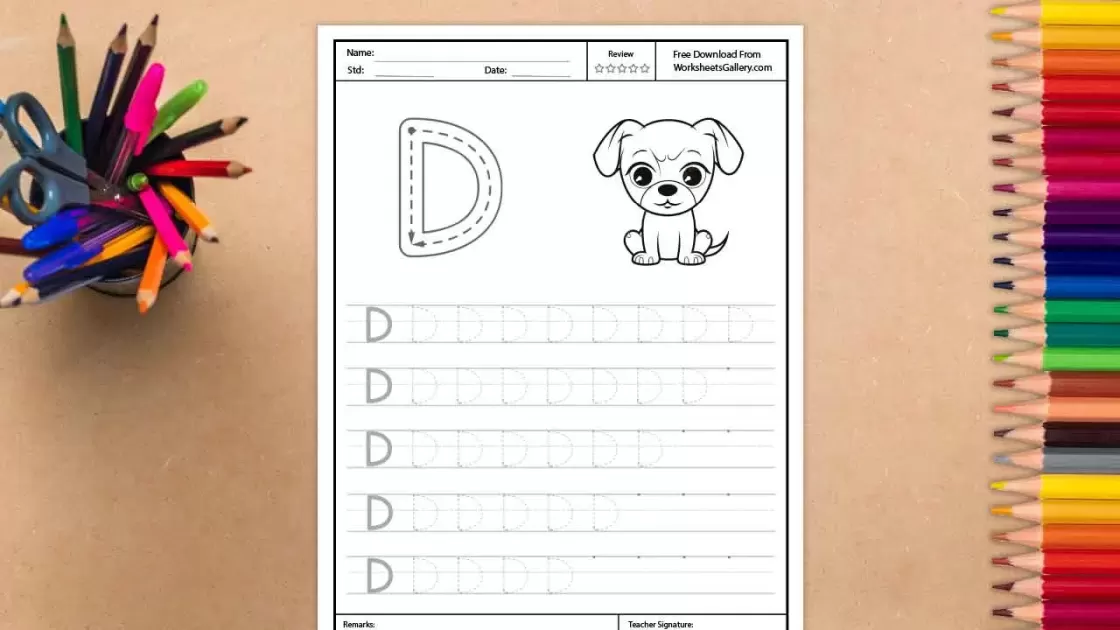
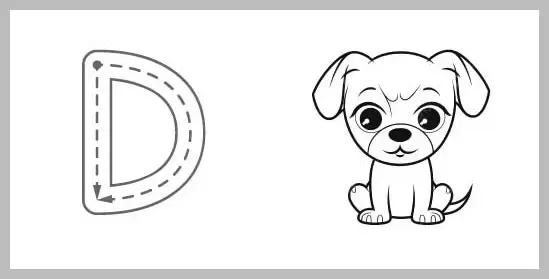
This meticulously designed worksheet offers a clear and structured approach to mastering the letter D. It features large, dotted outlines of both uppercase and lowercase 'D's, guiding little hands along the correct path. The inclusion of directional arrows provides crucial visual cues, helping children understand the proper stroke order. This systematic guidance is invaluable for developing muscle memory and ensuring neat, consistent letter formation. The accompanying cheerful puppy illustration adds an element of fun, transforming a potentially tedious task into an enjoyable activity. This resource is more than just a practice sheet; it's a gateway to early literacy, specifically targeting the essential Letter D Tracing skill.
Why This Worksheet is a Must-Have
- Enhanced Fine Motor Skills: The act of carefully guiding a pencil or crayon along dotted lines refines the small muscles in a child's hands and fingers. This is critical for developing dexterity needed for writing, drawing, and even everyday tasks like buttoning clothes.
- Improved Hand-Eye Coordination: Successfully tracing requires children to coordinate what they see with the movements of their hands. This skill is fundamental for academic tasks and physical activities.
- Letter Recognition and Formation: Repeatedly tracing the letter D helps children internalize its shape and structure. This visual and kinesthetic reinforcement solidifies their understanding of the letter, making it easier to recognize and recall.
- Building Confidence: As children successfully complete each traced letter, they experience a sense of accomplishment. This positive reinforcement boosts their confidence and encourages them to tackle more challenging tasks.
- Preparation for Writing: This worksheet provides a solid foundation for independent writing. Children learn the correct way to form letters, which prevents the development of bad habits that can be difficult to correct later.
- Introduction to Directionality: The directional arrows on the worksheet teach children the correct sequence of strokes needed to form the letter D. This understanding of directionality is a key component of early writing skills.
Bringing the Letter D to Life: Home and Classroom Scenarios
Imagine a cozy afternoon at home. Your child, perhaps around 4 years old, sits at a small table, their brow furrowed in concentration as they carefully trace the letter D. The cheerful puppy on the worksheet seems to offer encouragement. You can sit nearby, offering gentle praise for their effort, perhaps saying, "Wow, look at that beautiful curve you made! The letter D is looking so strong." This simple act of tracing becomes a bonding moment, reinforcing learning in a relaxed, supportive environment.
In a classroom setting, this worksheet can be a valuable tool during small group instruction. A teacher might introduce the letter D, discussing words that start with it like 'dog', 'duck', or 'dinosaur'. Then, the children can each receive a copy of the worksheet. The teacher can circulate, offering individual guidance, helping a child who is struggling with the curve of the D, or celebrating a perfectly formed letter. The visual appeal of the puppy can also be used as a reward or a talking point, making the learning experience more memorable and fun for the entire class.
Developing Essential Skills Through Play
Cognitive Skills:
Tracing the letter D sharpens a child's ability to focus and follow instructions. They learn to recognize the visual pattern of the letter and understand the sequence of movements required to replicate it. This cognitive engagement is crucial for developing problem-solving abilities and attention span.
Motor Skills:
The primary motor skill developed here is fine motor control. Holding a writing instrument correctly, applying appropriate pressure, and making precise movements are all honed through the repetitive action of tracing. This directly impacts handwriting quality and dexterity.
Language and Literacy Skills:
By focusing on the letter D, children are actively engaging with the building blocks of language. Discussing words that start with 'D' (like 'dazzling' or 'delightful') expands their vocabulary and reinforces the connection between the letter's sound and its written form. This lays the groundwork for reading comprehension and expressive language.
Creative Extensions: Beyond the Tracing Lines
To deepen the learning experience and keep children engaged, consider these fun extensions:
- 'D' Word Hunt: Go on a scavenger hunt around the house or classroom to find objects that start with the letter D. Think 'door', 'desk', 'doll', 'dog', 'duck'. Each item found can be a small victory.
- Dinosaur Discovery: Since 'dinosaur' starts with D, bring in some dinosaur toys or books. Have your child draw their own dinosaur, focusing on the letter D shape in its body or spikes.
- Doughy Letters: Use play-dough to create the letter D. This provides a tactile, multi-sensory experience that reinforces the shape and structure of the letter.
- Dotted Art: Instead of just tracing, use the dotted lines as a guide for creating dotted art. Children can use paint dabbers or markers to fill in the dots, creating a unique pattern for the letter D.
- Story Time with 'D' Characters: Read stories that prominently feature characters or themes starting with D, such as 'The Dog Who Dared' or 'Daisy's Delightful Day'. Discuss the characters and events, reinforcing the initial sound.
Why Children Adore This Activity
Children are naturally drawn to activities that offer a sense of accomplishment and fun. The clear, step-by-step nature of tracing provides immediate feedback and a visible result. The cute puppy illustration acts as a friendly companion, making the learning process feel less like work and more like play. When learning is presented in an engaging and supportive way, children are more likely to embrace it. The tactile experience of holding a crayon and making marks on paper is also inherently satisfying for young learners.
Navigating Common Challenges
While this worksheet is designed for ease, some common challenges might arise:
- Grip Issues: Some children may grip their writing tool too tightly or too loosely. Encourage a relaxed, functional grip by demonstrating and offering a pencil grip if needed.
- Incorrect Stroke Order: Despite arrows, some children might deviate. Gently guide them back to the correct path, reminding them of the starting point and direction.
- Staying on the Lines: Difficulty staying within the dotted lines is common. Celebrate effort and progress rather than perfection. Focus on improvement over time.
- Fatigue: Young children have short attention spans and tire easily. Keep tracing sessions brief and positive, perhaps focusing on just a few letters at a time.
Encouraging Consistent Practice
Consistency is key to mastering any new skill. Here’s how to foster regular practice:
- Make it a Routine: Dedicate a short, consistent time each day or week for tracing activities. This predictability helps children know what to expect.
- Positive Reinforcement: Offer genuine praise and encouragement for effort and progress. Stickers, high-fives, or a simple "Great job!" go a long way.
- Variety is Key: While this worksheet is excellent, occasionally introduce other tracing activities or writing tools (like chunky crayons or washable markers) to maintain interest. Explore our collection of alphabet tracing worksheets for more options.
- Connect to Real Life: Point out the letter D in books, on signs, or on food packaging. This shows children the relevance of their learning.
Download Your Free Letter D Tracing Worksheet
Ready to help your child conquer the letter D? Downloading this worksheet is simple and straightforward. Click the download button to get a high-quality, printable PDF version. This resource is completely free, with no watermarks or distracting advertisements, ensuring a clean and focused learning experience for your child. It’s perfect for immediate use at home or in the classroom, providing a valuable tool for early literacy development. You can also find other fantastic resources like our preschool printables to support your child's educational journey.
Age Appropriateness
This worksheet is ideally suited for children in the 3-5 age group. At this stage, children are typically developing the fine motor skills and cognitive readiness necessary for letter tracing. It also serves as an excellent introduction for children aged 3-6, providing a gentle and fun way to begin their alphabet journey.
A Closer Look at the Learning Exercise
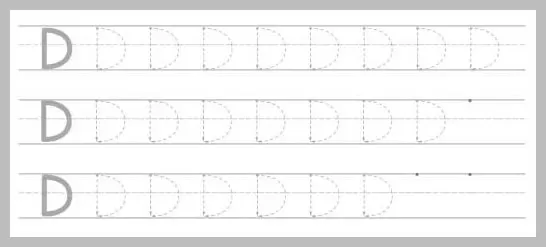
The core learning exercise on this worksheet involves tracing the uppercase letter 'D'. The worksheet presents multiple rows of dotted 'D's, each accompanied by clear directional arrows indicating the starting point and the path to follow. This systematic approach ensures children learn the correct formation from the outset. The large size of the letters and the generous spacing between them make it easier for young children to control their movements and stay within the lines. This focused practice on a single letter, the uppercase 'D', allows for dedicated skill-building without overwhelming the child.

Skills Practiced
The primary skills practiced are fine motor control, hand-eye coordination, letter formation, and directional awareness. Children also indirectly develop concentration and perseverance.
Use In
This worksheet is perfect for preschool classrooms, kindergarten readiness programs, homeschooling, and at-home learning activities to supplement early literacy education. It’s also a great resource for occupational therapy exercises focusing on fine motor development.
File Format
Printable PDF
Popular Worksheets
Printable resources families and teachers are downloading now.
 Free
Free
 Free
Free
 Free
Free
 Free
Free