
Mastering Letter F Tracing: 5 Fantastic Steps to Flawless Formation!

Unlocking Early Writing: The Power of Letter F Tracing
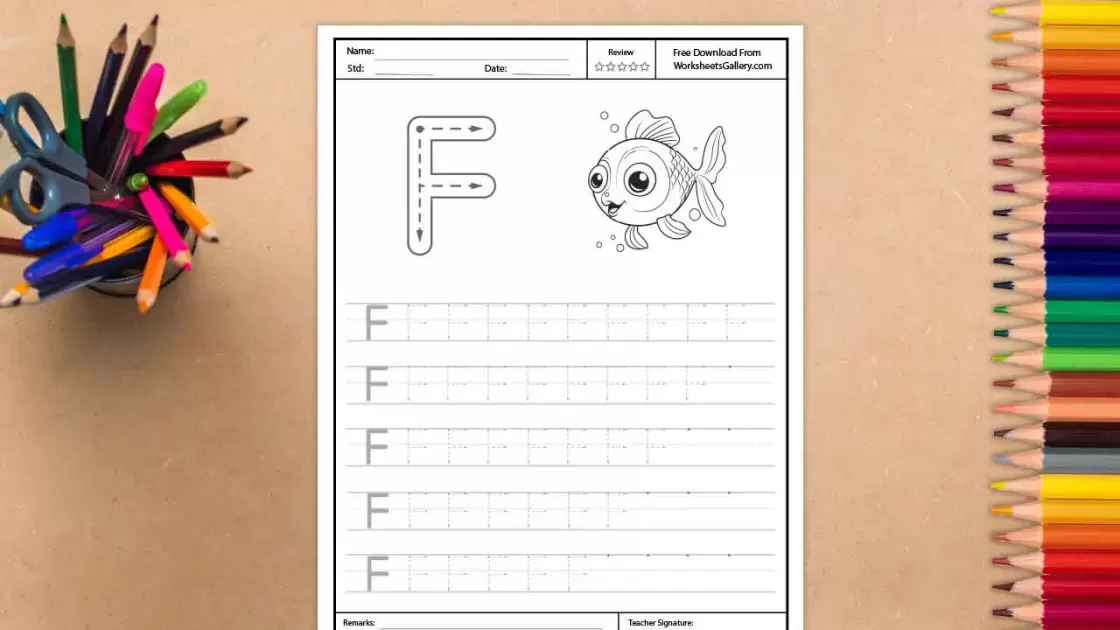
Introducing the alphabet to young children is a cornerstone of early education, and mastering individual letter formation is a crucial step. Our printable Letter F tracing worksheet is specifically designed to make this learning process engaging and effective. It provides a structured yet fun approach for children to practice writing the uppercase 'F', building essential pre-writing skills that will serve them well throughout their academic journey.
This worksheet doesn't just offer repetitive tracing; it integrates visual cues and a friendly fish illustration to capture attention and reinforce learning. By following the clear directional arrows and dotted lines, children gain a tactile understanding of how to construct the letter 'F', transforming an abstract symbol into a familiar shape. This foundational practice is invaluable for developing both cognitive recognition and fine motor precision.
Why Focused Letter F Practice is So Beneficial
Engaging with targeted letter tracing activities, especially for letters like 'F', offers a multitude of benefits that extend beyond simply learning to write. These exercises are critical for developing a holistic set of skills necessary for future academic success.
- Enhances Fine Motor Skills: The precise movements required for tracing dotted lines significantly strengthen the small muscles in the hand and fingers, crucial for handwriting, drawing, and even self-care tasks like buttoning clothes.
- Improves Hand-Eye Coordination: Children learn to coordinate what their eyes see with what their hands do, following the visual path of the letter 'F' with their writing tool. This synergy is vital for many daily activities.
- Boosts Letter Recognition: Repeated exposure to the shape of the uppercase 'F' solidifies its recognition, making it easier for children to identify the letter in books and other written materials.
- Develops Pre-Writing Confidence: Successfully tracing letters builds a sense of accomplishment, encouraging children to tackle more complex writing tasks with greater self-assurance.
- Fosters Concentration and Focus: Tracing requires sustained attention, helping children develop their ability to concentrate on a single task for an extended period, a skill invaluable in classroom settings.
- Introduces Proper Stroke Order: The directional arrows on the worksheet guide children in forming the letter 'F' with the correct stroke sequence, preventing bad habits and promoting efficient writing.
Ideal Age Group for This Activity
This Letter F tracing worksheet is perfectly suited for children aged 3-5 years old. At this developmental stage, preschoolers and early kindergarteners are actively developing their fine motor skills and beginning to show interest in letters and sounds. The large, clear letterforms and guided tracing lines are ideal for their developing coordination and cognitive abilities, providing a gentle introduction to formal writing.

Seamlessly Integrating the Worksheet into Learning Environments
Whether you're a parent at home or a teacher in a classroom, this printable worksheet offers flexible and effective ways to support early literacy. Its straightforward design makes it easy to incorporate into various learning routines.
At Home: Making Learning Fun and Consistent
Scenario: Daily 'Letter Time' with a Parent
Imagine a cozy afternoon where you and your child sit together for a dedicated 'Letter Time.' You print out the Letter F tracing worksheet and a few crayons. Start by pointing to the large 'F' at the top, emphasizing its sound and perhaps naming a few words that start with 'F' like 'fish' (referencing the illustration) or 'flower'. Guide your child's hand for the first few strokes if needed, explaining the path of the lines. Celebrate each completed 'F' with praise, making the activity a positive and anticipated part of their day. This consistent, low-pressure approach helps build a strong foundation without overwhelming the child.
Beyond dedicated sessions, you can use this worksheet as a quick warm-up before story time or as a quiet activity during independent play. Laminating a copy allows for repeated use with dry-erase markers, saving paper and extending its value. You can also encourage your child to color the fish after tracing, further enhancing engagement and creativity.
In the Classroom: A Versatile Tool for Educators
Scenario: Learning Centers and Small Group Instruction
In a bustling preschool or kindergarten classroom, this worksheet can be a fantastic addition to your literacy centers. Set up a 'Letter F' station with printed worksheets, pencils, and perhaps some flashcards featuring 'F' words. During small group instruction, you can use the worksheet to demonstrate proper letter formation, paying close attention to individual student needs. For example, if a child struggles with the horizontal strokes, you can provide extra verbal cues or physical guidance. The worksheet also serves as an excellent assessment tool to gauge a child's progress in letter formation.
Teachers can also integrate this worksheet into a broader 'Letter of the Week' curriculum. Pair it with other 'F' themed activities like singing alphabet songs, reading books about fish or frogs, or even a simple craft involving the letter 'F'. This multi-sensory approach reinforces learning and caters to different learning styles.
Developing Key Skills Through Tracing
The act of tracing is far more than just copying lines; it's a rich developmental exercise that nurtures a range of crucial skills. This particular Letter F tracing worksheet is designed to tap into cognitive, motor, and language development simultaneously.
Cognitive Development
- Pattern Recognition
- Visual Discrimination
- Memory Recall
- Problem Solving (how to connect dots)
Motor Skill Development
- Fine Motor Control
- Pencil Grip Improvement
- Hand Strength
- Bilateral Coordination
Language Development
- Letter Sound Association
- Vocabulary Expansion (F words)
- Phonological Awareness
- Early Literacy Concepts
These interconnected skills lay the groundwork for reading, writing, and overall academic readiness, making simple tracing activities profoundly impactful.
Common Mistakes and How to Guide Children
It's natural for young learners to make mistakes as they develop new skills. Here are a few common issues you might observe and how to gently correct them:
- Incorrect Stroke Order: Children might draw the horizontal lines of the 'F' before the vertical one, or start from the bottom. Gently remind them to follow the arrows, perhaps tracing the correct path with your finger first.
- Poor Pencil Grip: Some children may hold the pencil too tightly or with an awkward grip. Offer gentle reminders about the 'tripod grip' (thumb, index, and middle finger) and ensure they have age-appropriate writing tools.
- Rushing Through: Children might rush, leading to messy or incomplete letters. Encourage them to go slowly and carefully, emphasizing quality over speed. You can say, "Let's make each 'F' look super neat!"
- Lack of Pressure Control: Some children press too hard, others too lightly. Experiment with different writing tools (crayons, thicker pencils) to find what works best, and model appropriate pressure.
Creative Extensions: Beyond the Tracing Lines
Once your child is comfortable with the Letter F tracing worksheet, expand their learning with these fun and interactive activities:
1. 'F' Word Scavenger Hunt
Go on a hunt around the house or classroom for objects starting with the letter 'F'. Think 'fork', 'fan', 'feather', 'flower'. Each time you find one, practice saying the word and its initial 'F' sound. You could even draw a quick 'F' next to each item found.
2. Finger Painting 'F's
For a sensory experience, let children finger paint large uppercase 'F's on a sheet of paper. This tactile activity helps reinforce the letter's shape in a different, engaging way and is great for developing pre-writing muscle memory.
3. 'F' Storytelling Fun
Start a simple story with an 'F' word, like "Once upon a time, a friendly fox..." and encourage your child to add sentences using as many 'F' words as they can think of. This boosts vocabulary and imaginative play.
4. Fishy 'F' Craft
Since the worksheet features a fish, extend the theme! Cut out a large 'F' shape from construction paper and have children decorate it with fish scales (using glitter, torn paper, or even real fish crackers!). This connects the letter to its associated image.
These activities not only reinforce letter recognition but also make learning a multi-sensory and enjoyable experience, solidifying the connection between the letter 'F' and its sound and form. For more alphabet fun, explore our collection of alphabet tracing worksheets.
Encouraging Consistent Practice for Lasting Skills
Regular, positive reinforcement is key to fostering a love for learning and developing strong writing habits. Here's how to keep children motivated:
- Celebrate Small Wins: Acknowledge every effort, no matter how small. "Look at that fantastic 'F' you made!" goes a long way.
- Keep It Short and Sweet: Young children have short attention spans. Keep tracing sessions brief (5-10 minutes) to prevent burnout and maintain enthusiasm.
- Vary Activities: Mix tracing with other 'F'-themed games, stories, or crafts to keep things fresh and exciting.
- Model Enthusiasm: Your positive attitude towards learning will be contagious. Show genuine interest in their progress.
- Create a Learning Space: Designate a comfortable, well-lit area for learning activities. This signals that it's a special time for focus and discovery.
Remember, the goal is to build a positive association with learning and writing, not to achieve perfection immediately. Patience and encouragement are your best tools.
Why Children Find This Worksheet Delightful
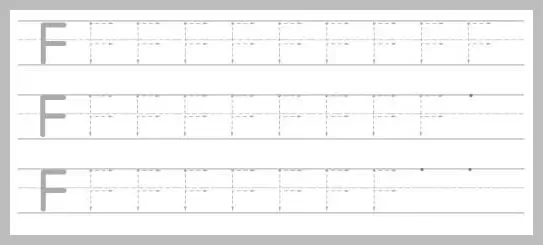
Children are naturally drawn to engaging visuals and clear instructions, both of which are central to this Letter F tracing worksheet. The friendly fish illustration at the top immediately captures their attention, transforming a potentially dry exercise into an inviting activity. The large, well-spaced tracing lines reduce frustration, allowing them to focus on forming the letter rather than struggling with tiny details. The sense of accomplishment they feel after completing each row, especially with positive feedback, fuels their desire to continue learning. It's a perfect blend of instruction and fun, designed to foster early literacy skills joyfully.
The worksheet's clean layout minimizes distractions, helping young eyes stay focused on the task. The clear progression from the guided tracing at the top to the more independent practice rows allows for a gradual increase in challenge, building confidence step by step. This thoughtful design ensures that children remain engaged and motivated throughout the activity, making it a truly effective learning tool.
Download Your Free Printable Letter F Tracing Worksheet!
Ready to help your child master the letter 'F'? This high-quality, printable worksheet is available for instant download. You'll receive a clean PDF file, completely free of watermarks and intrusive ads, ensuring a seamless learning experience. Simply click the download button, print it out, and you're ready to start practicing the Letter F tracing with your little learner.
This resource is designed to be easily accessible for parents and educators alike, providing a valuable tool for early literacy development. Start your child's journey to flawless letter formation today!
Explore More Learning Resources
Don't stop at the letter 'F'! Our website offers a wide array of educational materials to support your child's growth. Discover more preschool worksheets covering various subjects, from numbers to shapes, all designed to make learning enjoyable and effective. You might also find our fine motor skill activities particularly useful for complementing tracing practice.
Popular Worksheets
Printable resources families and teachers are downloading now.
 Free
Free
 Free
Free
 Free
Free
 Free
Free