
Master the Amazing Letter B Tracing Worksheet for Early Learners

Unlock Early Literacy: The Wonderful World of the Letter B Tracing Worksheet
Embarking on the journey of learning to read and write is an incredibly exciting time for young children. The foundational building blocks of literacy are often introduced through the alphabet, and mastering each letter is a significant milestone. Our specially designed Letter B tracing worksheet provides a fun, interactive, and effective way for little ones to get acquainted with the uppercase 'B'. This printable resource is crafted to support the development of crucial pre-writing skills while fostering a positive association with learning letters.
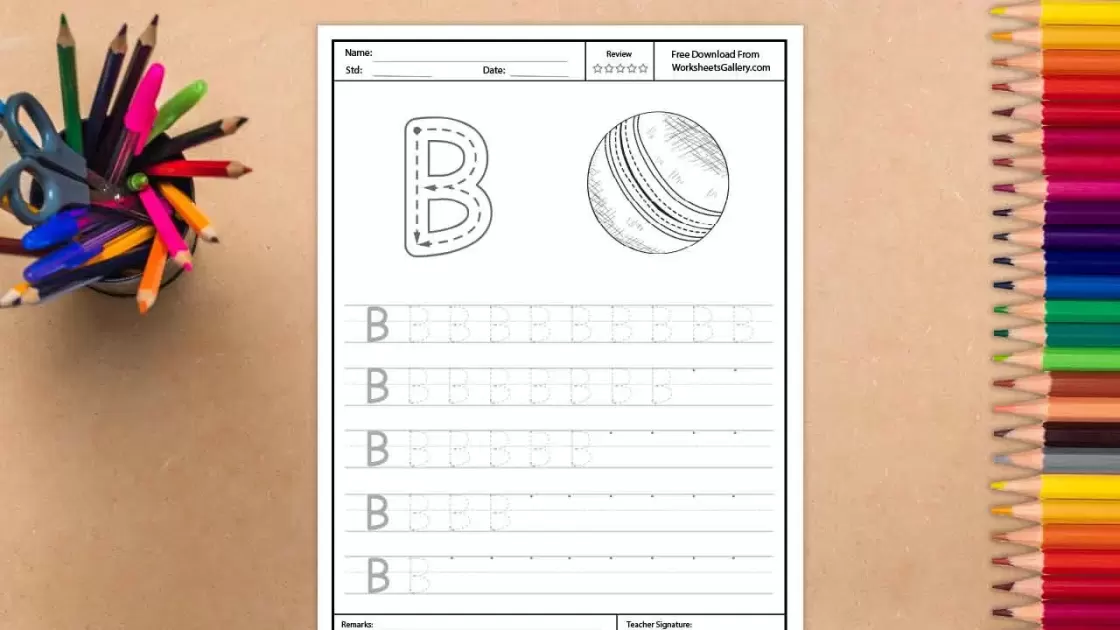
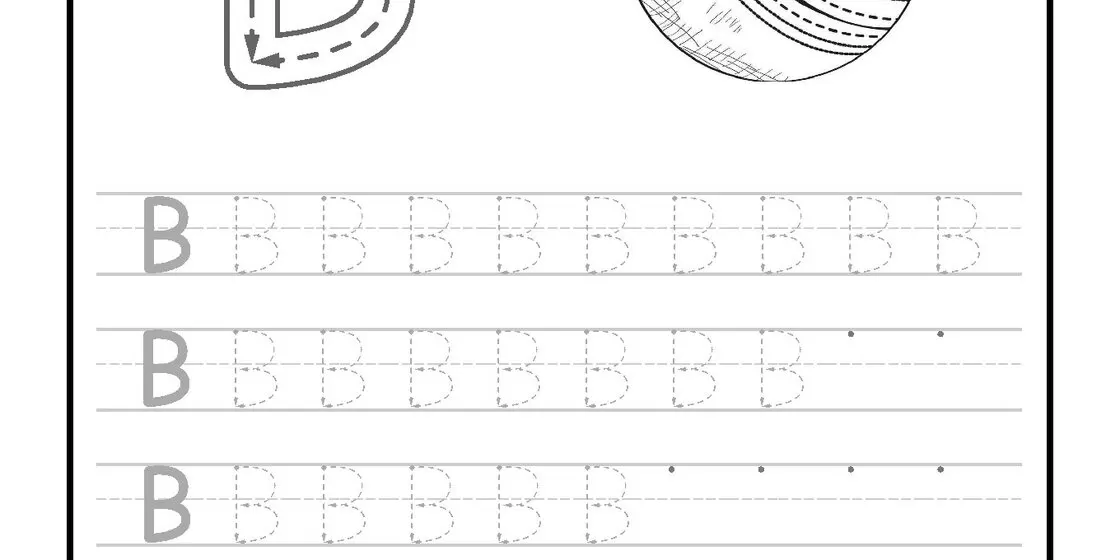
We understand that children learn best when they are engaged and motivated. This worksheet goes beyond simple letter repetition. It incorporates visual cues and ample practice space, ensuring that children not only recognize the shape of the letter 'B' but also begin to form it independently. The visual of a ball, often associated with the letter 'B', is included to reinforce the connection and make the learning experience more memorable and enjoyable. Therefore, this approach helps solidify the letter's identity in a child's mind, making the learning process feel less like a chore and more like a game.
This resource is perfect for parents, homeschool educators, and classroom teachers looking for a high-quality, printable tool to supplement early literacy instruction. It’s designed with the developmental needs of preschoolers in mind, offering a structured yet flexible approach to learning the letter 'B'. Dive into the details and discover how this simple worksheet can make a profound impact on your child's educational journey.
What Makes This Letter B Tracing Worksheet Stand Out?
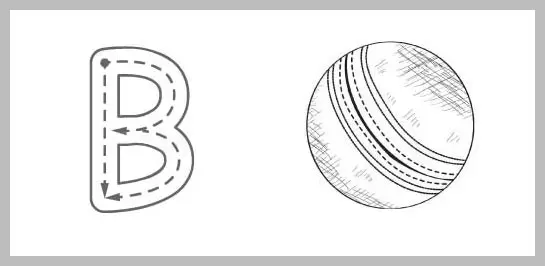
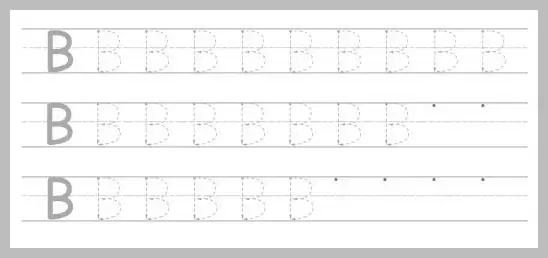
This isn't just another alphabet sheet; it's a carefully constructed learning tool. The worksheet features a large, dotted outline of the uppercase letter 'B', complete with directional arrows to guide little fingers. Below this, ample lines of dotted 'B's are provided for tracing practice. The inclusion of a simple, recognizable image – a ball – associated with the letter 'B' adds a delightful visual element that aids in memory retention. The layout is clean, uncluttered, and focused, ensuring that the child's attention remains on the primary learning objective: mastering the Letter B tracing.
The Foundational Importance of Letter Tracing
Tracing letters is a critical step in the pre-writing process. It allows children to develop the fine motor control and hand-eye coordination necessary for forming letters legibly. When children trace, they are essentially building muscle memory for each letter's unique shape and stroke order. This repetition, guided by dotted lines and arrows, helps to refine the small muscles in their hands and fingers, preparing them for independent writing. Furthermore, the act of tracing also enhances concentration and focus, as children must pay close attention to the path they are following.
For the letter 'B', tracing involves specific movements: a straight vertical line followed by two curved lines. Our worksheet breaks this down into manageable steps. The initial large 'B' with arrows shows the correct formation, and the subsequent lines of dotted 'B's allow for repeated practice. This systematic approach ensures that children learn the correct way to form the letter from the outset, preventing the development of poor writing habits that can be difficult to correct later. Consequently, it's a gentle introduction to the mechanics of handwriting, making the transition to writing words and sentences much smoother.
Why Focus on the Letter 'B'?
The letter 'B' is a common and important letter in the English alphabet. It appears in many essential words, such as 'ball', 'book', 'boy', 'baby', and 'blue'. Introducing 'B' early helps children begin to decode and recognize words they encounter daily. Moreover, the formation of 'B' involves both straight and curved lines, offering a good opportunity to practice different motor skills. Mastering 'B' also builds confidence, as it's a letter that many children find relatively straightforward to trace once they understand the stroke order. This success can be a powerful motivator for further learning.
Key Learning Benefits of This Worksheet
This printable worksheet is designed to offer a comprehensive set of benefits for young learners:
- Enhanced Fine Motor Skills: The act of holding a crayon or pencil and carefully guiding it along the dotted lines significantly strengthens the small muscles in a child's hands, fingers, and wrists. This is crucial for tasks like buttoning clothes, using scissors, and eventually, writing legibly.
- Improved Hand-Eye Coordination: Children must coordinate what they see (the dotted line) with the movement of their hand. This develops the essential connection between visual input and motor output, a skill vital for countless activities.
- Letter Recognition and Formation: Repeated tracing helps children internalize the visual structure of the uppercase 'B' and learn the correct sequence of strokes needed to form it. This builds a strong foundation for alphabet mastery.
- Increased Concentration and Focus: Completing the tracing exercises requires sustained attention. Children learn to focus on a single task, follow instructions (implied by the arrows), and persevere until the task is finished.
- Early Literacy Development: By familiarizing themselves with the letter 'B', children take a significant step towards reading and writing. Recognizing 'B' in words and being able to form it themselves are key components of early literacy.
- Boosted Confidence and Self-Esteem: Successfully completing the tracing activities provides children with a sense of accomplishment. Each correctly traced 'B' reinforces their growing abilities and encourages them to tackle new learning challenges.
- Introduction to Visual Cues: The inclusion of directional arrows and the associated image (a ball) helps children understand how to approach letter formation systematically and associate letters with familiar objects.
A Visual Aid: The Ball Connection
The simple sketch of a ball accompanying the letter 'B' is more than just decoration. It serves as a powerful mnemonic device. For young children, associating an abstract symbol like a letter with a concrete object they know and love, like a ball, makes the learning process more tangible and memorable. This connection can help children recall the letter 'B' more easily and reinforces its place in their vocabulary. In essence, it transforms a potentially dry exercise into a more engaging and playful experience, tapping into a child's natural curiosity and love for familiar objects. This visual anchor is particularly helpful for kinesthetic and visual learners.
Step-by-Step Guide: Maximizing Worksheet Use
To get the most out of this Letter B tracing worksheet, follow these simple steps, whether you're at home or in a classroom setting:
Preparation is Key:
- Print Clearly: Ensure the worksheet is printed on good quality paper. A crisp, clear print makes it easier for children to see the dotted lines and arrows.
- Gather Supplies: Provide your child with age-appropriate writing tools. Chunky crayons, thick pencils, or washable markers are ideal for little hands.
- Create a Comfortable Space: Set up a quiet, well-lit area with a stable surface for your child to work. Minimize distractions to help them focus.
Guided Practice Session:
- Introduce the Letter: Start by showing your child the large uppercase 'B' at the top of the worksheet. Say its name clearly: "This is the letter B." Point out the picture and say, "B is for Ball."
- Demonstrate Tracing: Using your finger or a marker on a separate copy, demonstrate how to trace the letter 'B', following the arrows. Emphasize the direction of the strokes: "Down, then around, then around again."
- Supervised Tracing: Encourage your child to trace the large 'B' first. Offer gentle guidance and positive reinforcement. Celebrate their effort, regardless of perfection.
- Independent Practice: Move on to the lines of dotted 'B's. Let your child trace them independently. Offer help only when needed, allowing them to develop their own control.
- Focus on Formation: Gently correct any significant deviations from the correct stroke order or shape, but prioritize effort and engagement at this stage.
Reinforcement and Extension:
- Verbalize: As they trace, encourage them to say "B, B, B" or "B is for Ball." This multi-sensory approach reinforces learning.
- Review: After they finish, review their work together. Point out the 'B's they traced well and discuss any areas that might need more practice in the future.
- Connect to the Real World: Look for the letter 'B' in books, signs, and around the house. Point out words that start with 'B' to make the learning relevant.
Classroom Integration:
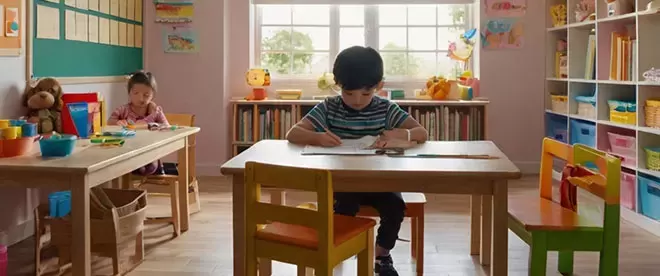
In a classroom, this worksheet can be used during small group instruction, literacy centers, or as a take-home activity. Teachers can use it to assess individual students' fine motor skills and letter formation. Additionally, pairing it with other alphabet activities, such as singing the alphabet song or reading books featuring the letter 'B', can create a rich learning environment. Consider laminating the worksheet for repeated use with dry-erase markers, offering a sustainable practice option.
Developing Essential Skills Through Play
The seemingly simple act of tracing a letter like 'B' is a gateway to developing a wide array of essential skills that extend far beyond the alphabet itself. This worksheet is a powerful tool for nurturing cognitive, motor, and even early language development.
Cognitive Skills at Play:
- Problem-Solving: Children learn to navigate the dotted lines, figuring out how to keep their marks within the boundaries and follow the intended path.
- Pattern Recognition: They see the repeated pattern of the letter 'B' and learn to replicate it, a fundamental skill for understanding sequences and mathematical concepts.
- Memory Retention: Associating the shape with the sound and name of 'B', especially with the visual cue of the ball, strengthens their ability to recall information.
Fine Motor Mastery:
- Pincer Grasp Refinement: Holding a writing utensil correctly uses the pincer grasp, which is essential for manipulating small objects.
- Pre-Grip Development: The varied pressure and control needed for tracing help develop the foundational grips necessary for more complex writing tasks.
- Hand-Arm Movement Control: Learning to control the movement of the entire arm and hand in coordination with the fingers is a key outcome of consistent tracing practice.
Language and Communication:
- Vocabulary Expansion: Introducing words like "ball" that start with 'B' broadens their vocabulary.
- Phonological Awareness: Connecting the letter 'B' with its sound (/b/) is the first step in understanding phonics and how sounds make up words.
- Following Instructions: The directional arrows and the overall task require children to interpret and follow visual instructions, a precursor to understanding written directions.
Beyond the Worksheet: Extending the Learning Fun
The learning doesn't have to stop once the worksheet is completed! Here are some creative ways to extend the fun and reinforce the concept of the letter 'B':
1. Sensory Bin Exploration:
Create a "B" themed sensory bin. Fill a container with dried beans, buttons, or blue-colored rice. Hide letter 'B' cutouts (or small balls) within the bin for children to find. As they find each 'B', have them practice saying its name and sound.
2. Build a 'B' Tower:
Use building blocks (like LEGOs or wooden blocks) to construct the letter 'B'. Encourage children to make a tall tower that resembles the shape of a 'B', or use blocks to spell out words that start with 'B' like "BIG" or "BLUE".
3. Ball Play and Letter Hunt:
Play with a ball! Roll it, bounce it, and talk about how "B is for Ball." Then, go on a "B" hunt around the house or classroom, looking for objects that start with the letter 'B' or have a circular shape like a ball.
4. Storytelling with 'B':
Make up a short story featuring a character whose name starts with 'B', like Barnaby Bear or Betty Butterfly. The story can involve a ball, a boat, or anything else beginning with 'B'. This imaginative play reinforces vocabulary and letter association.
5. Creative 'B' Art:
Provide various art materials like paint, playdough, or collage materials. Challenge your child to create their own version of the letter 'B'. They could paint a big blue 'B', sculpt a 'B' out of playdough, or glue beans onto a paper 'B'.
6. Explore Other 'B' Worksheets:
Complement this tracing activity with other alphabet resources. Perhaps explore letter recognition games or worksheets that focus on the sound of 'B'. Finding a variety of activities keeps learning fresh and caters to different learning styles.
The Joy of Discovery: Why Kids Love Tracing 'B'
Children are naturally curious and eager to explore the world around them, including the world of letters and words. This worksheet taps into that innate desire for discovery. The tactile experience of tracing, the visual appeal of the letter and the ball, and the sense of accomplishment upon completion all contribute to a positive learning experience. In short, when children feel successful and engaged, they are more likely to develop a lifelong love for learning. The clear structure and achievable goal of tracing the letter 'B' provide a safe and encouraging environment for them to practice and grow their skills. It’s a small step that builds significant confidence, empowering them to tackle more complex literacy tasks with enthusiasm.
Effortless Download for Immediate Learning
Getting started with this valuable learning tool is simple and straightforward. We’ve designed the download process to be as user-friendly as possible so you can begin reinforcing essential literacy skills right away.
How to Download Your Free Worksheet:
- Print Clearly: Ensure the worksheet is printed on good quality paper. A crisp, clear print makes it easier for children to see the dotted lines and arrows.
- Save the File: The worksheet will typically download as a PDF file. Save it to a location on your computer or device that you can easily access.
- Print: Open the PDF file and print the worksheet on standard letter-sized paper. For durability, consider using cardstock or laminating the page, especially if you plan to reuse it.
Once downloaded and printed, the worksheet is ready for immediate use. There are no watermarks or distracting advertisements on the printable itself, ensuring a clean and focused learning experience for your child. Thus, this makes it perfect for both home and classroom environments where concentration is key. Enjoy the ease of access and the immediate educational benefits this resource provides!
Ready to Inspire Early Learners?
This Letter B tracing worksheet is more than just an educational printable; it's an invitation to explore, learn, and grow. By providing a structured yet playful approach to mastering the letter 'B', you are laying a crucial foundation for your child's future academic success. Download it today and watch your child’s confidence and literacy skills blossom!
Popular Worksheets
Printable resources families and teachers are downloading now.
 Free
Free
 Free
Free
 Free
Free
 Free
Free