
Master the Mighty Letter H Tracing: 7 Steps to Early Writing!

Unlocking the Power of the Mighty Letter H
Welcome to an exciting exploration of the Letter H Tracing, a foundational element in early literacy! This printable worksheet is your child's gateway to mastering the formation of this important uppercase letter. Designed with young learners in mind, it provides clear, guided practice to build confidence and skill. The journey of learning to write begins with simple, repetitive actions, and tracing the Letter H is a perfect starting point. This activity not only introduces the shape of the letter but also helps develop the crucial fine motor skills necessary for all future writing endeavors. We'll delve into the specifics of this worksheet, exploring its benefits, how to best utilize it at home or in the classroom, and how to make the learning process an absolute joy for your child.
The focus keyword for this resource is "Letter H Tracing," and this worksheet excels at providing ample opportunities for children to practice this essential skill. By engaging with the dotted lines and directional arrows, children begin to understand the physical movements required to form the letter correctly. This repetition is key to muscle memory development, a vital component of early writing. Let's discover how this simple yet powerful tool can significantly contribute to your child's educational journey.
Why This Letter H Tracing Worksheet is a Must-Have
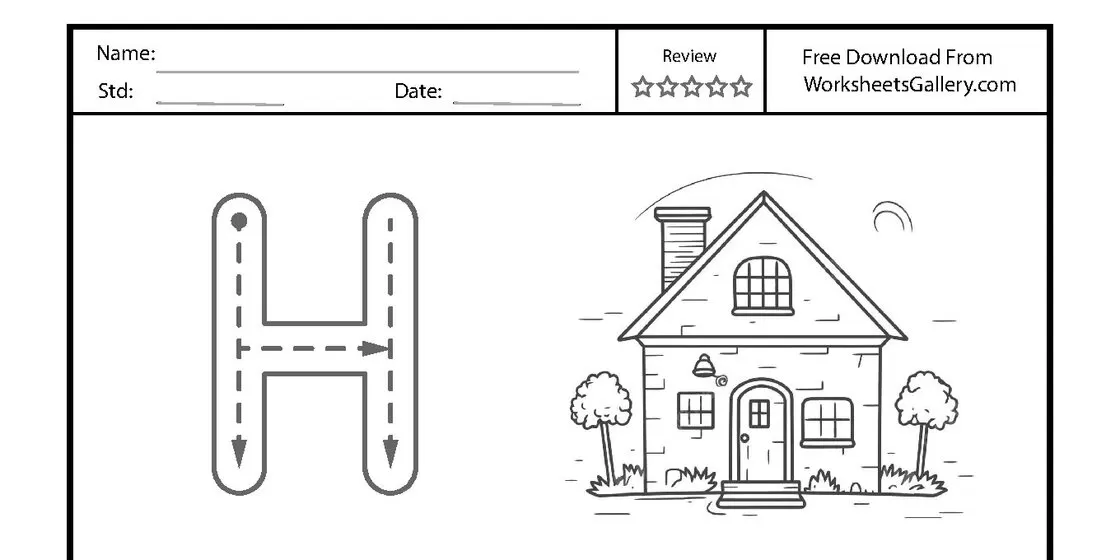
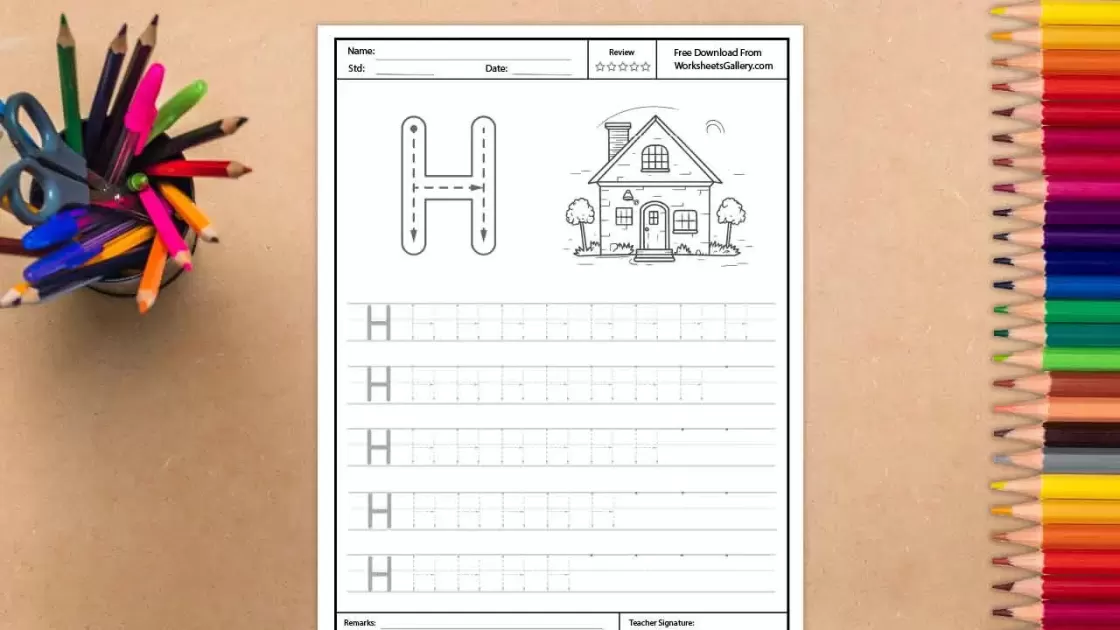
This isn't just another tracing sheet; it's a carefully crafted tool designed to make learning enjoyable and effective. The visual appeal, combined with the structured practice, ensures that children remain engaged while developing critical skills. The worksheet presents the uppercase 'H' in a clear, prominent manner, making it easy for little eyes to focus. The dotted lines serve as a gentle guide, allowing children to trace the letter with a crayon, pencil, or marker, building confidence with each stroke. The inclusion of directional arrows further aids in teaching the correct way to form the letter, setting a strong foundation for handwriting.
Key Features at a Glance:
- Clear, large uppercase Letter H for easy recognition.
- Dotted lines provide a visual guide for tracing.
- Directional arrows indicate the correct stroke order.
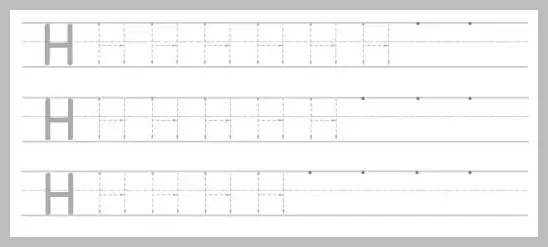
- Ample space for repeated practice.
- Engaging design elements to maintain interest.
The Educational Advantage: Skill Development
Engaging with this Letter H tracing worksheet offers a multitude of developmental benefits for young children. It's a multi-faceted activity that supports cognitive, motor, and even language development. As children trace, they are not just making marks on paper; they are actively building essential skills that will serve them throughout their academic lives.
Fine Motor Skills Enhancement
The act of holding a writing utensil and guiding it along dotted lines is a fundamental exercise for developing fine motor control. This worksheet specifically targets the small muscles in a child's hands, fingers, and wrists. Precise movements are required to stay within the lines, which strengthens these muscles and improves hand-eye coordination. This improved dexterity is crucial not only for writing but also for other daily tasks like buttoning clothes, using utensils, and manipulating small objects. Consistent practice with Letter H tracing directly contributes to this vital skill development.
Letter Recognition and Formation
Repeatedly tracing the uppercase 'H' helps children internalize its shape and structure. They learn to recognize the letter visually and understand how its components come together. This direct experience with forming the letter solidifies its identity in their minds, making it easier to identify the letter when they see it in books or other print materials. This early exposure to letter formation is a significant step towards reading readiness.
Cognitive Skills Boost
Tracing involves following instructions (the dotted lines and arrows) and maintaining focus. This process enhances a child's concentration span and their ability to follow sequential steps. Understanding that specific movements create a specific shape also develops their problem-solving skills and spatial reasoning. They learn to connect cause and effect – their hand movements result in the formation of the letter 'H'.
Language and Vocabulary Development
While primarily a motor skill activity, this worksheet can also be a springboard for language development. Discussing the letter 'H' and words that start with it (like 'house,' 'hat,' 'happy,' 'horse') can expand vocabulary. The worksheet itself features a charming illustration of a house, providing a natural conversation starter. You can ask your child, "What is this? It's a house! What sound does 'house' start with?" This integration of visual and auditory learning reinforces the connection between spoken and written language.
Making Learning Fun: Extended Activities and Play
To maximize the learning potential and keep children excited about practicing the Letter H, consider incorporating these engaging activities:
Creative House Play
The worksheet includes a delightful illustration of a house. Use this as a prompt for imaginative play. Ask your child to describe the house, who lives there, or what they would like to do if they lived in that house. You could even build a small fort at home using blankets and chairs, calling it your "Happy House" to reinforce the 'H' sound and concept.
Letter Hunt Adventure
After completing the tracing, go on a "Letter H Hunt" around the house or classroom. Look for objects that start with the letter H (e.g., hat, hanger, hammer – with supervision, of course!) or simply look for the letter H in books, on signs, or on packaging. This makes letter recognition a fun, interactive game.
Sensory Bin Exploration
Create a sensory bin filled with rice, beans, or sand. Hide letter 'H' cutouts (made from cardstock or foam) within the bin. Have your child dig through the bin to find the letters and then trace them with their finger or a stick. This multi-sensory approach can be very effective for some learners.
Storytelling with 'H'
Make up a short story featuring a character whose name starts with H, like "Harry the Happy Hippo" or "Henrietta the Helpful Hen." As you tell the story, emphasize the 'H' sound and encourage your child to repeat it. You can even draw simple pictures of the characters and objects from the story, incorporating the letter H.
Building with Blocks
Use building blocks to construct the letter H. If you have alphabet blocks, find the 'H' block. If not, use regular blocks to create the shape. This kinesthetic activity helps children understand the physical structure of the letter in a different medium. Discuss how the vertical and horizontal lines form the letter.
Practical Application: Home and Classroom Use
This versatile worksheet can be seamlessly integrated into various learning environments. Whether you're a parent looking to supplement early learning at home or a teacher planning classroom activities, the approach is straightforward.
At Home: A Gentle Introduction
For parents, this worksheet is an ideal tool for quiet, focused learning time. Set aside 10-15 minutes daily or a few times a week. Ensure your child has a comfortable space, good lighting, and age-appropriate writing tools (chunky crayons or pencils are great for little hands). Start by showing your child how to hold the writing tool and trace the letter, emphasizing the direction of the strokes. Celebrate each completed letter with praise and encouragement. You can make it a part of a morning routine or an afternoon activity. Consider laminating the worksheet to allow for repeated tracing with dry-erase markers, extending its usability and reducing paper waste. This is a fantastic way to introduce the concept of early literacy skills without pressure.
In the Classroom: A Foundational Exercise
Teachers can use this worksheet as an introduction to the letter H in their alphabet curriculum. It's perfect for small group activities or as a center station. After introducing the letter H and its sound, provide the worksheet for independent practice. Integrate it with other 'H' themed activities, such as reading books about houses or animals starting with H, singing songs that feature the 'H' sound, or creating a classroom display of children's own letter H drawings. The clear layout makes it easy for young students to follow, and the visual cue of the house can tie into broader classroom themes.
Common Pitfalls and How to Overcome Them
While tracing is generally straightforward, some common challenges may arise. Being aware of these can help you guide your child more effectively:
- Incorrect Grip: Children might hold the writing tool too tightly or with an immature grip. Gently guide their fingers into a more relaxed, functional grip (like a tripod grip). Don't force it; consistent, positive modeling is key.
- Going Off the Lines: It's perfectly normal for beginners to stray outside the dotted lines. Avoid criticism. Instead, offer gentle verbal cues like, "Let's try to stay on the path" or "See how this line goes here?" Positive reinforcement for effort is more beneficial than focusing on perfection.
- Incorrect Stroke Direction: Children might not follow the directional arrows. Demonstrate the correct strokes slowly and clearly. You can even trace the letter in the air with them or use your finger on their back to guide the movement.
- Lack of Engagement: If a child loses interest, it might be time for a break or a change of pace. The worksheet is a tool, not a test. Short, frequent practice sessions are often more effective than long, frustrating ones. Try one of the extended activities to re-engage them.
Fostering Consistent Practice
Encouraging regular practice is crucial for skill mastery. Here are some strategies:
- Make it a Routine: Incorporate tracing into a daily or weekly schedule so children know what to expect.
- Positive Reinforcement: Offer specific praise for effort and progress, not just perfect results. Stickers, verbal encouragement, or a small reward chart can be motivating.
- Variety is Key: Alternate between different writing tools (crayons, markers, pencils) and surfaces (paper, whiteboard, sand tray) to keep things interesting.
- Connect to Real Life: Point out the letter H in everyday environments – on signs, in books, on food packaging. This shows children the practical relevance of their learning.
- Celebrate Milestones: Acknowledge when they successfully trace a letter independently or show improvement in their grip or control.
Download Your Free Letter H Tracing Worksheet
Ready to help your child conquer the mighty Letter H? Downloading this worksheet is simple and ensures a high-quality learning experience. Simply click the download button below. You'll receive a printable PDF file, completely free of charge, with no watermarks or distracting advertisements. This allows for a clean, focused learning session for your child. Print as many copies as you need to ensure plenty of practice opportunities. It’s the perfect resource to kickstart or supplement your child’s journey into the world of letters and writing. For more resources on developing fine motor skills, explore our collection.
The Joy of Learning 'H'
Children often find tracing activities enjoyable because they offer a sense of accomplishment. The clear goal – to complete the letter – and the tangible result provide immediate satisfaction. The visual cues, like the dotted lines and the friendly house illustration, make the task less daunting and more like a game. When learning is presented in a playful and supportive manner, children are naturally motivated to participate and learn. This worksheet, with its focus on the mighty Letter H, is designed to harness that natural curiosity and turn a fundamental skill into a rewarding experience.
Popular Worksheets
Printable resources families and teachers are downloading now.
 Free
Free
 Free
Free
 Free
Free
 Free
Free