
Master the Terrific Letter G Tracing: 5 Essential Steps to Early Writing!

Embark on the Journey of the Letter G!
Welcome to a wonderfully engaging experience designed to introduce your child to the fascinating world of letters. This printable worksheet focuses on the uppercase 'G', a foundational element in early literacy. Through guided practice, children will develop the essential skills needed to form this letter confidently. Our goal is to make learning fun, intuitive, and incredibly rewarding, setting a strong base for future academic success. Get ready to see your child's fine motor skills and letter recognition blossom as they master the Letter G Tracing!
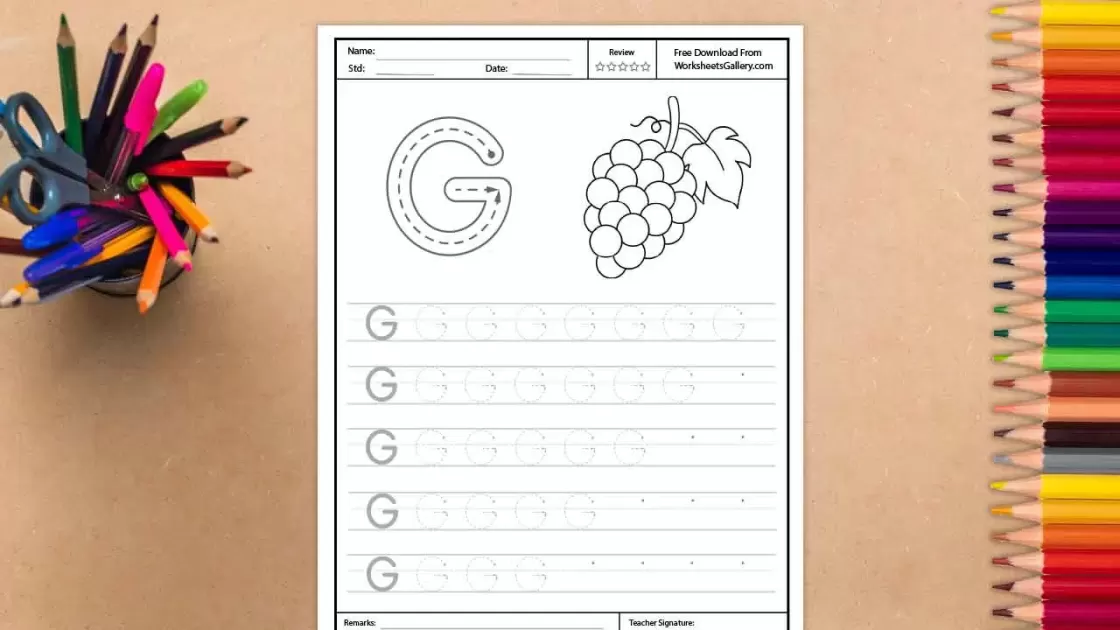
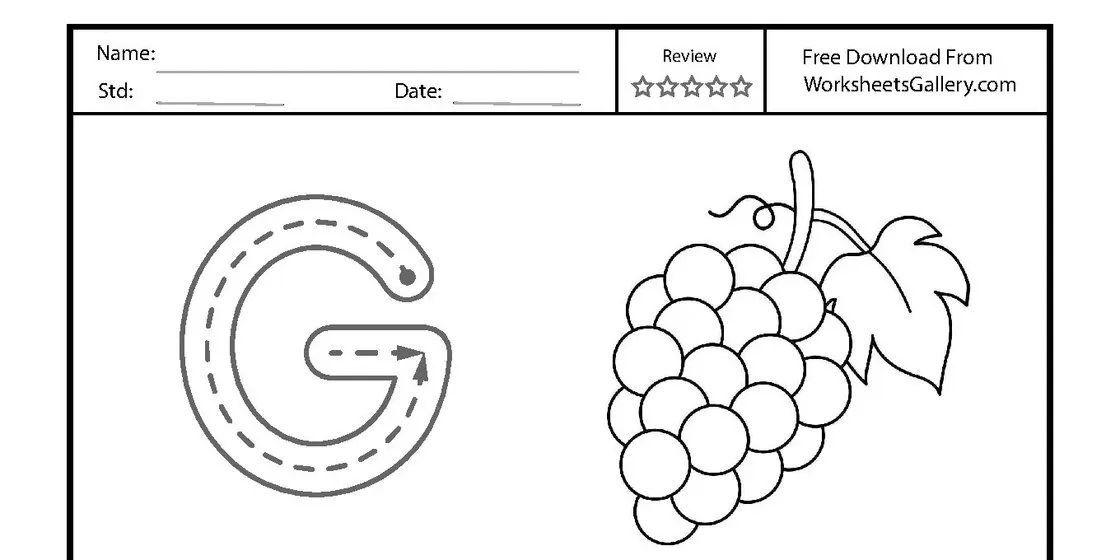
This specific worksheet provides a clear path for learning, featuring the letter 'G' in a large, traceable format. Accompanying the letter are delightful grapes, adding a visual and thematic element that can spark curiosity and make the learning process more enjoyable. The structured layout ensures that children can follow along easily, building confidence with each stroke.
Why This Letter G Tracing Worksheet Shines
- Clear Visuals: Large, bold 'G's with dotted lines offer a straightforward tracing path.
- Directional Guidance: Arrows indicate the correct stroke order, crucial for proper letter formation.
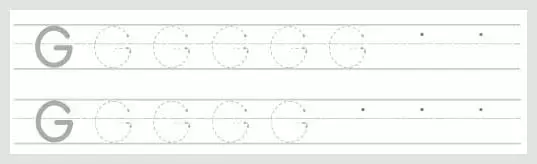
- Repetitive Practice: Multiple lines of tracing allow for ample repetition and skill reinforcement.
- Engaging Theme: The inclusion of grapes makes the activity visually appealing and memorable.
- Printable Convenience: Easily downloadable and printable for immediate use at home or in the classroom.
Key Learning Benefits Explored
Engaging with this Letter G Tracing worksheet offers a multitude of benefits that extend far beyond simply forming a letter:
- Enhanced Fine Motor Skills: Holding a pencil and tracing lines refines the small muscles in the hands and fingers, essential for handwriting.
- Improved Hand-Eye Coordination: Following the dotted lines with a writing utensil directly links visual perception with physical action.
- Letter Recognition: Repeated exposure to the uppercase 'G' helps children identify and remember its shape.
- Pre-Writing Skills Development: This activity is a vital precursor to independent writing, building muscle memory for letter strokes.
- Concentration and Focus: Completing the tracing exercises requires sustained attention, boosting a child's ability to focus.
- Sense of Accomplishment: Successfully tracing letters provides a tangible sense of achievement, boosting confidence.
Bringing the Letter G to Life: Home & Classroom Scenarios
Home Learning Adventures
Imagine a cozy afternoon at home. Your child, perhaps around 4 or 5 years old, is seated at a table with this Letter G tracing worksheet. You can sit with them, offering gentle guidance. Start by pointing out the letter 'G' and the grapes. Say, "Look, this is the letter G! It looks like a circle with a little line inside. Can you trace it with your finger first?" Then, encourage them to use a crayon or pencil. Celebrate each successful trace with praise. For instance, if they struggle with the curve, you can say, "You're doing great! Let's try to make that curve a little smoother, like the round grapes." This supportive approach makes learning feel like a game, not a chore. You can also extend this by having a snack of grapes after completing the page, reinforcing the connection.
Classroom Implementation
In a preschool or kindergarten classroom, this worksheet serves as an excellent small-group activity or individual practice. A teacher might introduce the letter 'G' during a circle time lesson, discussing words that start with 'G' like 'grapes,' 'green,' or 'go.' Then, children can take this worksheet back to their desks. Teachers can circulate, offering one-on-one support. For children who find it challenging, providing thicker crayons or adapted grips can help. For those who excel, you might challenge them to draw their own grapes next to their perfectly traced 'G's or write words starting with 'G' on the back. This worksheet is also perfect for a literacy center, where children can revisit it independently, building confidence and familiarity with the letter.
Developing Essential Skills with Every Stroke
Cognitive Skill Development
The act of tracing involves more than just motor control; it engages cognitive processes. Children learn to recognize patterns, follow instructions (the dotted lines and arrows), and understand the concept of forming a specific shape. This worksheet specifically targets the visual discrimination needed to differentiate 'G' from other letters, a key component of early reading and writing readiness. The repetition aids in memory consolidation, helping the brain store the visual information of the letter 'G'.
Motor Skill Refinement
Fine motor skills are paramount for early childhood development, and tracing is a prime activity for honing them. This worksheet demands precise movements: the controlled grip on a writing tool, the steady hand to follow the dotted lines, and the ability to make curved and straight strokes. These actions build the dexterity required for tasks like buttoning clothes, using scissors, and, of course, writing letters and words legibly. The worksheet's clear structure provides a scaffold for developing these crucial physical abilities.
Language and Literacy Growth
While primarily a motor skill activity, this Letter G Tracing worksheet significantly supports language and literacy. By focusing on the uppercase 'G', it introduces children to the building blocks of written language. Discussing the image of grapes can expand vocabulary and encourage descriptive language. As children become more proficient, they can begin to associate the letter 'G' with its sound, paving the way for phonics. This early exposure to letter forms is fundamental for developing reading comprehension and writing fluency later on. Explore more alphabet resources on our Alphabet Worksheets page.
Making 'G' Great: Extended Activities and Fun
To deepen the learning experience and keep children engaged, consider these extended activities:
Grape-tastic Storytelling
Create a simple story about a character who loves grapes. Perhaps a little girl named Grace who goes to the grocery store to buy green grapes. Encourage your child to add 'G' words to the story. You can even act out the story, with your child being 'Grace' and pretending to eat grapes.
Sensory Bin 'G' Hunt
Fill a bin with dried beans, rice, or shredded paper. Hide magnetic letters, focusing on 'G's, or small grape-shaped objects. Have your child dig through the bin to find all the 'G's or grape items. This adds a tactile element to letter recognition.
'G' Collage Craft
Provide children with magazines and ask them to cut out pictures of things that start with the letter 'G' (grapes, grass, girl, gift). They can then glue these onto a separate sheet of paper, creating a 'G' collage. This reinforces the sound and concept of the letter.
Playdough 'G' Formation
Use playdough to form the letter 'G'. This activity is excellent for developing fine motor strength and spatial awareness. Encourage children to roll out snakes of playdough and then shape them into the uppercase 'G'.
Why Children Adore Tracing 'G'
Children are naturally drawn to activities that offer a sense of control and accomplishment. Tracing the letter 'G' provides a clear, achievable goal. The dotted lines act as a friendly guide, reducing frustration and building confidence with each successful stroke. The visual appeal of the large letter and the associated image (grapes) also capture their attention. Furthermore, the tactile experience of holding a pencil and making marks on paper is inherently satisfying for young learners. It's a tangible way for them to interact with the world and express themselves, making the process of learning the Letter G Tracing an enjoyable adventure.
Navigating Common Challenges
It's common for young children to face a few hurdles when learning to trace. Some might grip their pencil too tightly, leading to hand fatigue. Others might struggle with the curved portion of the 'G', often making it too open or too closed. Inconsistent pressure or shaky lines are also frequent. A child might also have difficulty following the directional arrows, leading to an incorrect stroke order. It's important to remember that these are normal parts of the learning process.
Encouraging Consistent Practice
Regular, short practice sessions are far more effective than infrequent long ones. Make tracing a part of your daily routine, even if it's just for 5-10 minutes. Positive reinforcement is key; praise effort and progress, not just perfection. Display completed worksheets proudly to boost their confidence. You can also gamify the process by setting small goals, like tracing three 'G's perfectly to earn a sticker. For more handwriting resources, visit our Handwriting Practice section.
Age Appropriateness
This worksheet is ideally suited for children aged 4-6 years old. At this age, most children have developed the necessary fine motor skills and cognitive readiness to engage with tracing activities. Younger children (3-4) might benefit from pre-tracing activities like drawing lines and shapes, or using larger manipulatives before moving to pencil and paper.
Download Your Free Letter G Tracing Worksheet
Ready to help your child master the letter 'G'? Downloading this worksheet is simple and completely free. You'll receive a high-quality, printable PDF file, free from watermarks and advertisements, ensuring a clean and focused learning experience. Simply click the download button below to get started on this exciting educational journey. It’s a fantastic way to supplement learning at home or in the classroom, providing valuable practice that builds essential skills. For additional alphabet tracing sheets, check out our Alphabet Tracing Sheets collection.
Popular Worksheets
Printable resources families and teachers are downloading now.
 Free
Free
 Free
Free
 Free
Free
 Free
Free