
Ultimate Letter S Tracing: 5 Simple Steps for Super Handwriting!

Starting Strong with Letter S Tracing
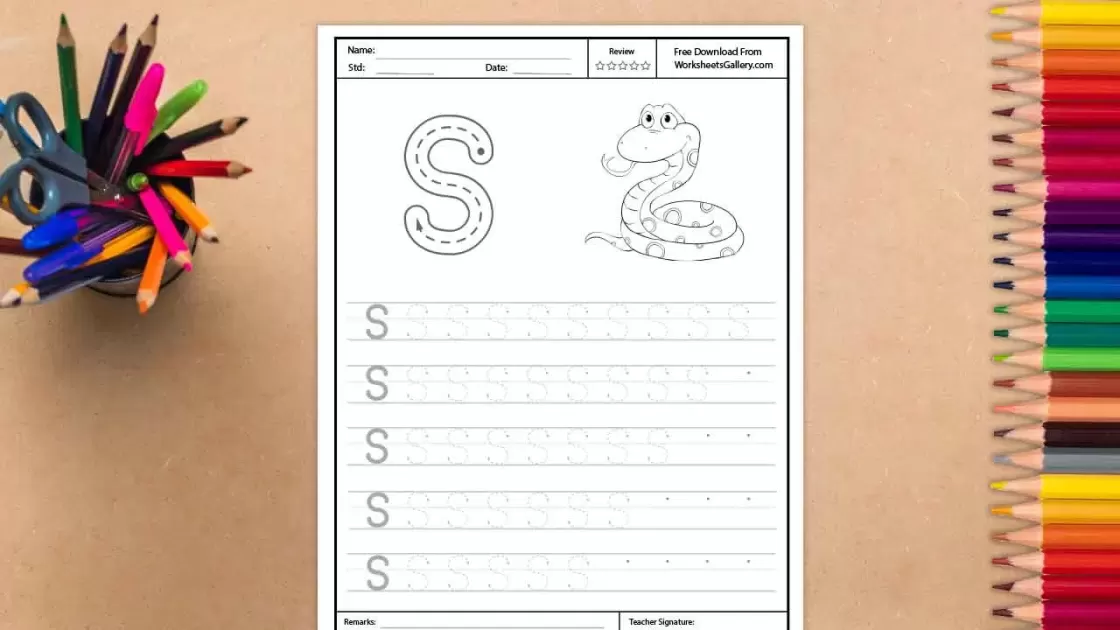
Introducing children to the alphabet is a foundational step in their educational journey. The uppercase Letter S, with its flowing curves, often presents a unique challenge for young hands. This free printable worksheet is specifically designed to make Letter S Tracing an accessible and enjoyable activity for preschoolers and kindergarteners. It provides a structured approach to learning letter formation, combining visual cues with repetitive practice.
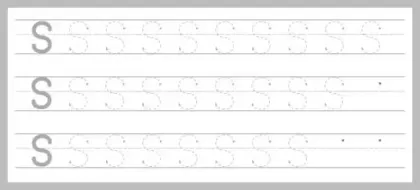
The worksheet features a large, guided Letter S with clear directional arrows, helping children understand the correct stroke order. Following this initial guide, multiple rows of dotted 'S' characters allow for extensive practice, reinforcing muscle memory and improving hand-eye coordination. The friendly snake illustration adds a playful element, making the learning process less daunting and more engaging for young minds.
Key Benefits of Consistent Letter S Practice
Regular engagement with tracing activities like this one offers a wide array of developmental advantages for early learners. Beyond simply recognizing the letter 'S', children are building a robust skill set essential for future academic success.
- Enhances Fine Motor Skills: The precise movements required for tracing strengthen the small muscles in the hand and fingers, crucial for holding a pencil correctly and controlling its movement. This is a direct benefit of repeated Letter S Tracing.
- Improves Hand-Eye Coordination: Children learn to synchronize what they see with what their hands do, following the dotted lines accurately. This coordination is vital for writing, drawing, and many daily tasks.
- Develops Letter Recognition: Repeated exposure to the shape of the 'S' helps children commit it to memory, making it easier to identify in books and other written materials.
- Builds Pre-Writing Confidence: Successfully tracing letters gives children a sense of accomplishment, encouraging them to tackle more complex writing tasks in the future.
- Fosters Concentration and Focus: Tracing requires sustained attention, helping children develop their ability to concentrate on a single task for an extended period.
- Introduces Proper Letter Formation: The guided arrows ensure that children learn the correct stroke order from the beginning, preventing the development of incorrect habits that are harder to break later.
These benefits collectively lay a strong foundation for literacy, preparing children not just for writing, but for a broader engagement with language and learning.
How to Effectively Use This Worksheet at Home
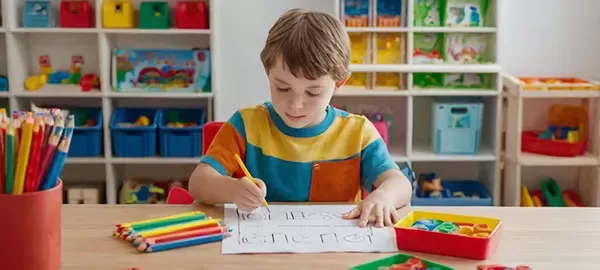
This worksheet is a versatile tool for parents looking to support their child's early literacy development. Here’s how you can integrate it into your home routine:
Creating a Positive Learning Environment
Find a quiet, well-lit space where your child can sit comfortably without distractions. Ensure they have a pencil that is easy to grip. Before starting, talk about the letter 'S' and the friendly snake. Ask them, "What sound does 'S' make?" and encourage them to make the 'ssss' sound like a snake. This connection makes the learning more memorable.
Step-by-Step Tracing Guidance
- Observe the Large Letter: Point to the large 'S' at the top with the dashed lines and arrows. Trace it with your finger first, explaining the direction of each stroke. "See how the snake curves? We start at the top, curve around, and then curve back the other way!"
- Guided Practice: Have your child trace the large 'S' with their finger, then with a pencil. Emphasize following the arrows. This initial practice with the large format is crucial for understanding the letter's structure before moving to smaller versions.
- Row by Row Progression: Move to the rows of dotted 'S' characters. Encourage them to trace each one carefully. If they struggle, gently guide their hand. It's perfectly fine if the first few aren't perfect. The goal is consistent effort.
- Independent Practice: As they gain confidence, let them try tracing the letters independently. Offer praise for effort and completion, rather than just perfection.
- Connect to Words: After tracing, brainstorm words that start with 'S', like "sun," "star," "slide," or "snake." This reinforces phonological awareness and expands their vocabulary.
Remember, short, frequent sessions are more effective than long, tiring ones. Five to ten minutes of focused Letter S Tracing can make a big difference.
Classroom Integration Strategies for Educators
Teachers can seamlessly incorporate this worksheet into various classroom activities, supporting both individual and group learning goals. It’s an excellent resource for literacy centers, morning work, or small group instruction.
Literacy Center Activity
Designate a literacy center with printed copies of the worksheet, pencils, and perhaps some green or brown crayons for coloring the snake. Provide clear instructions for students to complete the Letter S Tracing activity. You might also include a basket of 'S' objects (e.g., a toy snake, a small spoon, a plastic star) for tactile exploration.
Small Group Instruction
Work with a small group of students who need extra support with letter formation. Use a large whiteboard or chart paper to demonstrate the 'S' stroke order before distributing the worksheets. Provide individualized feedback and encouragement as they trace. This direct interaction helps correct common mistakes early on.
Morning Work or Transition Task
This worksheet serves as an ideal morning work activity, allowing students to settle in and focus before the main lessons begin. It can also be used as a quick transition task between activities, keeping students engaged and productive. Consider having students color the snake after tracing to add an artistic element.
Developing Essential Skills Through Tracing
Tracing activities are far more than just busy work; they are fundamental for holistic child development. This specific Letter S worksheet targets several key areas:
- Cognitive Development: Children engage in problem-solving as they interpret the directional arrows and plan their hand movements. They also develop visual discrimination by recognizing the distinct curves of the 'S'.
- Motor Skill Development: Beyond fine motor skills, gross motor skills are indirectly supported as children learn to maintain proper posture and arm position while writing. The controlled hand movements directly contribute to developing dexterity.
- Language Skill Development: Discussing the letter 'S' and words that start with it enhances vocabulary and phonological awareness. The snake illustration provides a clear visual cue for the 'S' sound.
- Sensory Integration: The tactile experience of holding a pencil and making marks on paper, combined with visual tracking, helps integrate different sensory inputs, which is crucial for learning.
These integrated learning experiences ensure that children are not just memorizing a letter, but truly understanding its form and function.
Why Children Enjoy This Letter S Tracing Activity
Children are naturally drawn to activities that are both engaging and achievable. This worksheet hits both marks, making Letter S Tracing a positive experience.
- Friendly Visuals: The cartoon snake is appealing and provides a fun context for the letter 'S'. Connecting letters to familiar objects or animals makes them less abstract.
- Clear Guidance: The large, guided 'S' and directional arrows reduce frustration. Children feel supported and know exactly what to do, leading to a higher success rate.
- Sense of Accomplishment: Completing a row of traced letters, especially the first perfect 'S', provides a tangible sense of achievement. This positive reinforcement encourages continued practice.
- Repetitive but Varied: While tracing is repetitive, the different sizes and numbers of letters across the rows offer a slight variation that keeps interest. The coloring option for the snake also adds variety.
These elements combine to create a low-pressure, high-reward learning environment where children can thrive.
Common Mistakes and How to Correct Them
Even with clear guides, young learners might encounter a few hurdles when practicing Letter S Tracing. Being aware of these common issues can help parents and teachers provide targeted support.
| Mistake | Correction Strategy |
|---|---|
| Incorrect Stroke Order | Re-demonstrate the large 'S' with arrows. Use verbal cues like "start at the top, curve left, then curve right." Guide their hand if necessary. |
| Lifting the Pencil Too Often | Explain that the 'S' is often a continuous stroke. Encourage slow, deliberate tracing. Practice drawing 'S' shapes in the air with a finger. |
| Uneven Pressure or Shaky Lines | Ensure proper pencil grip. Practice pre-writing lines and curves on a separate sheet to build hand strength. Praise smooth lines. |
| Not Staying on the Dotted Lines | Remind them to "stay on the road." Use a finger to trace the path before they use a pencil. Make it a game to stay perfectly on the dots. |
Patience and gentle correction are key. Celebrate small improvements to keep motivation high.
Encouraging Regular Practice and Engagement
Making learning fun and consistent is vital. Here are some ideas to encourage children to practice their Letter S Tracing regularly:
- Themed Days: Dedicate a "Snake Day" or "S-Day" where everything revolves around the letter 'S'. Eat snacks that start with 'S' (strawberries, string cheese), wear something striped, and watch videos about snakes.
- Sticker Rewards: Use a sticker chart. Each time they complete a worksheet, they get a sticker. After a certain number of stickers, they earn a small reward, like extra playtime.
- Creative Coloring: After tracing, encourage them to color the snake illustration. This adds an artistic element and makes the activity feel less like a chore.
- "S" Scavenger Hunt: Hide objects around the room that start with the letter 'S' (e.g., a small stone, a toy spider, a sock). As they find each item, have them say its name and the 'S' sound.
- Storytelling with 'S': Create a simple story together where many words start with 'S'. "Sid the snake saw a big, shiny sun..." This reinforces the sound and letter in context.
These playful approaches help build a positive association with learning and writing.
Extended Activities for Deeper Learning
Once your child is comfortable with Letter S Tracing, you can expand their learning with these engaging activities:
Sensory Letter Formation
Have your child form the letter 'S' using various sensory materials. They can trace it in a tray of sand, salt, or rice. Alternatively, use playdough to roll out 'snakes' and shape them into an 'S'. This tactile experience reinforces the letter's form in a multi-sensory way.
"S" Word Wall
Create a dedicated space on a wall or bulletin board for words starting with 'S'. As you encounter 'S' words in books or daily conversations, write them down and add them to the wall. Encourage your child to draw pictures next to the words. This visual aid helps build a strong vocabulary and reinforces letter-sound correspondence.
Letter S Craft Project
Engage in a craft project where the letter 'S' is the main theme. For example, help your child cut out a large 'S' shape from construction paper and decorate it to look like a snake, adding scales, eyes, and a tongue. This combines fine motor skills with creative expression. You can find more alphabet craft ideas at our alphabet crafts section.
Interactive Story Time
Read books that prominently feature words starting with 'S'. Pause and point out the 'S' whenever you see it. Encourage your child to identify the letter and make its sound. For example, books about "snakes," "stars," or "sunflowers" would be perfect. This integrates literacy with enjoyable reading experiences.
Tracing with Different Tools
Vary the tools used for tracing. Besides pencils, try crayons, markers, or even washable paint with a brush. This keeps the activity fresh and helps develop different types of grip and control. For more tracing practice with other letters, visit our collection of tracing worksheets.
These extensions ensure that learning about the letter 'S' remains dynamic and exciting, catering to various learning styles.
Suitable Age Group for This Worksheet
This Letter S tracing worksheet is ideally suited for children aged 3-6 years old. This age range typically includes preschoolers and early kindergarteners who are developing their pre-writing skills, letter recognition, and fine motor control. The clear visual guides and repetitive practice are perfectly tailored to their developmental stage.
For younger children (3-4 years), focus on tracing the large letter and the first few rows with plenty of hand-over-hand guidance. For older children (5-6 years), encourage independent tracing and challenge them to write the letter 'S' on their own after completing the worksheet. This flexibility makes the resource valuable across a key developmental window.
Download Your Free Letter S Tracing Worksheet
Ready to help your child master the letter 'S'? This high-quality worksheet is available for instant download. Simply click the download button, and you'll receive a clean, printable PDF file. There are no watermarks or distracting advertisements, ensuring a pure learning experience.
Print as many copies as you need for personal or classroom use. Consistent practice is key, so don't hesitate to print multiple sheets for repeated tracing sessions. For more free educational resources, explore our collection of free printable worksheets.
Visualizing the Tracing Process
To better understand the detailed tracing paths, observe the close-up of the worksheet. Notice the clear dotted lines and how they guide the pencil from start to finish for the uppercase 'S'.
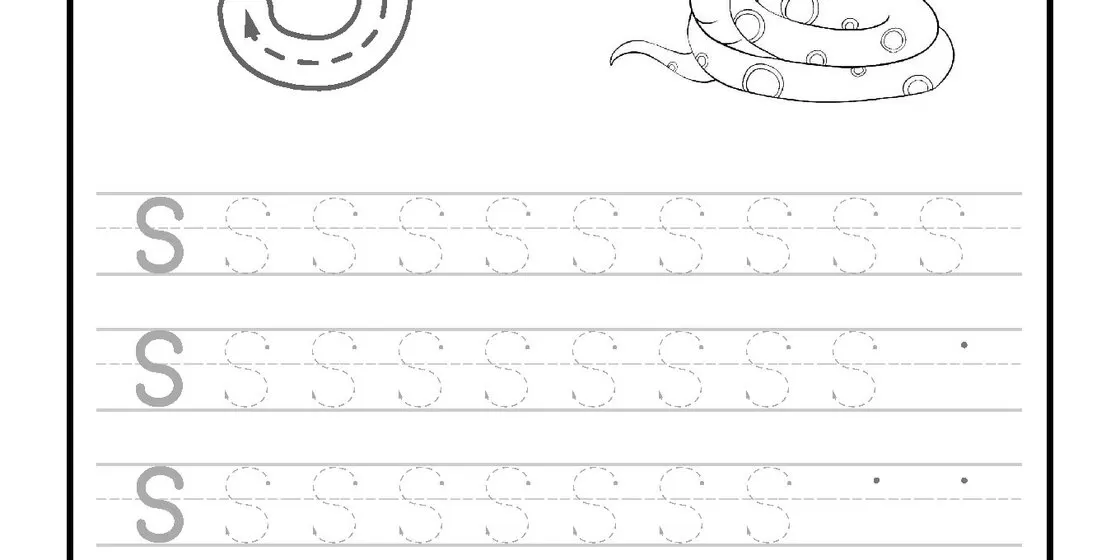
This section of the worksheet clearly shows the progression from the large, guided 'S' to the smaller practice rows. The consistent dotted line pattern provides a predictable and supportive structure for young learners as they build their handwriting skills for the letter 'S'.
Popular Worksheets
Printable resources families and teachers are downloading now.
 Free
Free
 Free
Free
 Free
Free
 Paid
Paid