
9 Radical Letter R Tracing Tips for Amazing Handwriting!

Helping a child master the art of writing is a journey filled with small victories and significant milestones. This specific printable focuses on Letter R tracing, providing a structured yet delightful way for preschoolers to grasp the complex curves and straight lines of the uppercase R. By combining visual cues with repetitive motor practice, children can move from simple scribbles to intentional letter formation. This guide explores the educational value of the worksheet and offers practical advice for parents and teachers to maximize learning outcomes at home or in the classroom.
The Core Concepts of Letter R Tracing
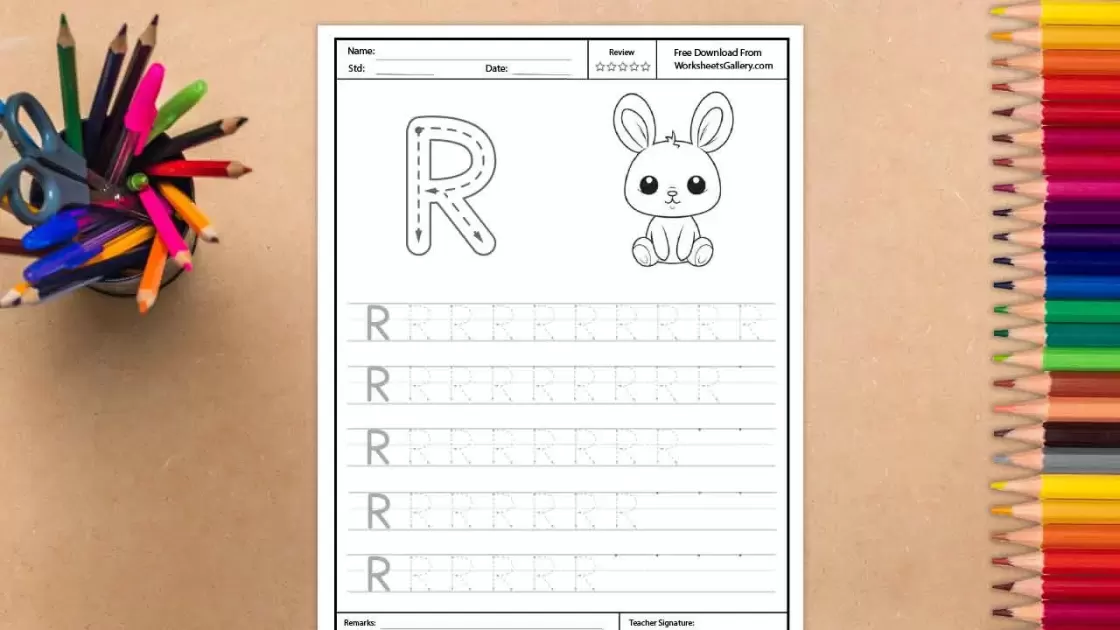
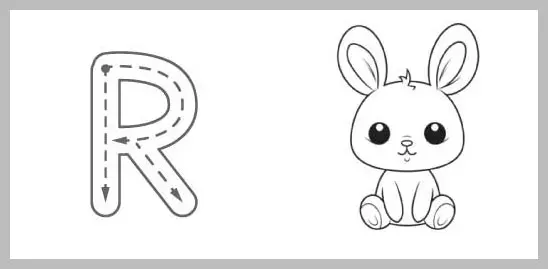
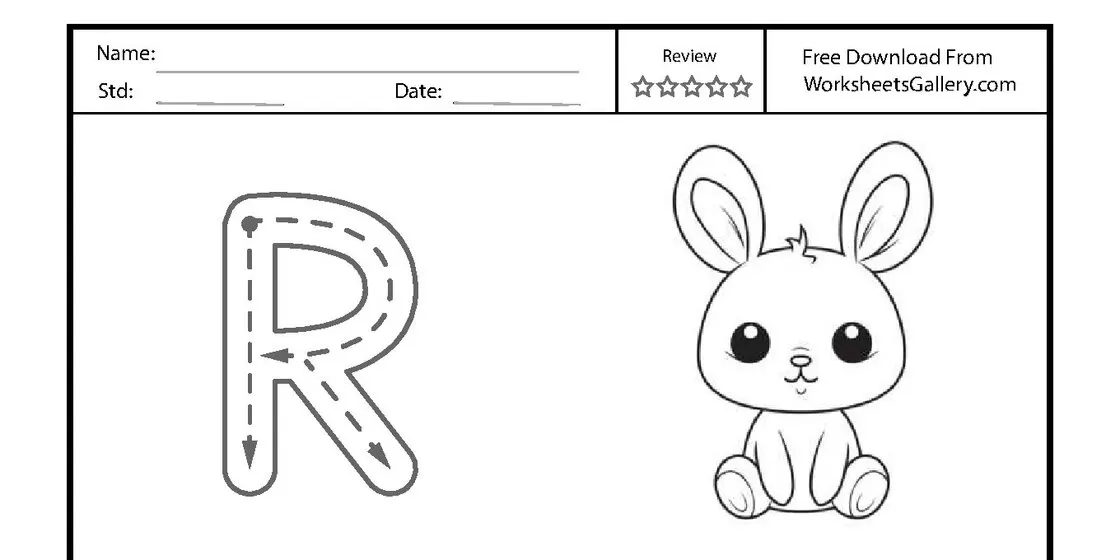
Writing the letter R is often a challenging task for beginners because it requires three distinct movements: a vertical drop, a curved loop, and a slanted kick. This worksheet breaks down the process visually. At the top, a large demonstration letter features dashed lines and directional arrows. These arrows act as a roadmap, showing the child exactly where to start and which direction to pull their pencil. Alongside the large guide is a cute, wide-eyed bunny, reinforcing the phonics connection between the letter and its sound. Letter R tracing becomes more intuitive when children can associate the shape with a familiar character like a rabbit.
"Consistency in directional flow is the secret to fluent handwriting. By following the arrows, children build the correct muscle memory from day one."
Seven Essential Benefits of Letter R Tracing Practice
- 1
Fine Motor Refinement: The act of keeping a pencil on the dashed lines strengthens the tiny muscles in the hand and wrist, which is vital for all future writing tasks.
- 2
Spatial Awareness: Children learn to manage the "top, middle, and bottom" of the writing grid, understanding how letters occupy a specific 2D space.
- 3
Alphabet Recognition: Repeatedly engaging with the uppercase R helps children distinguish it from similar-looking letters like P or B.
- 4
Directional Flow: Following the internal arrows of the Letter R tracing guide prevents the development of "bottom-up" writing habits which can slow down writing speed later.
- 5
Cognitive Focus: Concentrating on a single row of letters improves a child's attention span and ability to complete a multi-step task.
- 6
Phonemic Awareness: The bunny illustration serves as a visual anchor, helping the child remember the /r/ sound as they work through the exercises.
- 7
Confidence Building: Finishing a full page of Letter R tracing gives a child a sense of pride and a tangible record of their hard work.
Practical Scenarios for the Home and Classroom
In a classroom setting, a teacher might use this worksheet as a quiet morning activity. After a short lesson on the sound of R, students receive their copies. The teacher can walk around the room, offering gentle corrections on pencil grip. For instance, if a student is holding the pencil too tightly, the teacher might suggest they hold it like a little bird that they don't want to squish. This social environment encourages students to observe their peers and strive for neatness in their own Letter R tracing work.
At home, a parent might set up a "writing station" at the kitchen table while dinner is being prepared. This creates a low-pressure environment where the child can practice without feeling rushed. A parent might say, "Look at this bunny! He needs us to help him build the letter R. Can you show me how we start at the top?" This interactive approach turns a standard worksheet into a collaborative game, making Letter R tracing something the child looks forward to rather than a chore.
Skill Development: Motor, Cognitive, and Language
The developmental impact of Letter R tracing spans multiple domains. Motorically, it involves "crossing the midline"—the ability to move the hand across the center of the body—which is essential for fluent writing. Cognitively, the child must plan the three strokes of the R before executing them, which builds executive function. From a language perspective, discussing the bunny and finding other "R" words (like red, run, or rain) during the activity enriches the child's vocabulary and phonological awareness.
Avoiding Common Mistakes in Letter R Tracing
When children first begin Letter R tracing, they often make a few predictable errors. One common mistake is neglecting the "slanting leg" of the R, making it look more like a capital P. Another is starting from the bottom and drawing the vertical line upward. It is important to gently guide them back to the starting dot shown on the large guide. If you notice a child struggling with the curve, encourage them to trace the shape with their finger first. Finger-tracing provides sensory feedback that helps the brain map the movement before the complexity of a pencil is introduced.
Encouragement Ideas
- Use a star sticker for each completed row.
- Let them use a "special" glitter pen for the final row.
- Hang the finished work on the refrigerator for family praise.
- Let the child color the bunny as a reward for finishing the tracing.
Extended Activities
- Hunt for the letter R on cereal boxes and signs.
- Shape the letter R out of playdough or pipe cleaners.
- Draw a "Racetrack" in the shape of an R for toy cars.
- Read books like "The Rabbit Listened" to reinforce the R sound.
Why Children Love This Rabbit-Themed Worksheet
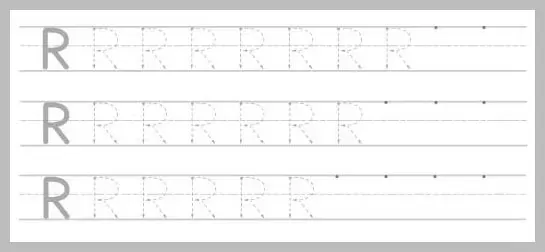
Children are naturally drawn to characters, and the presence of the bunny makes the task feel more like a story than a test. The structured rows provide a clear beginning and end, which is satisfying for young learners who thrive on predictability. As they progress through the Letter R tracing rows, the number of letters slightly decreases or stays consistent, giving them the feeling of a manageable challenge. They also enjoy the tactile sensation of tracing, especially if they are allowed to use different colors for different rows, turning their handwriting practice into a rainbow of letters.
Step-by-Step Instructions for Effective Practice
- Introduce the Sound: Start by pointing to the bunny and saying "R is for Rabbit. /r/, /r/, rabbit."
- Air Writing: Have the child draw a giant R in the air with their whole arm, following the 1-2-3 stroke pattern.
- The Large Guide: Use a finger to trace the large R at the top of the Letter R tracing worksheet, following the arrows.
- Pencil Grip Check: Ensure the child is using a comfortable tripod grip (three fingers) before they touch the paper.
- First Row Focus: Complete the first row slowly. If they wobble, remind them that even bunnies hop slowly sometimes!
- Independent Completion: Encourage the child to finish the remaining rows, focusing on staying within the lines.
- Color and Celebrate: Once the Letter R tracing is done, let them color the bunny and praise their concentration.
Download and Printing Information
This high-quality preschool worksheet is available for immediate download to help your child excel at Letter R tracing. We believe in providing accessible educational resources, which is why this file comes with no watermarks and no intrusive advertisements, ensuring a clean and professional appearance for your home or school use. The PDF format is optimized for standard US Letter or A4 paper, ensuring that the lines and guides remain sharp and clear after printing.
To get started, simply click the download link and save the file to your device. You can print multiple copies for extra practice or for use in a larger classroom setting. For more alphabet adventures, check out our Letter P tracing or explore the Letter Q tracing guides to complete your collection. For those just starting their handwriting journey, our letter A tracing resources offer the perfect foundation for young writers.
Summary of Handwriting Success
Mastering Letter R tracing is about more than just handwriting; it is about building the confidence to communicate through written language. With the right tools and a little bit of encouragement, every child can develop the skills needed to write clearly and efficiently. This bunny-themed worksheet is a fantastic step on that path.
| Feature | Benefit |
|---|---|
| Directional Arrows | Teaches correct stroke order |
| Dashed Letters | Provides a clear path for tracing |
| Bunny Graphic | Connects letter shape to phonics |
| Graduated Difficulty | Builds toward writing independence |
Popular Worksheets
Printable resources families and teachers are downloading now.
 Free
Free
 Free
Free
 Free
Free
 Free
Free