
Perfect Letter P Tracing: 5 Essential Steps for Confident Writers

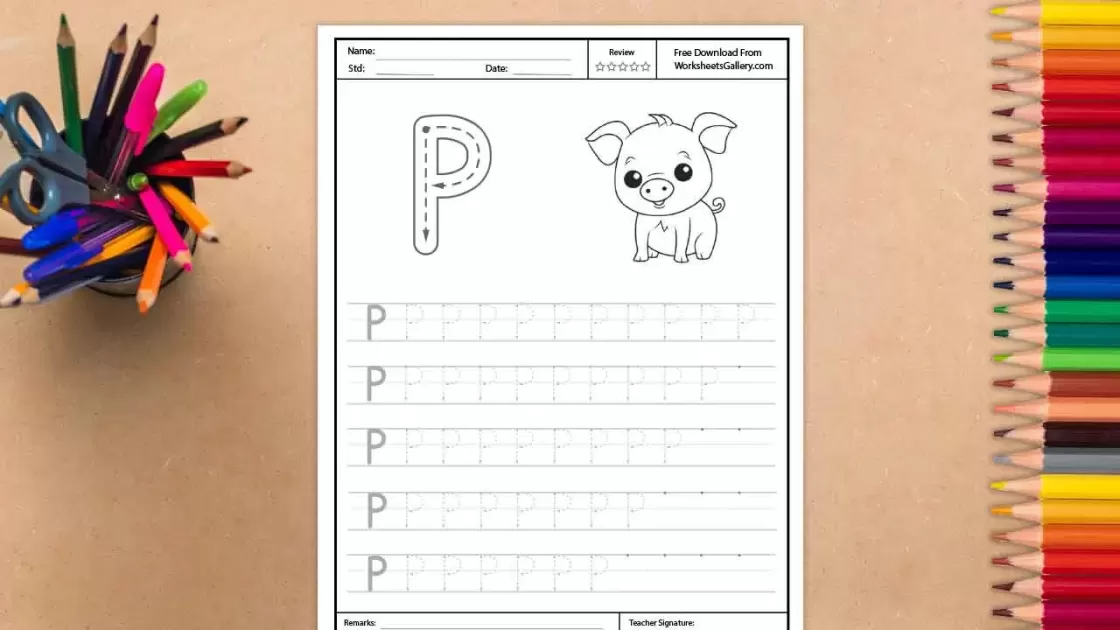
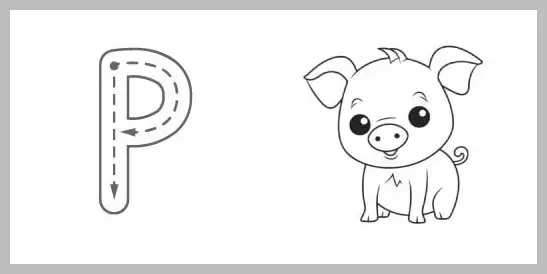
Helping young children develop pre-writing skills is a rewarding journey, and introducing them to individual letters systematically can make a significant difference. This worksheet focuses specifically on Letter P Tracing, providing a structured yet engaging approach for preschoolers and kindergarteners. The clear design, combined with a friendly pig illustration, ensures that children remain interested and motivated as they practice forming this important letter. Mastering the letter 'P' is not just about handwriting; it's a crucial step in developing fine motor skills, hand-eye coordination, and early literacy confidence.
The consistent practice offered by this printable helps solidify letter recognition and prepares children for more complex writing tasks. It breaks down the letter formation into manageable steps, allowing learners to build confidence with each stroke. Whether used at home or in a classroom setting, this resource offers a valuable opportunity for children to refine their penmanship and enjoy the process of learning the alphabet.
Why Focus on Letter P Tracing?
Targeted practice on individual letters like 'P' offers numerous developmental advantages. It allows children to concentrate on the specific strokes and curves required, preventing overwhelming them with too much information. This focused approach helps in building muscle memory, which is essential for fluent and legible handwriting later on.
- Builds Foundational Strokes: The Letter P involves a straight vertical line and a curved half-circle, which are fundamental shapes in many other letters.
- Enhances Letter Recognition: Repeated exposure and active formation help children quickly identify the letter 'P' in various contexts.
- Prepares for Reading: Recognizing and writing letters are interconnected skills that support early reading readiness.
Age-Appropriate Learning
This Letter P Tracing worksheet is ideally suited for children aged 3-5 years. At this stage, children are developing their fine motor skills and are often eager to explore letters and sounds. The large tracing area and clear dotted lines are perfect for small hands that are still gaining control over a pencil or crayon. Introducing letters at this age in a playful way can foster a lifelong love for learning.
For younger children, focus on the joy of making marks and the shape of the letter, rather than perfect formation. For older children in this range, encourage precision and proper pencil grip. The friendly pig on the worksheet also adds an element of fun, making the activity more appealing.
Key Learning Benefits of Tracing 'P'
Engaging with this Letter P Tracing worksheet provides a multitude of advantages for young learners, extending beyond just handwriting practice. Each stroke contributes to a broader set of developmental milestones.
- Fine Motor Skill Development: The act of holding a pencil and carefully following the dotted lines strengthens the small muscles in the hands and fingers. This precision is crucial for everyday tasks like buttoning clothes or using utensils.
- Hand-Eye Coordination: Children must visually track the lines while simultaneously guiding their hand, significantly improving their hand-eye coordination. This skill is vital for sports, drawing, and many academic activities.
- Letter Recognition and Phonological Awareness: Repeatedly seeing and tracing the letter 'P' helps children recognize its unique shape. Pairing this with discussions about words that start with 'P' (like 'pig' from the worksheet itself!) enhances their phonological awareness, a key pre-reading skill.
- Concentration and Focus: Completing a tracing activity requires sustained attention. This worksheet encourages children to focus on a single task, building their concentration span, which is beneficial for all areas of learning.
- Pre-Writing Confidence: Successfully tracing a letter provides a sense of accomplishment. This positive reinforcement builds confidence in their abilities, making them more eager to tackle new writing challenges.
- Preparation for Formal Writing: The structured practice of forming the letter 'P' lays the groundwork for more advanced writing. It teaches proper stroke order and directionality, preventing the development of bad habits later on.
Effective Home Use Scenarios
Integrating this Letter P Tracing worksheet into your home routine can be simple and highly effective. Here are a couple of ways to maximize its learning potential:
Morning Warm-Up Activity
Before starting their day or other learning activities, present the worksheet as a quick warm-up. For example, after breakfast, say, "Let's help our little pig friend learn his letter 'P' today!" Encourage your child to trace the large letter first, then move to the rows. Play a game where you name things that start with 'P' as they trace, like 'pizza,' 'park,' or 'pencil.' This not only reinforces the letter sound but also makes the activity more interactive and fun. You can even use different colored pencils for each row to add variety and maintain interest.
Quiet Time Engagement
When you need a focused, calm activity, this worksheet is perfect. Set up a comfortable, well-lit space for your child. Perhaps during an afternoon quiet time, suggest, "Would you like to practice writing the letter 'P' with our friendly pig?" Offer gentle guidance on pencil grip and stroke direction. If they finish early, encourage them to color the pig illustration, further developing their fine motor skills and creativity. This quiet engagement provides a valuable opportunity for independent learning and concentration.
Classroom Integration Strategies
This Letter P Tracing worksheet is a versatile tool for educators. It can be incorporated into various parts of the school day to support literacy development.
Literacy Center Activity
Create a dedicated literacy center where children can independently work on letter formation. Place several copies of the 'Letter P' worksheet along with different writing tools like crayons, markers, or even gel pens for added sensory input. Provide a small basket of objects or picture cards that begin with the letter 'P' (e.g., plastic pig, picture of a pear, puzzle piece) for children to explore after tracing. This multi-sensory approach reinforces learning and allows children to work at their own pace.
Small Group Instruction
During small group time, use the worksheet to provide targeted instruction. You can demonstrate the correct stroke order on a whiteboard or a larger version of the worksheet. Observe each child's pencil grip and tracing technique, offering immediate feedback and support. For example, you might say, "Remember, for the 'P', we go straight down first, then around for the bump!" This direct guidance is invaluable for correcting early misconceptions and ensuring proper letter formation. The visual of the pig can also be a talking point to keep engagement high.
Common Mistakes and How to Guide
As children learn Letter P Tracing, they might encounter a few common challenges. Recognizing these and offering constructive guidance can prevent frustration and reinforce correct habits.
- Incorrect Stroke Order: Some children might start the curve before the vertical line, or draw the curve from bottom to top. Gently remind them: "Start at the top, straight down, then back to the top for the curve." Use your finger to demonstrate on the worksheet or in the air.
- Poor Pencil Grip: A common issue is holding the pencil too tightly or with an awkward grip. Encourage a relaxed tripod grip. Sometimes, using a thicker crayon or a pencil grip aid can help. Make sure their thumb, index, and middle fingers are working together.
- Lifting the Pencil Too Often: Children might lift their pencil multiple times during a single stroke. Emphasize completing the vertical line in one continuous motion and then the curve in another. "Try to keep your pencil on the line as much as you can."
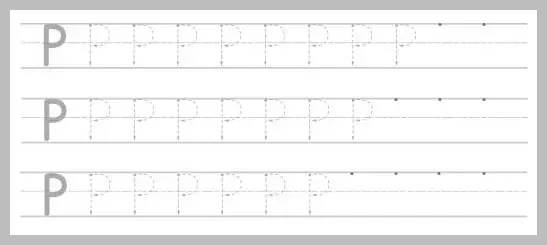
- Inconsistent Size: Especially in the later rows, some letters might be too large or too small. Point to the guidelines and say, "Let's try to make our 'P's fit nicely between these lines, just like the first one."
Encouraging Consistent Tracing Practice
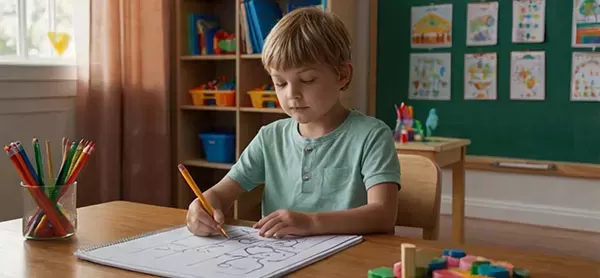
Motivation is key to successful learning. Here are some strategies to keep children engaged and eager to practice Letter P Tracing regularly:
- Positive Reinforcement: Always praise effort over perfection. "I love how carefully you're tracing the lines!" or "You're really trying your best to make those 'P's!" A small sticker or a happy face drawn on the worksheet can also go a long way.
- Vary the Tools: Don't limit tracing to just pencils. Let children use crayons, colored pencils, thin markers, or even finger paint on a laminated version of the worksheet. This adds novelty and sensory input.
- Connect to Real-World Objects: Point out the letter 'P' in books, on signs, or in product packaging. "Look, there's a 'P' for 'Pop-Tarts' at the store, just like the one you're tracing!" This shows the relevance of their learning.
- Short, Frequent Sessions: Instead of one long session, break up practice into shorter, more frequent intervals. Five to ten minutes a day is often more effective than one twenty-minute session, preventing fatigue and maintaining interest.
- Make it a Game: Turn tracing into a fun challenge. "Can you trace all the 'P's before the timer runs out?" or "Let's see who can make the neatest 'P' today!" without making it competitive among children.
- Celebrate Progress: Keep completed worksheets in a folder and occasionally look back at them together. "Wow, look how much your 'P's have improved since last week!" This visual evidence of progress is highly motivating.
Extended Activities for Letter P Exploration
Beyond just tracing, there are many ways to expand on the Letter P Tracing activity, reinforcing learning and making it even more enjoyable. These activities help children connect the letter to sounds, words, and creative play.
P is for Pig Story Time
After tracing, read a story featuring pigs or other 'P' words. Point out the letter 'P' whenever it appears in the text. You could even create your own simple story together about the pig on the worksheet, incorporating as many 'P' words as possible. This integrates literacy with imaginative play.
Playdough Letter Formation
Provide playdough and challenge your child to roll out 'snakes' and then form the letter 'P'. This tactile activity strengthens hand muscles and provides a different sensory experience for learning the letter shape. It's a fantastic way to reinforce the physical formation without a pencil.
"P" Word Scavenger Hunt
Go on a scavenger hunt around the house or classroom to find objects that start with the letter 'P'. Think of items like 'pencil,' 'paper,' 'plate,' 'pillow,' or 'plant.' As you find each item, say its name, emphasizing the 'P' sound. This reinforces phonics in a fun, active way.
Picture and Sound Matching
Create simple flashcards with pictures of 'P' words (e.g., penguin, pie, pumpkin) and another set with just the letter 'P'. Have your child match the pictures to the letter. This helps them connect the visual representation of the letter with its corresponding sound and initial words.
Pencil Control Practice with Mazes
To further develop the fine motor skills needed for Letter P Tracing, introduce simple mazes or dot-to-dot activities. These exercises require controlled pencil movements, similar to tracing, and can be a fun way to build dexterity. You can find many free printable mazes online or create your own simple ones.
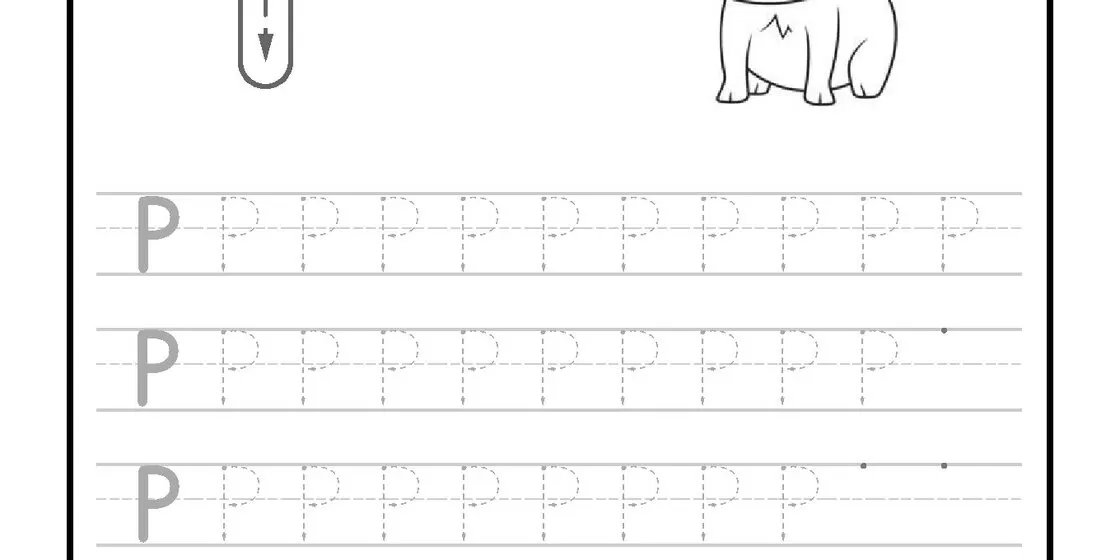
Consider how the tracing lines guide the child's hand. The clear, dotted lines for the uppercase 'P' provide a perfect visual path, making it easier for young learners to follow. The repetition across multiple rows reinforces the correct stroke order and shape, fostering muscle memory. This structured approach is fundamental for developing legible handwriting. You can see how the initial large 'P' acts as a clear model, followed by several rows of smaller 'P's, gradually increasing the challenge and encouraging consistent practice. This progression helps children refine their control and adapt to different sizes, preparing them for writing in various contexts.
Ready to Download Your Free Letter P Tracing Worksheet?
Getting started with this valuable educational resource is straightforward. This Letter P Tracing worksheet is available for instant download, completely free of charge. There are no hidden fees, no watermarks, and absolutely no distracting advertisements to interrupt your child's learning experience.
Simply click the download button, and the PDF file will be ready to print. The worksheet is designed for standard letter-sized paper, ensuring easy printing at home or in the classroom. You can print as many copies as you need for repeated practice or for multiple children. We believe in providing high-quality, accessible educational materials to support early childhood development.
Explore other alphabet tracing worksheets on our site, such as the Letter O Tracing Worksheet or the Letter Q Tracing Worksheet, to continue building a strong foundation in literacy. For more comprehensive pre-writing practice, check out our collection of pre-writing skills worksheets. You might also find our alphabet coloring pages a fun complementary activity.
Popular Worksheets
Printable resources families and teachers are downloading now.
 Free
Free
 Free
Free
 Free
Free
 Free
Free