
9 Helpful Steps for Letter J Tracing Joy with a Jolly Clown!

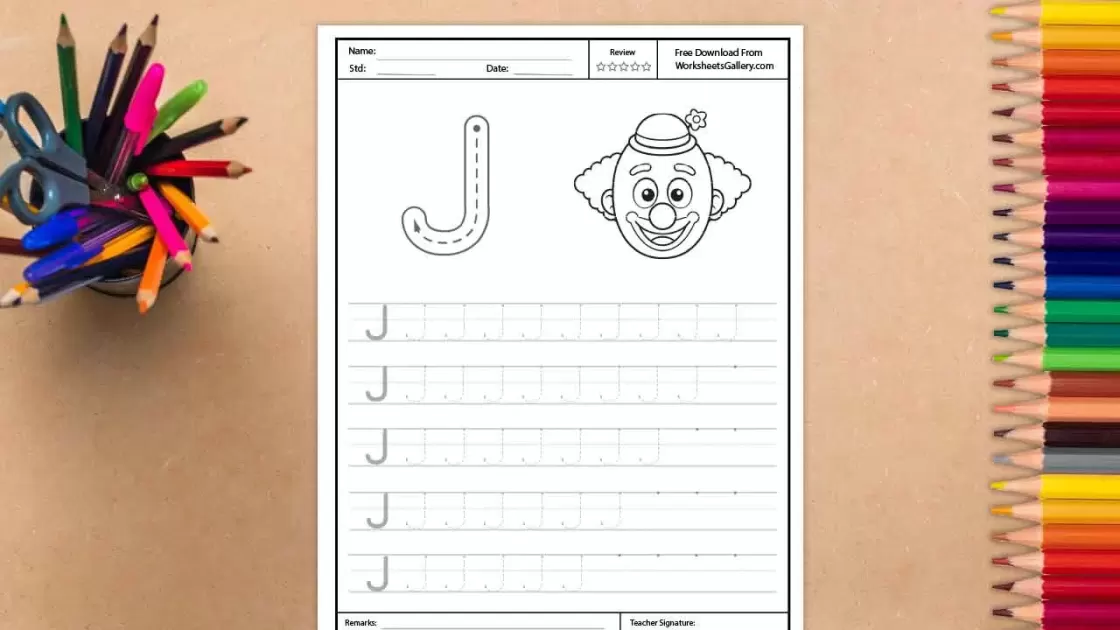
Building foundational writing skills is a major milestone for young learners, and our Letter J Tracing worksheet makes this journey both effective and lighthearted. In the first 10 percent of the content, it is essential to emphasize that Letter J Tracing provides the perfect bridge between simple scribbling and intentional penmanship. This specific resource combines the mechanical repetition of tracing with a whimsical clown illustration, ensuring that children remain engaged while they develop the muscle memory required for curved letter shapes. By focusing on the unique 'hook' shape of the J, students learn to control their pencil movements through both vertical and curved paths. This structured approach helps prevent common formation errors and turns a potentially tedious task into a rewarding creative session.
Why Letter J Tracing is Crucial for Preschoolers
Developing Precision
Tracing the curved tail of the J requires a higher degree of hand-eye coordination than straight-line letters like L or T. This worksheet helps kids navigate that transition smoothly.
Visual Association
Linking the letter J with a 'Jolly' clown helps children create a mnemonic connection, making it easier to recall the letter name and its phonetic sound in the future.
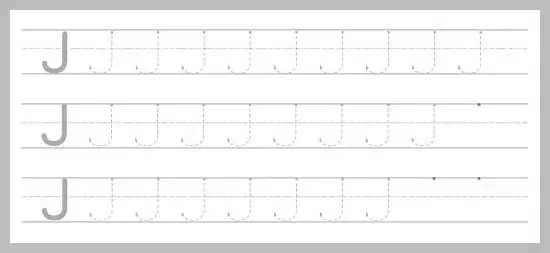
The design of this printable is intentional, offering a large guide at the top followed by five rows of practice. As children move down the page, the support gradually decreases, moving from fully dashed letters to single starting dots. This scaffolding is a proven educational technique that builds independence. When a child sees the clown at the top, it removes the pressure of 'work' and replaces it with the joy of a game. Teachers and parents find that Letter J Tracing sessions are most productive when they include verbal cues like 'down and around' to describe the stroke. This multisensory approach reinforces the spatial awareness needed for all future handwriting tasks.
Top 6 Benefits of Systematic Letter J Tracing Practice
| Benefit Type | Educational Impact |
|---|---|
| Fine Motor Strength | Strengthens the intrinsic muscles of the hand necessary for the tripod grip. |
| Phonemic Awareness | Associating the /j/ sound with characters like the clown or 'juggling'. |
| Directionality Skills | Teaches the top-to-bottom and left-to-right flow of English writing. |
| Concentration | Encourages sustained focus as children try to stay within the dashed lines. |
| Pre-Reading Readiness | Improves letter recognition by internalizing the physical shape of the J. |
| Confidence Boost | Completing a full page gives a tangible sense of accomplishment to toddlers. |
Cognitive and Motor Skill Integration
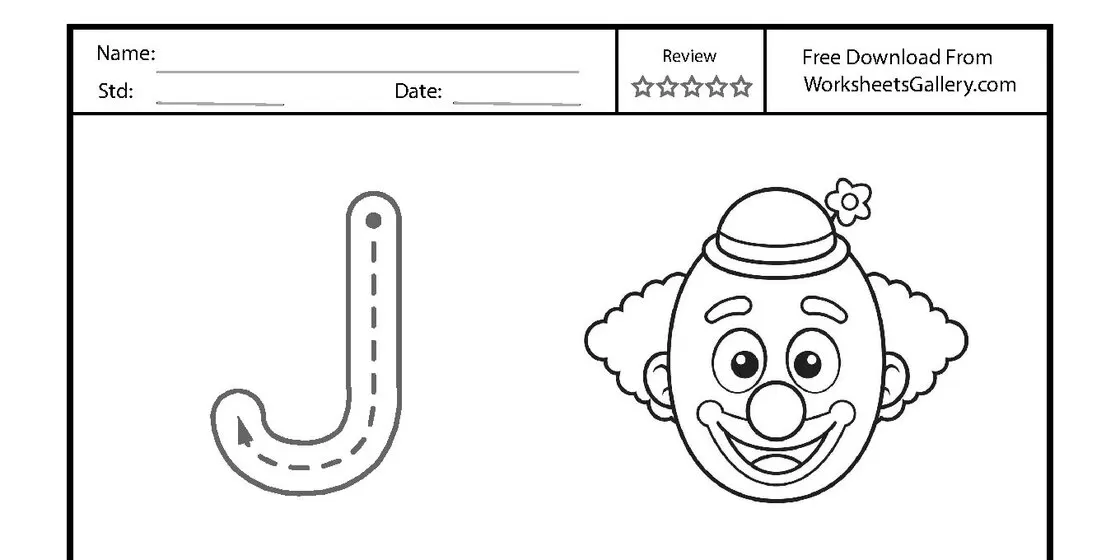
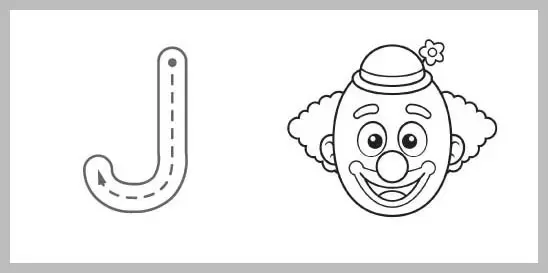
When a child engages in Letter J Tracing, they aren't just moving a pencil; they are performing complex cognitive mapping. They must interpret the visual symbol, plan the motor movement, and execute the curve at exactly the right moment. This worksheet uses a large model with a directional dot at the top to serve as a visual anchor. By starting at the dot and following the dashed line, the child learns the correct sequence of movements. This prevents the habit of writing letters from bottom to top, which often slows down writing speed in later grades.
Implementing Letter J Tracing in Different Settings
The Classroom Scenario
In a preschool or kindergarten classroom, a teacher might introduce this worksheet after a group story about a 'Jolly Jellyfish'. The teacher can project the worksheet on a smartboard and demonstrate the Letter J Tracing path with a finger first. Students then receive their printables at their desks. To foster a collaborative environment, children can trade papers for a 'Review' session where they give each other stars (using the review section at the top) for staying on the lines. This peer encouragement makes the writing center the most popular spot in the room.
The Home Learning Scenario
At the kitchen table, a parent can turn Letter J Tracing into a bonding activity. After a snack of 'juice' and 'jelly', the child can work on the worksheet. If the child gets frustrated, the parent can ask them to 'color the clown's nose' as a break. This keeps the atmosphere light. Using colorful markers or even glitter pens for the final row of J's can make the practice feel like an art project rather than a chore. The parent can then display the finished work on the refrigerator to celebrate the progress.
Creative Games to Extend the Learning
- 1. J-Jump Challenge: Lay out the traced worksheets on the floor. Ask the child to 'Jump' to the 'J' every time you say a word that starts with that sound.
- 2. The Juggling J: Since there is a clown on the page, have the child pretend to juggle imaginary balls while shouting the letter name.
- 3. Shaving Cream J's: After finishing the Letter J Tracing worksheet, let the child practice the same shape in a tray of shaving cream or sand to reinforce the tactile memory.
- 4. Storytelling with the Clown: Ask the child to name the clown (perhaps 'Jolly Jim') and tell a short story about what he likes to do, focusing on 'J' words like jumping or eating jam.
Common Mistakes and How to Fix Them
One common hurdle in Letter J Tracing is reversing the hook. Children often want to hook the bottom to the right instead of the left. If this happens, gently guide their hand and call it a 'fishing hook' that catches the other letters. Another mistake is starting from the bottom. The directional dot at the top of our worksheet is designed specifically to combat this. Remind them that the 'rain falls down' to help them remember the starting point. If the child is struggling with the curves, encourage them to trace the large J at the top multiple times with different colors (rainbow tracing) before attempting the smaller lines below.

Why Kids Love This Specific Worksheet
Children are naturally drawn to friendly faces, and the large, smiling clown on this printable serves as a welcoming companion. Unlike a page full of abstract lines, this Letter J Tracing activity feels purposeful. They are 'helping' the clown or 'writing like a big kid'. The inclusion of the 'Review' stars at the top allows children to self-evaluate, giving them a sense of agency over their learning. When they see those five stars, they feel like they have won a game. This emotional connection to the material is what transforms a simple alphabet tracing exercise into a memorable educational experience.
Encouraging Regular Handwriting Practice
Consistency is the secret to penmanship. Rather than doing ten pages in one day, it is better to do one Letter J Tracing sheet every few days. Praise effort over perfection. If a child stays on the line for just three letters, highlight those three as 'Super J's'. Using varied writing tools can also keep interest high. Try using a tracing worksheet with crayons one day and a pencil the next. You can also find other letter tracing resources on our site to create a full alphabet workbook for your student.
Instructions for Printing and Use
Getting started with your Letter J Tracing session is simple. This resource is provided as a high-quality PDF that prints clearly on standard A4 or US Letter paper. Our files are designed to be ink-friendly, using clean black lines that are easy for young eyes to follow. Best of all, these downloads come with no watermarks and no ads on the actual printable, ensuring a distraction-free environment for your child. Simply click the download button, print, and you are ready to go. For long-term use, you can laminate the page and use dry-erase markers, allowing for endless Letter J Tracing practice without wasting paper.
Recommended for ages 4-6. This worksheet focuses on uppercase formation, providing a sturdy foundation for early primary writing requirements.
Popular Worksheets
Printable resources families and teachers are downloading now.
 Free
Free
 Free
Free
 Free
Free
 Free
Free