
9 Radical Letter X Tracing Secrets for Amazing Kids!

Finding fun ways to teach the alphabet can be a challenge. Our Letter X Tracing worksheet makes the diagonal strokes of this rare letter simple and engaging. While X doesn't appear as frequently as other letters, mastering its unique shape is a vital milestone for young learners developing spatial awareness. This printable resource provides a structured, clear environment for children to practice their cross-strokes. It's free from distracting watermarks or advertisements. By focusing on the flow of the lines, kids gain the precision needed for more complex writing tasks later in their educational journey.
Understanding the Diagonal Mechanics of Letter X Tracing
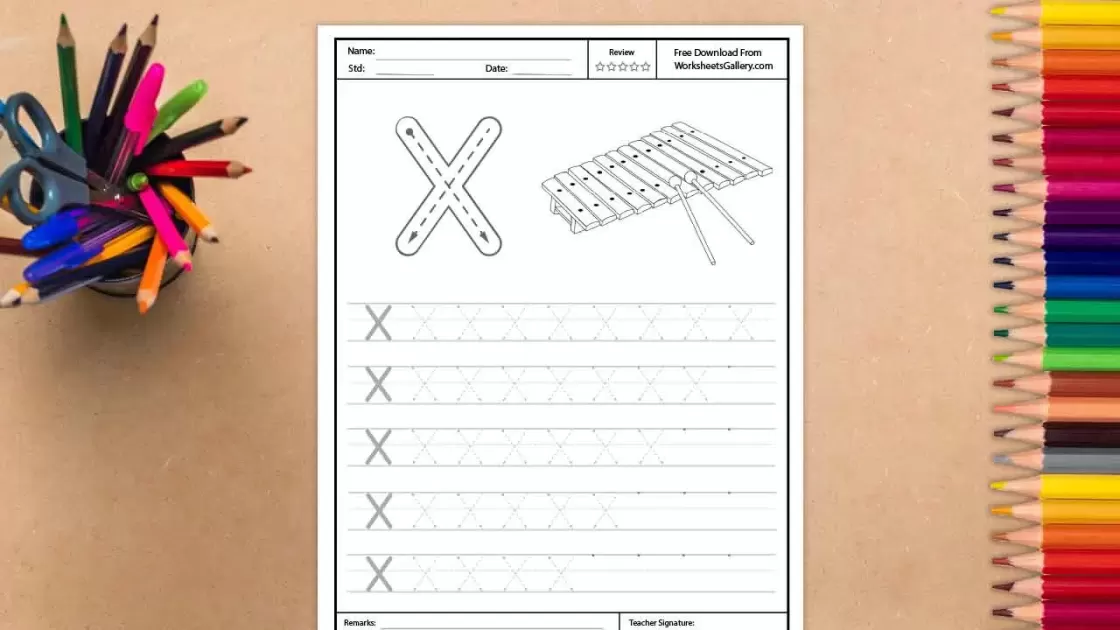
Writing an uppercase X requires a child to understand how two diagonal lines intersect at a central point. This isn't just about drawing; it is a lesson in geometry and fine motor control. The Letter X Tracing process begins with a large, bold guide letter at the top of the page. This anchor letter features dashed lines and directional arrows. They show exactly where to place the pencil and in which direction to pull. This helps prevent common mistakes like drawing the letter from the bottom up or creating messy, disconnected strokes. For example, imagine drawing the letter 'V' twice. One 'V' is upside down and slightly shifted to cross the first one perfectly in the middle.
Why X Marks the Spot for Development
- Visual Discrimination: Identifying the intersection point in the middle of the letter.
- Cross-Midline Skills: Moving the hand across the body's midline, which is essential for brain development.
- Grip Stability: Sustaining a steady pressure through long, diagonal movements.
- Spatial Orientation: Learning the difference between a vertical line and a slanted one.
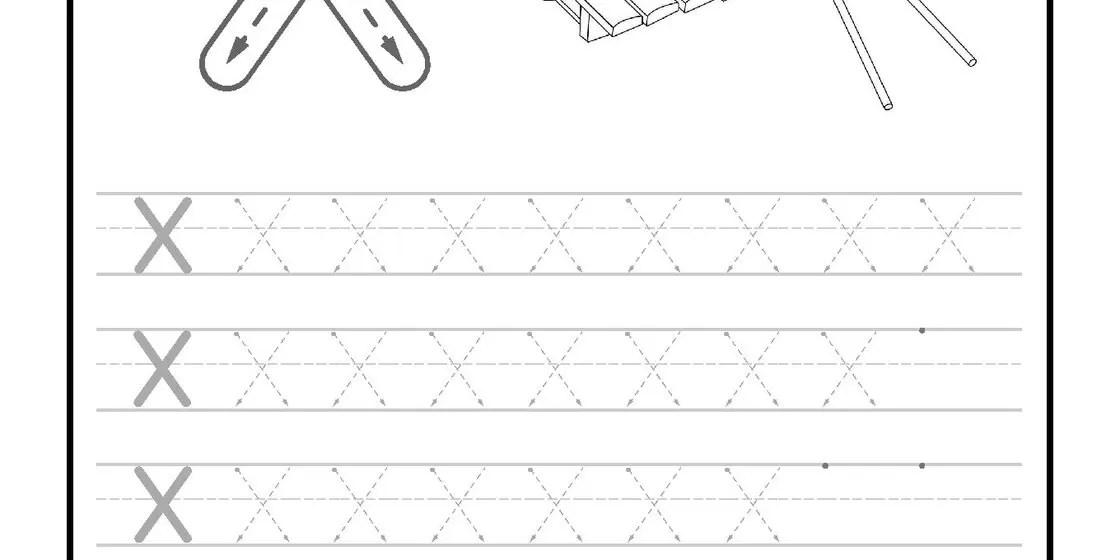
As students progress through the Letter X Tracing rows, they move from highly supported dotted lines to more independent practice. This gradual release of responsibility ensures they have the muscle memory to form the letter with minimal guidance by the final row. The xylophone illustration at the top also serves a dual purpose. It provides a visual phonics link and offers a rewarding coloring break for students who finish their writing practice early.
Five Core Benefits of Early Handwriting Practice
Repetitive practice is often seen as tedious. However, for a 4-6 year old, it is the foundational work of literacy. Here are the specific ways Letter X Tracing transforms a child's abilities:
1. Finger Strength
Manipulating a pencil along a diagonal path requires the small muscles in the hand to work in unison. This builds endurance for longer school days.
2. Attention to Detail
Following the specific arrow path in Letter X Tracing teaches children that the process of how they create a shape is as important as the final result.
3. Confidence Building
Successfully completing a full page of clear letters provides an immediate sense of accomplishment and pride in their work.
4. Vocabulary Growth
Discussing words like 'Xylophone,' 'X-ray,' and 'Six' helps children realize that X can appear at the start, middle, or end of words.
Effective Strategies for Home and Classroom Use
Whether you are a parent at the kitchen table or a teacher in a busy classroom, the way you introduce Letter X Tracing matters. We recommend starting with a tactile approach before even picking up the pencil. Ask the child to use their index finger to trace the large guide letter at the top of the worksheet. Feel the texture of the paper and talk about the 'slide' motion of the diagonal lines.
In a classroom setting, you can use these worksheets as part of a literacy center. Pair the Letter X Tracing page with a small musical xylophone. Students can trace one row of letters and then play a note on the instrument. This multisensory feedback keeps the activity exciting. For home use, create a 'Mailbox' game. Children trace their X and 'post' it to a family member once they have done their best work. For instance, after tracing, they can fold the worksheet into an envelope shape and 'mail' it to a parent or sibling. This reinforces the idea of written communication.
Mastering the Cross-Strokes Step-by-Step
One of the best ways to ensure success with Letter X Tracing is to model the behavior. Sit next to your learner and demonstrate on your own sheet. Use verbal cues like "Top left to bottom right, lift, then top right to bottom left." These auditory signals reinforce the visual cues provided on the page. Remember to praise the effort, not just the perfection of the lines. If a line goes outside the dots, that is a great moment to discuss how we keep our 'pencil car' on the track. For example, you might say, "Oops, your pencil car went off the road a little there. Let's try to keep it on the dashed line next time, just like a train on its tracks!"
Extended Learning Activities for Letter X
Once the Letter X Tracing sheet is complete, don't stop there! Extend the learning with these creative ideas:
- Treasure Map Fun: Draw a simple map of your living room. Use a big red 'X' to show where a hidden sticker is located. This reinforces the "X marks the spot" concept.
- Body Letters: Have the child stand up and make the shape of an X with their arms and legs. This gross motor movement complements the fine motor Letter X Tracing.
- X-Ray Vision Game: Put objects inside a paper bag. Have the child try to guess what they are using only their hands, pretending they have X-ray vision.
- Sticks and Stones: Go outside and find two straight twigs. Help your child cross them to form an X in the dirt, just like they did during Letter X Tracing.
Common Mistakes to Avoid During Practice
Even with a clear Letter X Tracing guide, beginners often face a few hurdles. Watch out for "The Floating X," where the child starts the letter too high or too low, missing the baseline. Another common issue is the "Curved Cross," where the child draws the lines with a slight bend. To fix this, encourage them to think of the pencil as a straight ruler. If they struggle with the intersection point, you can put a tiny green dot in the center of the tracing box to give them a target for where the lines should meet. For instance, if they are drawing a curved line, you might gently guide their hand and say, "Let's make this line super straight, like a slide!"
Encouragement and Motivation Tips
"You are doing such a great job holding your pencil steady! Look at how straight that diagonal line is. You're becoming a real writing pro!"
Positive reinforcement fuels learning. Instead of pointing out mistakes, highlight the one letter on the Letter X Tracing sheet that looks most like the model. Ask the child, "Which one of these is your favorite?" This gives them ownership over their progress. You can even use colorful markers or glitter pens for the final row to make the Letter X Tracing experience feel like a special treat. For example, after they complete a row, you could say, "Wow, that last X is fantastic! Let's use a sparkly pen for the next one to make it extra special!"
Why Children Enjoy This Specific Worksheet
Kids love the predictability of our worksheets. The familiar layout of the Letter X Tracing page reduces anxiety. They know exactly what is expected of them. The large xylophone graphic is often a favorite. It represents a fun musical instrument many see in their playrooms or music classes. The satisfying click of a pencil finishing a row of Letter X Tracing provides a hit of dopamine. This keeps them engaged through the entire lesson.
Skills Practiced and Targeted Age Group
This resource is meticulously designed for children in the 4-6 age range. It aligns perfectly with early kindergarten or preschool curriculums. By engaging in Letter X Tracing, students are working on several developmental fronts simultaneously:
| Skill Category | Developmental Focus |
|---|---|
| Fine Motor | Hand-eye coordination and pincer grasp refinement. |
| Cognitive | Letter recognition and following sequential instructions. |
| Spatial | Understanding angles and intersection points on a 2D plane. |
As you continue your alphabet journey, you might also find our Letter W Tracing guide helpful for practicing different types of diagonal lines. If your child is ready for curves, the Letter U tracing sheet offers a nice contrast to the sharp angles found here. For more straight-line practice, don't miss the Letter T Tracing page which reinforces vertical and horizontal balance.

How to Download and Print Your Worksheet
Getting started with your Letter X Tracing session is easy. Our printables are provided in a high-quality PDF format. This ensures that the lines remain crisp and clear even on standard home printers. There are no watermarks or annoying ads to block the learning area, giving your child a professional-grade experience for free. Simply click the download button, open the file, and print as many copies as you need for your home or classroom.
For the best results, we recommend using a slightly heavier paper stock if possible. This is especially true if your child likes to use markers for their Letter X Tracing. This prevents ink bleed-through and makes the final product feel like a real certificate of achievement. Once the page is filled with beautiful X's, don't forget to have the child sign their name at the top to build early identity as a writer.
Popular Worksheets
Printable resources families and teachers are downloading now.
 Free
Free
 Free
Free
 Free
Free
 Free
Free