
Complete Number Tracing 1 to 100 for Confident Writers
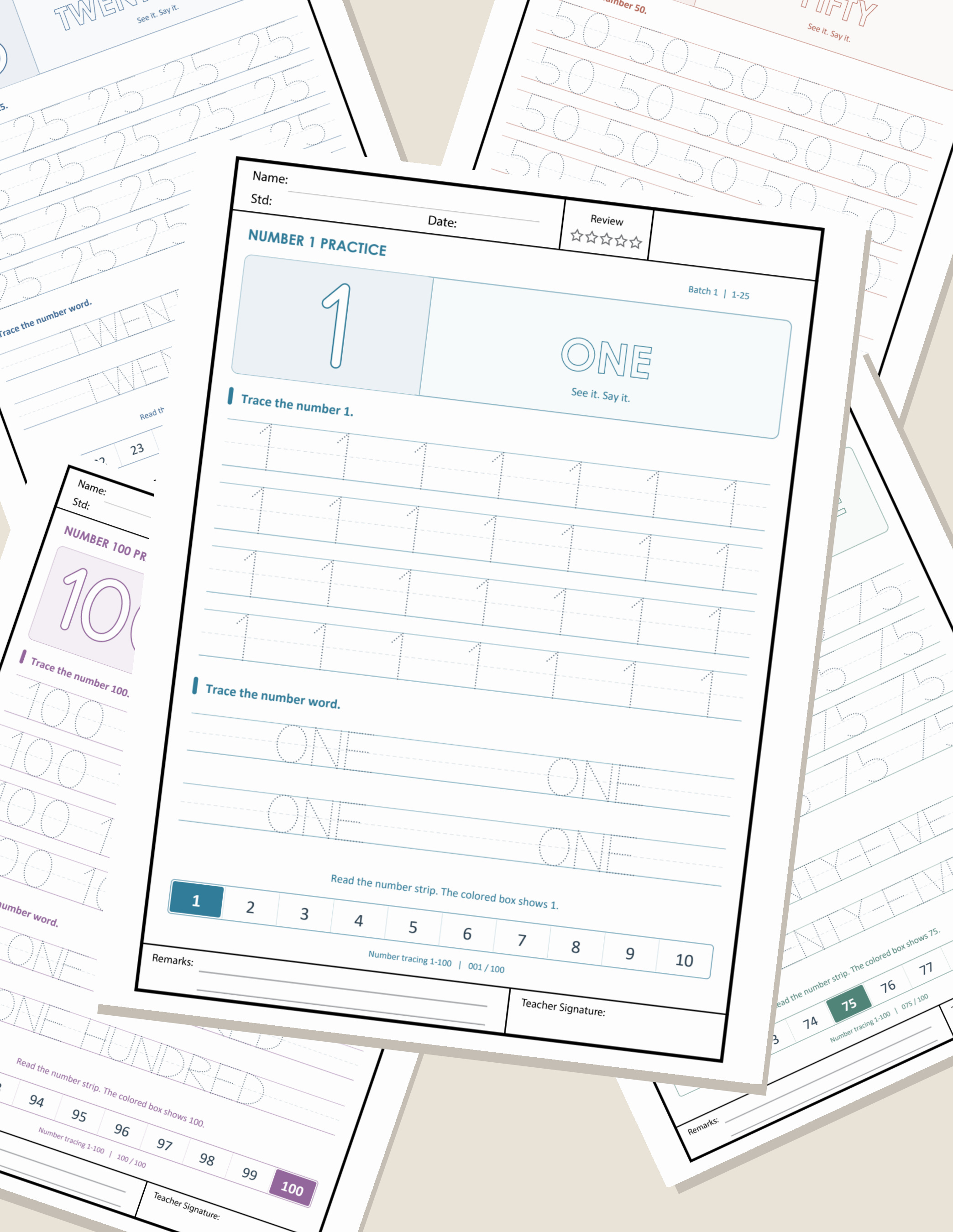
Five actual worksheets show the collection's four ranges and the first practice page.
The first full worksheet sits in front of four angled samples from the 25, 50, 75 and 100 ends of the collection's ranges.
Set the page for 1 beside the page for 100. The first has a single upright figure, while the last fits three digits into the same space. Between those endpoints, the Number Tracing 1 to 100 collection gives children one full worksheet per number. They can say the name, study the large outline, trace selected examples and locate the target on a short sequence strip. Choose a page for the skill a child is practising today. A learner who already writes 7 may enjoy examining it inside 17 or 70.
What Number Tracing 1 to 100 includes
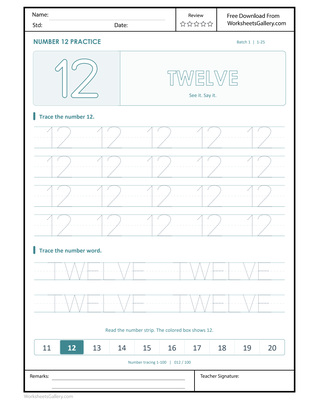
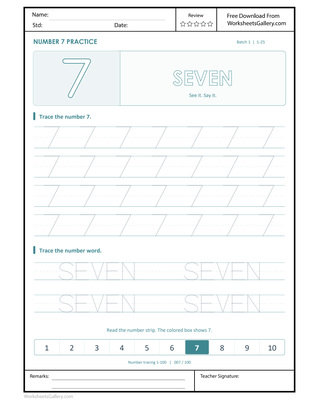
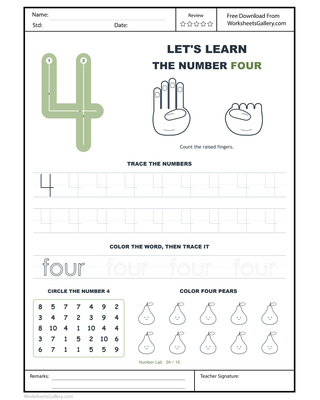
The complete printable PDF puts one hundred sheets in numerical order. Every worksheet has an outline numeral paired with its uppercase name, four ruled numeral rows, two ruled word rows and a ten-cell number strip. The target value is shaded on that last strip. For 10 the strip ends at the shaded cell. For 11 a different strip begins with the shaded cell. This recurring shift lets you teach the difference between moving to the next number and moving to a different printed strip.
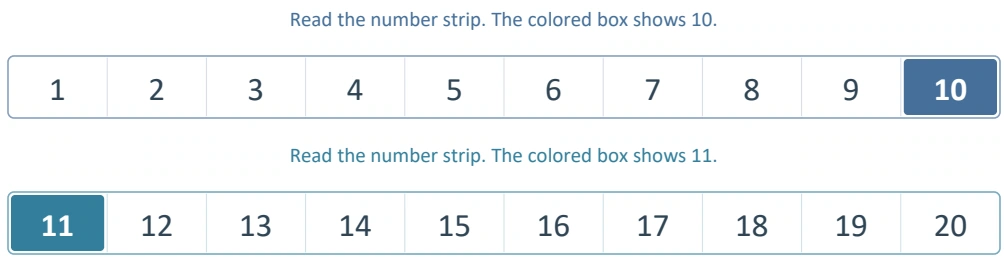
There are four groups of twenty-five sheets in the collection. These groups organize printing, while the ten-cell strips organize the local number sequence. The two systems have different boundaries. For example, sheet 25 ends the first group and sheet 26 begins the second group. Both worksheets still use a 21–30 strip, with different colored cells. Children can compare those two sheets to see the range label change while the printed run of numbers stays familiar.
Choose a pair to suit today's lesson
Print 8 and 9 for a child practising a new curve. Set out 12 and 21 for a learner who spots both digits quickly but sometimes reads their positions backward. Try 49 and 50 after the class has counted loose objects into tens. For a reader who notices that 99 is the last two-digit number in the packet, add 100 and give the zeros room to breathe. You can keep the unused pages in the PDF and print the next pair when it has a purpose.
| Sheets | Start with | Try next |
|---|---|---|
| 1–25 | 7 and 17 to compare the shared right digit | 19, 20 and 21 across a ten boundary |
| 26–50 | 29, then 30 to move into another ten | 49 next to 50 on a loose card |
| 51–75 | 51 just after the prior set's 50 | 63 and 64 to name adjacent amounts |
| 76–100 | 76 beside 75 from the prior range | 99 followed by the collection's only three-digit sheet |
Read a number name before following the dots
Cover the smaller traces for the first part of a lesson. Ask the child to point to the large model and say the name shown beside it. Let a child who needs support echo the word after an adult. Then reveal one line and choose a single attempt. Talk about which portion of the shape to watch. A numeral such as 26 needs a change in movement from the left digit's base to the curve of the right digit. The outlined reference makes that comparison easier to point out.
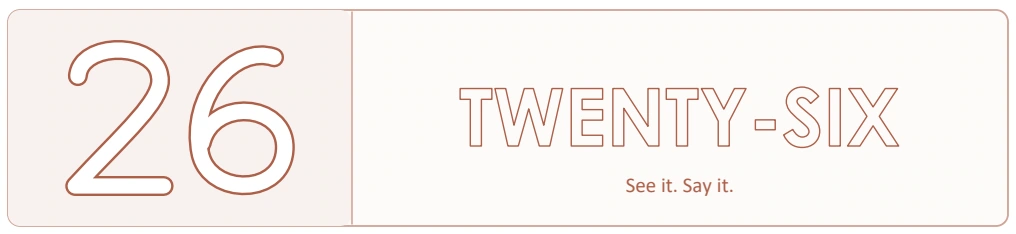
For a second look, cover the numeral in the top panel and leave the name visible. A beginning reader may recognize the first part of a familiar number word or remember what the adult has just said. Both give a starting point. Reopen the whole reference and ask whether the name agrees with the numeral. Keep the printed word nearby while making a label for a pile of counters or a pretend classroom sign.
A family session with paper bundles
Put ten paper slips inside a band and keep seven loose. Ask how many slips the group has and choose the 17 sheet to check the answer. Bring a single slip back from another pile, and let the child decide which worksheet will now match. Read 17 and 18 before making one pencil attempt. A child who chooses 8 may be counting only the loose slips. Open the bundle and check the full set together before returning to the numeral.
After writing one pair, finish by asking the child what happened to the previous amount. Moving the slips into a row does not add a slip. Bringing a new one does. Keep both ideas visible by doing one change at a time. On another day, invite the child to arrange the demonstration and choose the labels for an adult. A child who chooses the next sheet for a reason is doing more than working through a stack.
Run a small writing center with separate jobs
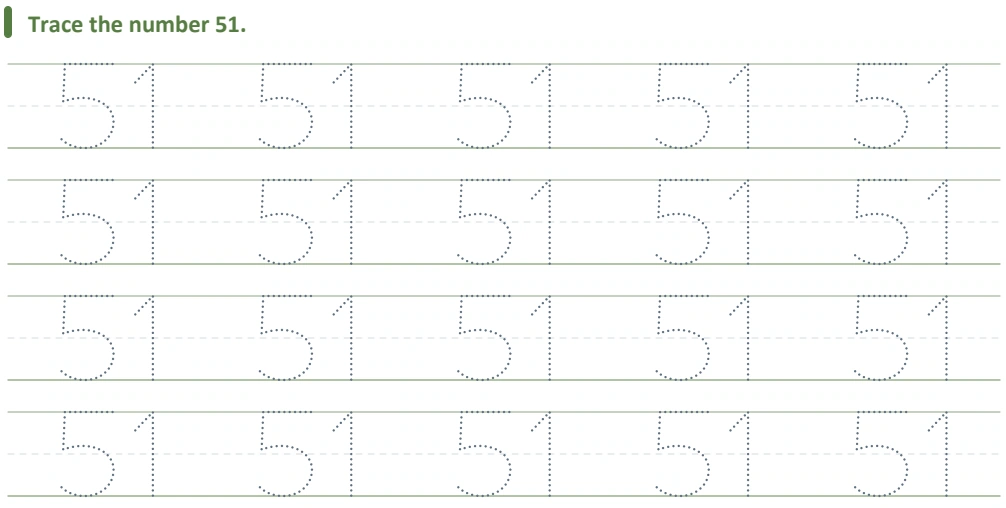
Give a pair of learners the page for 50 and a loose card marked 51. One learner builds five groups of ten using paper counters and another reads the label. Add one loose counter and turn to the next sheet. Ask which part of the number changed. The following page uses a 51–60 strip, so a learner will need both sheets or an extra card to point to the step from 50 to 51.
On a later rotation, offer a shared sheet beside two blank slips. Learners can take turns pointing to the number, speaking its name, tracing a chosen model and trying a fresh mark on a slip. Rotate jobs after one complete exchange so a child who needs longer to form a digit still has a meaningful role. Read the new marks together and ask each writer to name one part that agrees with the printed reference.
Six things to listen for during the lesson
Symbol recognition. A learner may recognize 76 before they can write the pair. Ask them to find it after two other cards are turned face up. Accurate pointing can show that the hand needs practice while the reading is already sound.
Controlled changes of direction. When the pencil reaches a corner or curve, observe whether the child can slow down and continue. One steady attempt provides a more useful view of that movement than a hurried row.
Place value language. When comparing 57 and 75, ask a child to describe how many groups of ten each has. Exchanging the positions of two familiar digits changes the amount.
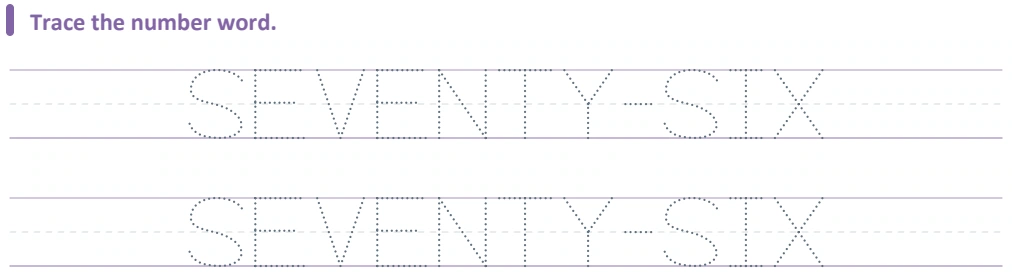
Print tracking. The long word on sheet 76 gives a learner an opportunity to keep a place across the small printed hyphen. Ask the child to point below the part being spoken before choosing one word to trace.
Sequence sense. A child who finds a shaded cell can work out the number next to it, then make a short prediction for the following box. Start with a familiar part of the strip before covering any cells.
Explaining a decision. Let the child choose between a numeral and a word card while a partner asks for a reason. A meaningful explanation may come through counters, gestures or a spoken response.
Work out why a mark or answer changed
A reversed digit pair, a misnamed figure and a drifting pencil stroke call for different responses. If 62 appears for sixty-two in speech and 26 appears on paper, point to the left position while reading both cards. Have the child build six tens and two ones, then choose the card that fits. If the number is named accurately but the pencil slides beyond the line, revisit one dotted stroke with the top and bottom guides in view.
If a learner picks the shaded box but reads the wrong number, put a slip over the color and say the first visible numeral in the segment. Point while reading a short run and let the child find the target again. A child who can keep the sequence going may need more time with the printed symbol or its name. Talk about one skill at a time and watch whether the next response changes after the prompt.
Five ways to revisit the packet
A delivery desk. Write 34 and 43 on two envelopes. Ask a child to choose one after hearing a spoken address. A partner checks with the worksheet's large model and returns the delivery if the two digits arrived in the opposite order.
One more at the bus stop. Lay out a card for 79, then add a paper passenger and choose the next worksheet. Find where the two numbers sit in their printed runs and make a short bridge across the edge of the strips.
Two names on a shelf. Choose 40 and 41 for two pretend supply boxes. Attach the numeral to one and the word to the other. Let the learner swap labels for equally meaningful word or digit cards.
A number hunt on the table. Set four page previews down with the words temporarily covered. Give a clue such as “five tens and six more.” Let the child locate 56, reveal the name and say the complete number.
A hundred-piece exchange. Arrange ten paper groups of ten and attach a label to the total. Follow the printed 100 once and compare its two separate zeros with the single oval on 10. Keep the three digits aligned.

Let the writing difficulty set the pace
Many children around four to eight can use some pages in this packet. The useful starting point depends on what they can count, recognize and put on paper. A child beginning with 3 may benefit from a single large finger motion and a short printed attempt. Someone comfortable with 30 may want to explore a new pair using the same routines. Reading the long words out loud is an adult's job when the child is still learning the letters.
A regular visit can fit between classroom activities or happen at a table before cleanup. Pick one clear purpose. On Monday a learner might practise the round part of 60, on Wednesday locate 60 between its neighbors on two cards and on Friday check the numeral on a sign. Keep a dated example if the child wants to compare the next mark with the earlier one. Notice one concrete difference such as spacing between digits or a clearer start.
Choose another kind of number activity
Between tracing sessions, choose an activity that gives a numeral a different job. A dice roll can determine how many counters move. A tracing path can isolate the turn that makes a printed curve difficult. A small group can practise matching an amount and a word using cards before opening the next sheet. Choose something the learner can explain briefly to a partner and then go back to the printable for a single relevant mark.
Use the earlier 1–10 tracing set to practise a few familiar figures before choosing a teen or a higher decade. On a lighter day, a mixed 1–10 numeral sheet brings several early numbers together. Roll for counters with the even-number dice game and let the learner write the score.
Choose a family activity from NAEYC family play ideas that can use a homemade number label. For another play session, look through PBS KIDS for Parents and pick a game that calls for a new number sign.
Purchase the collection and print the sheets you need
The $8 collection is a single purchase for all one hundred clean worksheets in numerical order. Choose the purchase option on this page, sign in as prompted and complete checkout. Use the account with the purchase to download the PDF. The printable worksheets have no watermark or advertisements. Keep a saved copy on the device you use for printing so it is easy to return to the range you need.
Select US Letter portrait and check the full border in print preview. If you only need a practice pair, enter the two PDF page numbers. The worksheet number and PDF page number agree throughout the collection. Use standard print quality for the first test sheet, since pale dots can disappear in draft mode. If your printer clips near an edge, use its fit option and recheck the preview. Keep the highlighted box in view, and if you print in grayscale ask the learner to name the printed number as well as noticing the shading.
Once the first copy is printed, give the child one clear job to choose from the page. Save the rest of the row for a return visit. The collection is set up so you can print the needed sheet again when a small change in the exercise will give the child a useful reason to revisit it.
Related Topics
Popular Worksheets
Printable resources families and teachers are downloading now.
 Free
 Free
 Free
 Free