
Count and Circle: 5 Brilliant Ways to Check a Choice
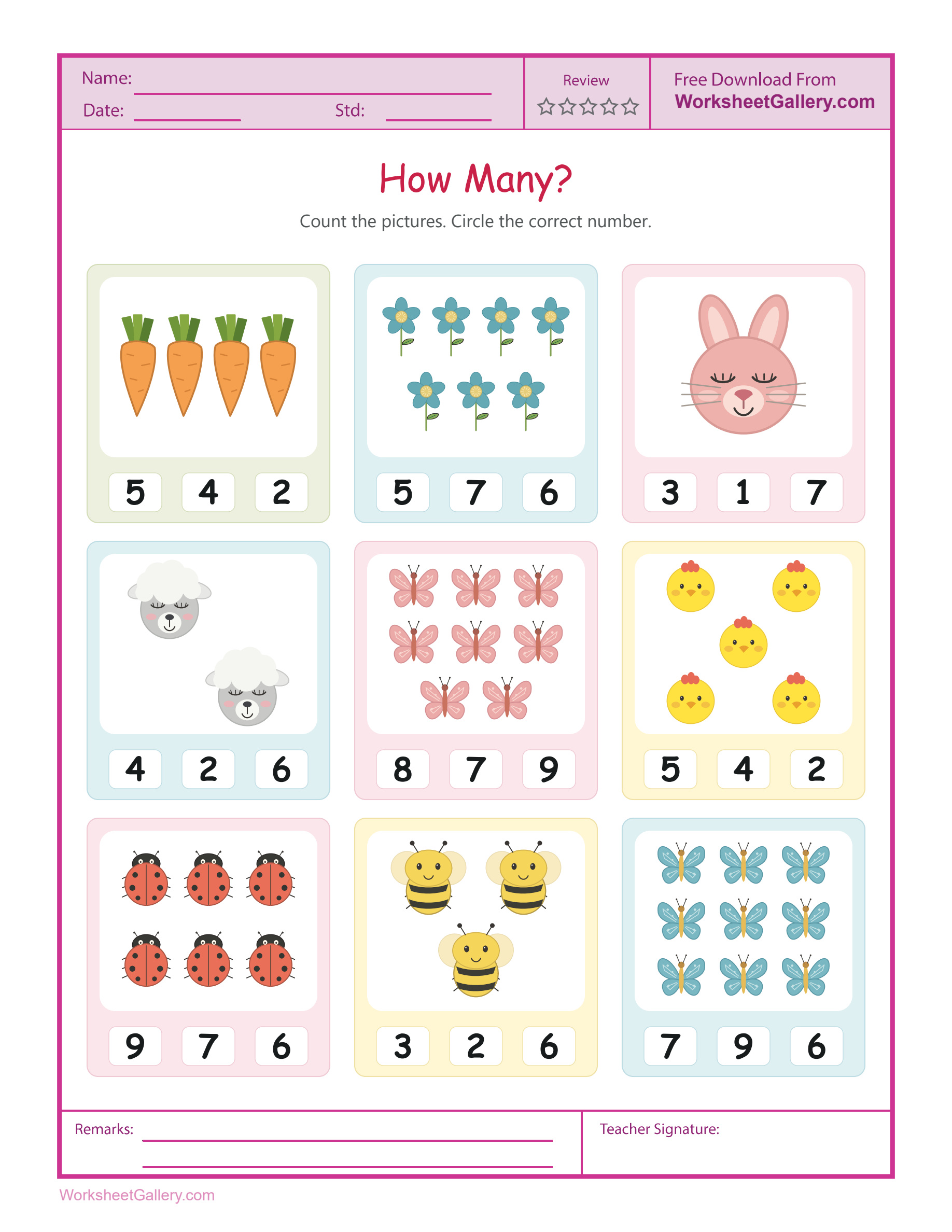
A chosen numeral needs a counted collection behind it. Count and Circle separates those two jobs: first establish how many pictures belong to a card, then find the numeral that represents that amount. This nine-card sheet moves from a single rabbit to nine blue butterflies, with flowers, carrots and other small creatures between them. Each card offers three choices, but only one matches its pictures. Explore Count and Circle by covering the choices briefly, letting a child discover a quantity before the printed options invite a guess.
Let the Count and Circle flowers supply the evidence
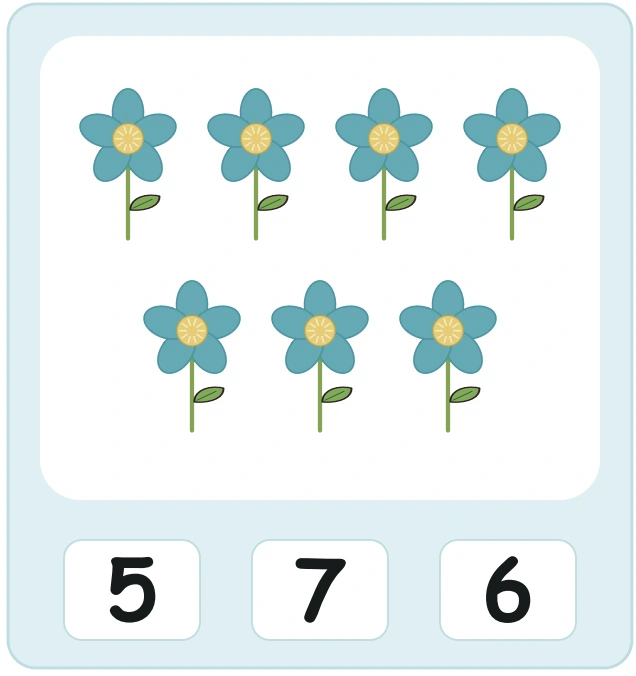
Seven blue flowers appear in the upper middle card, four above three. Its choices are 5, 7 and 6. Establish the pictured quantity before selecting 7. Count complete flower drawings rather than individual petals, leaves or yellow centers.
A child can point along the upper flowers and then the lower flowers, saying one number for each. Ask which flower received the last count. Count and Circle connects that final number word with an amount that can be checked on the page.
Then read the choices together if numeral recognition is still developing. The adult may name each printed digit while the learner identifies which means seven. Counting accurately and recognizing the corresponding numeral are related tasks, but they can need different kinds of support.
The printed numbers are alternatives, not additional objects to count or quantities to add together. Count and Circle asks for one matching choice in this card. The surrounding cards have their own picture groups and their own choices.
At home, hide the Count and Circle choices for a moment
Milo and his mother place a plain paper strip over the three flower choices, leaving every flower visible. Milo counts and says seven. His mother asks him to show the final flower before they uncover the response row.
Now they inspect 5, 7 and 6. Milo points to 7 and explains that it matches the flowers he counted. His mother helps him make a circle that identifies the selected numeral without enclosing its neighbors.
This Count and Circle routine provides a small pause between establishing the amount and recording a decision. It is useful when a child habitually selects a familiar digit before looking at the objects. Use the cover as an invitation to inspect, not as a memory challenge.
An adult can say the established number again after revealing the choices. The photograph suggests materials for the conversation; its blank cards do not reproduce a solved exercise. Count and Circle evidence comes from the actual worksheet picture group.
One rabbit is a complete Count and Circle collection
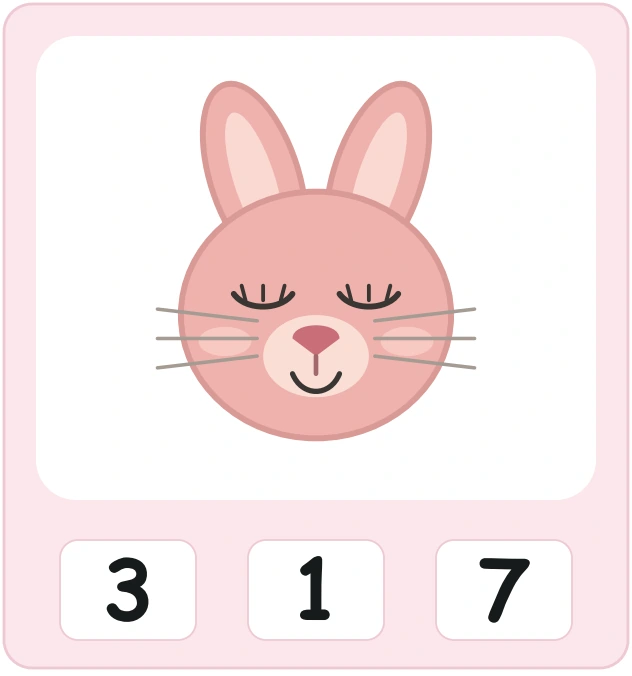
The upper-right Count and Circle card contains one rabbit face, with choices 3, 1 and 7. Its two ears, whiskers and facial details all belong to that one drawing. Name the counting unit before asking for an answer, particularly if a child starts counting interesting features.
The correct numeral is 1. Count and Circle can begin with this card for a learner who is not ready to track several objects. A short explanation such as “one rabbit” is enough to show the quantity connection.
Circling requires another skill. Demonstrate on spare paper if the movement is unfamiliar, or let the child point while an adult records the choice. A wandering circle should not erase the evidence of an accurate count or an understood numeral.
For ages three to six, adjust the entry task to the individual preschool or kindergarten learner. Count and Circle offers amounts from one through nine on this page, so difficulty can change substantially from one card to the next.
Six Count and Circle gains worth distinguishing
- Count and Circle correspondence. Pointing to each whole drawing while saying a number lets a child match a spoken count with a particular object.
- Count and Circle quantity meaning. The last number names how many pictures are in the selected card, rather than merely being the final word in a chant.
- Count and Circle numeral recognition. Comparing three options links an established amount with the written digit that represents it.
- Count and Circle visual boundaries. Keeping attention inside one card helps the learner avoid importing objects or response choices from a neighbor.
- Count and Circle hand movement. Drawing around one numeral asks for a controlled enclosure, which an adult can support independently of the arithmetic.
- Count and Circle explanations. Showing why a choice fits gives a partner something to inspect and discuss when an answer needs another look.
These opportunities involve attention, language and movement together. Notice which part is secure and which part needs support. A child can count correctly while confusing two numeral shapes, or recognize a numeral while still learning to enclose it clearly.
The pink Count and Circle butterflies need both lower pictures
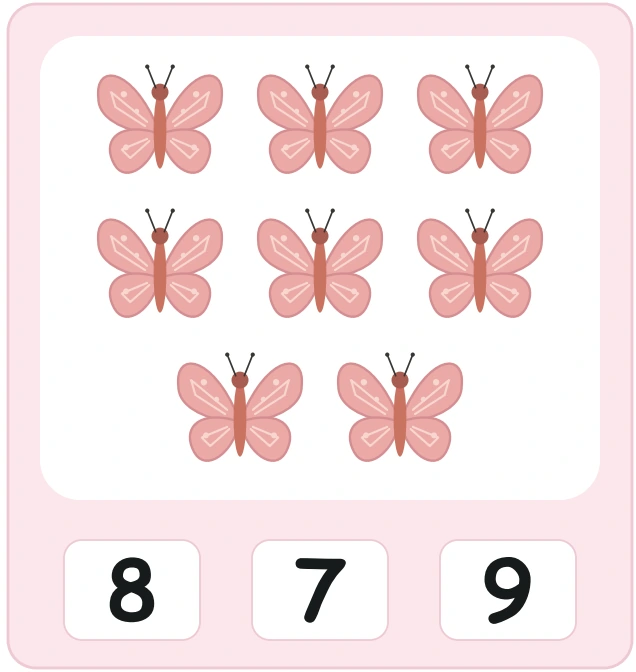
The central Count and Circle card holds eight pink butterflies: three on the upper level, three on the next and two below. The choices read 8, 7 and 9. Its correct answer is the first option, unlike several earlier cards where the matching numeral sits in the middle.
Let the objects determine the choice. Count and Circle should not become a rule about selecting the central number or the largest digit. Ask the learner to show all eight butterflies before discussing where 8 happens to be printed.
Use a route that includes the bottom pair. A count of six may describe the upper two levels accurately, while a count of seven may have missed one lower butterfly. Locate the specific gap instead of asking for an unspecified better attempt.
Count each butterfly once rather than counting its wings. Count and Circle uses complete pictures even when the illustration has several prominent parts. The blue butterfly card elsewhere has nine drawings, so a shared object name does not guarantee a shared amount.
In class, ask for a count before a choice
A teacher begins with one card large enough for the group to see. She asks learners to indicate the picture unit and proposes a pointing route. One child counts aloud while another follows the indicated objects without marking an answer yet.
Next the teacher asks which printed numeral matches the established amount. If learners disagree, she checks whether the disagreement concerns the picture count or the numeral identification. Count and Circle discussion becomes more useful when those questions are kept distinct.
At tables, learners can take turns as counter and chooser. The chooser listens to the amount and then explains a response. Change roles so one child does not always supply the number words and the other only draw circles.
An adult may record a pointed answer for someone working on pencil control. Count and Circle participation can remain mathematical even when the movement is shared. Keep each response tied to the selected card rather than comparing who finished the most cards.
Five Count and Circle choices to investigate later
1. Reveal a Count and Circle answer row after counting
Use a plain strip to hide only the choices of a selected card. Establish the amount with visible pointing, then uncover the numerals. Read unfamiliar digits aloud and let the learner show which matches.
The Count and Circle sequence creates a reason to trust the objects before the options. Keep the count available through talk; it is not a test of remembering a number during a long delay.
2. Explain one Count and Circle option that does not fit
After choosing a correct numeral, select one other option and ask why it cannot describe the current collection. Refer back to the counted pictures rather than requiring a formal number comparison.
For the flower card, a child can recount seven and explain that the option 6 leaves a flower unaccounted for. Count and Circle reasoning can include a pointing demonstration instead of a long verbal answer.
3. Give a Count and Circle pointer its own practice
Let the learner indicate objects while an adult speaks the count. Swap the jobs if the child wants to supply the number words. Discuss whether the pace kept one spoken number with each picture.
This Count and Circle investigation can reveal a coordination problem without adding the demand to recognize and mark a numeral immediately. Finish by establishing the complete amount together.
4. Compare the two Count and Circle butterfly cards
Locate the pink butterflies and the blue butterflies. Count each card independently, noticing eight in one and nine in the other. Then inspect their different option rows and choose the appropriate numerals.
The object category stays familiar while quantity changes. Count and Circle should follow the current group, not an answer carried over from another card with similar pictures.
5. Make a clear Count and Circle decision mark
On spare paper, write a short row of well-spaced numerals. Model a single enclosing curve around one choice, then let the child try. Return to an actual card only after its quantity is understood.
The Count and Circle goal is a readable selection, not a perfectly round shape. A pointed response remains useful when an adult helps with the pencil movement.
Count and Circle ladybirds are more than their spots
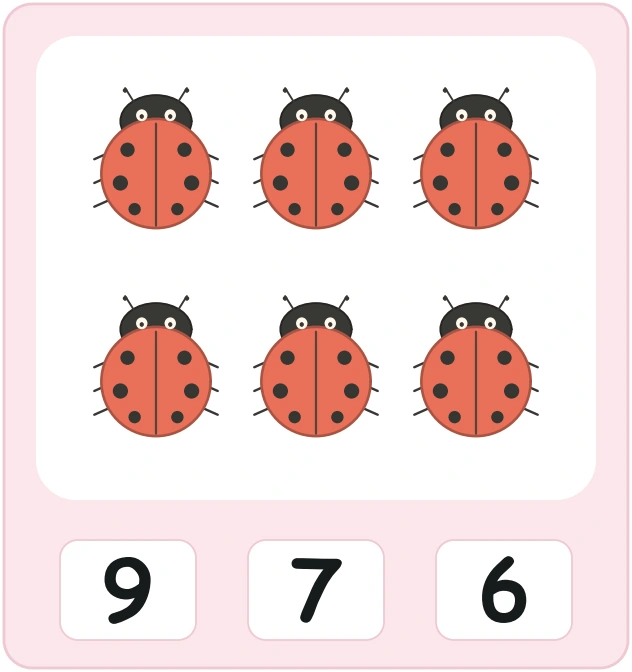
Six ladybirds appear in two rows of three on the lower-left card. Their answer options are 9, 7 and 6, so the matching numeral is last. Check the six whole insects before treating the response position as meaningful.
Spots belong inside the drawings and are not the counting unit. An adult can trace around one complete ladybird and name it before starting. Count and Circle is clearer when the child knows which visible thing receives each count.
An adult Count and Circle reference for all nine cards
| Card position | Pictures and quantity | Options in print |
|---|---|---|
| Upper left | 4 carrots | 5, 4, 2 |
| Upper middle | 7 flowers | 5, 7, 6 |
| Upper right | 1 rabbit | 3, 1, 7 |
| Middle left | 2 sheep faces | 4, 2, 6 |
| Center | 8 pink butterflies | 8, 7, 9 |
| Middle right | 5 chicks | 5, 4, 2 |
| Lower left | 6 ladybirds | 9, 7, 6 |
| Lower middle | 3 bees | 3, 2, 6 |
| Lower right | 9 blue butterflies | 7, 9, 6 |
Use the reference after listening to the learner. The sheet is delivered without answer circles, preserving a fresh decision on every card. If a result differs, observe how it was produced before deciding what the next attempt should change.
Return to Count and Circle through a specific discovery
A child who circles two choices may need a clearer explanation that the card has one complete pictured amount. Someone who gives a correct count but marks a neighbor may need help locating that numeral. Repeated recounting alone will not answer every difficulty.
Save a single card for another visit and name the action you want to inspect: the lower butterflies, the ladybird unit or the choice after the number has been established. Let the counted objects justify the mark. That gives Count and Circle practice a concrete focus.
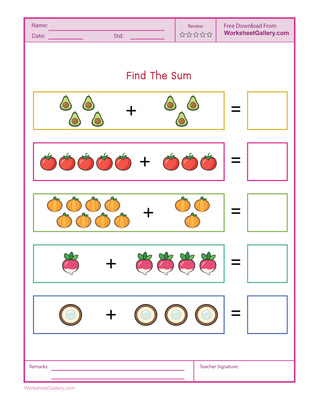
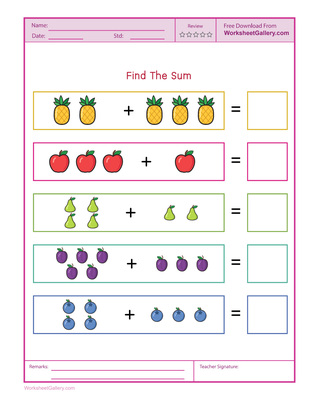
The number-five object and numeral activity offers another quantity connection. For pencil movement, try five introductory tracing paths. When the learner is ready to combine groups, the illustrated Find the Sum lesson supplies a different counting purpose.
Download Count and Circle with every option visible
The free sample is the original branded PDF. An eligible membership that is active provides the clean premium Count and Circle copy through the member download. That edition removes worksheet website-name and domain credits, along with the promotional watermark, and adds no advertisements to the printable.
Open the downloaded version and check the nine cards before printing. Set US Letter portrait output and scale within the printer's available margins. On a test sheet, verify the small option numerals, both lower pink butterflies and all nine blue butterflies, keeping the full outer border visible.
Offer the Count and Circle sheet with a pencil and choose one starting card together. Count, compare, then mark can be a short routine with room for a child to explain each decision.
Popular Worksheets
Printable resources families and teachers are downloading now.
 Free
 Free
 Free
 Free