
Zebra Zip: 6 Powerful Letter Z Games for a Happy End
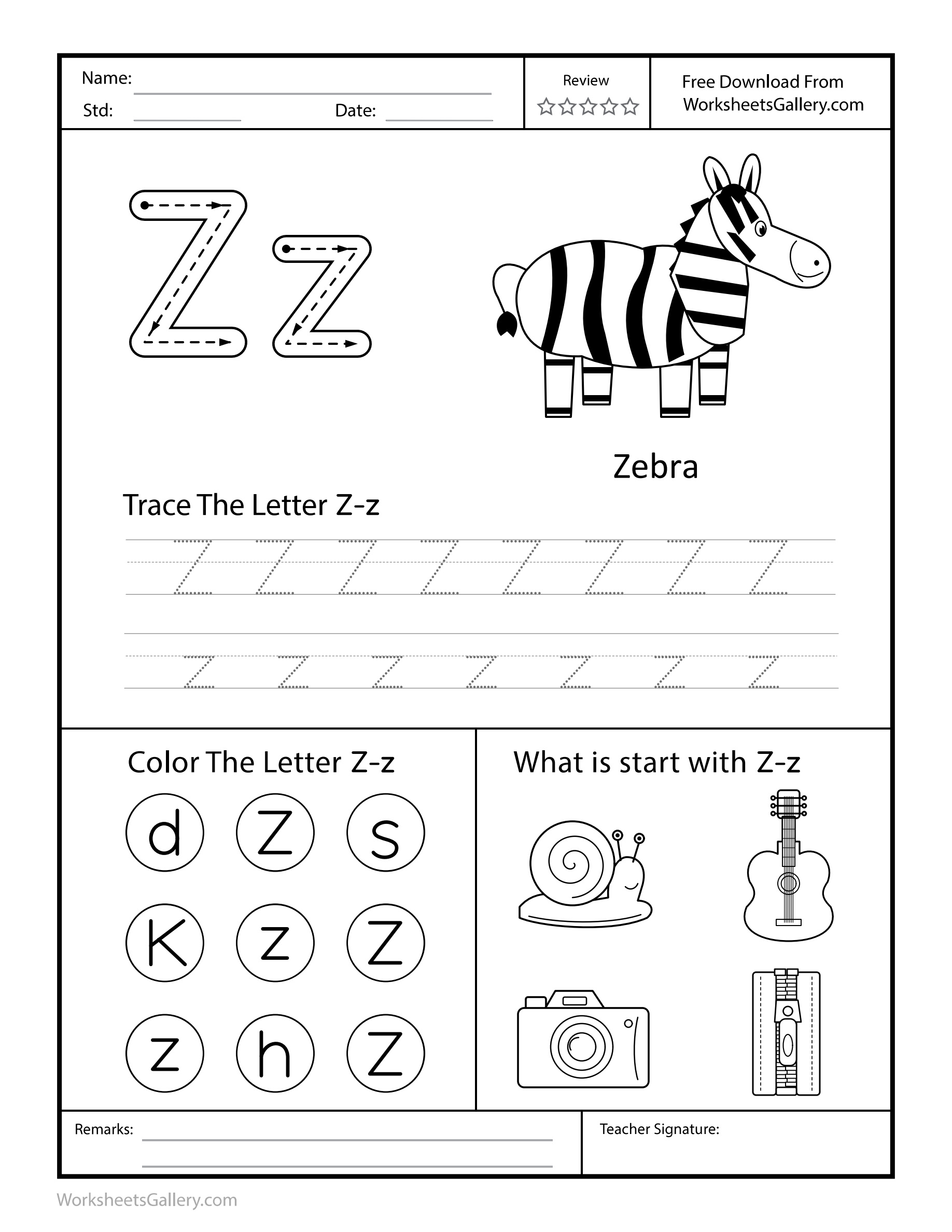
Across, slant, across: three decisions keep this shape readable. Letter Z begins with a horizontal journey, changes direction toward the opposite lower corner, then travels horizontally again. Both bars move to the right; the diagonal joins their alternating ends. A zebra and a zipper give those movements a place in an imaginary packing story. This page invites children to inspect Z/z, trace selected guides and explain their picture choices. Letter Z can be a satisfying alphabet finish without becoming a race to complete every row or recall every earlier letter.
Three Letter Z movements, two changes of direction
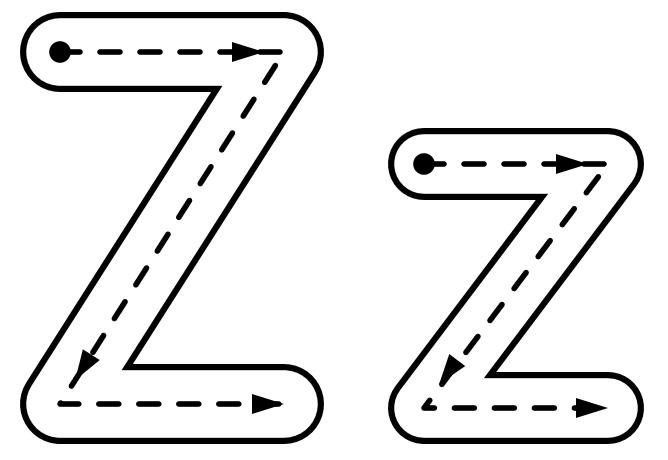
The first arrow travels along the upper bar from its left end toward its right end. The diagonal then descends from the upper right to the lower left. The last bar goes rightward along the bottom. Following that order gives Letter Z its three connected parts.
Pause your explanation at each corner while keeping the complete model visible. Ask where the next part will finish. A learner may understand the endpoints before being able to move a pencil between them. Pointing is a useful response to that Letter Z question.
The smaller Letter Z keeps the same basic route. Its reduced height asks for shorter movements rather than a different arrangement of bars. Eight capital guides and seven lowercase examples appear on the source sheet; choose an amount that suits the child instead of treating fifteen traces as a required session.
- → Upper bar: travel from the left toward the top-right corner.
- ↙ Connecting slant: reach the opposite corner below.
- → Lower bar: finish by moving right again.
A class compares where the Letter Z diagonal lands
A teacher draws a large Z next to the source model and indicates the top-right corner. Before continuing, she asks learners to point to the diagonal's destination. Their gestures show whether they expect the opposite lower corner or a straight drop on the same side.
She completes the diagonal, then names the final rightward movement. The class follows the sequence through the air while watching the reference. For Letter Z, the destination matters at each turn: the next stroke begins where the previous one has arrived.
At tables, children locate one capital guide. The teacher demonstrates slowly from the printed starting point, using the handwriting convention familiar in that classroom. A learner can trace with a fingertip before deciding whether to use a pencil on the dotted Letter Z.
Afterward, ask for a specific observation. Did the diagonal reach the left end of the bottom bar? Are both bars visible? Let a child explain one feature rather than comparing classmates' finished rows. A clear observation provides more useful information than a contest over speed or darkness.
Six Letter Z gains an adult can observe
- Letter Z route planning. Three connected parts encourage anticipation of the next endpoint before the pencil changes direction. A pointing prediction reveals that plan without requiring a complete trace.
- Letter Z directional vocabulary. Across, opposite, upper and lower describe real places in the printed form. Children can use these words to give an adult a movement instruction.
- Letter Z eye-and-hand coordination. The eye checks the intended corner as the writing hand follows the guide, while the other hand keeps the sheet steady.
- Letter Z case comparison. Seeing the repeated construction in Z and z supports recognition across height changes, with both cases included in the later circle search.
- Letter Z naming and listening. Zebra and zipper provide two concrete words with a shared /z/ beginning. Naming the drawings first makes the sound comparison understandable.
- Letter Z reasoning in play. Packing a pretend pouch calls for choosing an item, explaining its purpose and revising the plan when another object needs space.
These tasks offer different entry points for ages three to six, including preschool and kindergarten. A child can be ready to name a zebra before being ready to trace its initial. Letter Z recognition, pencil movement and spoken explanation deserve separate attention.
Find the Letter Z zipper, then say why it belongs
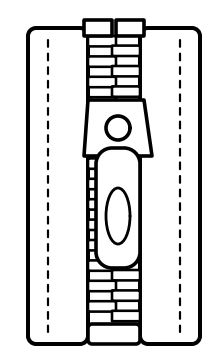
The source's picture-choice area contains a snail, guitar, camera and zipper. Zipper sits at the lower right. Establish each name aloud before asking the child which begins with the target sound. That keeps unfamiliar object vocabulary from becoming an accidental obstacle.
Zebra is the introduction picture. Say zebra and zipper at an ordinary pace, then repeat their shared beginning if needed. Letter Z represents /z/ in both of these examples. A learner can answer by pointing or naming; independent reading of the complete words is unnecessary.
If the zipper drawing is unfamiliar, show a zipper on a bag while an adult holds it. Name the pull and the track without turning the activity into a detailed mechanism lesson. Return to the drawing and let the child explain the connection in their own words.
Compare one distractor when the first answer is clear. Guitar has a different beginning; camera does too. Letter Z discussion can stay focused on the known picture names rather than becoming a test of every sound in every word.
Esme packs a travel pouch for a toy zebra
Esme and her grandfather decide that their zebra toy needs a bag for an imaginary visit. She chooses a cloth for a picnic and a small book for the journey. Her grandfather asks which should go in first, then follows her plan so she can see whether the objects fit.
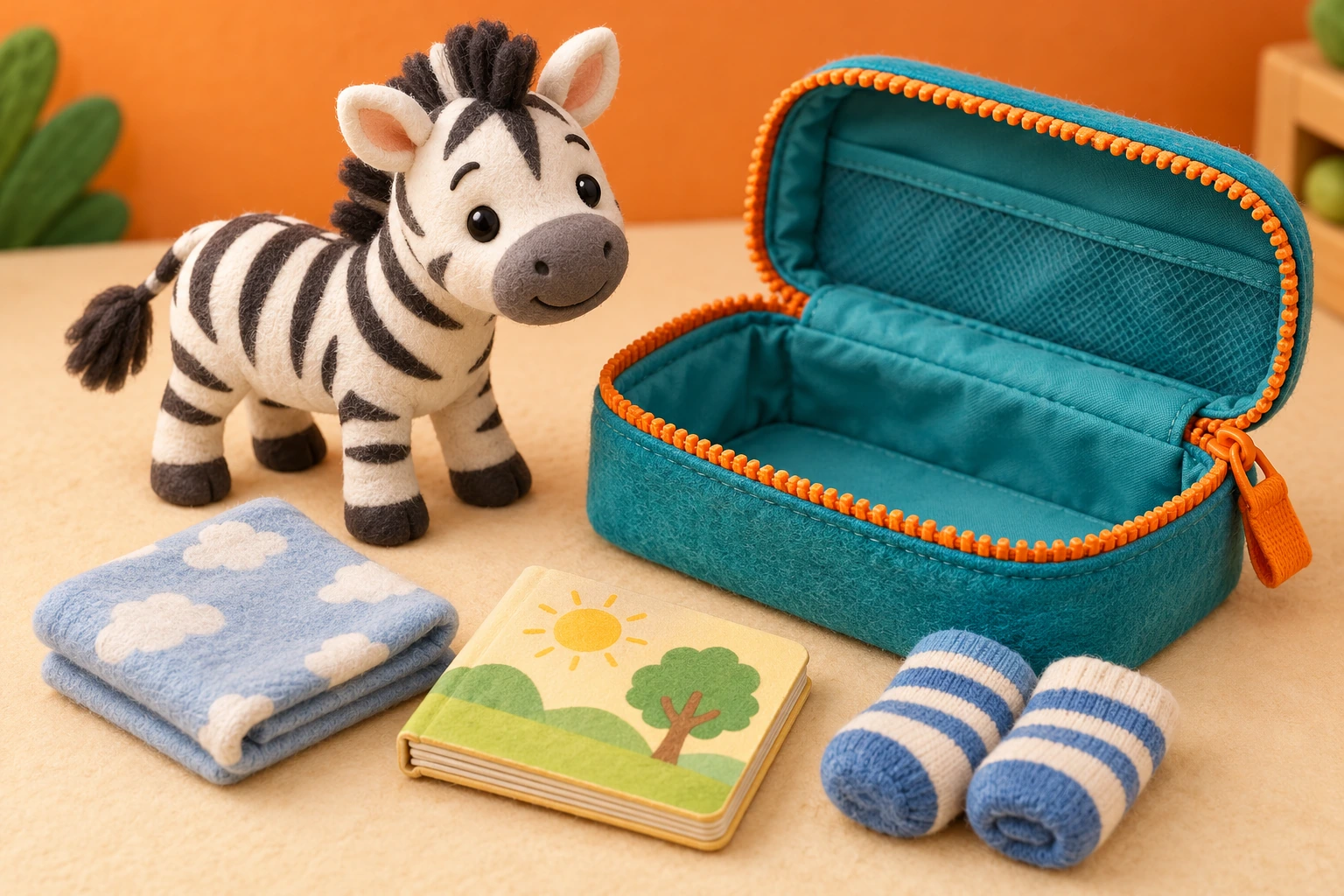
When the pouch will not close, Esme removes the rolled socks and tries a different arrangement. The story gives her a reason to describe space, order and purpose. It is pretend toy play, so a real zebra's needs are not the point of the scene.
Her grandfather names the zipper and shows its written initial on a separate card. They compare that Letter Z with the first letter in zebra. Esme then looks at the worksheet's large route and points from the upper right toward the lower left.
She chooses one trace before sending the toy on its journey. Her grandfather describes what he saw: the diagonal reached the opposite corner and left room for the bottom bar. Letter Z becomes part of the packing conversation without requiring every object in the bag to start with Z.
Six Letter Z invitations after the first trace
1. Plan the Letter Z travel pouch
Offer a few large pretend packing items and ask what each would be for. Let the learner choose an order, then test the arrangement with an adult. Explain a change if an item no longer fits.
Name zebra and zipper once the packing plan has a purpose. This Letter Z invitation adds vocabulary to the child's decisions instead of replacing the conversation with constant letter questions.
2. Predict the Letter Z diagonal's destination
Point to the top-right corner of a large adult-drawn model. Ask which lower corner the slant reaches, then follow the printed arrow route together. Keep the full example available so the learner has evidence for the prediction.
Finish with a complete Letter Z demonstration. A child who points accurately can stop there or choose a dotted guide; prediction and pencil tracing are different levels of response.
3. Dictate a Letter Z journey message
Invite a sentence about where the toy zebra is going and what it will carry. The adult writes the sentence on spare paper and reads it back. Let the child correct a detail if the message does not match the intended story.
Write zebra nearby and indicate its initial. Letter Z appears in a message with meaning, while the adult takes responsibility for spelling and sentence writing.
4. Compare Letter Z bars of different sizes
Prepare one tall Z and one small z using the source construction. Ask whether both have an upper and lower horizontal part. Compare how the diagonal joins them before moving the cards to different places.
The learner can point to the top-right corner on either card. This Letter Z comparison checks shared structure rather than making size itself the answer.
5. Give a Letter Z route instruction
An adult holds a pencil over a roomy model on spare paper while the child describes the next movement. Pause at a corner and ask for a destination if the instruction is unclear. Follow the model together after the message has been clarified.
Swap roles if the learner wants to draw. This Letter Z exchange makes words such as across and opposite useful to someone listening, with the source arrows settling any uncertainty.
6. Review the Letter Z bag before departure
Ask the pretend traveler what is missing and allow one more practical suggestion. A blanket, ticket picture or familiar toy can belong in the story regardless of its initial. Explain why it is needed, then decide where it will fit.
Close with zebra and zipper as the two target names. The final Letter Z moment can be a spoken connection rather than another row, especially when the child is ready to continue the journey in play.
Five Letter Z answers sit among four distractors
The source arrangement is d Z S / K z Z / z h Z. Choose the center of the upper row, the center and right of the middle row, and the left and right of the bottom row. Those positions give three capital targets and two lowercase targets.
The distractors are d, S, K and h. Compare their construction with the arrow model, using one visible difference at a time. S is curved where Letter Z uses an angular connecting slant; K has a different central arrangement.
The matching rule includes Z and z. A pointing check before coloring lets the learner reconsider a choice while all outlines are still clear. If a child enjoys explaining more than coloring, retain the explanation as the useful response.
Short Letter Z returns can solve a specific problem
A reversed diagonal changes the construction. Compare its endpoints with the source instead of asking for an unspecified “better Z.” If the child replaces the slant with a vertical stroke, indicate the opposite lower corner and demonstrate how the model reaches it.
Another difficulty is rounding both corners until the result resembles an S. Enlarge the Letter Z example and discuss its turns. The instruction across, slant, across can support the demonstration when it matches the actual movement, but should not become a chant spoken faster than the child's hand can follow.
On another day, return to the feature that needed attention and one part the learner already enjoys. A brief Letter Z visit might involve selecting a circle and explaining a corner before continuing the zebra journey. Describe a concrete change rather than requesting a flawless alphabet finale.
For other movement experiences, use the varied line-tracing practice. The additional Z tracing resource offers another presentation, and the alphabet-wide tracing pages support a later choice of letters.
A Letter Z print check before the toy departs
The original sheet is provided as the branded free sample. An active membership with the required eligibility unlocks the clean premium Letter Z PDF. That edition has the worksheet website's domain lettering, name and promotional watermark removed, and no advertisements added to its printable page.
| Before printing | Look for |
|---|---|
| Choose the download edition. | Free original or eligible member's clean copy. |
| Open the downloaded file. | Complete frame, arrow pair and both lower tasks. |
| Set up the printer. | US Letter portrait sheet with the border inside the usable margin. |
| Inspect one test print. | Readable dots, two horizontal bars and the full zipper drawing. |
Check that the learner has a firm surface and a comfortable view of the guide. Put a pencil and a few colors within reach, then offer the first Letter Z choice. There is a route to inspect and a toy journey to plan; either can supply a worthwhile beginning.
Popular Worksheets
Printable resources families and teachers are downloading now.
 Free
 Free
 Free
 Free