
Yak and Yo-Yo: 5 Brilliant Letter Y Games for Joy
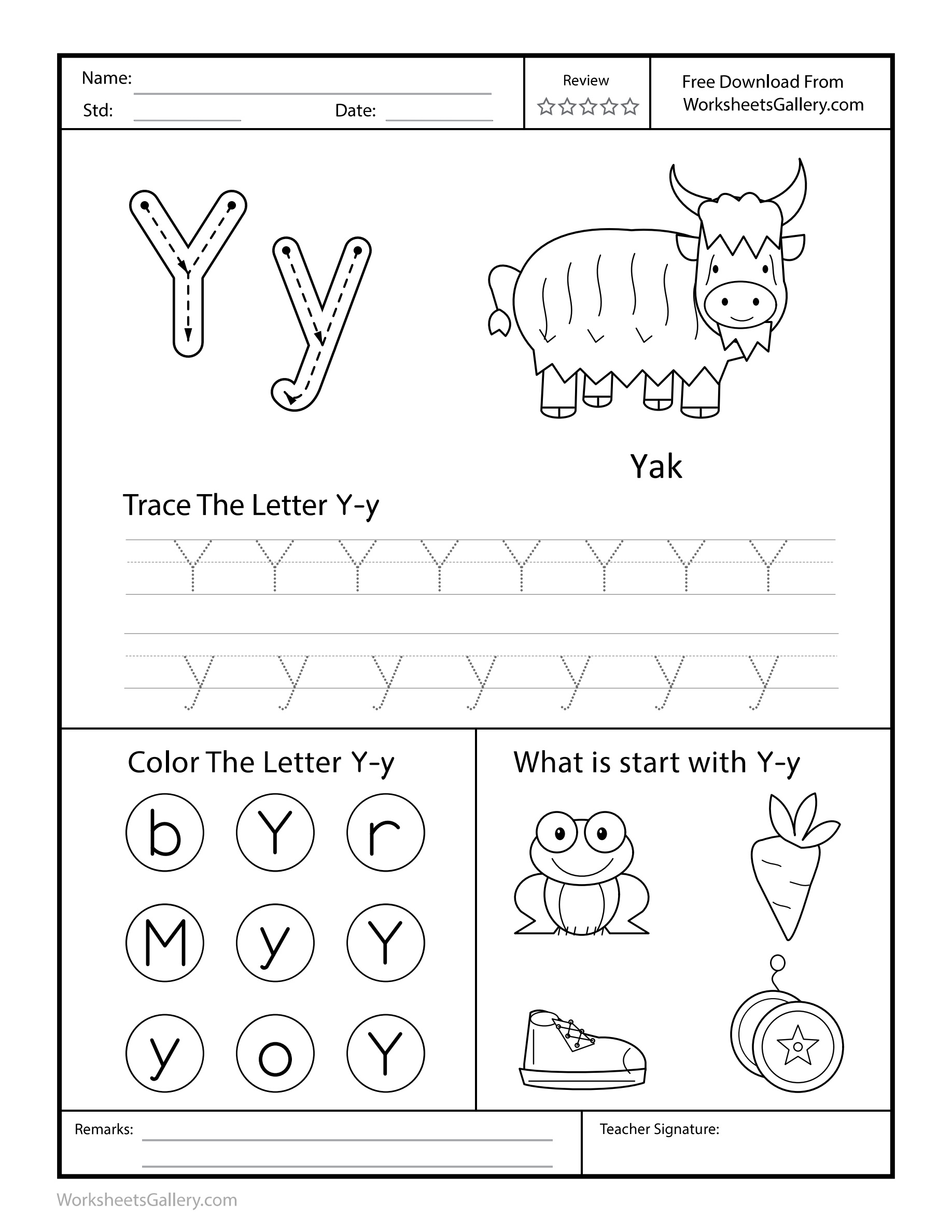
Look below the fork before deciding you have finished. A capital Letter Y has a straight stem beneath its meeting point; the small y on this worksheet continues diagonally below the writing rule and turns at the end. That difference is easy to miss when children concentrate on the two upper branches. Explore it with a yak, a yo-yo and a pretend toy stall where a young shopkeeper has something to explain. Letter Y practice can begin with a pointing choice, a spoken request or one carefully observed dotted guide.
The lowercase Letter Y has somewhere further to go

Seven small guides occupy the lower writing row. Their bodies sit near the central rule, while each descending part reaches beneath the lower body line. The printed form turns left at its foot. Follow the arrow model when showing that continuation rather than converting it into a straight capital stem.
Eight capitals appear in the upper row. Letter Y changes more than height between these cases: the tall form has a straight central trunk, whereas the lowercase route continues downward on a slant. A child who shrinks the capital exactly may create a recognizable capital, but has not yet followed this lowercase model.
Let the learner indicate the lowest point in one small example. Ask where the Letter Y body finishes and where its tail continues. This visual inspection can happen without a pencil, leaving attention available for the feature that distinguishes the cases.
Compare the Letter Y meeting point and its continuation
| Printed case | Below its upper branches | Useful observation |
|---|---|---|
| Capital Y | A straight central stem | The trunk reaches the capital's lower limit. |
| Lowercase y | A diagonal continuation with a turning foot | The tail extends below the body rule. |
The table describes the forms on this sheet. Use the handwriting convention taught in the child's setting when demonstrating Letter Y. Explain the pencil lift and starting positions from the arrows, keeping the model in view while the learner follows.
Draw a generous example on separate paper if the narrow guides are difficult to inspect. Point out the space below the lowercase body. For Letter Y, that lower space is part of the letter's route, not a place the child has accidentally strayed into.
Seven ways Letter Y gives a learner something to notice
- ↓ Letter Y position
- Comparing the body and descending tail makes above, below and lowest useful words tied to an observable feature.
- Letter Y case identity
- The capital and lowercase examples ask learners to recognize related letters even when the lower construction differs.
- Letter Y movement planning
- Following the tail requires continuing beyond the body line instead of ending at the familiar height of smaller letters.
- Letter Y hand coordination
- A steadying hand and a deliberate descending movement give both hands a practical role during one short trace.
- Letter Y picture vocabulary
- Naming yak and yo-yo supplies concrete words for a spoken initial-sound comparison before coloring.
- Letter Y visual selection
- Choosing targets among nine circles calls for attention to form rather than coloring every option in a row.
- Letter Y social language
- Pretend shop requests allow the learner to explain a preference, listen to an answer and clarify what a customer needs.
Preschool and kindergarten children, typically ages three to six, can use different parts according to their readiness. Someone who can identify the toy may not yet control the descending stroke. Letter Y learning includes those separate observations; a whole-page completion requirement would conceal that variety.
A yo-yo is the intended lower-right answer
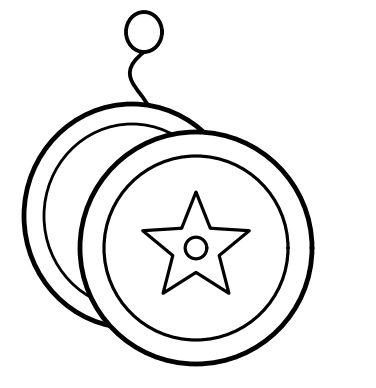
The picture options show frog, carrot, shoe and yo-yo. Name all four before asking which begins with the target letter. The yo-yo is in the lower-right position. Its hanging string and round toy body offer details a child can use when explaining the choice.
Yak introduces Letter Y at the top. Say yak and yo-yo normally, listening for the initial /y/ sound, also represented as /j/ in phonetic notation. There is no need to introduce that notation to the learner; the adult can simply repeat the natural words.
If the child calls the toy a ball, explain how a yo-yo is named and used in a simple sentence. Then revisit the picture choice. Letter Y knowledge should not be assessed through an object label the child has never encountered.
Other jobs of written y can wait for another lesson. On this sheet, focus on the two pictured words and their shared beginning. A brief Letter Y comparison is easier to follow when an adult resists adding several unrelated spelling examples at once.
Nico opens a toy stall for an imaginary yak
Nico puts two toy pictures on a small table while his older cousin supplies the customer's voice. A toy yak approaches the pretend stall and asks for a yo-yo with a long string. Nico chooses a picture, explains his choice and waits for the customer to respond.
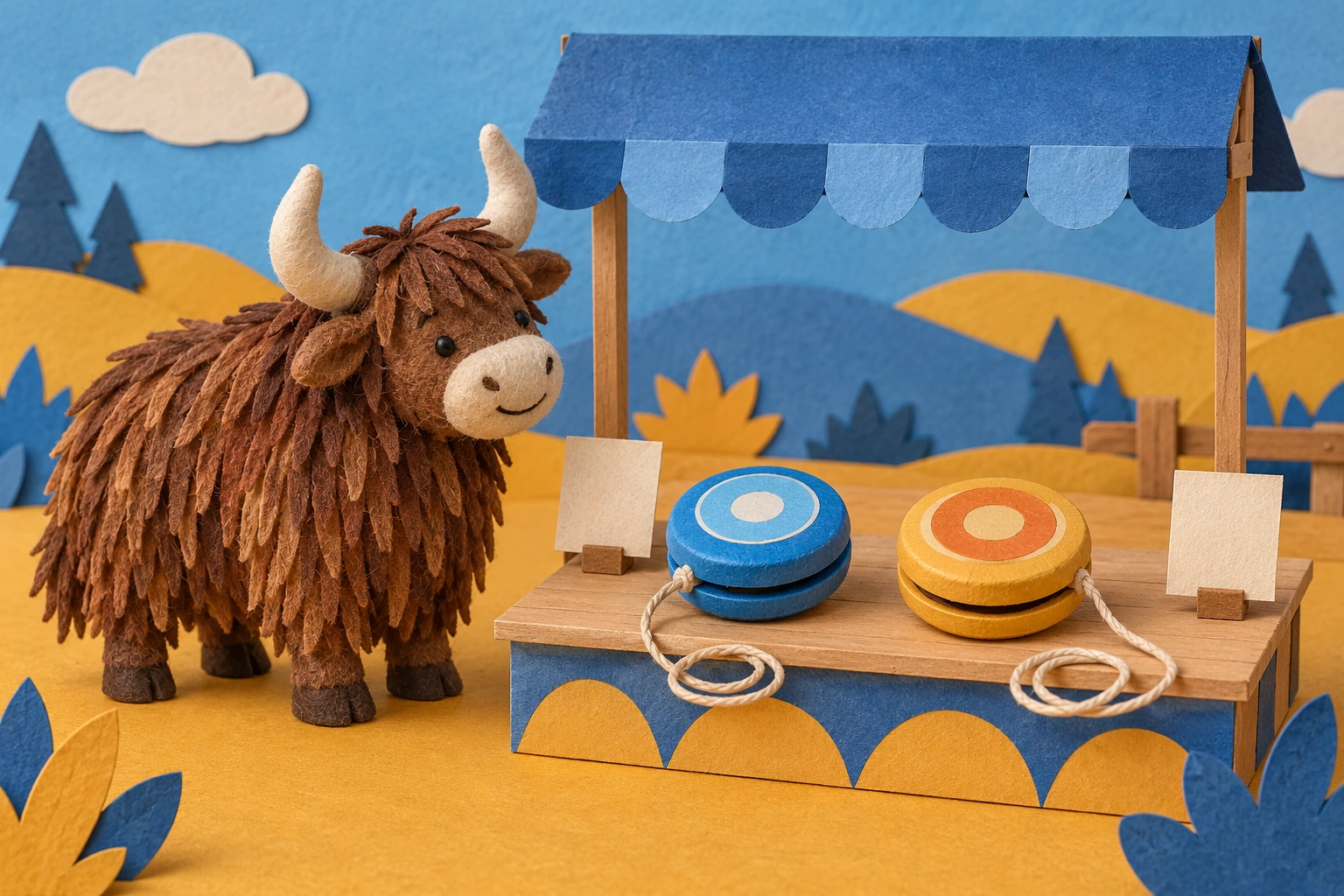
The illustration is imaginary miniature play scenery. It gives the conversation a setting without suggesting that real yaks shop for toys. Paper drawings are enough to play the same scene. An adult can name the yak and write its first letter beside the stall after Nico has made his decision.
His cousin then shows the lower Letter Y row. Nico points below the rule because the tail reminds him of the string hanging from the toy. They compare the actual printed shape instead of trying to make the string into a perfect letter. He chooses one dotted y and follows it downward.
When the customer returns, Nico changes the request: now the toy needs a box for a journey. The conversation can grow from his idea. Letter Y remains available through yak and yo-yo, while the child's story has room for other words and practical decisions.
A teacher makes room beneath the Letter Y body
Before distributing pencils, show a large capital beside a large lowercase example. Indicate each meeting point, then compare what lies beneath it. Ask children to point to the form that travels below the small-letter body line. Their response identifies the feature the next demonstration will use.
Trace the lowercase route according to its arrows, naming the descent and the turning end. Use below the body as a descriptive cue. Letter Y has a lower continuation on this model, so the demonstration needs sufficient blank space beneath the rule.
At tables, invite one learner to describe and another to point. Swap roles before either attempts a trace. A class can discuss the same Letter Y feature while individual children choose different response methods, including gesture, a fingertip route or a pencil.
Keep the sheet flat and visible. If the child turns the page to reach a difficult part, check comfort and follow the writing support used in that setting. Return to a roomy demonstration when the small tail is difficult to see; repeated tiny attempts are unlikely to clarify an unclear model.
Five Letter Y stall games with a clear purpose
1. Give the Letter Y customer a useful answer
An adult voices the yak's request for a yo-yo and the child explains which toy picture to offer. Add a simple preference, such as color or carrying space, after the object name is understood. The learner can ask for clarification before choosing.
Finish by saying yak and yo-yo together and indicating a written Y card. This Letter Y link follows a meaningful exchange rather than interrupting the roleplay at every sentence.
2. Leave space for the Letter Y tail
Draw a lowercase body guide on spare paper with plenty of space underneath. Use the worksheet to show where the tail descends. The learner points to the intended lowest area before following a larger adult-drawn example.
Compare the result with the source instead of praising any downward mark as correct. This Letter Y game concerns the specific slanted continuation and turning foot, with pointing available when drawing is difficult.
3. Deliver a Letter Y message to the next player
The shopkeeper tells a second player where the yo-yo picture is waiting: beside the yak, below a shelf picture or near a blank bag. The player follows the message, then reports whether the description was enough.
Use position words in an actual search. Return to below when looking at the lowercase tail, allowing Letter Y language to connect a play instruction with a visible worksheet feature.
4. Sort Letter Y cases by their lower routes
Prepare several adult-written Y and y cards using the source forms. The learner groups straight central stems separately from descending lowercase tails. Name both groups as the same letter, then compare their upper branches.
Move the cards around before a second brief look. Letter Y identity should follow its construction even when the tallest card is no longer in the first position.
5. Send the yak home with a Letter Y story
Ask what the customer will do after leaving the toy stall. Accept a sensible invented destination and let the child dictate one sentence. Draw a small picture for that sentence if they want a record of their idea.
Bring back the two target words only after the ending has been heard. This Letter Y activity gives the learner authorship; the adult supplies reading and spelling support rather than requiring independent sentence writing.
Check three capitals and two small Letter Y matches
The nine-circle arrangement reads b Y r / M y Y / y o Y. Its five answers occupy the top center, middle center, middle right, bottom left and bottom right. Three are capitals and two are lowercase forms.
The letters b, r, M and o are distractors. Compare them directly with a Y/y model before coloring. Letter Y does not include a closed round body like o; pointing out one useful difference is enough for a short explanation.
Accept both cases in this search. If a learner selects only the tall examples, revisit the descending small-letter guide and compare it with one of the matching circles. Leave the page available for correction through discussion rather than marking the first answer as a final judgment.
When Letter Y practice needs a different invitation
A tail that ends at the body rule is a reason to inspect the lower space. A small form copied with a straight capital trunk calls for a case comparison. Scribbled repairs suggest a fresh model may be more useful than another instruction to press harder.
For regular Letter Y visits, keep one familiar activity and change the conversation around it. Today the yak asks for a toy; later Nico can decide how to carry it. Mention the particular feature the child noticed, such as the tail's endpoint, so improvement has a clear meaning.
For preparatory movement, try the five early line paths. Compare another presentation on the separate Y tracing page, then use the A–Z tracing resource when a broader alphabet choice is useful.
Download Letter Y and protect the space beneath each guide
The free sample preserves the uploaded sheet's original branding. The premium Letter Y PDF is available through an eligible active membership, with its worksheet website lettering and promotional watermark removed. No advertisements have been added to that clean printable.
Select the desired download and open it before printing. Choose portrait US Letter output and keep the entire border inside the printable area. Inspect the lowercase tails on a test copy: they must remain visible below the body rules, along with the yo-yo picture and its string.
Set out the printed Letter Y page with a pencil and let the learner choose a starting job. There can be a customer to answer before there is a line to trace, and a useful discovery can be small enough to leave another turn for tomorrow.
Popular Worksheets
Printable resources families and teachers are downloading now.
 Free
 Free
 Free
 Free