
Master Letter L Tracing: 15 Brilliant Tips for Super Writing!

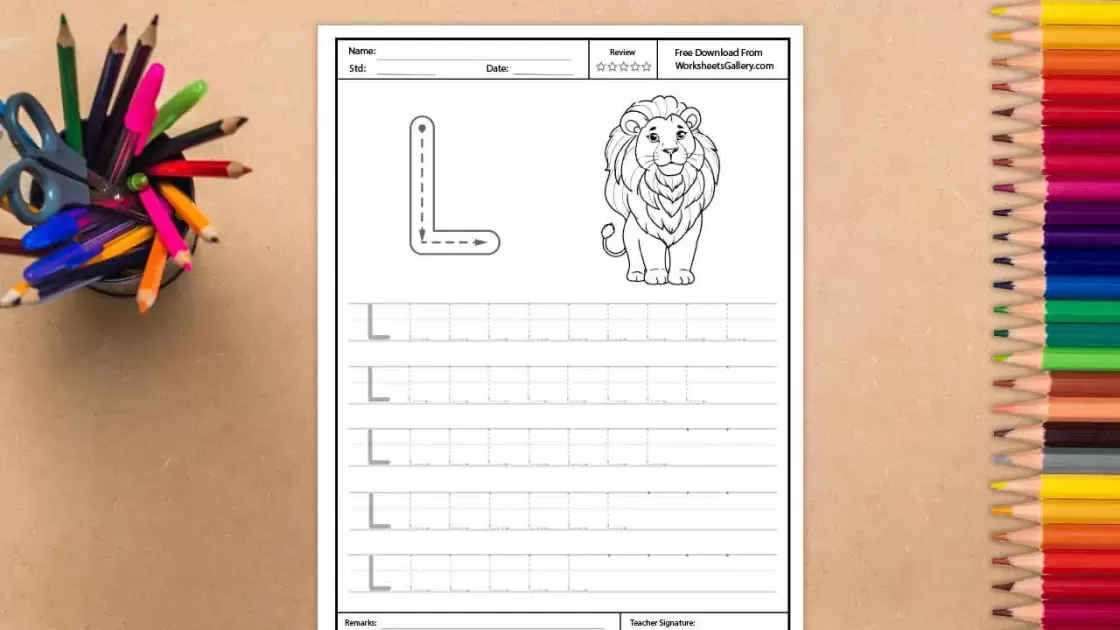
Helping a child navigate the world of penmanship starts with foundational strokes, and our Letter L Tracing worksheet is the perfect place to begin. This specific sheet focuses on the uppercase 'L', a character composed of two simple, straight lines that intersect at a sharp right angle. Because the formation avoids complex curves or diagonal slants, it serves as an excellent confidence builder for young learners. The high-quality printable features a magnificent lion illustration, bridging the gap between phonetic awareness and mechanical writing skills. By engaging with this exercise, your child isn't just following lines; they are training their brain to recognize patterns and their hands to execute them with precision.
Visual Learning with the Lion and Letter L Tracing
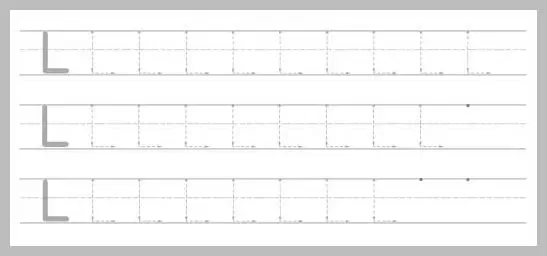
Children are naturally drawn to imagery, and the inclusion of a friendly lion on this page is a deliberate educational choice. When kids see the lion, they instantly connect the sound /l/ to the visual symbol 'L'. This multisensory approach is vital during the early literacy stage. The worksheet is divided into clear sections: a large demonstration area at the top and five rows of structured practice lines below. Each row provides ample opportunities for repetition, which is the cornerstone of muscle memory in early childhood education. The clean design ensures that the student remains focused on the task without unnecessary visual clutter.
Why This Worksheet Works
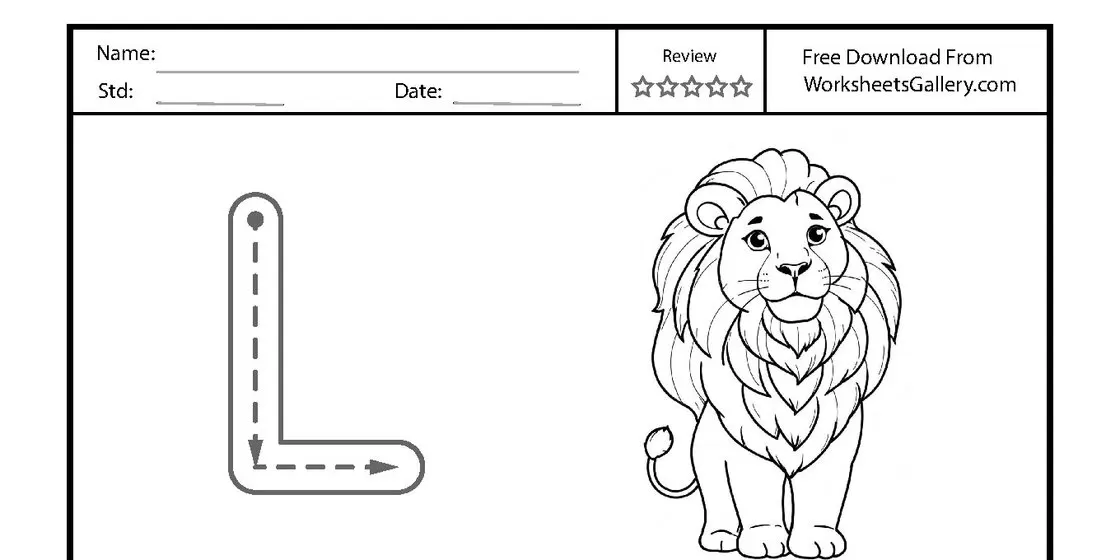
- Directional Guidance: The large 'L' at the top features a numbered dot and arrows to show exactly where to start and turn.
- Gradual Independence: The dotted lines fade slightly as the child progresses, encouraging self-reliance.
- Fine Motor Refinement: Holding a pencil and following the paths strengthens the small muscles in the hand.
- Standardized Sizing: Practice rows help children understand the concept of 'ceiling' and 'floor' in handwriting.
Effective Classroom and Home Strategies
In a classroom setting, a teacher might introduce this activity during a 'Letter of the Week' unit. Start by having the children 'air write' the letter using their entire arm. This large-scale movement helps solidify the shape in their minds before they attempt the smaller movements required on paper. Once at their desks, the Letter L Tracing activity provides a quiet, focused task that allows the teacher to circulate and check for proper pencil grip. In a home environment, parents can make this a bonding moment by sitting together and discussing words that start with L—like lamp, leaf, or love—while the child works through the lines.
Step-by-Step Handwriting Success
Step 1: The Big Guide
Have the child use their finger to trace the large 'L' at the top. Follow the arrows: start at the top, go straight down, then move right.
Step 2: The First Row
Encourage the child to trace the first row slowly. Speed is not the goal; accuracy and staying on the dotted lines are what matter here.
Step 3: Mid-Sheet Review
Pause after three rows. Ask the child which 'L' looks the best to them. Self-assessment builds critical thinking and pride in work.
Step 4: The Reward
Once the writing is complete, allow the child to color the lion. This rewards their hard work and adds another layer of finger control practice.
Cognitive and Motor Skill Development
Mastering Letter L Tracing involves more than just a pencil. It requires visual-spatial awareness to understand where one stroke ends and the next begins. Kids learn to judge distance and proportion—ensuring the vertical line isn't too short and the horizontal line isn't too long. Furthermore, this activity supports executive functioning. A child must plan their movement, execute it, and inhibit the urge to scribble. These foundational skills transfer directly to other academic areas, such as drawing geometric shapes in math or organizing thoughts for storytelling.
Core Skills Cultivated
| Skill Category | Developmental Benefit |
|---|---|
| Proprioception | Understanding how much pressure to apply to the paper. |
| Ocular Tracking | Training eyes to follow a path from top to bottom and left to right. |
| Phonemic Awareness | Linking the 'L' shape to the specific sound heard in "Lion". |
| Hand-Eye Coordination | Syncing visual input with physical hand output. |
Creative Games to Extend the Learning
Once the Letter L Tracing page is finished, keep the momentum going with interactive play. Educational research shows that combining seated work with active play improves retention. Try the "L-Search" game: give the child a magnifying glass and look for the letter L in books, on cereal boxes, or street signs. This proves that the symbol they just practiced exists in the real world. Another fun idea is "Lemonade Stand Roleplay." Write the word 'Lemonade' and have the child trace the first letter to create their own sign, teaching them the practical utility of writing.
Engaging Storytelling Ideas
Use the lion illustration on the worksheet to spark a narrative. Ask questions to get the creative juices flowing:
- The Lion's Name: Does this lion have a name that starts with L? Maybe Leo or Luna? What is Leo's favorite food?
- The Jungle Adventure: If Leo the Lion went for a walk, what things starting with L would he find? A lake? Some leaves? A lizard?
- The Lion's Roar: How does a lion roar? Practice making loud /l/ sounds and soft /l/ sounds together.

Common Mistakes and How to Correct Them
When first attempting Letter L Tracing, many children might reverse the letter, making it look like a 'J' or a backwards 'L'. This is a perfectly normal part of development. Instead of saying "that's wrong," try saying, "Look at the big lion's letter at the top. Which way is the little foot pointing?" Another common hurdle is the 'floating letter,' where the 'L' doesn't sit on the bottom line. You can help by calling the bottom line the "grass" and telling the child the letter needs to stand firmly on the ground so it doesn't blow away.
Poor pencil grip is also frequent at this age. If you see a child using a "fist grip," gently encourage the "tripod grip" (using the thumb, index, and middle finger). Small golf-sized pencils or triangular crayons can often naturally guide the hand into the correct position. Consistent Letter L Tracing sessions of just 10 minutes a day are much more effective than one long, exhausting session. We want the child to associate writing with success and fun, not frustration.
Encouragement and Positive Reinforcement
Validation is the fuel for learning. When your student completes a row of Letter L Tracing, find something specific to praise. Instead of a general "good job," try "I love how you kept this vertical line so straight!" or "You stayed right on the dots for this whole row." These specific compliments help the child understand exactly what they are doing correctly. The worksheet includes a "Review" section with five stars at the top. Let the child color in the stars themselves based on how hard they feel they worked. This builds a sense of agency and self-reflection.
Making Practice a Habit
Consistency is key. You might include this Letter L Tracing activity in a morning basket or as a quiet-time task after lunch. By making it a regular part of the routine, the resistance to "doing schoolwork" diminishes. You can also laminate the page and use dry-erase markers. This allows the child to practice the Letter L Tracing strokes over and over again without the fear of making a permanent mistake, which is often very liberating for perfectionist learners.
Simple Download and Printing Instructions
Getting your hands on this resource is incredibly straightforward. This Letter L Tracing worksheet is provided as a high-resolution PDF, ensuring that every dotted line and the detailed lion illustration print with crisp clarity. There are no watermarks to distract the student and no ads to clutter the page. It is designed to be printed on standard 8.5" x 11" paper, making it accessible for any home or school printer. Simply click the download button, open the file, and print as many copies as you need for your classroom or home school group.
Quick Summary for Busy Parents:
"A focused, high-quality tracing sheet that turns letter formation into a lion-sized adventure for kids aged 3 to 6."
- Best For: Preschool and Kindergarten beginners.
- Focus: Uppercase Letter L, Fine Motor Skills, Phonetic Association.
- Format: Free Printable PDF, no watermarks, professional layout.
- Companion Activities: Coloring the lion, L-word scavenger hunts.
If you found this resource helpful, explore our other alphabet guides like the Letter K tracing page or the Letter J tracing activity. We also have a wonderful Letter I tracing sheet to help round out your child's alphabet mastery. Building a library of these printables allows you to create a customized curriculum that moves at your child's specific pace. Happy writing, and may your little learner's skills roar like a lion!
Popular Worksheets
Printable resources families and teachers are downloading now.
 Free
Free
 Free
Free
 Free
Free
 Free
Free