
Super Letter V Tracing: 10 Brilliant Steps for Kids!

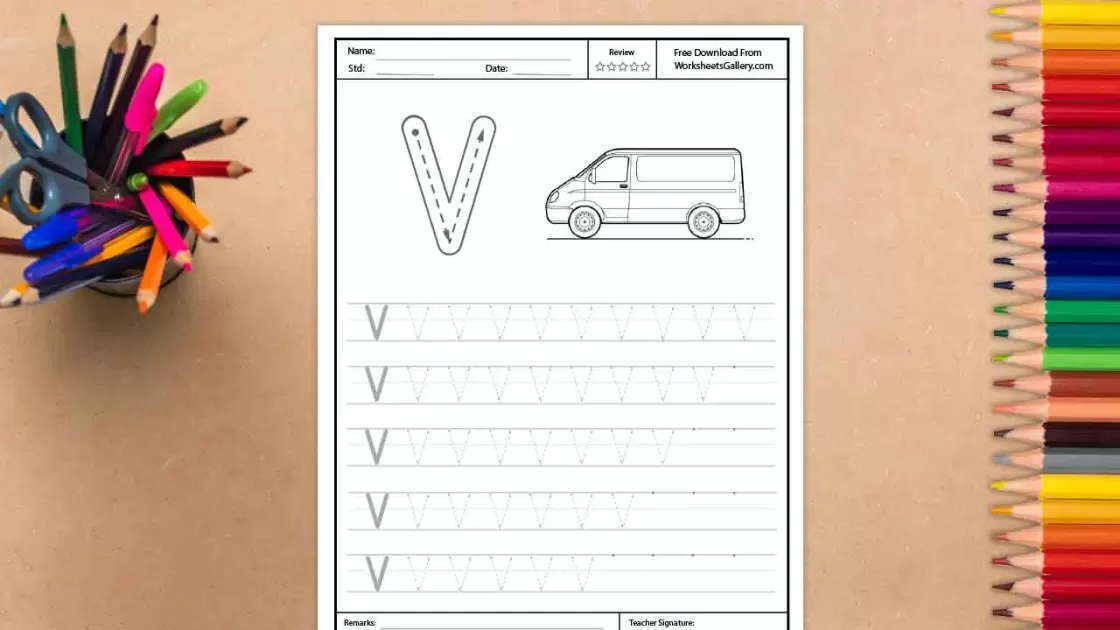
Building a solid foundation in alphabet formation is a vital milestone for any young learner. Using this specialized Letter V tracing worksheet, children can explore the sharp, angular movements required to master the twenty-second letter of the alphabet. This high-quality, printable resource is designed to simplify the learning process by providing clear directional guides and a relatable visual prompt. By engaging with Letter V tracing, students transition from simple scribbling to intentional, controlled handwriting that sets the stage for future literacy success. Whether you are a parent at home or a teacher in a busy classroom, this tool provides a structured yet enjoyable way to refine the delicate muscles of the hand while cementing letter recognition in a child's mind.
The Core Concept of Letter V Tracing
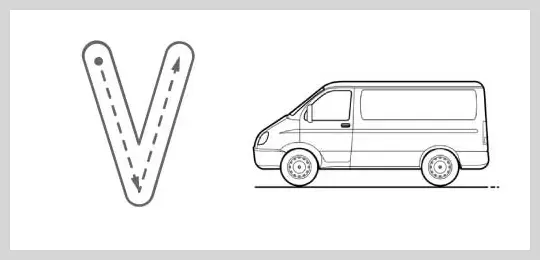
The uppercase V is unique because it lacks the curves of letters like O or S, focusing instead on two precise diagonal strokes that meet at a sharp point. Our worksheet emphasizes this structure by providing a large 'model' letter at the top left. This model includes dashed lines and arrows that indicate the exact starting points and the downward-then-upward path the pencil should follow. This visual scaffolding is essential for Letter V tracing because it prevents common reversal errors and ensures the child understands the verticality and symmetry of the character. By following these guides, children learn that writing is not just about drawing lines, but about following specific directions to create recognizable symbols.
Why Focus on the Letter V?
- It reinforces diagonal line control, which is more advanced than horizontal or vertical strokes.
- The letter is visually distinct, helping children differentiate it from the similar letter 'U'.
- Letter V tracing helps build a sense of symmetry as the left side mirrors the right side.
- It introduces vocabulary words like 'van', 'vase', and 'vest' through the integrated illustration.
Learning Benefits of Systematic Letter V Tracing
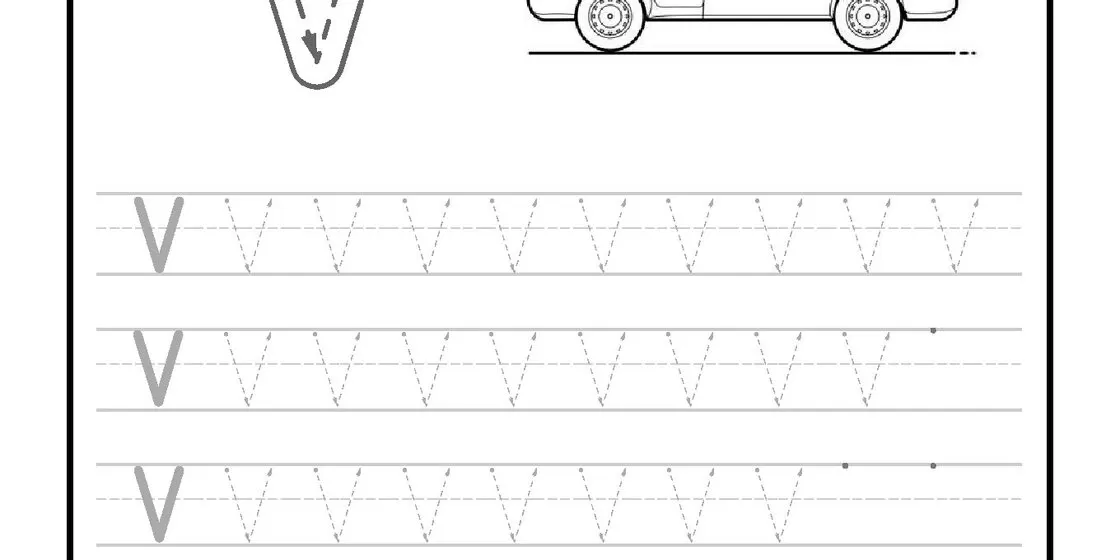
Engaging in regular Letter V tracing offers more than just handwriting practice; it is a holistic cognitive exercise. When a child follows the dotted path, they are practicing visual-motor integration. This is the ability to translate what the eye sees into a physical movement of the hand. This skill is fundamental not only for writing but for sports, buttoning clothes, and using utensils. Furthermore, the repetitive nature of the five rows of practice on the sheet builds muscle memory. Once the hand 'remembers' the shape, the child no longer needs to concentrate so hard on the physical act of writing, allowing them to focus more on the meaning of the words they are creating.
| Skill Area | Developmental Outcome |
|---|---|
| Fine Motor Skills | Improved pincer grasp and pencil pressure management. |
| Phonemic Awareness | Connecting the /v/ sound with the visual shape of the letter. |
| Spatial Awareness | Understanding top-to-bottom and left-to-right progression. |
| Concentration | Extending attention span through task completion. |
Implementing Letter V Tracing in the Classroom
In a professional educational setting, this worksheet serves as an excellent independent center activity. After a whole-group lesson where the teacher demonstrates the stroke order on a whiteboard, students can move to their desks to try Letter V tracing on their own. Teachers can use the 'Review' stars at the top right to provide instant feedback, allowing children to color in the stars based on their effort. This encourages self-assessment and a growth mindset. For students who finish early, the 'Remarks' section at the bottom can be used for a bonus challenge, such as drawing a small 'violin' or 'volcano' in the empty space.
Home-Based Learning Scenario
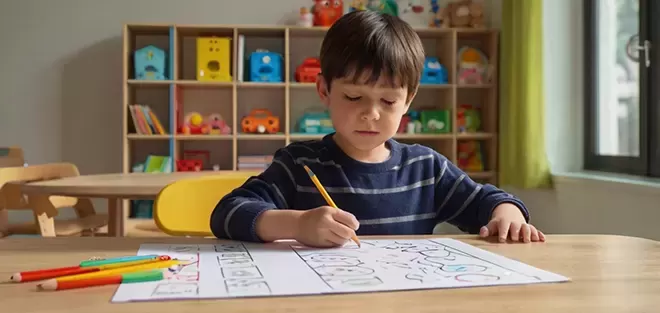
Imagine a rainy afternoon where a parent and a four-year-old sit at the kitchen table. The parent prints out the Letter V tracing sheet and first asks the child to point to the 'Van'. They discuss how 'van' starts with the /v/ sound. The child then uses a finger to trace the large guide letter before picking up a bright purple crayon. As the child works through the rows, the parent notices they are starting from the bottom. Gently, the parent points to the arrow at the top, explaining that letters 'fall' from the sky. This immediate, one-on-one guidance makes Letter V tracing a bonding experience that effectively corrects bad habits before they become permanent.
Cognitive and Motor Skill Development
Beyond the simple act of drawing, Letter V tracing stimulates the brain's executive functions. Planning where to start each letter and monitoring the pencil's progress along the dotted lines requires significant mental effort for a preschooler. This develops the brain's ability to sequence actions. Motor-wise, the 'V' shape requires a quick change in direction at the bottom vertex. This 'stop-and-turn' motion is a crucial milestone in developing finger dexterity. Children often struggle to keep the point sharp, sometimes rounding the bottom into a 'U' shape. Consistent Letter V tracing practice helps them master the muscular inhibition required to stop the downward stroke exactly on the baseline.
Exciting Games to Complement Letter V Tracing
To keep the momentum going, parents and teachers can introduce these playful activities alongside the worksheet:
- The Van Driver Roleplay: Use the van image on the sheet as a prompt. Have the child 'drive' their pencil along the Letter V tracing tracks as if they are delivering packages to different 'V' towns.
- Shaving Cream Valleys: Spread shaving cream on a tray. Ask the child to draw large 'V' shapes (valleys) in the cream, mirroring the motions they learned during their Letter V tracing session.
- Sticky Letter V: Give the child pieces of yarn or tape and have them create a giant 'V' on the floor. They can walk the path, feeling the sharp turn at the bottom.
- Sound Scavenger Hunt: After finishing the Letter V tracing rows, look around the room for objects that start with the letter, like a vase, a vest, or even the color violet.
Common Mistakes and How to Fix Them
When children begin Letter V tracing, they frequently make a few predictable errors. The most common is the 'Floating V', where the child doesn't bring the point all the way down to the bottom line. Another is the 'Open V', where the two diagonal lines are spaced too far apart, making the letter look like a wide bowl. To correct these, encourage the child to look closely at the dotted guides. You can place a small dot on the baseline where the two lines should meet. This gives them a clear target. Remind them that Letter V tracing is about precision, and it is okay to go slow to hit the target 'bullseye' at the bottom.
Encouragement and Positive Reinforcement
Avoid pointing out every single mistake. Instead, focus on their best attempt in each row. Ask the child, "Which 'V' do you think is the strongest?" and put a smiley face next to it. Since this Letter V tracing sheet has a 'Review' section with five stars, let the child color one star for every row they complete. This gamification makes the work feel like a challenge they can win. Success in small tasks builds the confidence needed for more complex letters like 'W' or 'K' later on.
Download and Printing Instructions
Getting started with this resource is easy and stress-free. This high-resolution PDF is provided in a clean, printable format with no watermarks and no distracting ads, ensuring your child stays focused on the task at hand. Simply click the download button to save the file to your device. For the best results in Letter V tracing, we recommend printing on standard A4 or Letter-sized paper. You can even laminate a copy so the child can use dry-erase markers for endless practice sessions. If you enjoyed this activity, consider exploring our Letter U tracing or Letter W tracing pages to continue the alphabetical journey. Mastering the full alphabet has never been more accessible.
Educational Tip: Always ensure the child has a comfortable, well-lit workspace and a pencil that fits their hand size comfortably. Proper ergonomics can significantly improve the quality of their Letter V tracing worksheet and overall enjoyment of the activity.
Popular Worksheets
Printable resources families and teachers are downloading now.
 Free
Free
 Free
Free
 Free
Free
 Free
Free