
Bakery Double Batch: 6 Brilliant Picture Sum Activities
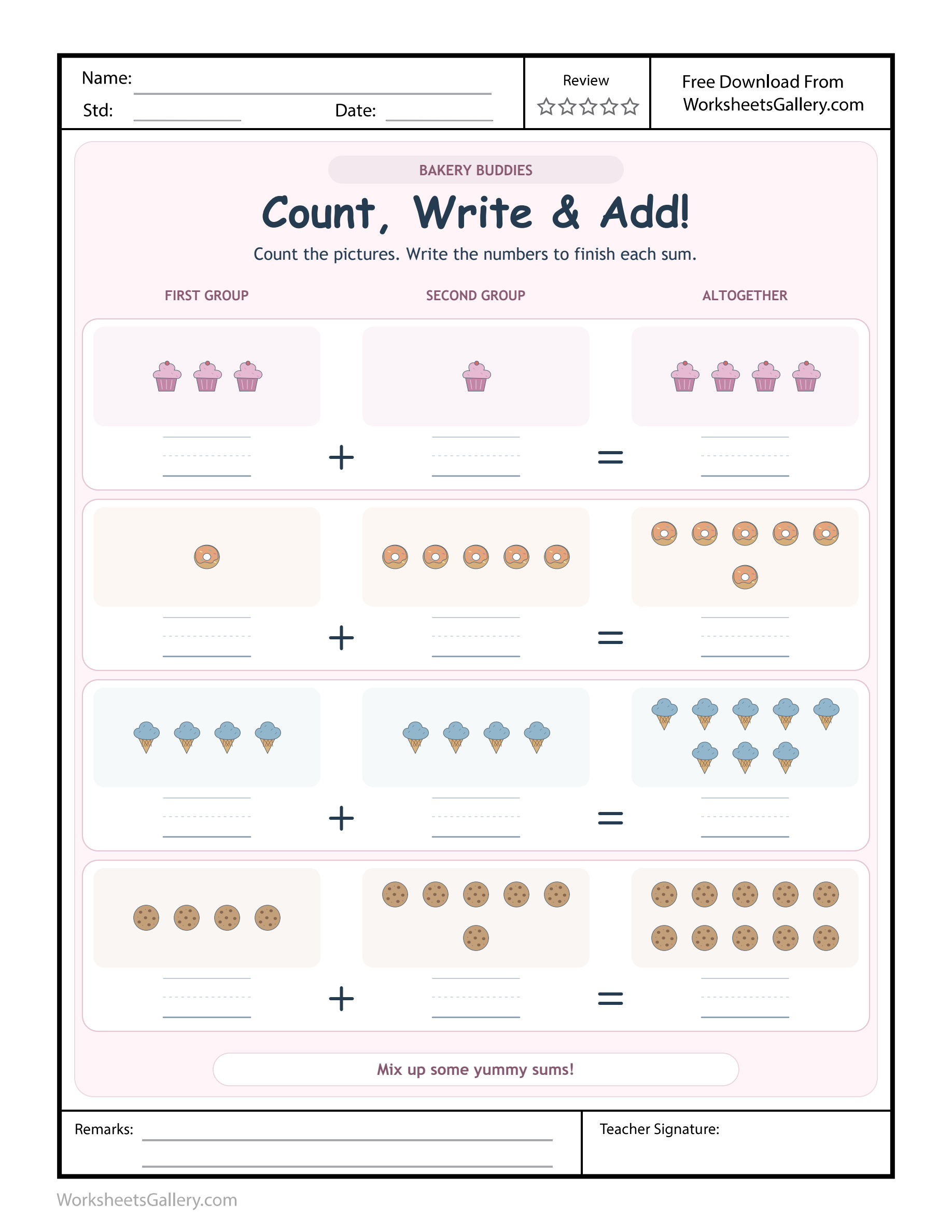
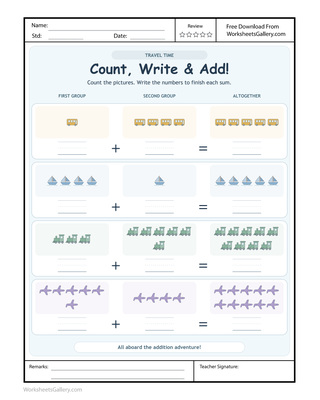
Two trays can hold the same number of treats without being the same tray. Bakery Double Batch explores that idea through the cone row of a four-equation printable, while cupcakes, doughnuts and cookies provide unequal starting batches to compare. Children count both parts, write their quantities and record the pictured whole. The equal four-and-four relationship is a special example within the sheet, not a rule for every row. Let the pretend bakery invite careful comparison before asking for a total, and keep counting available even when a child recognizes a familiar double.
Inspect the Bakery Double Batch menu before serving
The worksheet contains four different relationships. Only one starts with equal amounts. This Bakery Double Batch adult reference makes the distinction visible without turning every bakery row into a doubles exercise.
| Pretend treats | Printed relationship | Starting-batch comparison |
|---|---|---|
| Cupcakes | 3 + 1 = 4 | Different amounts |
| Doughnuts | 1 + 5 = 6 | Different amounts |
| Cones | 4 + 4 = 8 | Equal amounts |
| Cookies | 4 + 6 = 10 | Different amounts |
Bakery Double Batch uses FIRST GROUP, SECOND GROUP and ALTOGETHER panels. Each has its own numeral guide, giving twelve places to write across four equations. The final panel depicts the combined quantity. Its treats are a representation of the whole, not an additional batch to add to the first two.
Bakery Double Batch readiness begins with comparison
Preschool and kindergarten learners, often around four to six, can explore the page with adult support. Begin with small groups the child can count. Knowing a doubles fact is unnecessary. A Bakery Double Batch learner can establish four in each starting cone panel and count all eight before describing the parts as equal.
For Bakery Double Batch, separate three demands: counting, comparing and writing. A child may manage one while needing support with another. Read the Bakery Double Batch headings aloud, allow a spoken record first, and offer numeral cards if handwriting interrupts the discussion. Avoid interpreting a shaky written 8 as proof that the child did not understand the cone quantities.
Sena's Bakery Double Batch trays match
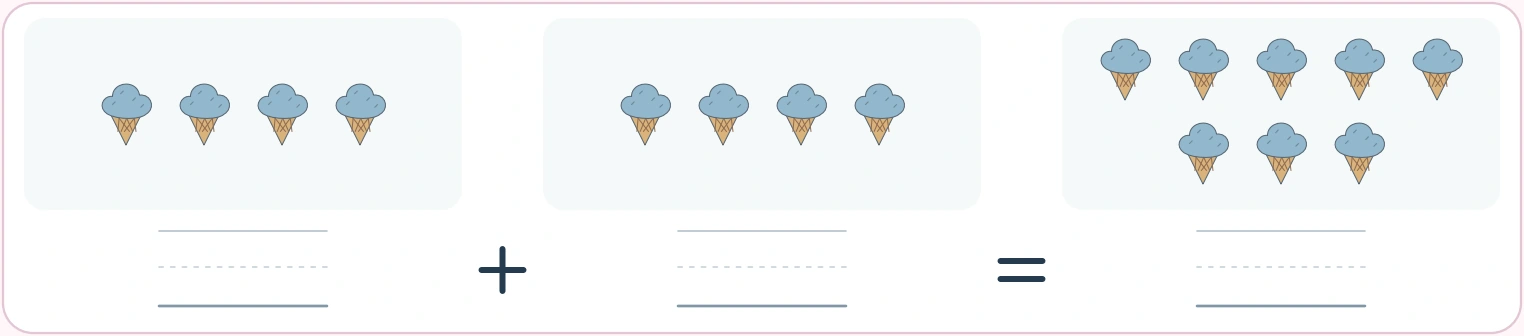
Sena's older sister sets four large pretend cones on one tray and four on another. Sena counts both trays and says they match. Her sister asks what will be available if the two batches are considered together. Sena touches each cone and finishes at eight; no rapid recall is required.
They bring Bakery Double Batch back to the printed cone row. Sena notices four pictures in both starting panels and eight on the right. She explains that the whole contains both batches, even though the paper shows them again in a total picture. Her sister writes a large separate 8 model only after Sena chooses the quantity. They leave the worksheet guide for her own attempt.
Six Bakery Double Batch skills that reach beyond treats
- Equal amounts can be verified. Counting both starting groups gives evidence for calling the cone batches the same size.
- A double has two equal parts. Four and four form this example, while the other printed rows demonstrate different relationships.
- The whole includes both parts. Eight describes the cones from both batches together, rather than either batch on its own.
- Counting remains a valid tool. A learner can establish the result directly without recalling a memorized fact.
- Vocabulary sharpens comparison. Words such as equal, different, batch and altogether connect a spoken explanation to the picture panels.
- Written numerals communicate decisions. Selecting and forming the records connects quantity reasoning with purposeful pencil control.
Bakery Double Batch creates chances to practise these skills; it does not establish fluency after one attempt. An adult can note which explanation was independent and which needed a physical model for support.
Bakery Double Batch cupcakes show a different relationship
Three cupcakes join one cupcake, giving four. Ask whether the Bakery Double Batch starting groups are equal before discussing their whole. A child who has just explored the cone double may assume every bakery row must contain matching batches. The cupcake pictures offer a clear counterexample.
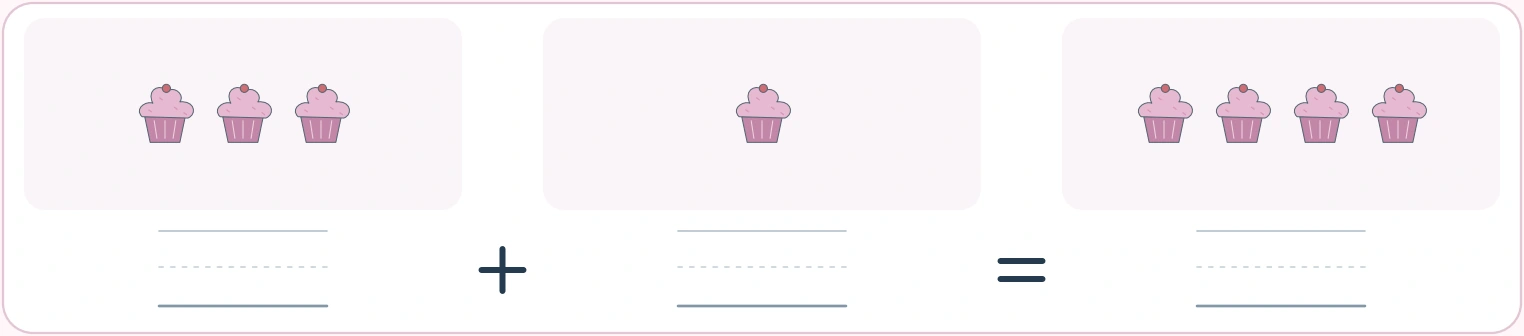
Bakery Double Batch does not require changing an unequal row to make it fit the theme. Say, “These parts are different, and they still combine.” Three and one belong under their own panels, while four belongs under the whole. Equal starting groups are one addition case, not a condition for addition.
Stage Bakery Double Batch at home without a real snack
Use large play objects or paper shapes rather than making food necessary for the activity. Read the column labels, establish one starting amount and record it. Count the second collection and record that value. Then consider the two parts together and inspect the pictured whole.
Bakery Double Batch can start with cones if matching groups interest the learner, or cupcakes if four feels more manageable than eight. Let the child tell you which they prefer. Keep a scrap sheet nearby for a numeral demonstration, and stop for a short break before the pencil work begins to overshadow the comparison.
A Bakery Double Batch classroom order needs explanation
Imagine a classroom pretend shop with two helpers preparing the doughnut row. One helper counts a single doughnut; another counts five. A customer asks whether the helpers made equal batches. The children can answer no while still explaining that six doughnuts are available together.
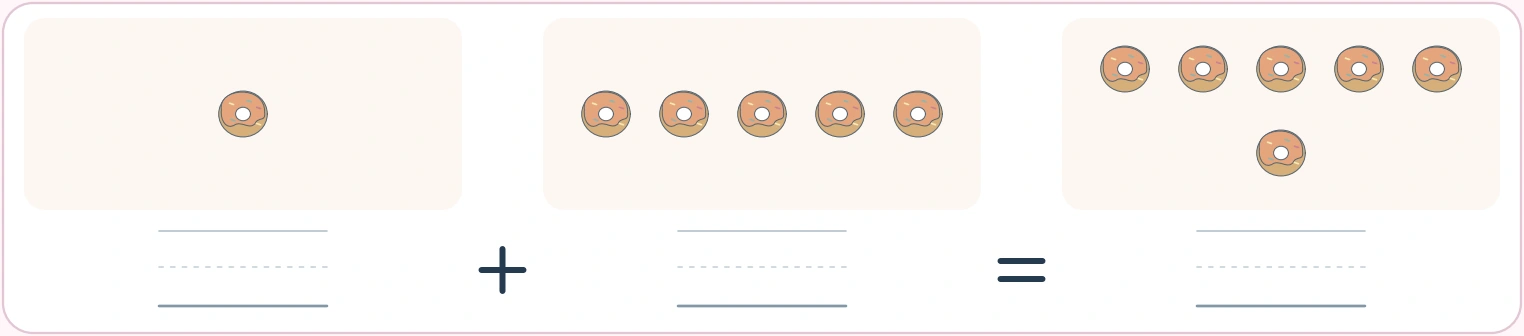
The Bakery Double Batch teacher asks which picture panel supports each part of the explanation. That question keeps the roleplay tied to quantities rather than merely naming treats. Rotate the counting and customer roles, and let a hesitant speaker point while a partner supplies words. A supported explanation can still reveal whether the learner distinguishes equal from unequal parts.
Six Bakery Double Batch games for a pretend counter
1. Find the Bakery Double Batch matching trays
Prepare one tray with four large counters and another with four. Let the child count both before announcing whether they match. Bakery Double Batch gives the comparison a reason: two helpers have prepared equal-sized batches. Bring the objects together for a total check, then separate them again. The eight objects remain the same objects through both arrangements.
2. Contrast a Bakery Double Batch cupcake request
Set out three pretend cupcakes and one more on separate mats. Ask whether this is another equal-batch example. Count to justify the answer, then find the whole of four. Bakery Double Batch can now distinguish “same amount in each part” from “parts can be joined.” No corrections to the worksheet pictures are needed to make that distinction.
3. Give Bakery Double Batch a spoken receipt
Choose the doughnut row and ask the child to dictate a receipt: one in the first batch, five in the second, six altogether. An adult records the message on separate paper. Bakery Double Batch adds language practice because the receipt needs all three values and their roles. Swap speakers so the child can check an adult's message against the printed panels.
4. Pair Bakery Double Batch cone positions
Arrange four counters on each mat and invite the child to place them in corresponding positions. Each first-mat counter has a partner on the second mat. Count the four positions, then count all eight counters. The Bakery Double Batch matching arrangement illustrates equal batch size without replacing a whole-object count or asking the child to multiply. Return to the source pictures afterwards.
5. Investigate a Bakery Double Batch cookie report
Use four large counters and six large counters to represent the cookies. An adult claims the whole is eight because they remember the cone result. Invite the learner to inspect the cookie evidence independently. Bakery Double Batch makes it reasonable to reject a familiar answer when the new parts differ. Count ten and explain why the previous row's result cannot simply be reused.
6. Design a Bakery Double Batch new order
On spare paper or with objects, the child chooses two equal groups small enough to count comfortably. Describe the parts and whole, then say how the new model resembles the cone relationship. Make clear that this is an extra play task, not another printed worksheet row. Different equal parts can give different totals; the sheet's four-and-four example remains unchanged.
Bakery Double Batch cookies reach ten
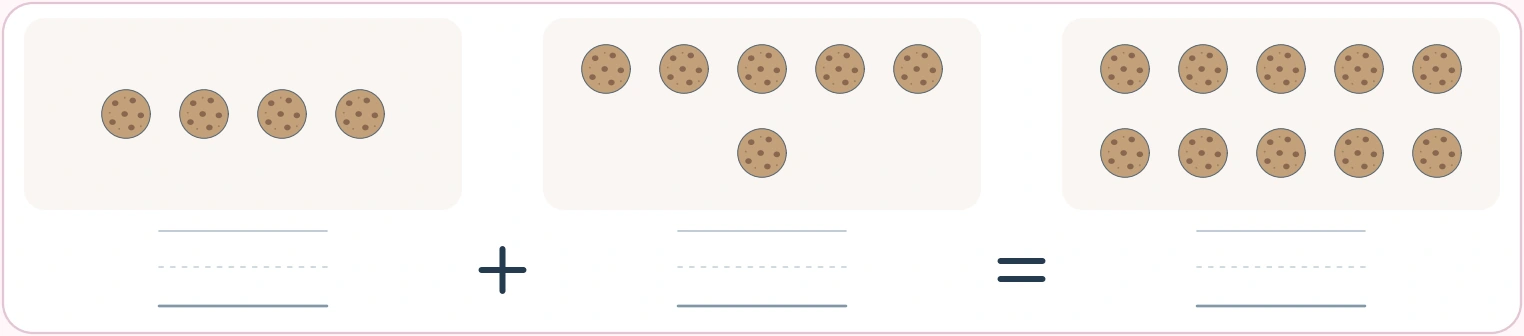
The cookie row joins four and six. Both are complete quantities even though the second panel places its sixth cookie beneath the first five. Count that lower cookie before recording six. The whole shows ten, arranged as two lines of five. Chocolate chips stay inside their cookies and are not additional treats.
Bakery Double Batch writing introduces a two-digit record for this final total. The 1 and 0 together name ten. Keep both in the same whole-number guide rather than spreading them across starting panels. For separate handwriting support, use the number-ten tracing page when appropriate.
A Bakery Double Batch illustration with eight complete cones
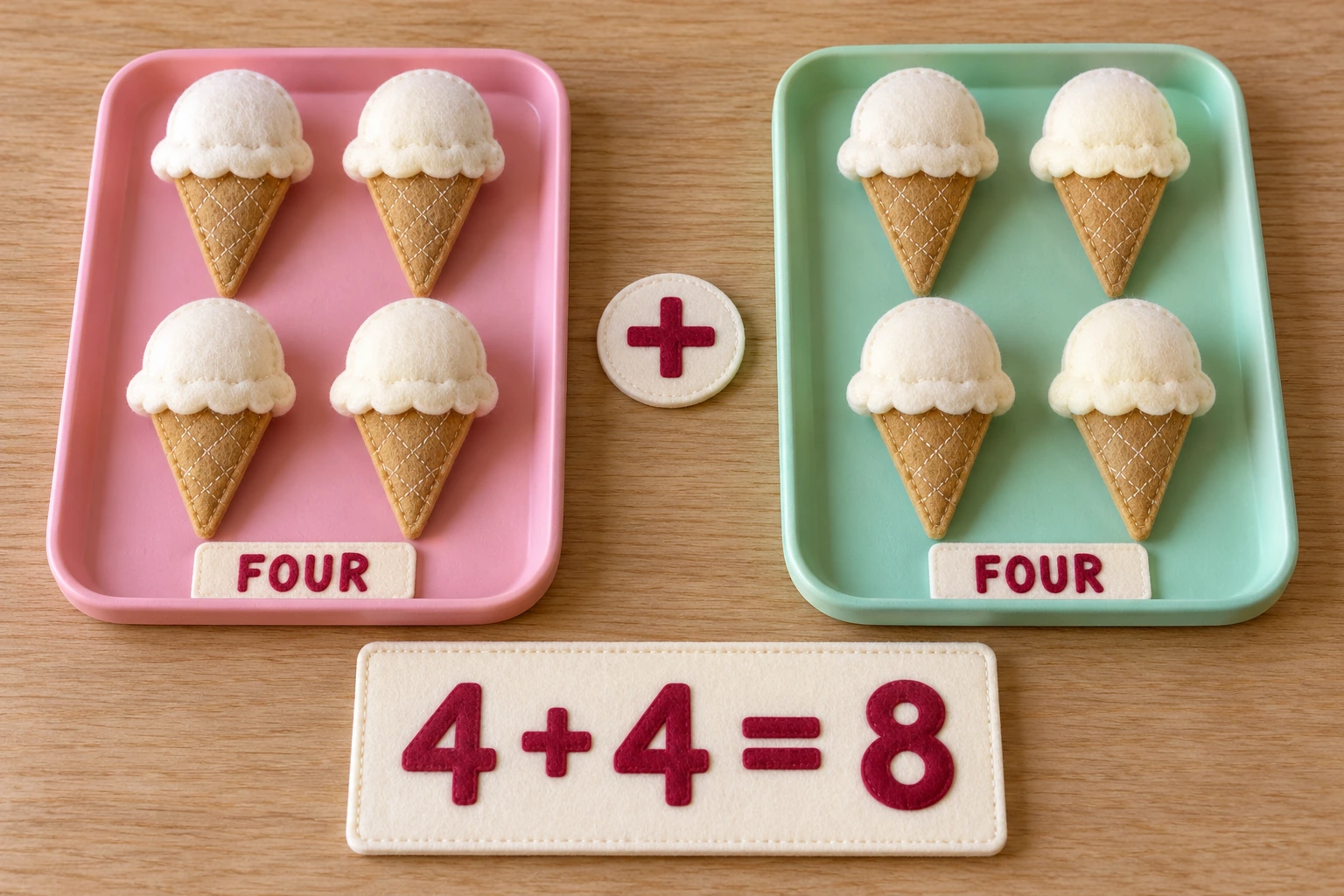
The Bakery Double Batch supporting image is a separate crafted example: four cones on each tray, with a readable four-plus-four equation. It is not a filled answer-key version of the worksheet. Bakery Double Batch can use it to prepare a comparison, while the faithful worksheet previews preserve their unanswered guides.
Keep Bakery Double Batch errors useful and emotions steady
Watch for counting the whole panel as another addend, calling all starting groups equal, or carrying eight from the cone row into the cookie row. Ask what the current pictures support. A specific pointing check is more informative than a general instruction to try harder or hurry up.
Bakery Double Batch may also reveal a formation difficulty after the quantity is secure. Separate an unclear mark from an unclear count. Model one numeral elsewhere, offer a spoken response, or stop after a successful comparison. Try “You checked both batches before deciding” as feedback that names an action. Avoid promising treats for completing every number; curiosity about the amounts can supply the activity's purpose.
Revisit Bakery Double Batch with another job
On one Bakery Double Batch visit the child might compare batches; another day they might dictate a receipt or write the cone total. Brief returns with changed roles are more purposeful than demanding the same completed sheet repeatedly. A learner who prefers smaller amounts can stay with cupcakes while another enjoys the ten-cookie relationship.
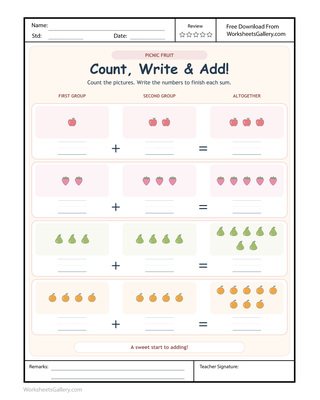
The eight-writing worksheet and fruit-based addition activity offer different follow-ups. Adults can explore age-five maths resources at PBS Parents or NAEYC's ideas for family maths. Choose a next task that responds to what the learner actually needed during this one.
Download Bakery Double Batch for a clean print session
An original sample preserves the supplied source presentation and can retain its branding. A different attachment provides the clean premium worksheet. Access that file through this page's premium download after logging into an account covered by an eligible active membership. The member PDF contains no watermark, website name, domain promotion or ads in the printable activity.
Bakery Double Batch fits one US Letter page. Open the saved PDF and inspect its margins, four equation rows and twelve writing guides in print preview. Select suitable scaling if your printer uses another paper size, preserving the outer border. Any website advertising is separate from the downloaded worksheet. Start with a comparison the child can describe and leave the numeral spaces ready for their own justified records.
Popular Worksheets
Printable resources families and teachers are downloading now.
 Free
 Free
 Free
 Free