
Build Letter B: 7 Powerful Gains for Happy Beginners
🧰 The shape builder's notebook
One tall post, two rounded pockets: a capital B has a structure children can notice before they hold a pencil. This Letter B worksheet turns that observation into several small jobs, from following a large model to choosing a ball by its beginning sound. The lowercase partner brings a useful change: one bowl sits low beside the tall stem. Use the page with a curious preschooler, a kindergarten group, or a child who wants another supported try. There is room to talk, trace, choose, and finish with a satisfying discovery.
Meet the parts of Letter B before the pencil moves
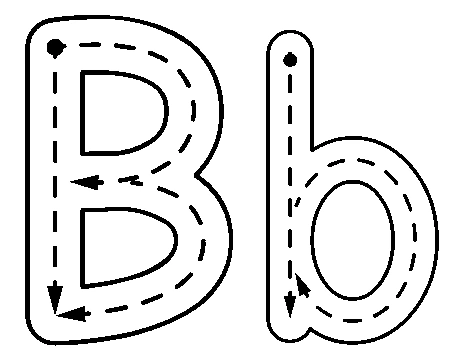
Think of the straight part as a stem and the curved enclosed parts as bowls. Those names give an adult something specific to point at. Capital Letter B has two bowls on the right of its stem; the lowercase Letter B keeps one bowl near the bottom. Ask, “Where does the rounded part join?” A child can answer with a finger long before explaining in a full sentence.
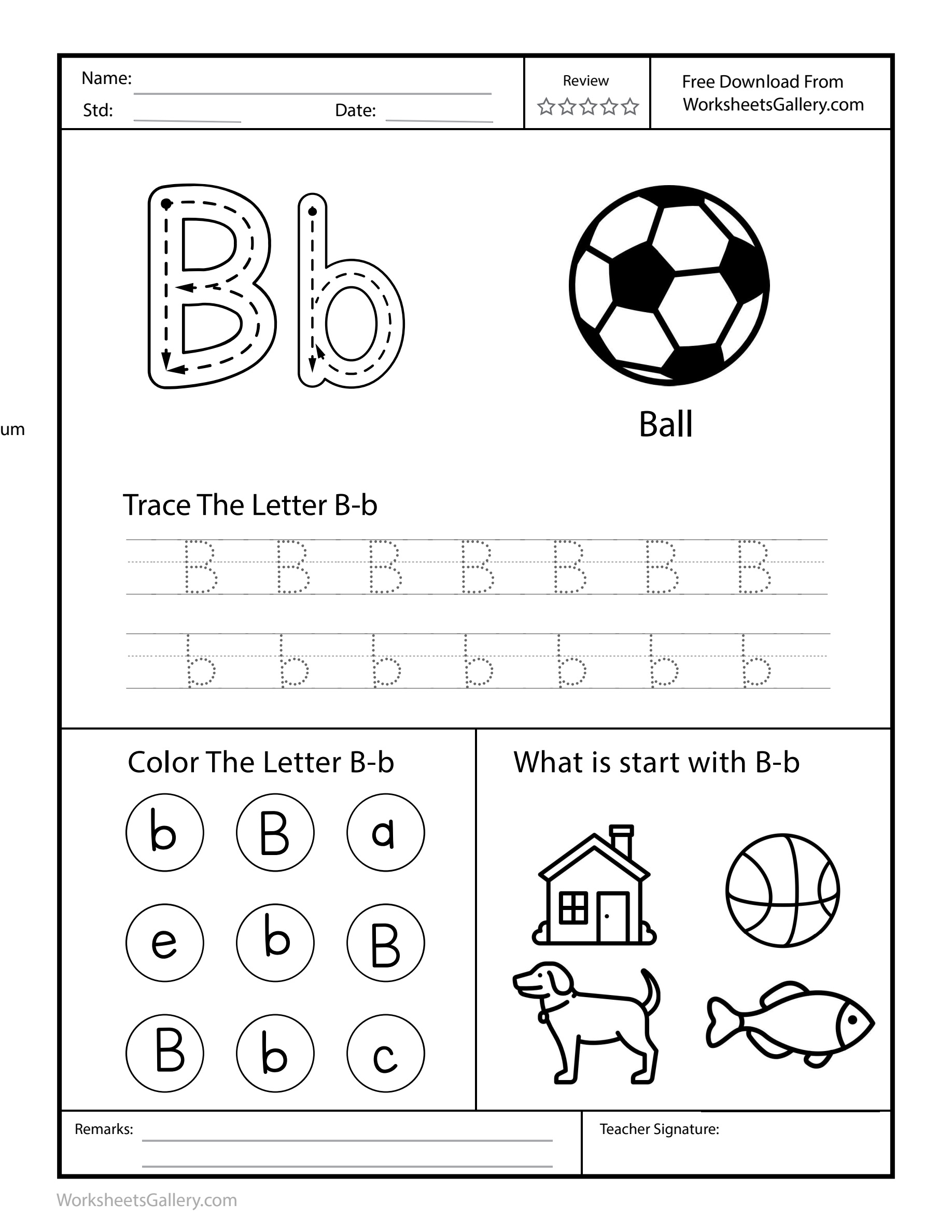
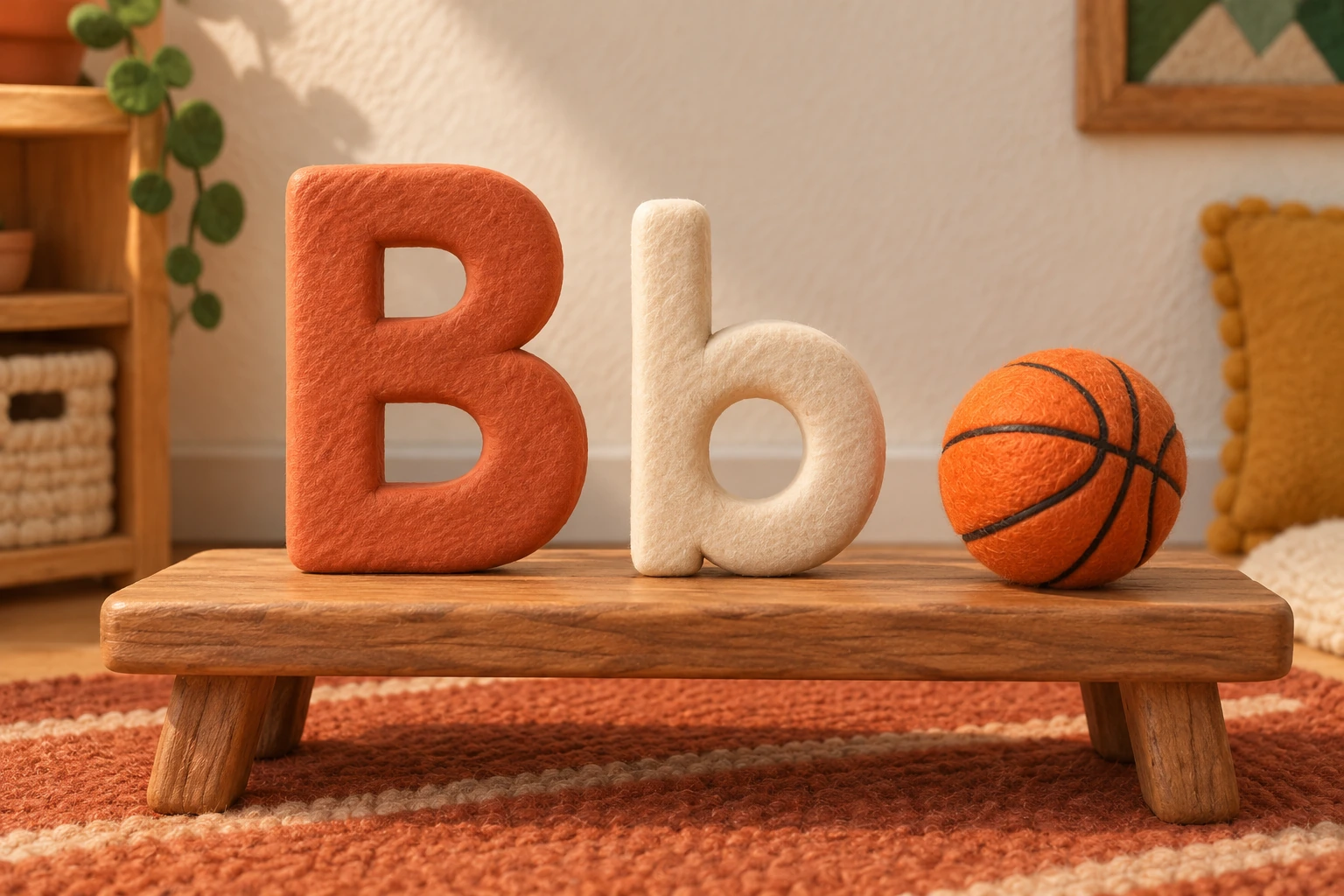
The large Letter B models include dotted routes and directional arrows. Trace them with a fingertip first, watching the joins rather than racing around the outline. Follow the printed guidance and your setting's handwriting approach. The clay illustration later in this guide is a conversation aid; the printed models remain the reference for pencil movement.
Keep the worksheet upright. Turning the paper to make a curve easier can accidentally hide the stable left-to-right relationship you are discussing.
A compact inventory of the printed Letter B tasks
Below the introduction picture labeled Ball, the Letter B sheet provides seven dotted capitals and seven dotted lowercase letters on separate ruled strips. These Letter B rows offer guided repetitions, with no independent writing row. The lower half contains nine letter circles and four outlined pictures. Name the house, ball, dog, and fish aloud before expecting a sound-based response.
Three capital Bs and three lowercase bs belong in the Letter B selection. The other entries are a, e, and c. In the picture panel, the basketball is the match when named “ball” or “basketball.” The upper illustration is a soccer ball. Their different appearances offer a useful vocabulary connection: both objects can share the same everyday name.
Suitable use usually falls around ages three to six with adult support. A younger child might point and name while an adult handles the explanation. A child already writing freely can compare the two cases and discuss their shapes. Choose the amount of pencil work from the learner's comfort, rather than treating age as a requirement to complete every mark.
Seven useful gains to watch during Letter B work
Letter B practice offers several kinds of evidence about a child's current understanding. Watch what changes after a small hint. The observations below are teaching possibilities, not a score sheet or a promise that one page will establish a skill.
| What you may notice | How the activity gives it a purpose |
|---|---|
| 1. Attention to structure | Comparing the large Letter B forms directs attention to the tall stem and the number of attached bowls. |
| 2. Recognition across cases | The mixed circles invite a child to accept both cases of Letter B as members of the same letter family. |
| 3. Guided pencil control | The dotted Letter B paths give eyes and hands a shared target as the pencil changes direction. |
| 4. Deliberate scanning | Searching three Letter B rows encourages a repeatable route instead of coloring whichever circle attracts attention first. |
| 5. Spoken vocabulary | Naming familiar pictures establishes the words needed before an adult asks about their beginnings. |
| 6. A sound connection | Saying ball with a brief /b/ connects the Letter B symbol to a meaningful spoken word. |
| 7. Explaining a choice | Pointing to a Letter B stem or naming a picture lets the learner show a reason, even with few words. |
The thinking in Letter B work includes comparing, remembering a target, and withholding an attractive wrong choice. The motor demand involves moving along a path while the other hand steadies the sheet. Language enters through words such as tall, round, beside, upper, and lower. Keep those demands manageable by introducing one instruction at a time.
At home: a breakfast box becomes a letter workshop
Sana notices a B on a cereal box and calls it “the one with two bumps.” Her adult sets the Letter B sheet beside the box and asks her to find the matching large shape. Sana taps both bowls, then chooses a finger trace before taking a pencil. That first comparison makes the page feel connected to something she found herself.
When Sana draws the lowercase bowl too high, the adult points to the model's bottom curve and says, “Let's park this round part lower.” They try one more Letter B, then stop for breakfast. Two thoughtfully discussed attempts have supplied a clearer next step than an entire row completed while frustrated. Later, Sana can show someone else the box and explain her discovery.
Reveal the sheet in four manageable stages
A spare piece of paper can cover the lower panels while Letter B tracing is underway. Slide the cover as the task changes. This creates a clear workspace without cutting the worksheet or changing its activities.
- Settle the tools. Place the sheet on a firm surface and offer a comfortable pencil plus one coloring tool. Check that both forearms can rest easily. Point out the name field, but write it for a child whose name writing would use up their available energy.
- Rehearse, then trace. Explore the large Letter B forms with a finger. Uncover the dotted strips and try a small selection. Watch the pencil follow a route instead of simply joining random dots. Remaining models can wait for a later visit.
- Search with a rule. Reveal the circles and agree that only Letter B forms receive color. Start at the left of each row. Ask the child to point before coloring if they are still checking what belongs.
- Name, hear, and review. Uncover the pictures and say their names. Ask which starts with the sound represented by Letter B. Invite a point, a circle, or light coloring of the ball, then let the learner explain one thing they noticed today.
Use a short, clean /b/ in ball rather than adding a long “buh.” There is no need to stretch this brief sound. Say the whole word naturally, give a short beginning-sound model, and return to the word. Adults can supply the language while a hesitant learner responds by pointing at the Letter B picture choice.
Check the lower Letter B panels without turning them into a test
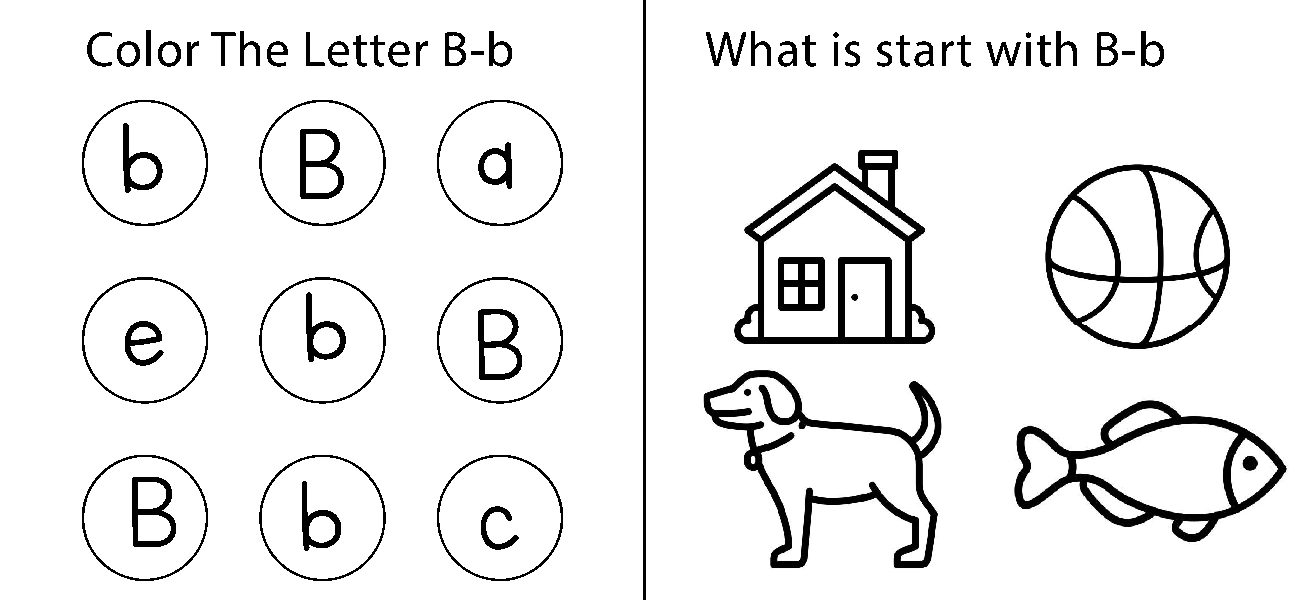
For the Letter B circles, the correct positions are left and middle in the top row, middle and right in the middle row, and left and middle in the bottom row. Leave a, e, and c uncolored. An adult can keep that sequence privately while the learner searches; announcing that there are six targets too soon can turn recognition into a counting puzzle.
If a child calls the house “building,” acknowledge the sensible word. That word also starts with /b/. Then explain that this Letter B picture activity uses the names house, ball, dog, and fish. Vocabulary needs agreement before an answer can be interpreted fairly. The intended response is the ball, but a child's alternative label can reveal good thinking.
In a group: let the clue belong to a different child
During a small-group Letter B session, a teacher appoints a “shape describer.” That child keeps a finger on the large lowercase model and says one clue: “Tall part, round part low.” Another learner finds a matching circle on their own sheet. Everyone then checks against the model rather than copying the quickest child's coloring.
Rotate the describing role before continuing Letter B tracing. A child who communicates through gesture can trace the tall stem in the air while an adult supplies the words. For the picture task, children first whisper their chosen picture name to the teacher. This gives quieter learners a chance to respond before a chorus supplies the answer.
Invite different amounts of work within the same session. One learner may practice two lowercase forms; another may explain how the capital differs. For a learner who finds pencil routes difficult, prepare for Letter B with short line and curve practice before adding more small letters.
Make another encounter feel worth choosing
The attraction of Letter B can be surprisingly physical: two bumps to tap, a rounded bowl to follow, a ball to pretend to bounce. Offer a choice that leaves the learning goal intact, such as which pencil to use or whether to begin with pointing or a finger route. A small decision can make returning to the table easier.
During Letter B work, use specific feedback: “You checked where the bowl joins,” or “You looked across the whole row.” Avoid comparing sheets or treating a darker line as a better letter. A relaxed, understandable attempt is a useful place to pause. Keep Letter B practice brief and predictable, perhaps alongside a favorite picture book twice during the week, then notice whether less prompting is needed.
Five little invitations beyond the dotted paths
🪵 Shape repair shop
Roll safe modeling dough into one long stem and short curves. Ask the child to build Letter B, then remove one bowl. What needs repairing? Compare the result with the large printed model.
🏀 Ball-name collection
Gather pictures of a tennis ball, basketball, and beach ball. Say the shared word ball after each. Connect each example to Letter B without expecting the child to read the longer names.
📦 Package spotter
Find one clear example of Letter B on safe household packaging. Cover neighboring letters with scrap paper. Ask whether it resembles the tall two-bowl form on the sheet, then look for a lowercase partner elsewhere.
🎭 Bowl inspector
Become a pretend inspector who checks letter constructions. A child inspecting Letter B points out the tall post, counts the bowls, and stamps an imaginary approval. Switch roles so the adult must explain a Letter B too.
📚 A two-word story start
Offer “bear” and “boat” as spoken story ingredients. Invent one sentence together, then listen to their beginnings. They extend the Letter B conversation; neither object appears in the worksheet's picture choices.
When another letter is welcome, explore the open curve of C as a shape comparison. For a broader sequence, keep the A-to-Z tracing collection nearby and introduce its pages gradually.
Small adjustments that prevent an unhelpful struggle
Coloring every circle usually means the selection rule needs another demonstration. Point to one Letter B and one distractor, discuss the difference, then return control to the child. Pressing hard through a whole dotted row suggests a pause or a tool adjustment. Do not require heavy marks to prove effort.
Reversing a lowercase form calls for a calm comparison with the printed b: locate its stem and check which side holds the bowl. Introduce no extra look-alike letters during that correction. Calling every round picture a ball is a naming issue first; return to the actual vocabulary before repeating the Letter B sound question.
Keep a dated Letter B note of one observation, such as “found both cases after looking at the model.” At the next visit, offer the same starting support and see whether the child takes over. Regular practice works best here as a familiar invitation with a clear stopping point, rather than a demand to make an entire fresh page flawless.
Choose the PDF, print clearly, and keep the next step small
The Letter B printable is a single US Letter portrait page. Its featured JPG shows the complete original sheet without cropping. The free sample retains the source branding; an active membership provides the clean premium PDF with no watermark, website branding, or ads inside the printable. The premium also removes a stray placeholder at the original page edge.
- Select the free download for the branded source, or sign in with an active membership and choose the clean premium option.
- Save the PDF and open its print preview. Select US Letter paper and check that the page border, both tracing strips, and lower panels are visible.
- Use actual size when the printer supports the full sheet. If its printable margins clip the border, choose fit to printable area and check again before printing.
- Print one copy, set out a pencil, and begin with a single Letter B observation. Save the remaining activities for the pace that suits your learner.
Popular Worksheets
Printable resources families and teachers are downloading now.
 Free
Free
 Free
Free
 Free
Free
 Free
Free