
Reading Stations: 21 Bright Dolch First Grade Sight Words
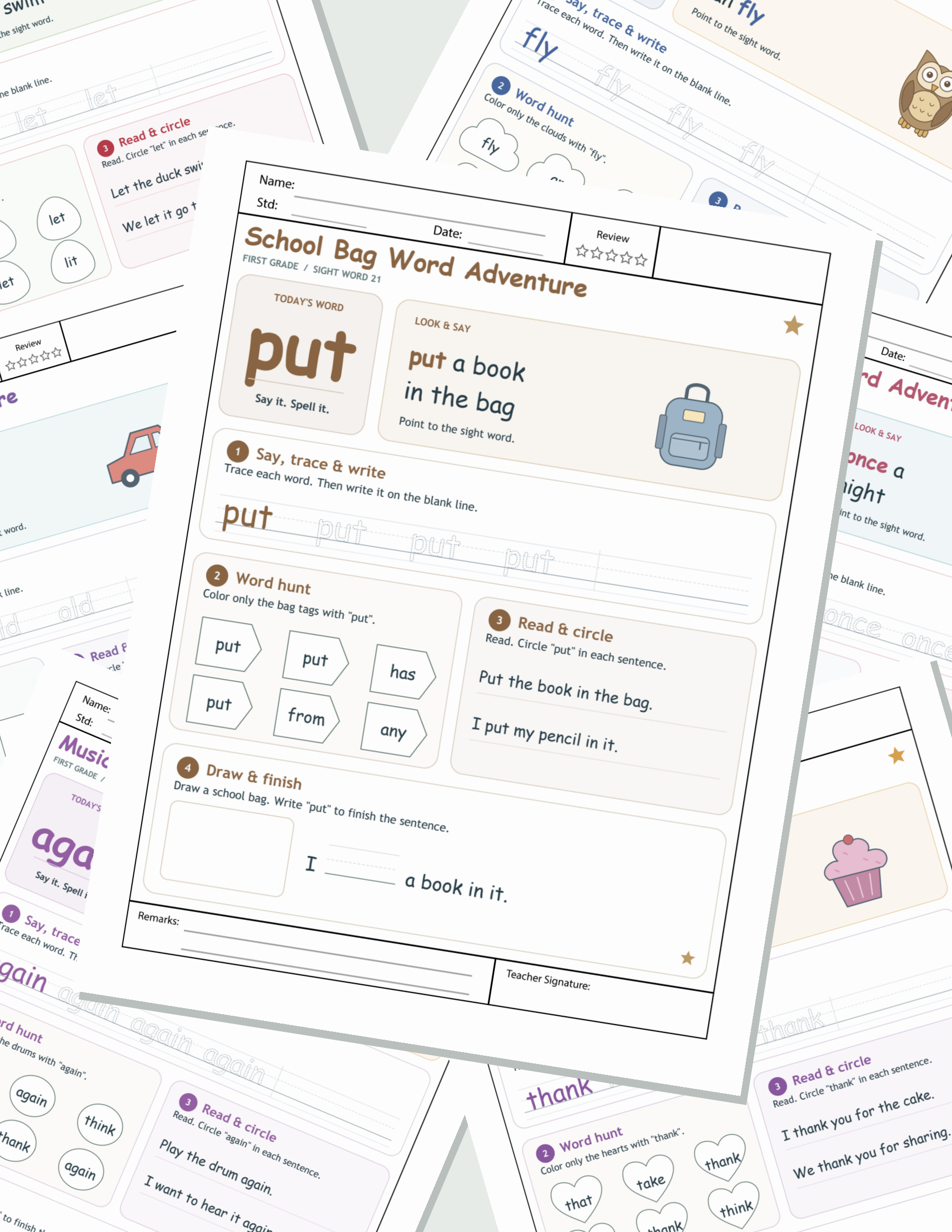
The backpack sheet sits in front of six pages from the same PDF.
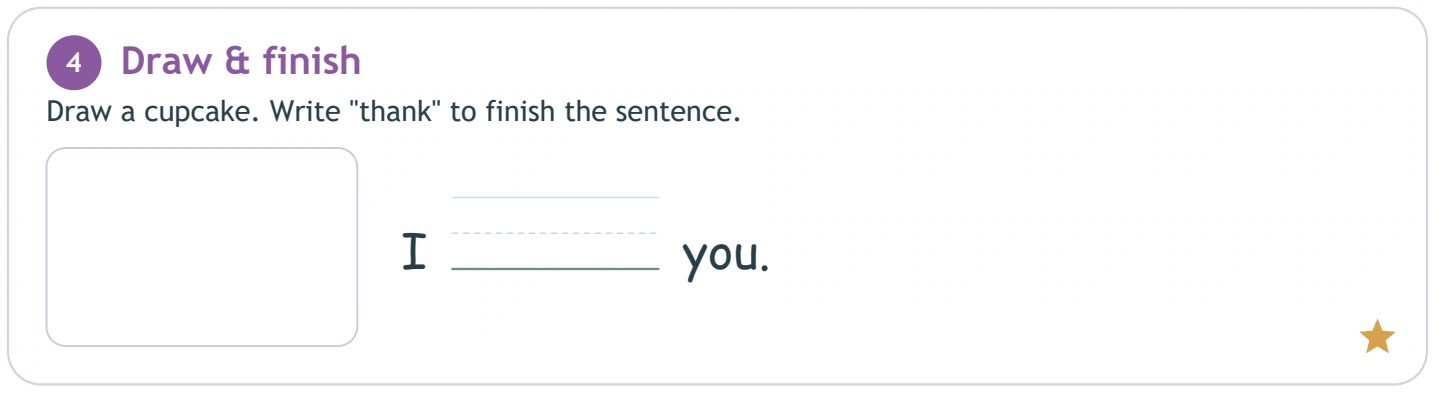
A collage of the original worksheet layouts shows examples of the larger model, tracing, searches and finish lines.
Pick a reading station
Arrange five places to read in a classroom, or pick just one at a kitchen table. A reader might move an object, choose a description for a picture, or send somebody a short message. These Dolch First Grade Sight Words worksheets give each visitor a printed example and four ways to practice. Use the station descriptions to choose a sheet for the lesson you’re teaching. The $4 collection puts worksheets 21 through 41 in one letter-size file, so a child can return to an earlier word when a new one brings it up again.
Plan five Dolch First Grade Sight Words stations
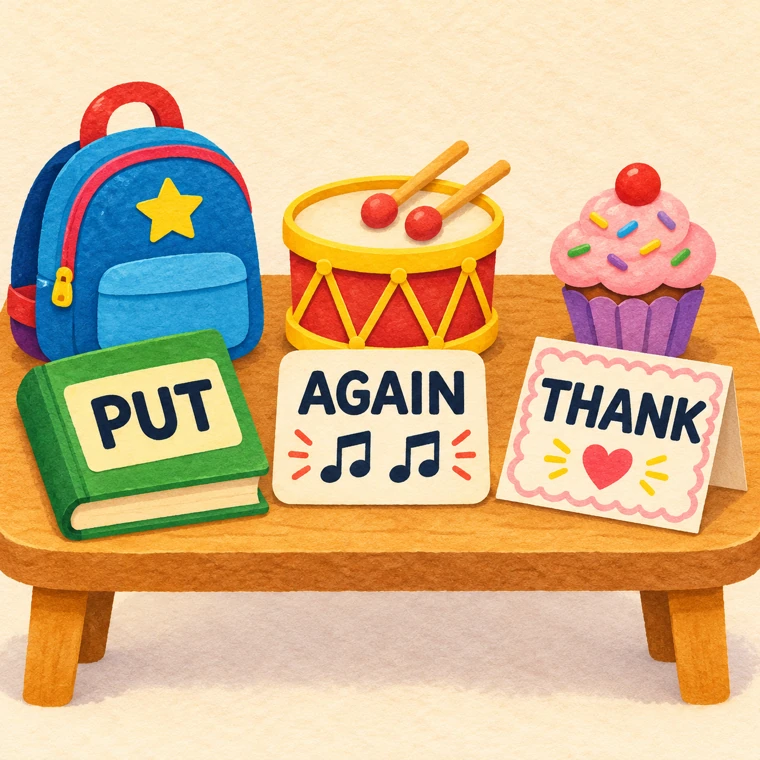
| Station | Words to find |
|---|---|
| Action bench | put, take, walk, stop, fly, open |
| Picture exhibit | every, old, by, round, has, live |
| Time table | after, going, again, once |
| Conversation counter | think, let, may |
| Message desk | give, thank |
Action bench
put, take, walk, stop, fly, open
Set a toy truck, a paper lid and two model bags on a low table. A visitor chooses an object and says what someone could do with it. The listener waits through a complete printed direction before showing the action. With two models of the same object in view, the speaker may need another identifying detail.
Use the stop page to direct the truck on a paper road and the fly page to explain what an owl is able to do while its picture shows it sitting. A direction can ask for something to happen now. An ability statement can be true even when nobody acts. Give those messages to two readers and ask them to trade cards after talking through what each card says.
Picture exhibit
every, old, by, round, has, live
Hand an exhibit visitor a note about a butterfly group, a toy car or a piglet. Prepare a second picture that could be confused with the first. Ask the visitor which detail helped them choose: whether a claim fits each member, whether a model is old, or which animal has a certain feature.
Compare a flat plate and a doughnut for round. Trace their outer edges in the air and find the similar outline. The live page gives a different sort of picture question: a nest holds eggs or young, while a habitat can mean the larger area where adult birds find food and shelter. Keep those two observations on separate picture labels.
Time table
after, going, again, once
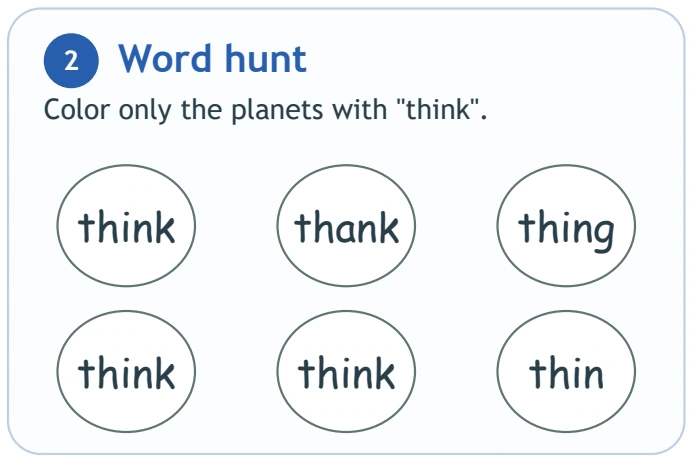
Make two pockets and label one things already seen and the other things we can do next. Put the ladybug card after the rain card on a line. Read the bug sentence with the bug named first, then map the order the events happened. Go to the moon sheet to hear the difference between a report about today and a plan for each night.
Tap a short rhythm when a visitor reads a repeat request. Give another child a card with a different rhythm and ask if it would satisfy the request. For going, try sending a bus to school and reading a note before the bus arrives. Compare that note with a report after arrival so the word comes with a time and a reason to talk.
Conversation counter
think, let, may
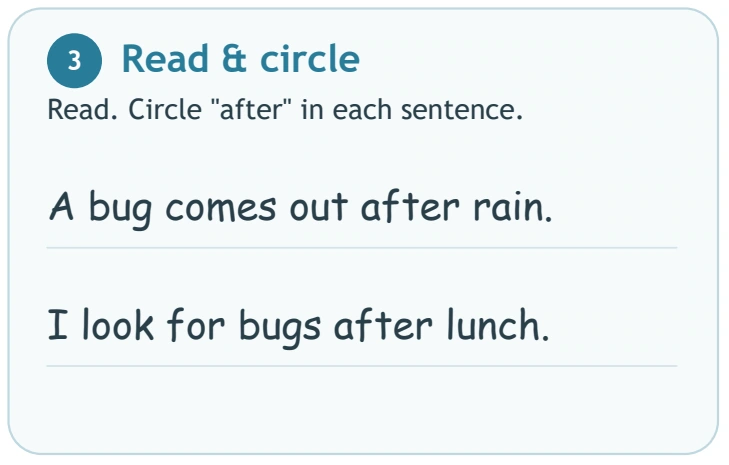
Show a picture of a striped planet and let two readers offer their own ideas. Ask what details they can check on the picture and which statements are possibilities. On the duck page, use a paper gate. The gatekeeper opens it when the reader gives permission, then waits for the duck’s actor to decide when the duck moves.
At the ice cream counter, leave a space between the child’s question and the answer. Give the reply a speaker of its own. After the listeners can point to the person asking, have them say what that person is allowed to do. Switch to a classroom request and let the learner choose which part of the earlier exchange could stay.
Message desk
give, thank
Send a folded paper parcel to a named desk. Have one reader say who has it now and who will take it at the end. Exchange roles and read the note again to see whether I and you still name the intended people. The word give remains useful as those people change.
For a separate message, set out pictures of two different acts of kindness and let a writer make a thank-you note for just one. The recipient guesses the favor from the words. If the note could fit either picture, talk through a specific reason for thanking the friend and have the writer read their new version aloud.
Choose a printable by its number
| Numbers | Words in print order |
|---|---|
| 21–25 | put, take, every, old, by |
| 26–30 | after, think, let, going, walk |
| 31–35 | again, may, stop, fly, round |
| 36–41 | give, once, open, has, live, thank |
Subtract twenty from the number printed on the sheet to find its location in a PDF viewer. The sixth page is worksheet 26, after. The last page is worksheet 41, thank. Save the selected print number beside a lesson plan so a substitute or family partner can find it again.
The big spelling at the top of each worksheet also appears in a shorter phrase. Four tasks sit below. An adult can use the writing guides first or begin with a reader who needs a real situation to use the word. Try the hunt as a comparison of complete spellings. Let the child read the sentence frame and discuss the picture before writing their response.
If you want to work across two stations in one visit, pull two sheets and keep their words in separate piles. A reader using give may also find a reason to say thank later. A learner who starts with a location at the picture exhibit can use a movement word from the action bench to explain how they reached it.
Plan a rotation for a class or a family
At school, pair readers with listeners and give each pair a few minutes. A third child can record a sentence if a group has three. Ask the recorder to pass the note to someone who was at another station. It is easier to notice missing information when the recipient did not watch the first round.
At home, pick one printout and a few props that are easy to put away. An adult might read a line, a learner could show what it means, and both can compare the child’s pencil work with the large model. Make room for a slow spelling turn after the conversation. Choose one short line to revisit at the next meal or reading time.
At ages six or seven, a learner may speak readily and still benefit from looking closely at a vowel, final letter or consonant pair. Give the child time to say a full line. If they read comfortably but write slowly, ask them to dictate the caption first and pencil the target word by itself. A peer can read that caption back and have the learner check it against what they intended.
Five observations to take to the next station
- Sounds. A child can explain the vowel difference in think and thank.
- Complete spelling. A reader notices the added c in the printed once when comparing it with one.
- Handwriting. A child gives the ending of going enough space and still makes the first letters recognizable.
- Meaning. A listener who hears by can set a figure near the named object without expecting an exact position.
- Independent use. The reader puts a target word in a request, report or label of their own.
For another turn, cover one label, change an actor, switch a starting place or add an exception to a group. Invite the child to choose something they can change and read their revision aloud. Ask the listener to use the new information before looking at the earlier model.
Note how an error was repaired. The learner might recognize a word on its own but overlook it in a longer line. Ask them to move a paper pointer at a comfortable speed. If they color a label after checking only the first letter, hide the remaining choices and compare the two endings together. Let them tell you what changed before putting the crayon back.
Send one instruction to a neighboring station
Give one reader the job of writing a note where it will be used by a different group. For instance, the visitor from the action bench can ask the time table to play a beat again. Someone at the picture exhibit can describe an old toy before sending it to the message desk as a paper gift. Short tasks like these make it easy to hear how each reader used a different word.
Switch the directions after one round. A child can choose whether they want a note that gives permission, names an action or offers thanks. Keep all three purposes available so different partners can write different kinds of messages. A second reader can identify its job and pass the note back with a checked mark.
Leave a note for the next day when the child wants more practice. The next reader can try the recorded word in a different setting before returning to the worksheet. Use one of the existing pictures as a conversation starter or draw a fresh prompt on another page. Keep the original activity intact for another reading turn.
Where to continue reading
Choose another reading turn if time permits, or read and match the word eat. To compare a different sound or spelling, try a family of words with AP or practice reading leg in a new activity.
Teachers and families can browse the UF Literacy Institute’s word activities and the Reading Rockets guide for frequently used words.
Buy and print the clean 21-page file
Choose the $4 premium download to obtain the combined PDF, from put through thank. The worksheets are assembled in print order with the website marks removed. Set the page to US Letter portrait. Start with a copy of a page selected for the next station and check that the pale pencil guides and bottom rule both appear. Choose the whole page range for a binder, or return to the number table to print another individual sheet.
Related Topics
Popular Worksheets
Printable resources families and teachers are downloading now.
 Free
 Free
 Free
 Free