
You Word Exchange: 6 Wonderful Listener-Switch Games
The listener lesson has nineteen companions. The word ‘you’ joins the other supplied word activities in a merged download priced at $5. The collection keeps their tracing, searches and sentence tasks without website branding.
Dev asks his sister a question, then she asks him the same thing. Who does you mean now? You Word Exchange explores that changing listener through the Fish Friend worksheet and a few ordinary conversations. The learner meets y-o-u in a model, a search, tracing, letter choices and two fish sentences. Adult support keeps the spelling visible while the spoken exchange supplies a reason to use it. There is room for a question, an offer and a willing reply, without assuming that a child can independently read every word surrounding the target.
A classroom conversation opens You Word Exchange
A teacher faces one learner and asks a supported question containing you. Next, the teacher turns toward another willing learner and repeats it. Ask the group to indicate who is receiving each question. The printed target stays unchanged even though the conversational listener has moved.
You Word Exchange can begin with a gesture instead of an oral answer. A child points toward the addressed person while the teacher identifies the speaker separately. This makes the relationship observable without requiring advanced grammar terms, public speaking or a complicated role-play.
For You Word Exchange, bring the group back to the visible y-o-u after discussing the turn. The listener's identity explains the message; the letters explain which word is written. A child may understand one part before the other, and the teacher can record those achievements separately.
You Word Exchange keeps three letters in their written order
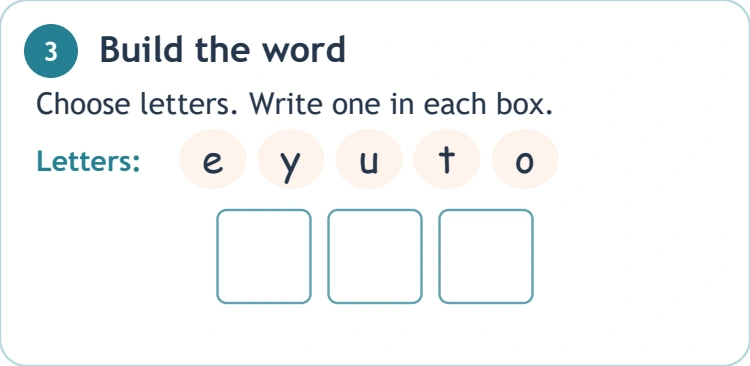
The bank contains e, y, u, t and o above three answer boxes. Select y, o and u and arrange them in that order. Copying the bank from left to right would produce a different result. Larger pieces beside the page can make this rearrangement easier to inspect before writing.
You Word Exchange does not treat three letter boxes as proof of three separate spoken sounds. Explain the word through the learner's reading instruction, with an accurate adult pronunciation and attention to the relevant spelling parts. Letter counting and sound analysis answer different questions here.
During You Word Exchange, a child may say the names y, o and u to describe their positions. That is useful spelling language, but the adult should also model reading the completed word. A string of letter names alone does not communicate the listener meaning in the source sentences.
You Word Exchange matches the kind of help to the difficulty
| A learner's response | A focused teaching choice |
|---|---|
| You always means the sister. | Switch speakers and identify the listener. |
| The letters are y-u-o. | Compare each position with the model. |
| A reply is difficult to say. | Accept a gesture or chosen picture. |
You Word Exchange should not become a test of eye contact, a race to answer or a demand to speak for another person. Keep the intended listener clear through an agreed gesture or name when needed. Communication can remain respectful while the spelling receives precise instruction.
The You Word Exchange model makes the whole target available

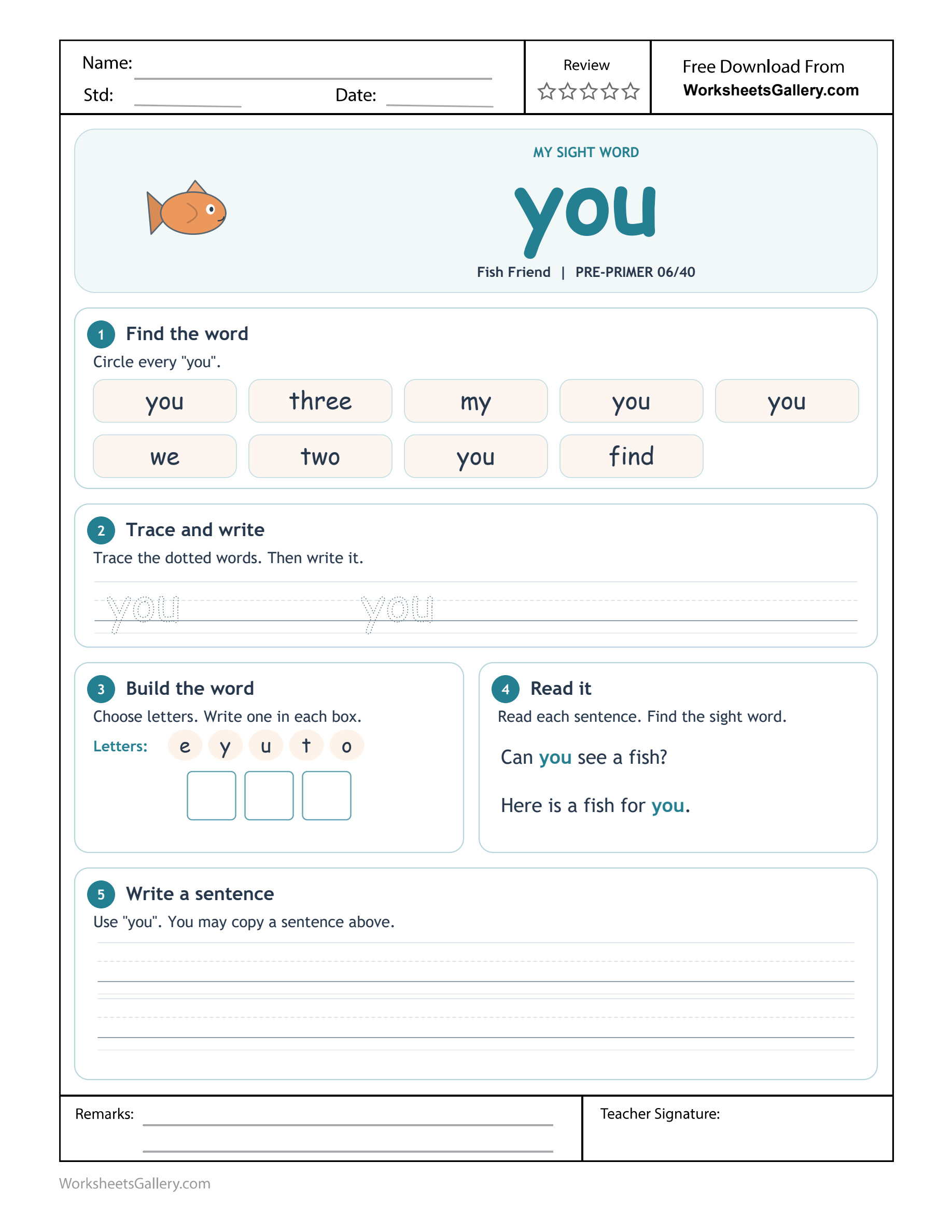
The upper model prints you beside the Fish Friend illustration. Name the three written letters in sequence, then read the word as part of a natural message. The fish gives a topic for conversation, but it cannot establish the identity of a printed entry by itself.
You Word Exchange can use an ordinary fish drawing instead of a toy or an elaborate display. Return to the word model whenever the question is about reading. That return distinguishes a meaningful discussion of a picture from an accurate response to print.
Six You Word Exchange invitations for changing listeners
These invitations take place on separate cards or through spoken turns. Choose an appealing one, model the target first and keep unfamiliar sentence words under adult responsibility. A short successful exchange can be enough for a single visit.
1. You Word Exchange sends a fish question across the table
Dev shows his sister a fish picture and uses an adult-written question strip. She answers, then becomes the questioner while he listens. You Word Exchange gives the repeated printed target a different listener reference in the second turn, even though its spelling is stable.
In You Word Exchange, the adult reads any unfamiliar words and invites a check of y-o-u. Dev can point to the addressed person before locating the target. Do not require both children to read the entire sentence independently in order to participate.
2. You Word Exchange delivers a small paper gift
Make a simple paper shape and dictate a message offering it to a willing person. The adult writes the phrase containing you and reads it aloud. You Word Exchange gives the recipient a clear role, making the source's offering sentence understandable through a parallel situation.
For You Word Exchange, change the recipient and reread the same target. The learner can explain who receives the offer this time. Keep the gift optional and ordinary; the reading activity need not depend on rewards or a purchase.
3. You Word Exchange appoints a puppet listener
Use two distinct homemade puppets. One asks a supported question, and the other receives it. Switch their roles openly. You Word Exchange can make a turn easier to follow when the adult moves only one puppet at a time and identifies who is speaking.
The You Word Exchange puppets provide a visible conversational cue. After the child indicates the listener, compare the written word with the source model. Avoid allowing puppet position alone to become the method for selecting a search answer.
4. You Word Exchange makes a listener-address book
Draw two familiar willing recipients on separate pages and dictate one short message for each. Read the messages with adult assistance. You Word Exchange lets the learner locate the same y-o-u in both, despite the different people receiving the words.
During You Word Exchange, a name can appear beside a portrait to clarify who is intended. Those names are adult-supported writing, not additional sight words the child must master. Save only the messages the learner is comfortable keeping.
5. You Word Exchange repairs an adult's mistaken delivery
An adult reads a clearly addressed note but offers it to the wrong puppet. Explain that the delivery went astray and invite the child to help. You Word Exchange creates a reason to consider the listener and reread the message together before sending it again.
A You Word Exchange repair is about clarifying meaning rather than catching the learner out. State the intended recipient openly if the situation is ambiguous. The adult can model the target while the child handles the conversational correction.
6. You Word Exchange builds a word for a new speaker
Arrange y, o and u with the model visible. Read the completed word, then invite a different person to use it in a supported spoken sentence. You Word Exchange shows that a speaker change does not require a new spelling or a different set of letter pieces.
Finish You Word Exchange by checking the middle o and final u once more. If moving pieces is tiring, let the child direct an adult. The activity can end with one accurate build instead of repeatedly mixing letters until attention is exhausted.
You Word Exchange reviews every search choice
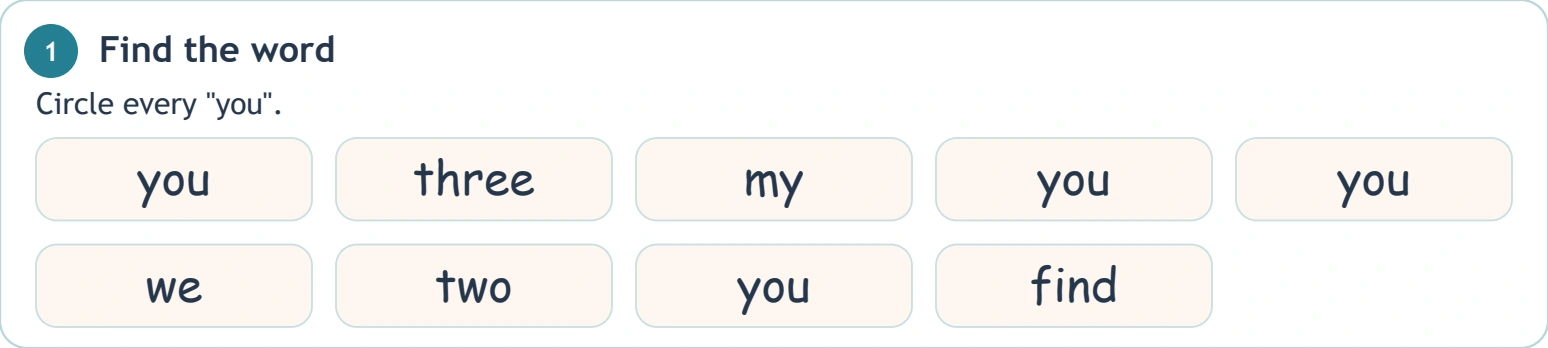
Four of the nine printed entries are you. The other words are three, my, we, two and find. A learner should inspect the whole entry and compare its sequence with the model. The adult can know the four-match answer count without revealing the locations in advance.
You Word Exchange also offers two dotted word models with writing guides. A comfortable trace can follow an oral reading model, rather than replace it. When small handwriting is the difficult part, a larger separate attempt preserves the word work without demanding an uncomfortable grip or repeated erasing.
You Word Exchange changes from a question to an offer
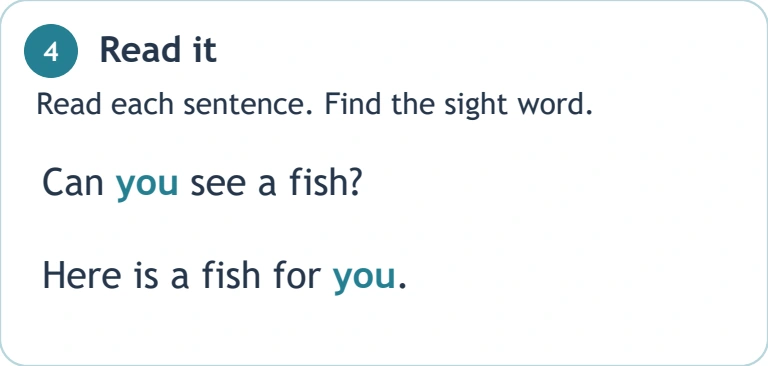
“Can you see a fish?” invites a reply. The other source line offers a fish to the listener. Read both messages with appropriate help, then identify who could be speaking and who receives the words. The target performs its listener role in both kinds of sentence.
You Word Exchange leaves the final writing task open to a new sentence or a copy of one above. An adult can record a dictated message first and help the learner locate the target within it. This makes composition, reading and handwriting available at different levels of independence.
Six You Word Exchange benefits can appear in different responses
- Conversational perspective: track who receives a message when turns change.
- Spelling attention: preserve the written order y-o-u across different examples.
- Search control: inspect a complete candidate instead of relying on length or an initial character.
- Letter selection: choose needed pieces while ignoring unrelated bank letters.
- Fine-motor participation: use suitable tracing or writing support for the current hand skill.
- Expressive choice: ask, offer or dictate a message that has a real listener.
You Word Exchange can reveal strong understanding through a quiet gesture. A child need not enjoy performing a puppet scene to demonstrate the target relationship. Notice what the learner can explain, recognise and physically manage rather than merging every observation into one score.
You Word Exchange at home follows a friendly question
Dev and his sister choose a fish picture, listen to an adult model and take one question turn each. The adult points out the target, helps with its spelling and offers a brief search comparison. The session can stop after that small sequence, leaving tracing for another willing visit.
Return to You Word Exchange through a fresh listener rather than a fixed daily quota. A comment such as “You noticed that your sister was listening this time” identifies the actual accomplishment. Offer time to think and pause when the conversation or handwork begins to feel demanding.
You Word Exchange keeps the supporting scene fully labelled
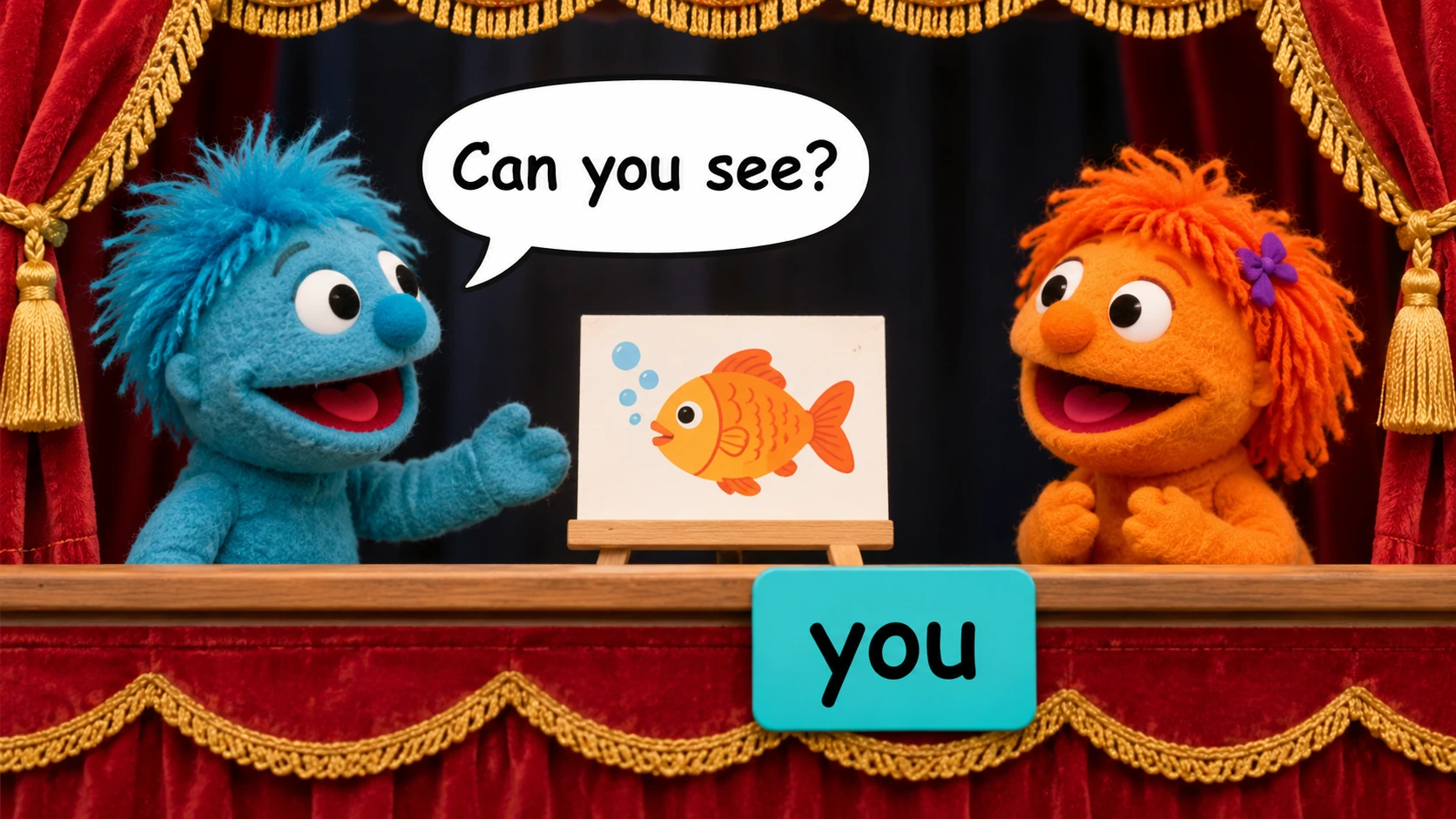
The felt puppets, fish card, you tile and completed question strip form an invented teaching display. Their labels are readable examples rather than unanswered props. The source worksheet retains its own deliberate writing spaces, which belong to the learner's activity.
You Word Exchange often suits adult-supported learners around four to six years old. Current language, spelling and handwriting experience matter more than age alone. An adult may read all surrounding words while the child takes responsibility for identifying this particular target.
Take You Word Exchange into print with the intended access
Select the source sample for the original individual file, or sign in under a qualifying active plan for the protected clean attachment. The latter is a printable PDF cleared of watermark text, website naming and domain branding. Its downloaded page contains no ads. Before printing, inspect the US Letter preview and allow your printer to retain the complete work area.
You Word Exchange is one of the twenty sheets in the separately priced $5 collection shown by the package card. Buying that collection obtains the merged clean PDF; this page's individual clean attachment remains a membership download. The two options lead to different file choices, so check the selected edition before saving.
Compare listener and speaker through the star pronoun page. Connect two people in a message with the fruit joining activity, or consider a shared object on the train reading sheet. Adults who want instructional background can visit Reading Rockets on frequent-word learning and UFLI's collection of word-teaching activities while planning support around the learner's current programme.
Popular Worksheets
Printable resources families and teachers are downloading now.
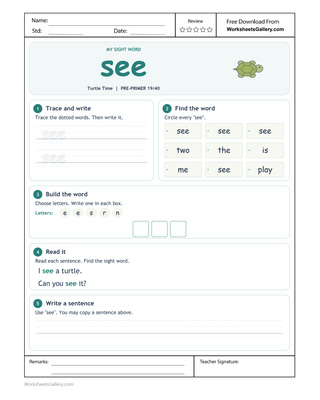 Free
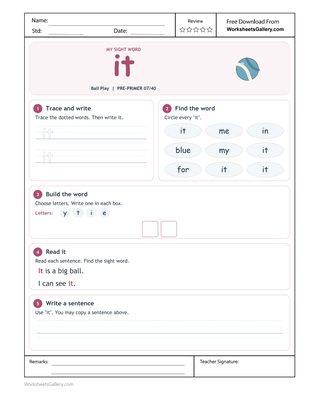 Free
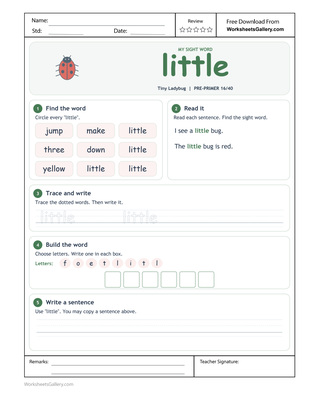 Free
 Free