
Look Word Lab: 6 Brilliant Butterfly-Reading Games
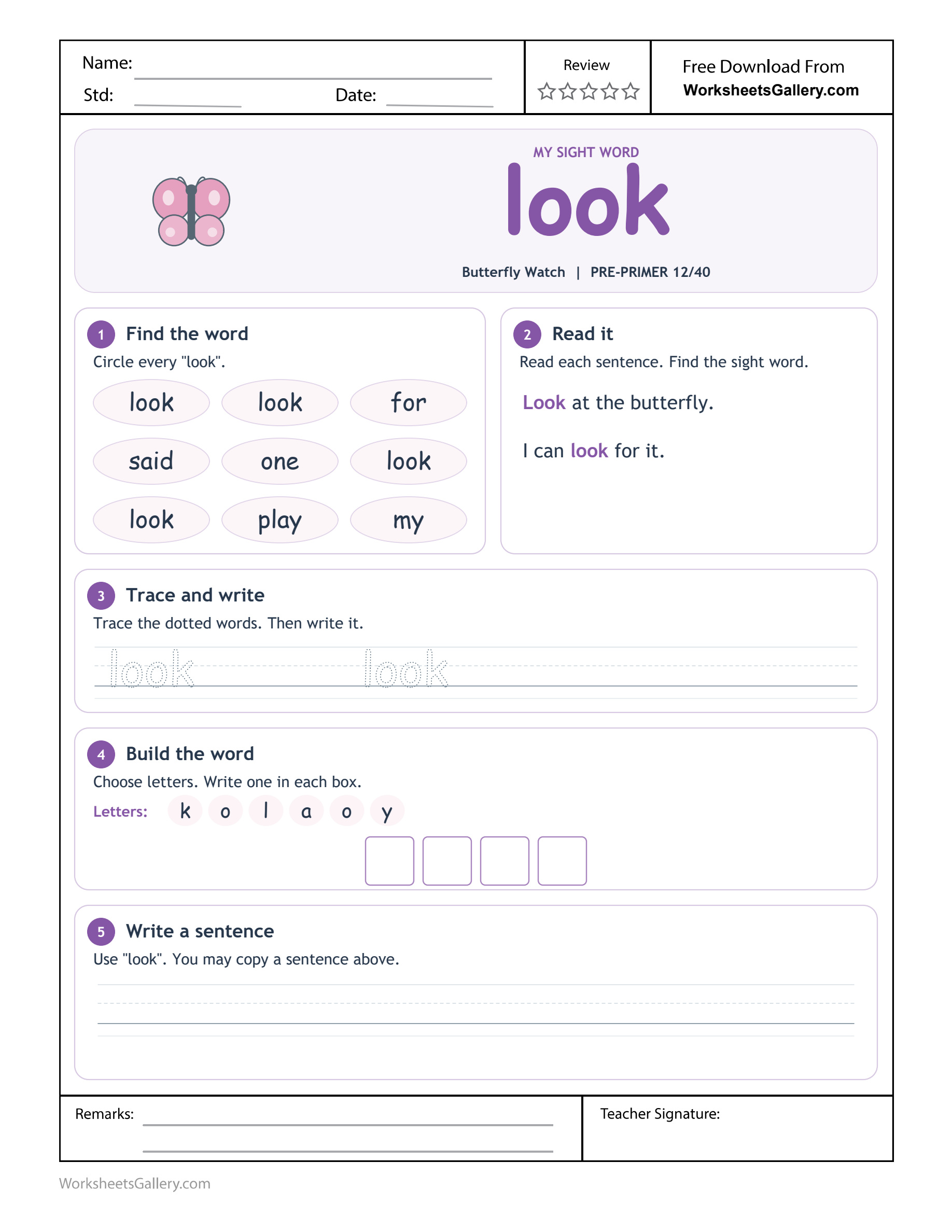
The butterfly request has a place in the full supplied group. ‘look’ is included in the premium twenty-page PDF. The $5 collection purchase keeps this double-o lesson beside nineteen other clean word activities.
Two o letters sit together, but they do not ask for two separate vowel sounds. Look Word Lab gives that detail a useful setting on the Butterfly Watch worksheet. The learner can inspect l-o-o-k, hear a clear adult model and use the word in a message about observing a butterfly. Tracing, searching, letter building and sentence writing offer different ways to respond. A picture starts the conversation while the printed spelling settles the reading question. With suitable help, one deliberate comparison can matter more than a fast search or a perfectly filled writing line.
Look Word Lab makes room for a clear adult model
Read look naturally and connect l, oo and k with the spoken parts. In the usual pronunciation, oo represents the vowel heard in book. The pair is one vowel spelling made from two letters. Do not ask the learner to assign a separate vowel sound to each o.
Look Word Lab can connect familiar beginning and ending sounds with an explicitly taught middle. If the learner has met another pronunciation of oo, explain this word directly rather than treating the earlier knowledge as a mistake. A spelling can occur in more than one sound pattern across English words.
For Look Word Lab, naming four letters and identifying three spoken sound parts are compatible observations. The source's four writing boxes concern letters. Keep that distinction visible when an adult moves between reading, spelling discussion and the physical build task.
Look Word Lab inspects the model before searching

The large source word appears beside the Butterfly Watch theme. Follow its written sequence, noting the two middle o letters. An adult can say the target while the child points or traces through the print with a finger, using assistance matched to current reading instruction.
Look Word Lab gives a learner a stable reference rather than a word to guess from the butterfly. A child may recognise the insect immediately and still need help reading the target. Treat those as separate observations so the next prompt addresses the actual uncertainty.
Ishaan's observation card gives Look Word Lab a purpose
Ishaan chooses a butterfly drawing to show his father. He dictates a short request inviting someone to observe it. His father writes the request on a large strip and reads it back, then helps Ishaan locate the target and inspect its middle spelling.
Their Look Word Lab visit can include a second familiar drawing. The item being observed changes while l-o-o-k remains. Ishaan can explain the new request orally, with his father supplying the other written words rather than requiring independent reading of the whole strip.
Look Word Lab can remain an indoor drawing exchange. No live butterfly, outdoor trip or sustained visual task is required. A child can choose an accessible object to discuss, and the adult can handle pointing or movement when that makes participation more comfortable.
Look Word Lab checks the entire search candidate
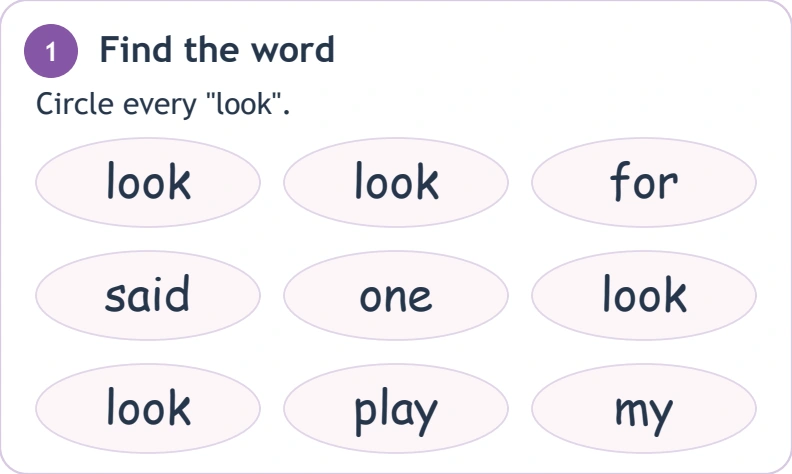
Four of the nine entries are look. The remaining choices are for, said, one, play and my. Compare each candidate with the complete model, checking the middle pair as well as the beginning and ending. The adult may retain the four-match count for review.
Look Word Lab can start with a pointed choice before a circle. If a child selects an uncertain entry, provide a specific comparison rather than a general instruction to concentrate. The aim is evidence from print, with enough time to inspect it.
Six Look Word Lab invitations give observation a written reason
These additions use separate cards and ordinary pictures. Choose one that suits the learner, teach the target before asking for a reading decision and supply unfamiliar surrounding words. Each invitation can finish after a brief successful exchange.
1. Look Word Lab writes an observation request
The child selects a drawing and dictates a request for a willing listener to observe it. An adult writes and models the message. Look Word Lab gives the target a job that the receiver can understand before checking its complete spelling together.
The Look Word Lab listener can explain which object the request concerns. Return to oo afterward, maintaining the distinction between following the message and recognising the word. A clear supported reread is enough to close the invitation.
2. Look Word Lab builds with a paired middle
Prepare l, oo and k on broad pieces, with the source model nearby. Read the assembled target, then discuss the two letters printed on the middle piece. Look Word Lab makes the vowel spelling available as one taught unit without hiding its written letter count.
For Look Word Lab, compare that arrangement with four separate letter pieces. The spelling stays l-o-o-k in both. The adult explains that changing the pieces used for demonstration does not change the word's letters or pronunciation.
3. Look Word Lab makes a small gallery invitation
Place two simple drawings apart and dictate an observation message about one. Supply the full written sentence and help the child locate the target. Look Word Lab gives a partner a clear task while keeping the unfamiliar object names under adult reading support.
During Look Word Lab, ask the maker to clarify the intended drawing if needed. A name or gesture can resolve that reference. Then inspect l-o-o-k again so the picture choice does not replace attention to the written target.
4. Look Word Lab repairs a missing o
Arrange l-o-k beside the correct source model and explain that the build is incomplete. Invite a supported repair by adding the other o. Look Word Lab makes the written omission visible while the adult continues to model the actual pronunciation.
The Look Word Lab repair concerns letters, not adding another vowel sound. State that directly if the child tries to stretch the word into four sound parts. One checked build can be more useful than repeated reshuffling without an explanation.
5. Look Word Lab changes who gives the request
An adult makes a supported observation request, then offers the child a turn to dictate one. Locate the target on both completed cards. Look Word Lab shows that the same spelling can appear in messages made by different people about different things.
Let the Look Word Lab child choose a gesture or an adult-read dictated message instead of a spoken performance. The activity needs a clear meaning and visible word, rather than a confident public voice or an independently written sentence.
6. Look Word Lab saves one observation for tomorrow
Choose a satisfying request and keep its card with the drawing. On another willing visit, reread the target and check whether the message still fits. Look Word Lab makes a return purposeful through a familiar piece of communication instead of a required repetition count.
A Look Word Lab revisit can stop after one middle-pair comparison. Invite a new message only if interest remains. The child's participation should guide the amount of optional play, while the adult continues to supply accurate reading support.
Look Word Lab reads a capital beginning as the same target
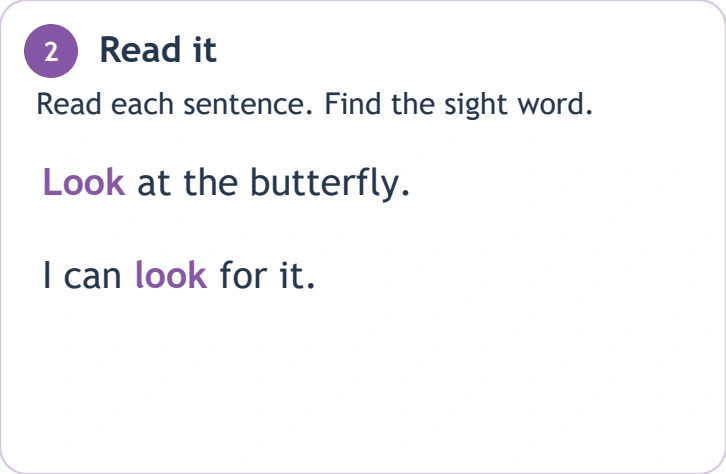
The source begins one line with “Look at the butterfly.” Its other line describes being able to look for it. Explain the capital L at the sentence beginning while connecting both forms with the lowercase model. A case change does not create a different target word.
Look Word Lab asks the adult to help with unfamiliar surrounding spellings and establish the complete message. The child can then locate the target, discuss the meaning and attempt a supported reread without being encouraged to infer the word from the illustration alone.
Two Look Word Lab traces precede a separate build decision

Follow one dotted model after reading the target. The source supplies two examples and guides for writing, rather than an unlimited tracing row. If the printed guide height feels uncomfortable, an adult can demonstrate an enlarged version on another sheet.
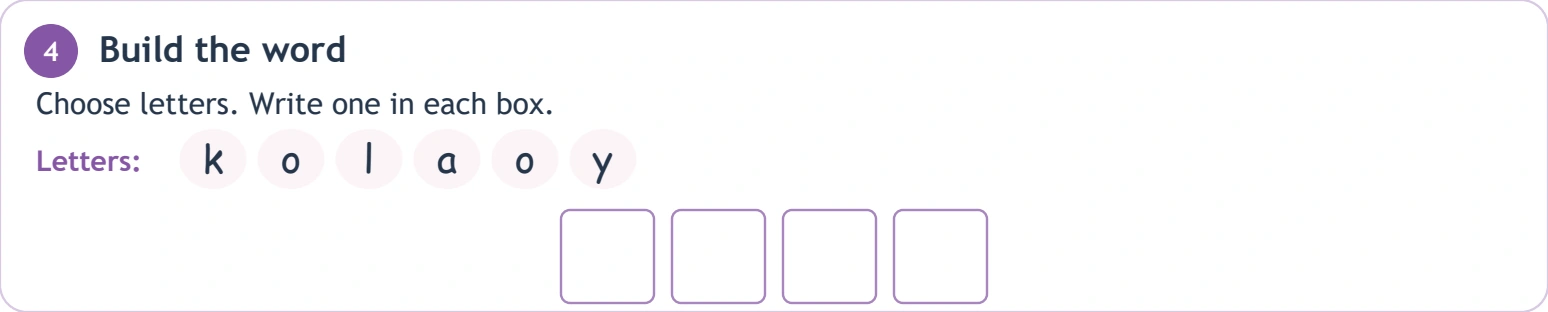
Look Word Lab offers k, o, l, a, o and y in the bank. Select l, both o choices and k, arranging them in order. The two o entries are both needed; a and y remain unused. Read the completed spelling after checking each written position.
Six Look Word Lab benefits can appear at different levels
- Spelling analysis: notice that a two-letter vowel spelling can represent one sound.
- Letter sequence: preserve both o characters between l and k.
- Case understanding: connect sentence-initial Look with the lowercase source target.
- Attention: inspect a complete entry before deciding it matches.
- Motor planning: attempt guided forms or use larger pieces when appropriate.
- Purposeful language: dictate a request that directs a listener's attention.
Look Word Lab does not require matching independence in reasoning, speaking and handwriting. A child may explain the double-o detail while needing an adult to record a sentence. Note the particular achievement and keep the next request manageable.
Look Word Lab can fit a short teaching conference
A classroom teacher models the vowel spelling, reads a source sentence and invites individual responses on each child's own sheet. One learner may select bank letters, another locate the target in print and another attempt writing. Record the prompts required for that response.
Look Word Lab at home can follow the same principle through a chosen drawing and one written request. Revisit a saved card when interest returns. A precise comment such as “You noticed that the build needed both o letters” names the learning action without making speed the measure of success.
Look Word Lab keeps the companion butterfly display explicit
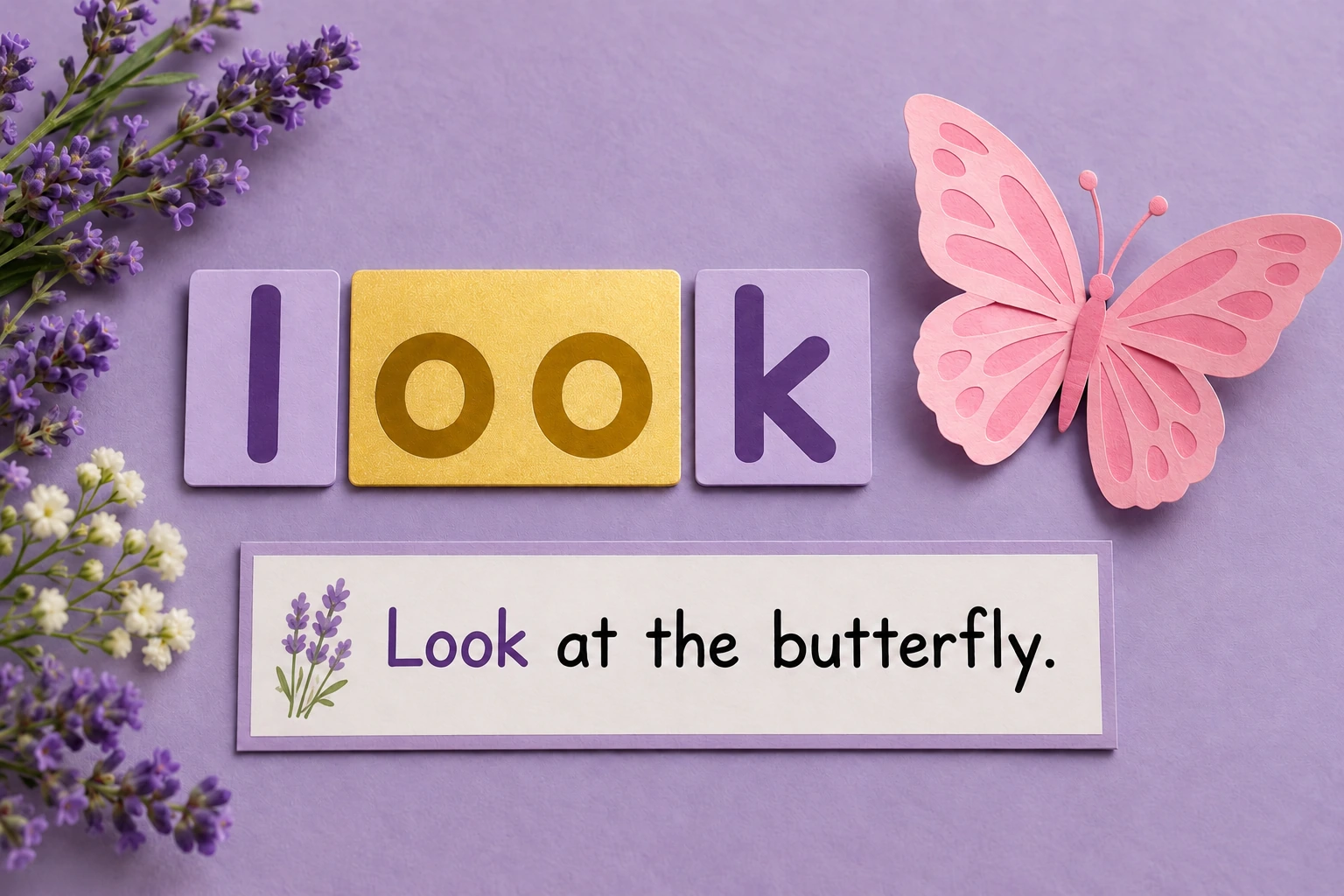
The separate scene shows a paper butterfly, l-oo-k pieces and a completed sentence strip. Its filled labels support an adult's demonstration. They do not replace the source activities or turn its deliberate answer spaces into completed exercises.
Look Word Lab can suit supported children near four to six years old, depending on taught correspondences and hand comfort. Explain an unfamiliar spelling before asking a child to use it independently. Pause when looking, talking or writing becomes demanding, and return through one clear message later.
Look Word Lab responds directly to common misconceptions
| What needs clarifying? | The adult's next move |
|---|---|
| Each o gets a separate sound. | Model oo as the vowel spelling here. |
| Only one o is selected. | Check all four written positions. |
| The butterfly determines the answer. | Inspect l-o-o-k in the actual choice. |
The final Look Word Lab panel allows a new sentence or a copy from above. Oral rehearsal and adult dictation can make the message clear before writing. Choose a response suited to the learner instead of treating independent composition as the only worthwhile finish.
Choose the Look Word Lab download before printing
The source-file option retains the supplied individual sheet. A clean version is available through the protected member download for a signed-in user whose active plan is eligible. The clean PDF removes worksheet watermark text, website-name promotion and domain branding; no ads appear inside its downloaded page. Check your printer preview for the entire US Letter activity border.
Look Word Lab is also included in the separate $5 twenty-page collection reached through this page's package card. That purchase provides the merged clean PDF, while the individual attachment uses membership access. For another observation context, visit the kite-direction sheet, compare a reported message with the teddy conversation activity, or revisit a separate vowel lesson.
Adult support can draw on UFLI's explicit frequent-word activities and Reading Rockets on spelling-informed word teaching. Use that background alongside the learner's existing reading programme when deciding which part of the target needs modelling next.
Popular Worksheets
Printable resources families and teachers are downloading now.
 Free
 Free
 Free
 Free