
For Word Messages: 5 Brilliant Gift-and-Reader Games
A recipient message can lead to another target. The twenty-page premium collection includes ‘for’ beside nineteen different word lessons. Its single-file download costs $5 and excludes worksheet website/domain promotion.
A gift label can answer a very practical question: who should receive this? For Word Messages brings that recipient relationship into the A Sweet Gift worksheet, where two cake sentences give f-o-r a clear purpose. The learner also finds the target among other entries, follows two dotted models, selects letters and tries a sentence. An adult can handle unfamiliar print while the child studies this particular word. A paper gift or dictated note is enough to begin; the activity does not depend on food, a celebration or buying something for someone else.
For Word Messages identifies a receiver
Say that a drawing is for a willing family member, then name that person. The small word links the item with its intended recipient in this context. An adult can demonstrate the relationship through a handover before showing the matching printed phrase.
For Word Messages stays with that useful meaning rather than attempting to cover every possible use of for. The word can do other jobs in English, but the supplied sentences concern a recipient. A focused explanation makes the source easier to understand without giving a misleading all-purpose definition.
In For Word Messages, show f-o-r after the spoken exchange and read it naturally. Pronunciation varies with accent and with emphasis in a sentence. Follow the learner's instruction and the adult's clear model rather than imposing a fixed sound count that may not suit their speech.
A family note turns For Word Messages into a real exchange
Aarav makes a small paper picture and chooses his aunt as its recipient. She helps him write a label, reads it back and invites him to locate the target. He compares f-o-r with the large model before attaching the note to the drawing.
Their For Word Messages activity continues when he chooses a different recipient for another pretend parcel. His aunt changes the name while the target stays the same. Aarav can explain the new destination through speech or pointing, then inspect the repeated spelling.
For Word Messages offers a contribution at several levels. Aarav may dictate the whole message, select the target letters or write the short word himself. His aunt supplies the remaining print instead of turning a meaningful note into a test of every unfamiliar spelling.
For Word Messages checks a wide field of word choices
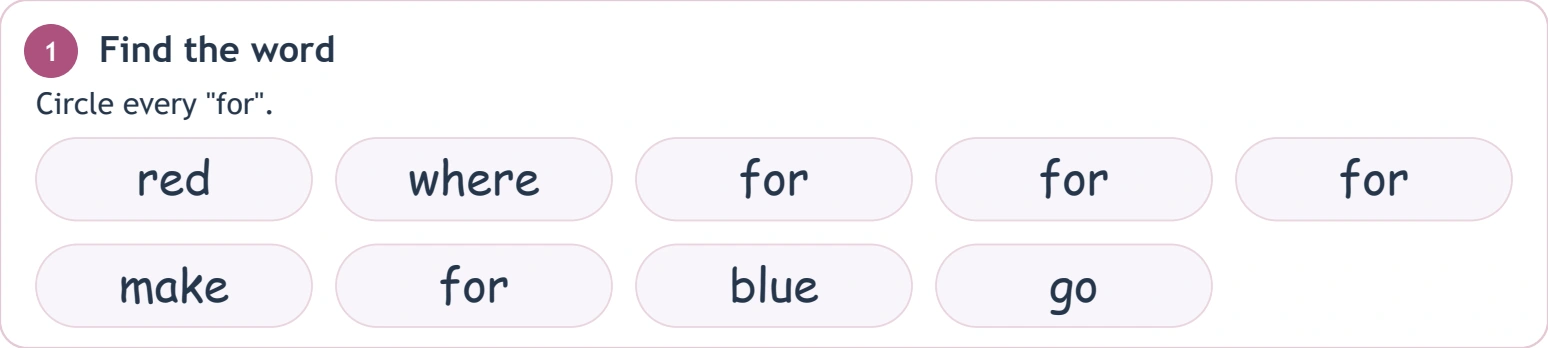
The source search contains nine entries with four for matches. Red, where, make, blue and go are the distractors. The adult can retain the four-match total privately while the learner compares each candidate with the target model and reads with suitable support.
For Word Messages does not depend on circling the shortest entry or choosing a familiar color word. Inspect f, o and r in order. If a learner points to an uncertain choice, compare the complete spelling and provide an accurate model before asking for another decision.
During For Word Messages, pointing can come before circling. A child who understands the match may still find the small marking area awkward. Separate that movement demand from the reading decision so the adult observes what the learner actually knows.
For Word Messages prepares the hand after introducing the word

Two dotted models provide the guided writing examples. Read the target first, demonstrate the printed form and invite one comfortable attempt. A larger separate model is available when the page's narrow guides do not yet suit the learner's hand control.
For Word Messages benefits from practical adjustments such as a stable sheet and a tool the child can hold comfortably. More repetition is not automatically the right response to an awkward grip or fatigue. Keep the meaning and spelling available through pointing or letter pieces when pencil work pauses.
For Word Messages chooses a spelling from a mixed bank
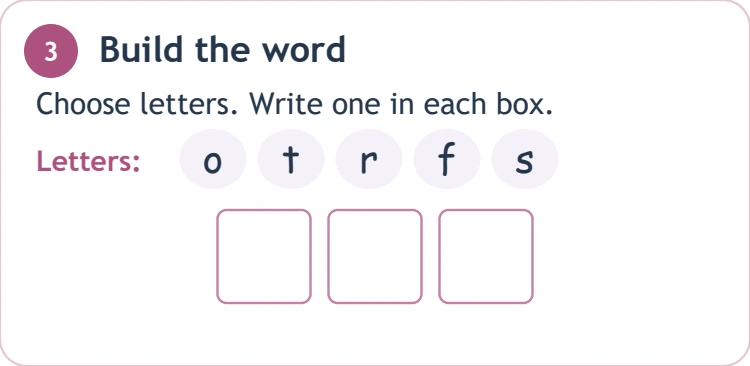
The choices are o, t, r, f and s, with three boxes for the answer. Select f, o and r and arrange them into the correct written order. The source bank is deliberately not a ready-made left-to-right copy of the target.
For Word Messages can begin with movable pieces before filling the boxes. Name the selected letters, compare them with the model and read the completed word. Leave t and s unused instead of trying to fit every available character into the answer.
Five For Word Messages activities make a recipient matter
Use a separate note or a safe ordinary prop for a chosen activity. These are optional additions around the sheet, with unfamiliar words read by the adult. They create a reason to inspect the target without promising extra exercises inside the PDF.
1. For Word Messages opens a drawing-delivery desk
The child chooses a willing person to receive a small drawing and dictates a label. A trusted helper records the intended recipient in clear print, then offers a supported reread. For Word Messages gives the target a concrete role before the drawing is delivered to its intended receiver.
Keep the For Word Messages spelling model beside the label. The learner can point to the complete word or write it with support. Ask whether the finished message names the right recipient rather than focusing only on whether the handwriting looks polished.
2. For Word Messages changes one name on a parcel note
Place a pretend parcel beside two adult-written recipient labels. Read each and discuss how the receiver changes while the target remains for. For Word Messages makes one stable spelling visible inside two different complete messages.
The For Word Messages labels need not be read independently. Supply unfamiliar names and let the learner inspect f-o-r. Avoid turning knowledge of a person's written name into a hidden prerequisite for participating in the activity.
3. For Word Messages repairs a delivery mix-up
An adult reads a clearly named recipient on a note, then offers the parcel to the wrong puppet. Explain the mistake and invite the learner to redirect it. For Word Messages gives the child a meaningful reason to clarify who the message concerns.
During For Word Messages, the correction can be a gesture or a spoken name. Return to the target afterward and check all three letters. Solving the social situation shows comprehension; the print comparison supplies separate evidence about reading.
4. For Word Messages makes a paper bakery order
Draw a pretend cake and dictate who it is intended for. An adult writes and reads the sentence while the learner locates the target. For Word Messages echoes the source theme through paper play, without requiring a real snack or a special event.
For Word Messages can change the pretend item while keeping the recipient constant. Discuss what stayed the same in the message and inspect the target again. One clear comparison is enough before the activity becomes repetitive.
5. For Word Messages sends an appreciation card
Invite a brief dictated message to someone who has helped with an ordinary task. The adult supplies the longer writing and includes a clear recipient phrase. For Word Messages gives the learner a personal reason to recognise or write the introduced word.
Let the child choose whether to deliver the For Word Messages card. A pretend recipient is equally workable if sharing feels uncomfortable. The reading opportunity does not need to depend on a public performance or an expectation to express a particular emotion.
For Word Messages reads two cake statements with support
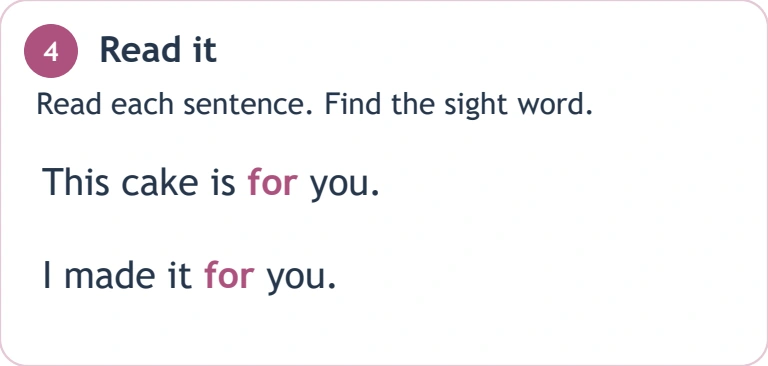
The first source line says “This cake is for you.” The second reports making it for that recipient. Read both messages, identify who receives the cake in the shared situation and locate the target. The adult can model the other spellings directly.
For Word Messages ends with a sentence task that permits a copy from the lines above. Rehearse the chosen message orally before writing. A dictated sentence, supported copy or new composition can each provide a reasonable next step at a different stage of readiness.
For Word Messages in class gives each learner a distinct contribution
A teacher models a short recipient phrase and points to f-o-r. Children then inspect one source choice, select the bank letters or dictate a message for a classroom puppet. Each learner uses an individual sheet while the teacher records the assistance required.
For Word Messages can involve partners who take different roles: one dictates a recipient, while another listens to an adult-supported note. Swap only when appropriate. Keep the target visible and prevent a confident partner from taking over the print decisions for someone else.
Six For Word Messages benefits can be seen in ordinary responses
- Recipient awareness: identify who should receive an item or message in the current context.
- Spelling order: preserve f-o-r when selecting and arranging the written characters.
- Print checking: compare an entire candidate rather than rely on a picture or word length.
- Listening: follow a supported sentence and clarify a mistaken recipient.
- Movement: trace or attempt a short written form with a comfortable level of support.
- Expression: dictate a useful label that another person can read and act on.
For Word Messages combines cognitive decisions, fine-motor participation and spoken language without expecting equal independence in each. An accurate recipient explanation can coexist with emerging spelling knowledge. Observe the exact action and choose the next prompt accordingly.
For Word Messages uses an invented parcel scene accurately
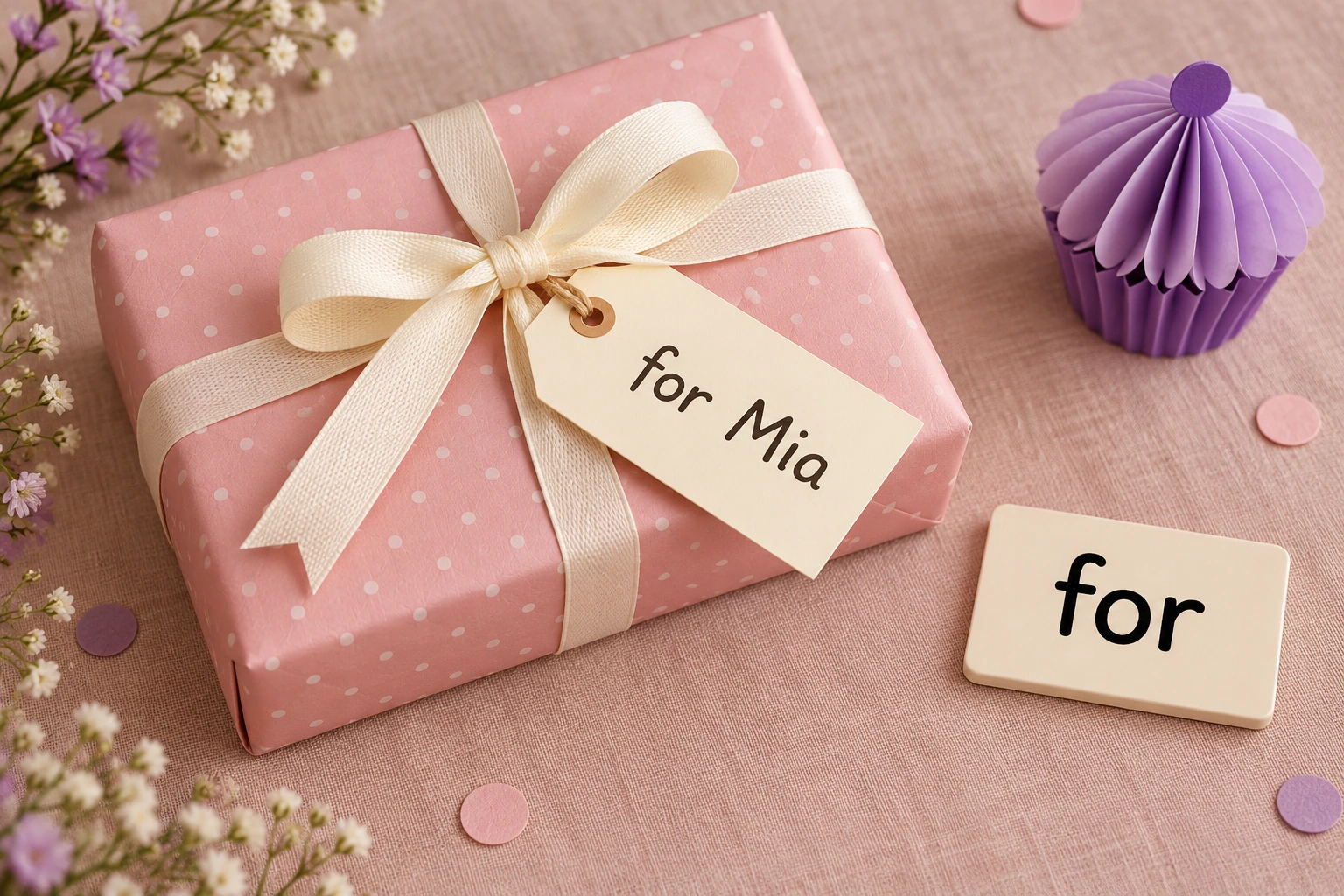
The companion image shows a pink parcel marked for Mia, a filled word card and a paper cupcake. This is a separate teaching arrangement rather than a photograph of the source worksheet. Its completed text gives an adult an explicit example to discuss and read.
For Word Messages can use a plain drawing in place of that display. The recipient relationship explains the message, while the printed letters identify the word. A child can enjoy choosing a receiver and still need a direct reading model; those responses deserve separate attention.
For Word Messages responds to common stumbling points
| What seems difficult? | A useful response |
|---|---|
| The bank order is copied. | Choose letters before arranging f-o-r. |
| The receiver is unclear. | Name the intended person explicitly. |
| Pronunciation is overcorrected. | Model the phrase naturally in context. |
For Word Messages can suit supported preschool and beginning-school learners, often ages four to six. Base the assistance on current instruction and comfort rather than age alone. Invite another brief visit through a saved note, and acknowledge a specific decision: “Your label told me who should get this.”
Download For Word Messages with a clear file choice
The original-source download keeps the supplied worksheet available. A clean individual member edition is provided through protected delivery for signed-in users whose active plans qualify. The clean file has no worksheet watermark, domain promotion or website-name branding, and no ads are embedded in its activity page. Check the US Letter print preview before fitting the complete border to your printer's usable margins.
For Word Messages is also one sheet in the separately purchased $5 twenty-page collection shown on this page's package card. The collection provides a merged clean PDF, while the individual edition uses membership access. Select the desired file route and save a copy for a later willing reading visit.
Explore the listener role with the fish exchange page, a shared referent with the ball pronoun sheet, or another food-related reading context through the eat activity. Adult background is available from Reading Rockets on teaching frequent words through spelling knowledge and UFLI's practical word-instruction collection; use examples aligned with the learner's ongoing reading lessons.
Popular Worksheets
Printable resources families and teachers are downloading now.
 Free
 Free
 Free
 Free