
The Word Practice: 5 Powerful Train-Reading Choices
A train is one stop on the word route. Get the ‘the’ sheet and nineteen companion activities in a clean, source-ordered PDF. The twenty-page package costs $5.
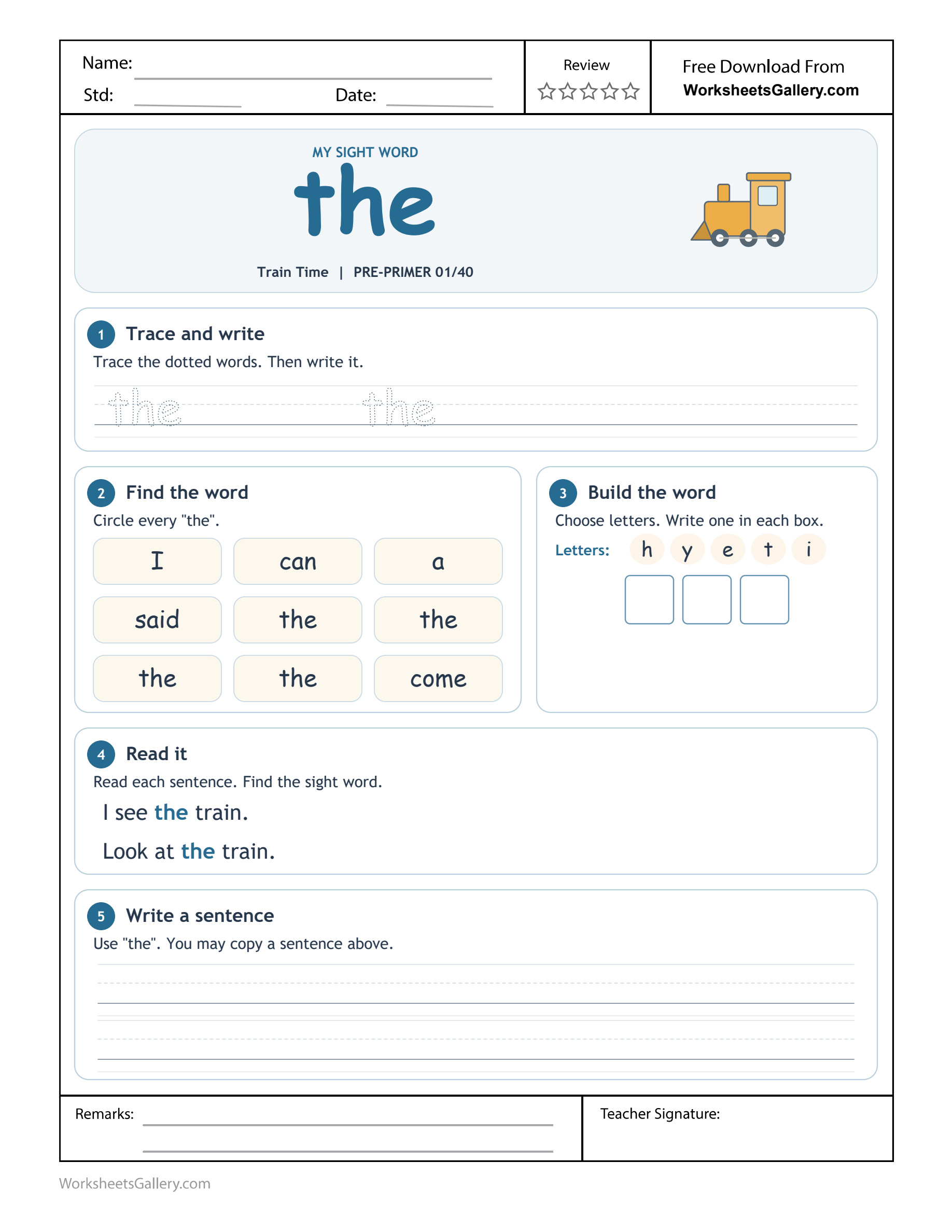
Which train are we talking about? The Word Practice begins with that small shared question, then brings attention back to the printed letters t-h-e. The Train Time worksheet offers a large word model, dotted writing examples, a search, letter selection and two train sentences. A child can discuss the picture with an adult before reading the target, but the picture cannot tell them which letters are printed. Read the word clearly, inspect its spelling and use it in a message about a particular train. One thoughtful exchange can give this familiar little word a noticeable purpose.
The Word Practice gives a small word a specific job

The source says “I see the train.” and “Look at the train.” Each line points attention toward a train that the speaker and listener can identify from their shared situation. Read the whole message together and ask which object they mean, allowing a spoken answer or a gesture.
The Word Practice connects that meaning with the exact written target. Point to t-h-e, say the word naturally and explain the sound-spelling parts at the child's current level. The t and h work together here; do not present each letter as an unrelated sound to be guessed from a picture.
The Word Practice need not introduce a technical grammar definition. A young learner can understand a shared reference through an adult's clear example. Later, a teacher may name the article's role, but understanding an actual message is a useful beginning.
Anika makes The Word Practice a station announcement
Anika places a toy train beside her father's book. She dictates “Look at the train,” and he writes the message on a separate card. They read it together, then she locates the small word before train. Her father helps with any other spelling she has not learned yet.
During The Word Practice, their conversation changes when another toy arrives. Anika points to the train she means before repeating her message. The movement clarifies the reference, while the printed card stays unchanged. Her father returns to the three target letters so the object demonstration does not become a word-reading shortcut.
The Word Practice can remain much simpler than a station story. One available picture or toy and a short spoken phrase are enough. The purpose of the example is to connect an accurate word with a meaningful message, rather than add a long pretend-play requirement.
The Word Practice model keeps all three letters visible

The large blue model sits beside a small locomotive and the Train Time label. Invite the learner to look across the complete word. An adult can name its written letters and model its pronunciation, with clear attention to the portions the child has not yet been taught.
The Word Practice separates a letter's name from the sound work needed for reading. Knowing that the middle letter is h helps discuss its position, but reciting letter names alone is not the same as saying the word. Offer the appropriate model rather than demanding discovery from an unfamiliar spelling.
Six observations from The Word Practice that matter more than speed
- Whole-spelling attention: inspect t, h and e in order before deciding that a printed choice matches.
- Sound connection: hear an accurate adult model and connect it with the taught spelling parts.
- Meaning awareness: identify the particular train intended in a shared message.
- Letter selection: choose the needed bank letters while leaving distractors unused.
- Writing control: attempt the word on guides without making neatness the measure of reading knowledge.
- Communication: give another person a short readable instruction or statement containing the target.
The Word Practice offers cognitive, motor and language opportunities that may need different support. A child can explain the reference while still needing a word model, or recognise the spelling while handwriting remains tiring. Notice the specific step that became manageable.
The Word Practice checks a complete choice before circling
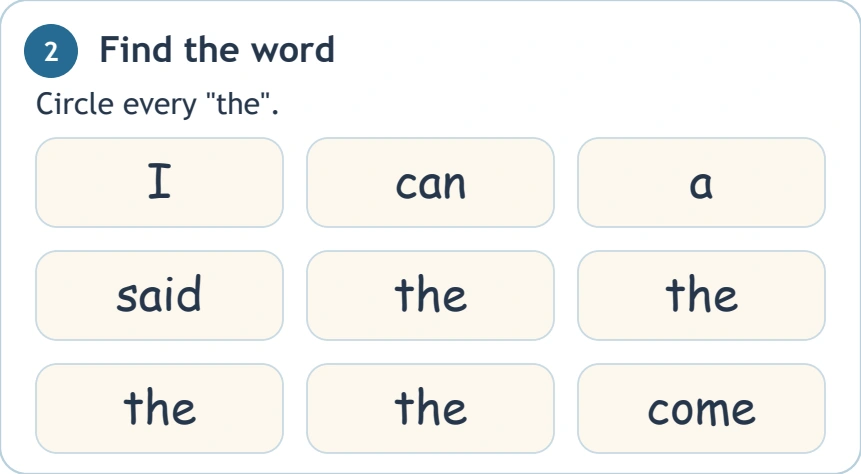
Nine search cells contain four instances of the, with I, can, a, said and come as the other entries. An adult can use the answer count privately when reviewing the work. Let the learner inspect each choice rather than revealing where the matches sit in advance.
The Word Practice search is not solved by finding the first letter alone. Compare the remaining letters with the large model and read the matched word. A child who circles an uncertain entry can pause for a supported comparison without erasing the entire page or restarting under time pressure.
Five The Word Practice games about a shared object
These invitations use new cards or ordinary props beside the source sheet. Choose a single game after the target has been introduced. Each adds a purpose for checking print instead of asking the learner to memorise the worksheet's search positions.
1. The Word Practice opens a train-message desk
Invite a short message about an available train picture. An adult writes the complete line, reads it aloud and asks the child to locate the target by its spelling. The Word Practice desk can send a statement or a looking request to a willing family listener.
During The Word Practice, the receiver follows the message, then asks which train the maker meant. This keeps meaning visible without replacing the print check. The child may dictate the other words while taking responsibility for locating or writing the introduced target.
2. Give The Word Practice a three-letter ordering tray
Offer large t, h and e pieces with the printed model nearby. Arrange the letters, compare each position and read the finished word with support. The Word Practice tray reduces the pencil demand while keeping the written order inspectable.
After The Word Practice construction, change the spacing between pieces without changing their order and look again. The child can see that the same letters still form the word. Avoid turning this into a lesson that every separate piece must represent a separate speech sound.
3. The Word Practice makes a referent switch
Place two toy trains far enough apart to point to one clearly. The learner chooses a train and gives a supported “Look at the train” message. The Word Practice switch explores why the listener needs shared context when the printed sentence itself does not name a color or position.
For The Word Practice, keep both the spoken message and the written target available. Pointing explains which object is intended; reading still requires attention to t-h-e. One clarified reference is enough, without repeating the same exchange until the learner loses interest.
4. The Word Practice collects a known-word comparison
Put the target beside one familiar distractor on separate large cards. Inspect the beginning, middle and end of each, then read the introduced word. The Word Practice comparisons can use a choice from the actual search after the adult has established its pronunciation.
In The Word Practice, the child explains a difference through letters, sounds or pointing. A correct response need not be rapid. If neither word is familiar, teach one clearly before asking for discrimination, keeping the game within the learner's existing reading instruction.
5. Turn The Word Practice into a small announcement recording
The learner dictates a new train sentence for an adult to write and read back. Locate the target, then let the child announce the message to one person. The Word Practice recording can be a written note kept with the worksheet rather than an audio or video file.
Return to The Word Practice later by rereading that specific message. Ask whether it still says what the maker intended and help with uncertain spelling. A meaningful short reread can be the whole visit, without requiring another complete page.
The Word Practice uses the actual letter bank and writing guides
The bank offers h, y, e, t and i above three boxes. Select t, h and e in the needed order. The order of the bank is a set of choices, not the sequence to copy directly into the spaces.
The Word Practice tracing panel contains two dotted models and guides for a writing attempt. The final panel permits a sentence using the target, including copying a line already supplied. The child may rehearse a message orally before combining word choice, spacing and letter movement.
The Word Practice at home can stay with one successful step
Prepare the page beside a comfortable tool and one larger word card. Read the direction for the selected panel, model the target and invite the learner to compare its letters. A family can begin with a sentence and return to the search, rather than insist on completing the printed panels in one sitting.
During The Word Practice, help with unfamiliar sentence words instead of encouraging guesses from the train picture. If handwriting becomes the difficult part, move briefly to larger letters or pointing. Preserve the reading question while changing the physical demand.
End The Word Practice with a concrete observation: “You checked the e before circling that choice.” This names evidence the child can understand. Broad praise about being a fast reader supplies less information about what made the attempt successful.
A classroom listening-and-print conference with The Word Practice
A teacher gives individual sheets after introducing the target through the class's reading instruction. Each learner reads or hears a train sentence, locates the word, checks the ordered letters and explains the intended train through a gesture or a short reply.
The Word Practice conference can record a specific prompt, such as an adult pronunciation model or a reminder to check the final letter. Partners may share messages afterward with adult reading support. Avoid comparing completion speed when children need different kinds of help.
The Word Practice keeps an illustration in its proper role
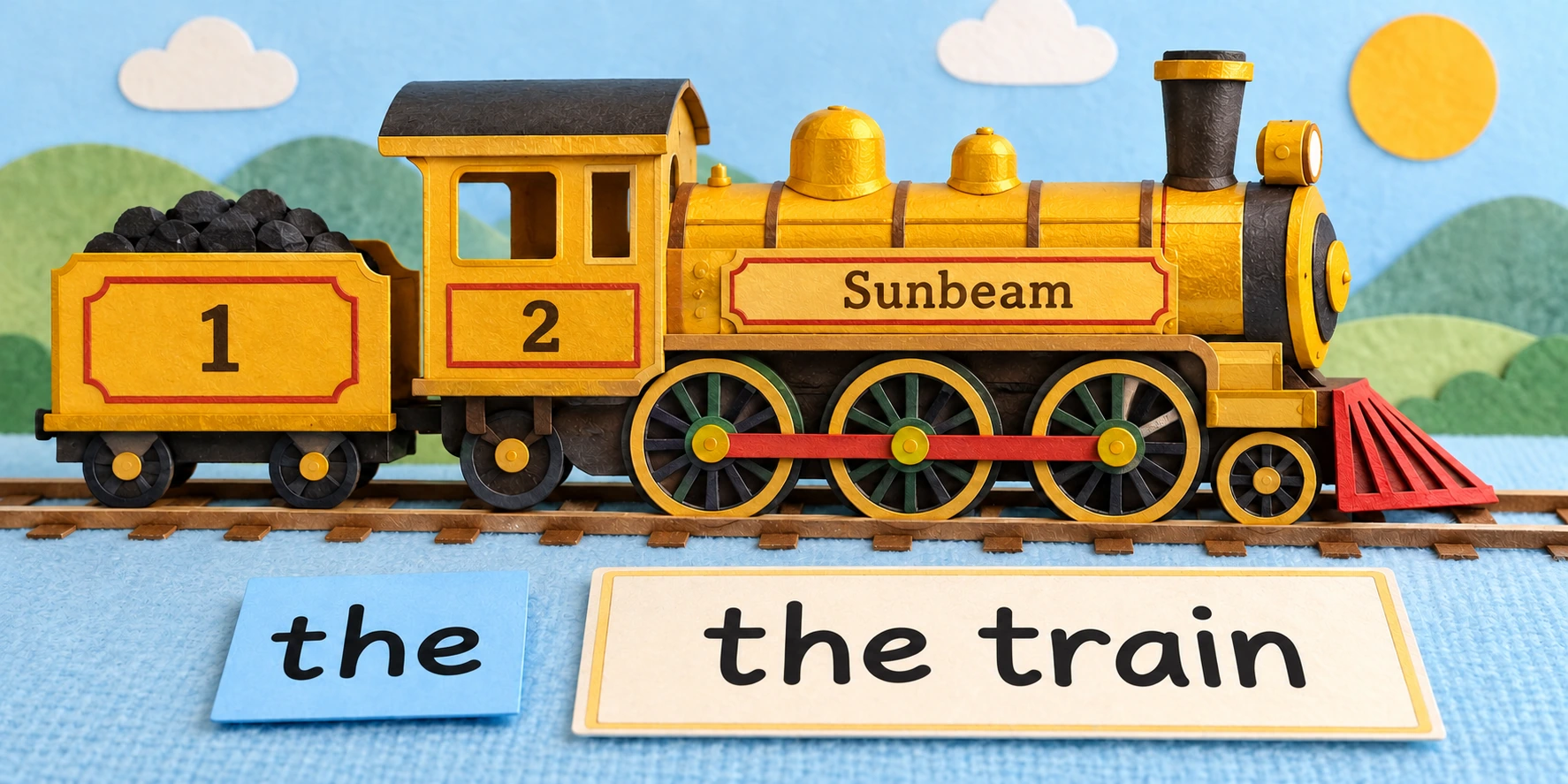
The companion paper locomotive sits above a the tile and a filled the train phrase card. Its numbered nameplates are part of the invented illustration. The image gives an adult a conversation setting; it does not identify the positions of target words in the source search.
The Word Practice can use an ordinary toy instead. Return from the object to the printed letters when reading the word. A child may understand the train story without yet recognising the spelling, and that distinction tells the adult what to model next.
The Word Practice adjustments for three different obstacles
| What needs help? | A focused response |
|---|---|
| The word is unfamiliar. | Model it and inspect its spelling. |
| The chosen entry is uncertain. | Compare all three letters. |
| Writing feels tiring. | Use larger pieces or a shorter attempt. |
Common The Word Practice mistakes include using the picture as the answer, giving only a first-letter hint or correcting every pencil movement during a reading discussion. Choose the skill currently being observed. A readable spoken explanation and a comfortable pause can matter more than filling every line.
The Word Practice suits supported early reading visits
Preschool readiness and beginning kindergarten learners, often around four to six years old, can use this page with help matched to their taught sound-spelling knowledge. Age alone does not establish that the child can independently read the surrounding sentences or write them comfortably.
Invite The Word Practice back through a new train message, another large-letter build or one supported reread. Keep the request specific, allow thinking time and rest when interest or hand comfort declines. Regular opportunities can remain brief and willing rather than follow a daily full-page quota.
Save The Word Practice in the edition that suits your plan
The original sample and a separate clean The Word Practice member PDF are available through the website's corresponding download options. Sign in with a currently eligible active membership for the clean individual attachment. This member edition excludes watermark text, domain promotion and site-name marks. There are no ads inside its downloaded PDF; advertising around the online page stays outside.
Preview the US Letter page before printing so all five panels remain within your printer's usable area. The Word Practice is also one sheet in the twenty-page $5 collection linked by the package card. The collection is a distinct paid download, while this page's clean individual edition follows its membership access.
For another reading context, try the eat word page or the separate leg reading activity. Short-vowel practice offers different sound work. Adults can consult UFLI's word-instruction materials and Reading Rockets' high-frequency-word article alongside their child's current reading programme.
Popular Worksheets
Printable resources families and teachers are downloading now.
 Free
 Free
 Free
 Free