
paid
Little Explorers Collection: 20 Wonderful Ways to Think
A small library of twenty different instructions lets adults choose between observing, remembering, describing, drawing and reasoning.
A small library of twenty different instructions lets adults choose between observing, remembering, describing, drawing and reasoning.
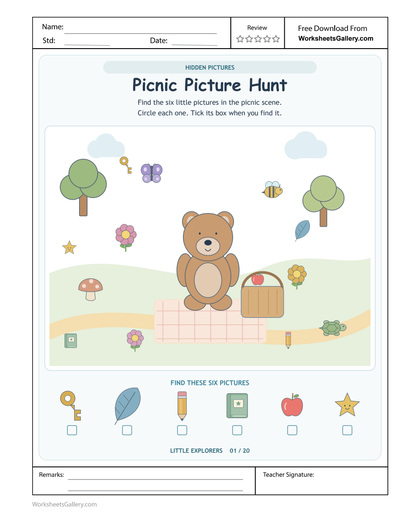
Locate one target at a time, then coordinate a scene circle with a checklist tick.
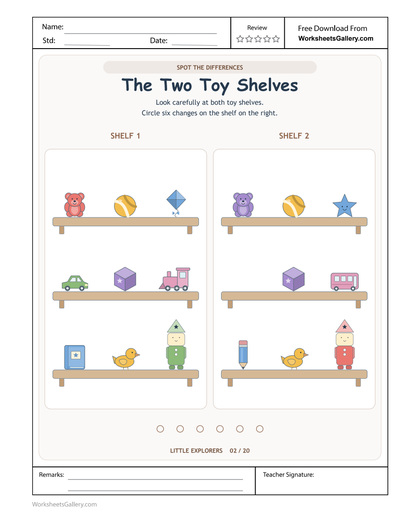
Use shelf positions to distinguish recolouring, replacement and disappearance.
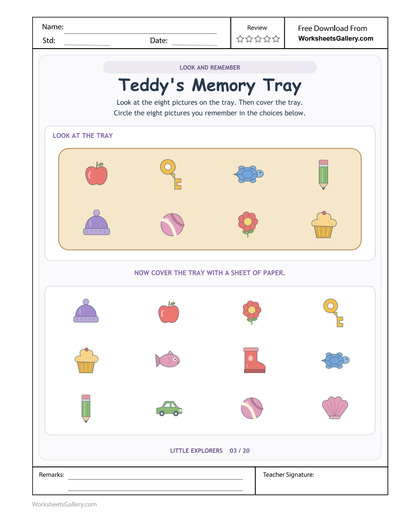
Cover the reference tray before recognising eight remembered objects among twelve choices.
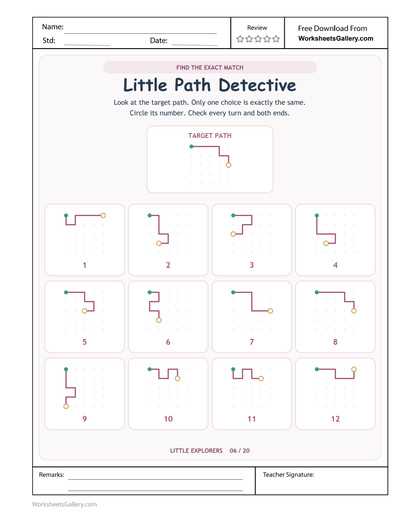
Compare every segment and endpoint of a target path against twelve alternatives.
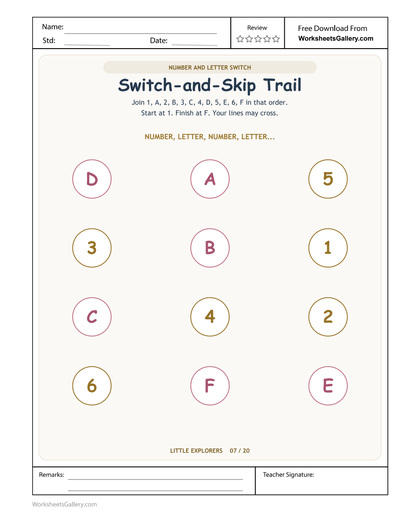
Alternate two ordered streams from 1 and A through 6 and F; crossing lines are permitted.
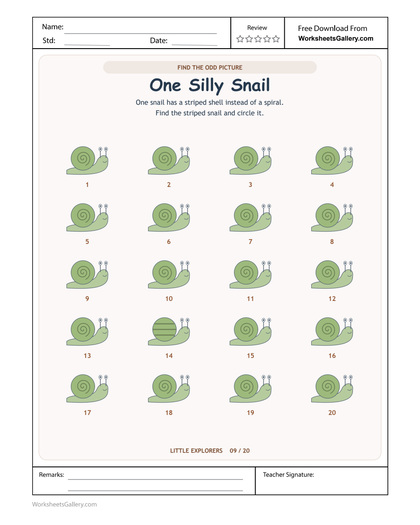
Scan twenty numbered snails for the single striped shell among nineteen spirals.
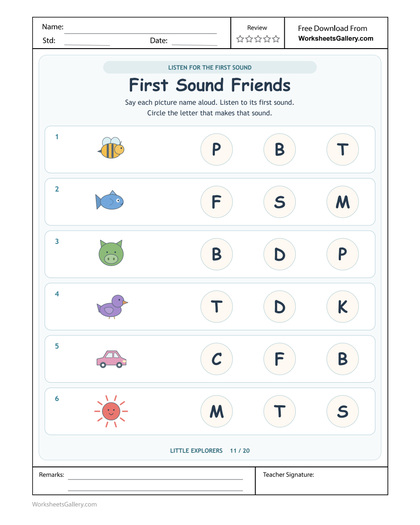
Say the intended picture name before mapping its initial sound to one capital letter.
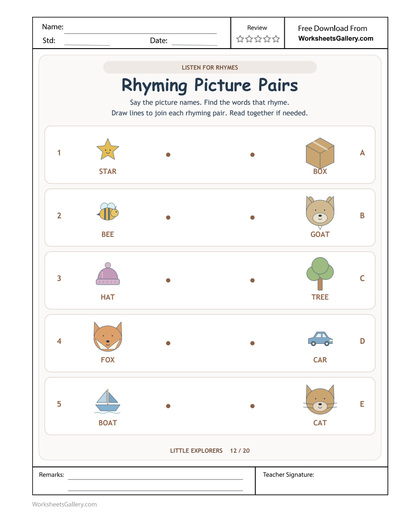
Listen to whole word endings and connect each named picture to a cross-column rhyme.
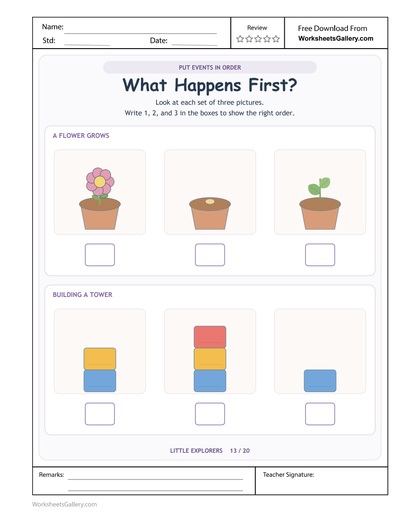
Assign time labels to flower growth and tower building rather than copying display positions.
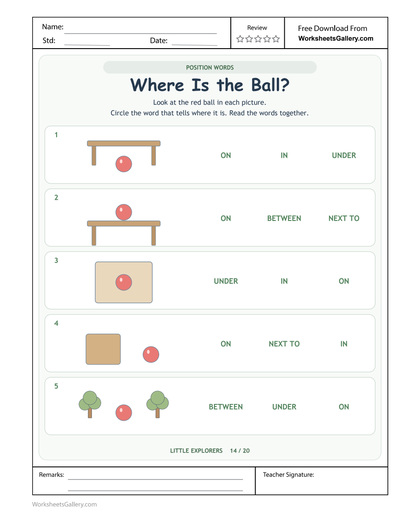
Describe a red ball relative to a table, box or pair of trees while an adult reads the choices.
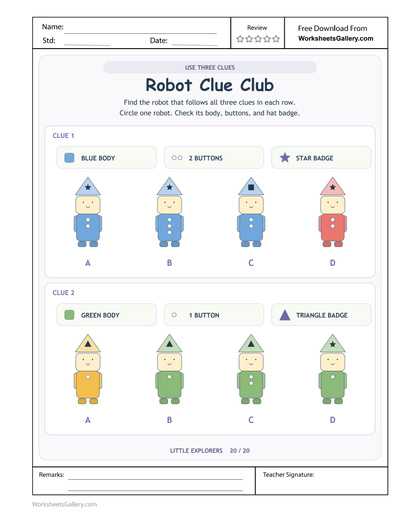
Intersect body colour, button count and hat badge before choosing one robot per row.
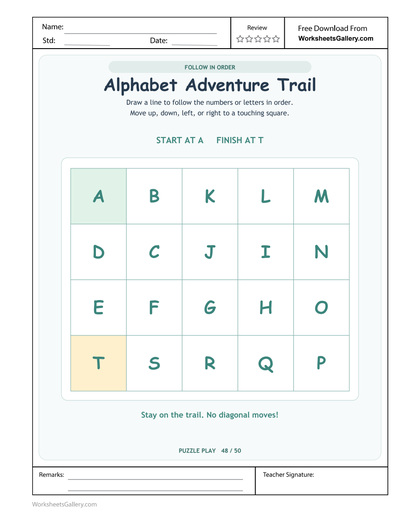
Carry alphabetical order through turns, moving only across a shared cell edge from A to T.
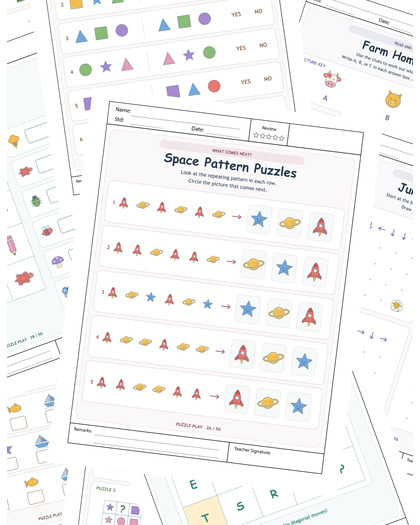
The second Puzzle Play selection gathers 25 supplied sheets for code reading, map references, picture comparisons and other thoughtful challenges.
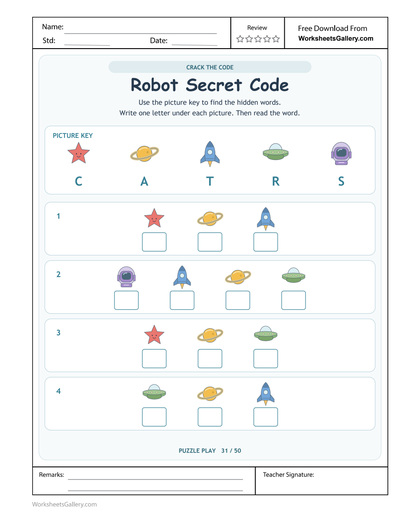
Translate each symbol through the supplied key; picture names do not provide the letters.
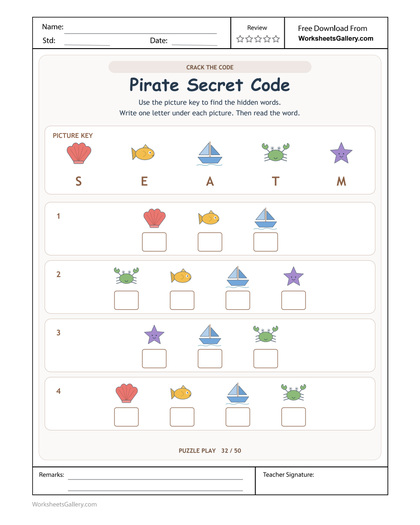
Keep one stable symbol-to-letter key while decoding sea-themed messages of different lengths.
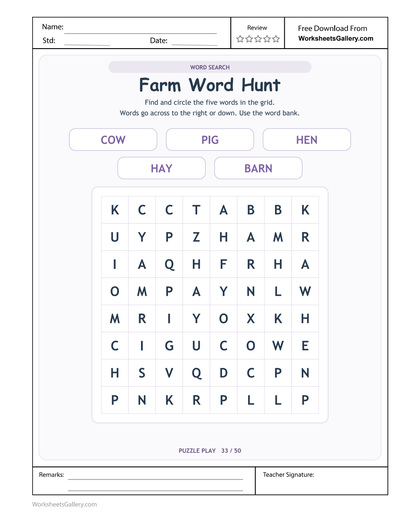
Track letters in a straight rightward or downward line and verify the whole bank word.
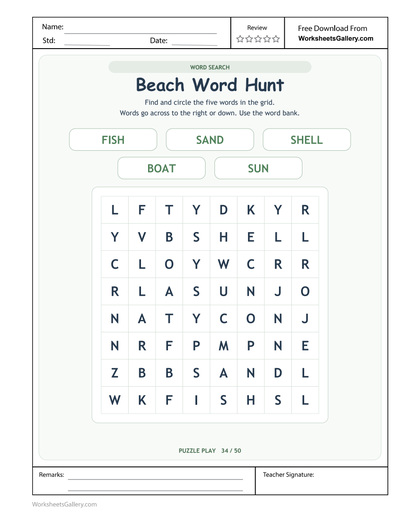
Check a promising first letter against every following letter before circling the full word.
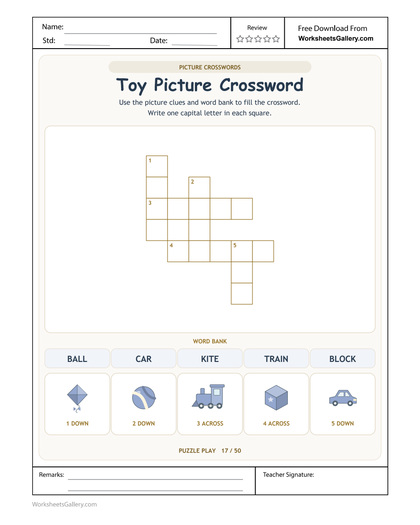
Toy Picture Crossword invites children to use clue direction and word length together before entering one capital per square.
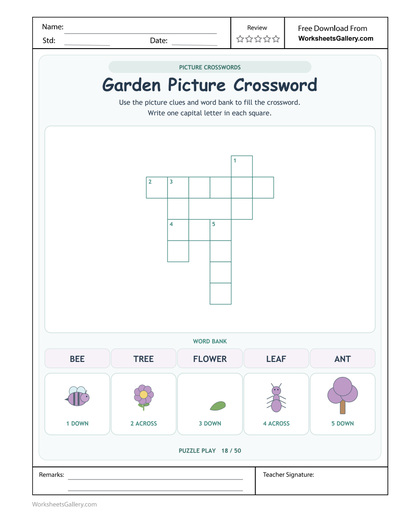
Garden Picture Crossword invites children to let a shared letter check two garden words, while keeping picture naming separate from spelling.
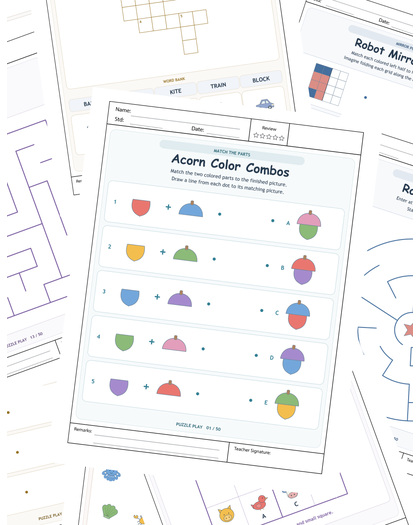
Twenty-five different puzzle decisions share one clean download, from matching coloured parts to checking a four-code Sudoku.
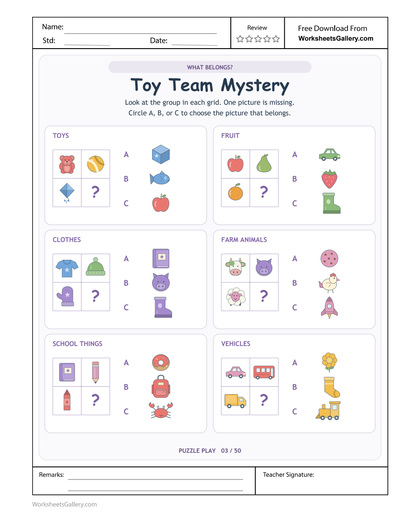
Toy Team Categories invites children to state a category rule before choosing the fourth object; different panels require different rules.
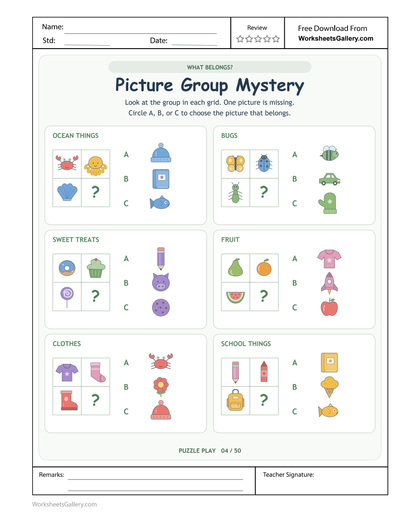
Picture Group Clues invites children to use the common property of three examples as evidence rather than choosing a favourite picture.
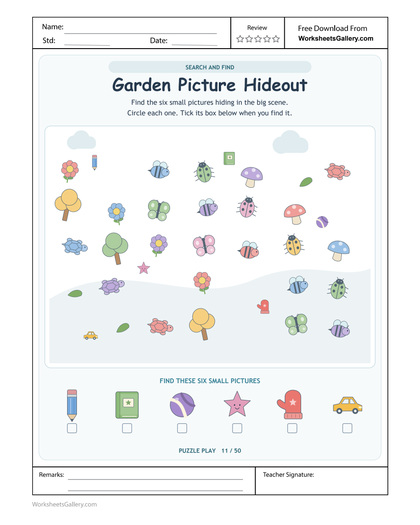
Garden Hidden Pictures invites children to separate the six target pictures from the garden setting, then use the checklist to record evidence.
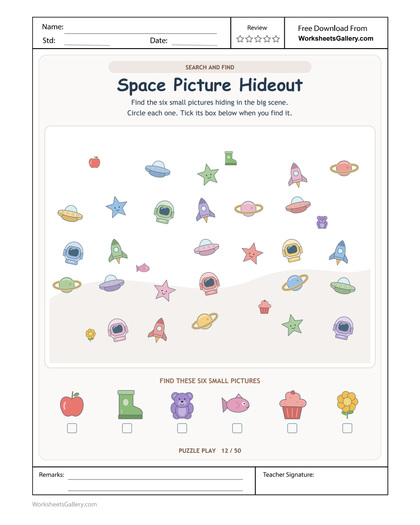
Space Picture Search invites children to sweep the busy scene in short lanes and distinguish target objects from decorative space pictures.
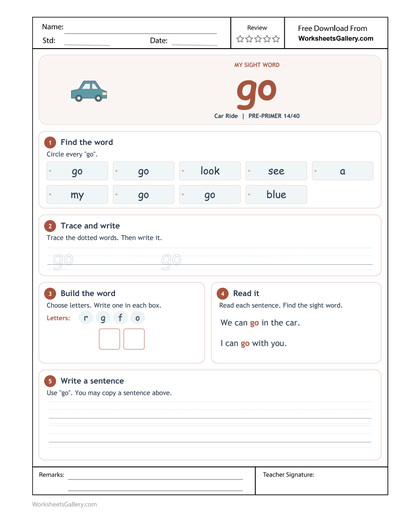
Car sentences connect an action word with company and travel.
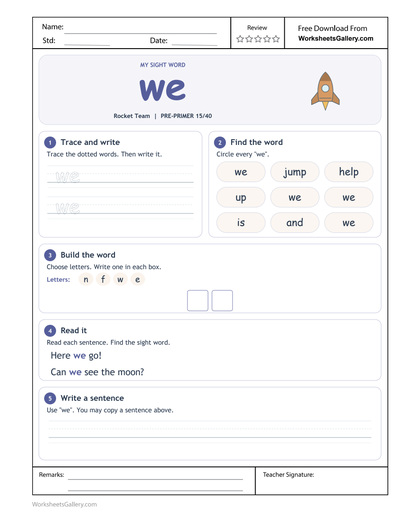
A rocket team gives a shared speaker word a clear group to refer to.
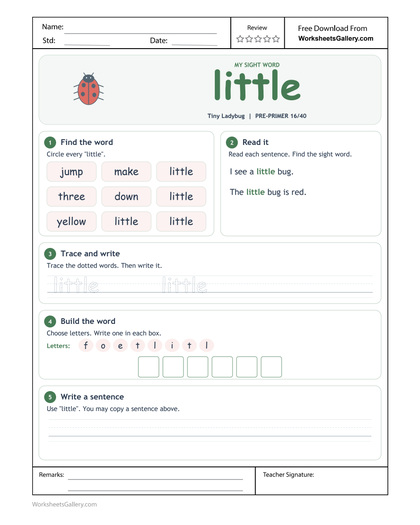
A tiny ladybug makes a longer word meaningful without reducing it to a picture guess.
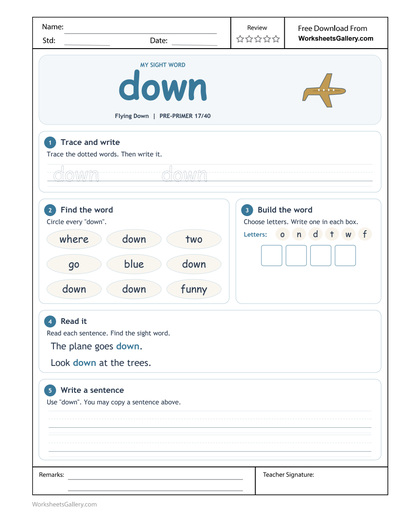
A plane and a viewpoint make two down phrases useful to compare.
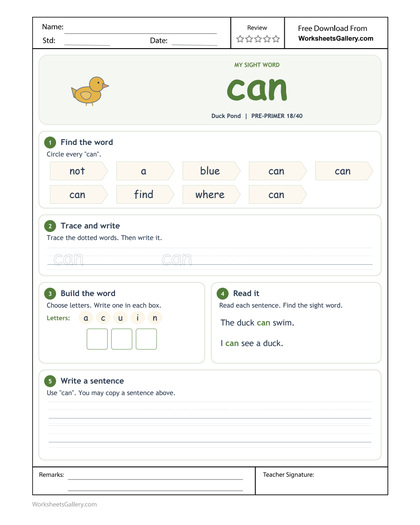
Two ability sentences give can a job beyond memorising a word card.