
Alphabet Touching Trail: 20 Brilliant Letter Stops
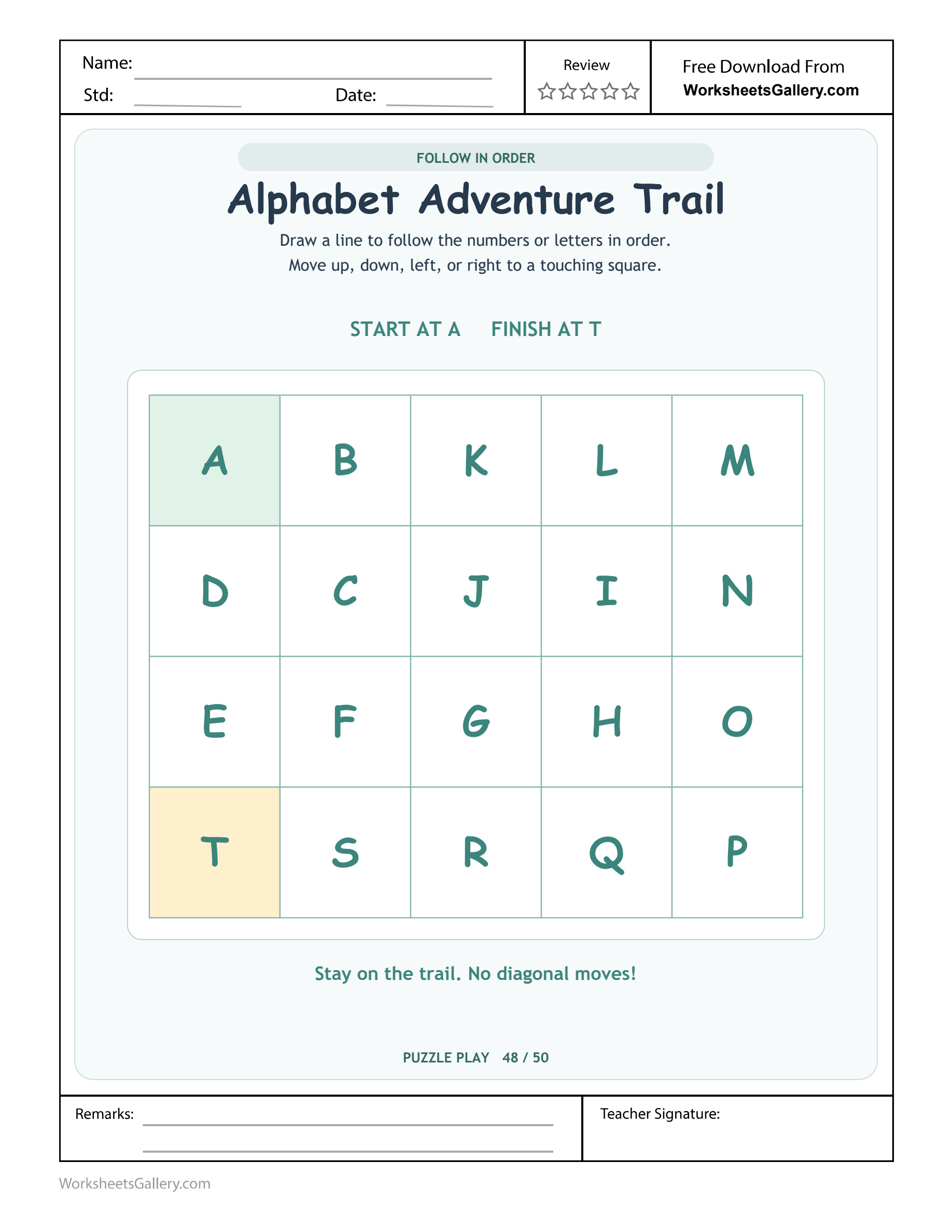
$5 · 25 supplied sheets: Alphabet Touching Trail. Carry alphabetical order through turns, moving only across a shared cell edge from A to T.
A capital-letter trail can move in several directions while keeping one alphabetical order. Alphabet Touching Trail begins at A and finishes at T, visiting twenty printed capitals through touching squares. Moves may go up, down, left or right across a shared side, with no diagonals. Read the next letter together when needed, then let the child inspect its possible location before extending a line. The grid is not arranged as ordinary reading rows, so following a familiar alphabet chant is only one part of the job. Each move must also fit the spatial rule.
Alphabet Touching Trail: read the actual puzzle
Alphabet Touching Trail: Twenty capitals A through T fill a four-by-five grid. The worksheet stops at T; U through Z are not printed destinations to invent after the highlighted finish. Keep the requested range clear before beginning the route.
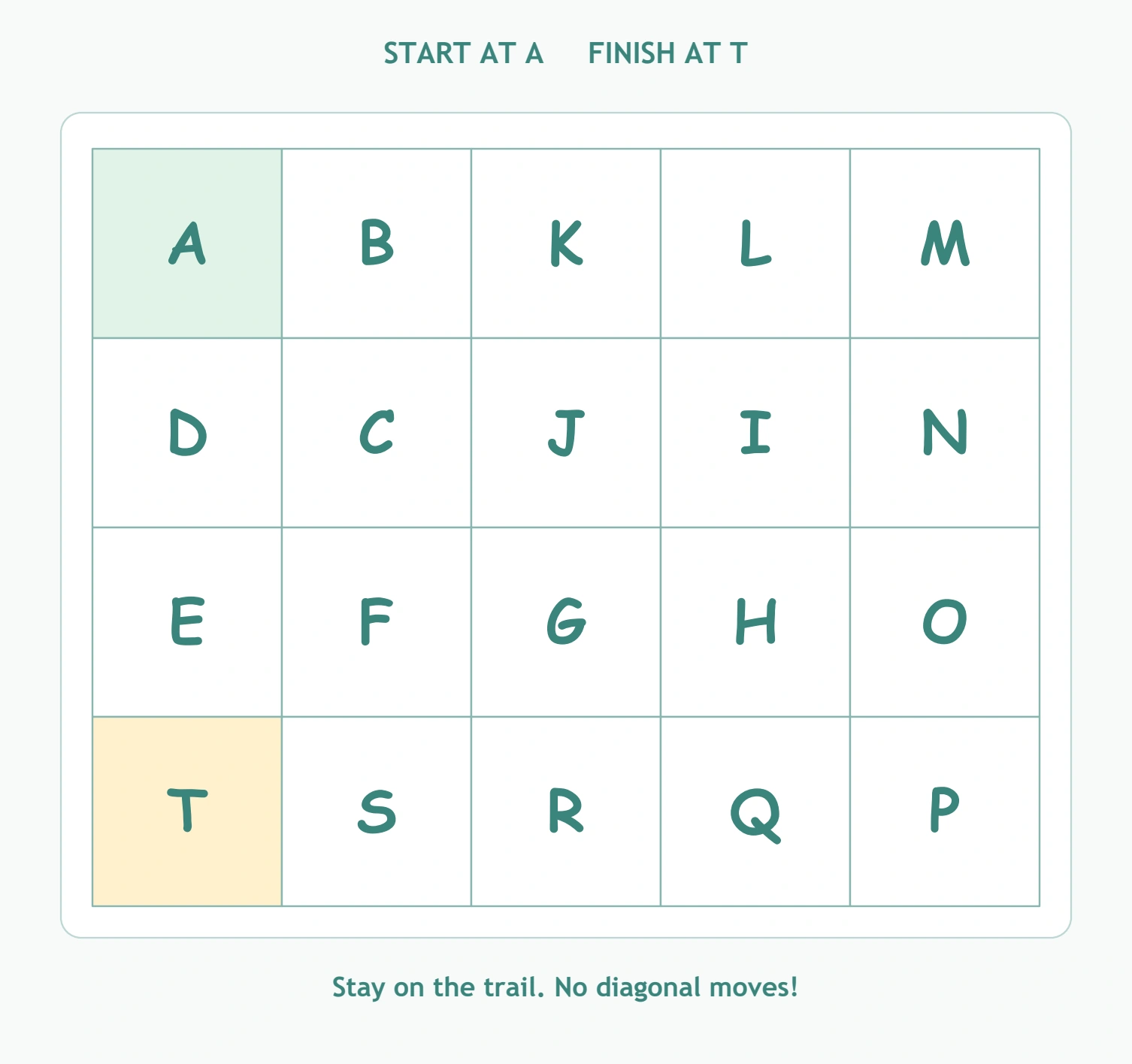
Follow the next capital in alphabetical order while crossing only a shared side. From A the route goes right to B, down to C and left to D. The changing direction does not change which letter is required next.
Touching edge deserves a second look
A square touching only at a corner is not an allowed destination. Say the successor first, then inspect whether its cell shares an edge with the current position. Avoid choosing a nearby familiar letter merely because it points toward the finish.
The path eventually moves upward as well as across and down. Read the actual capitals in the local neighbourhood instead of sweeping each printed row as a sentence. The alphabet supplies order; the grid supplies positions.
Readiness for alphabet successor
Offer letter-name support separately from location support. A child can hear the next capital and still search its written form independently. Pointing or moving a token can precede drawing when line control is demanding.
Suggested Alphabet Touching Trail range: ages five to seven. Arun’s readiness depends on alphabet-order use and interest in alphabet successor. Shorten this Alphabet Touching Trail visit when needed.
Six observations from capital entry
Alphabet-order use — capital entry
Alphabet Touching Trail invites applying a familiar sequence across a turning route. Notice Arun’s alphabet-order use explanation: “Where does this letter trail begin?”
Capital recognition — alphabet successor
Alphabet Touching Trail invites locating an intended letter among nearby alternatives. Notice Arun’s capital recognition explanation: “Which letter follows the one you reached?”
Spatial rule keeping — touching edge
Alphabet Touching Trail invites excluding diagonal jumps despite a tempting destination. Notice Arun’s spatial rule keeping explanation: “Can this move cross a shared side?”
Direction switching — t endpoint
Alphabet Touching Trail invites moving left or upward when the next capital requires it. Notice Arun’s direction switching explanation: “Have you visited every required capital before T?”
Route explanation — capital entry
Alphabet Touching Trail invites describing how letter order and contact justify a move. Notice Arun’s route explanation explanation: “Where does this letter trail begin?”
Controlled joining — alphabet successor
Alphabet Touching Trail invites recording an ordered path without obscuring the capitals. Notice Arun’s controlled joining explanation: “Which letter follows the one you reached?”
Four checkpoints for Alphabet Touching Trail
| Pause here | Inspect this clue |
|---|---|
| Capital entry | Locate the green A square before drawing. |
| Alphabet successor | Name the next capital without resetting the sequence. |
| Touching edge | Confirm a horizontal or vertical neighbouring square. |
| T endpoint | Finish only after the ordered A-to-T path. |
Capital entry — Arun’s inspection
For Alphabet Touching Trail, ask “Where does this letter trail begin?” Locate the green A square before drawing.
Alphabet successor — Arun’s inspection
For Alphabet Touching Trail, ask “Which letter follows the one you reached?” Name the next capital without resetting the sequence.
Touching edge — Arun’s inspection
For Alphabet Touching Trail, ask “Can this move cross a shared side?” Confirm a horizontal or vertical neighbouring square.
T endpoint — Arun’s inspection
For Alphabet Touching Trail, ask “Have you visited every required capital before T?” Finish only after the ordered A-to-T path.
Partners explore capital recognition
An alphabet navigator names a successor while a grid inspector checks contact. Partners swap those roles at an agreed stopping letter. Both children explain one turn before continuing, so the activity does not become one fluent singer directing every move.
A Alphabet Touching Trail classroom note can describe excluding diagonal jumps despite a tempting destination. Record the actual alphabet successor prompt, too.
Distinctions behind touching edge
Capital entry — the Arun discussion
The alphabet chant may support recall, but a child also needs to locate the requested capital in an unfamiliar arrangement. Observe those two actions separately. Naming a successor correctly does not mean its square has already been identified.
Alphabet successor — the Arun discussion
This path changes direction without reversing alphabetical order. A leftward step can still advance from one capital to its successor. Demonstrate that distinction using the first A-B-C-D turn before expecting the child to generalise it to later parts of the grid.
Touching edge — the Arun discussion
Respect the printed finish at T. Extending to Z would require a new activity rather than extra invented squares on this page. A complete A-to-T explanation is the intended outcome, even when the child knows the rest of the alphabet.
Eight closer readings of capital entry
A-to-T is the printed range
Identify the green A and highlighted T before beginning. The page contains twenty capitals and ends there. Knowing U through Z is welcome background knowledge, but those letters are not additional destinations to invent. A complete explanation respects the stated range of this particular trail. This Alphabet Touching Trail distinction supports alphabet-order use.
Name then locate the next capital
Separate recalling an alphabetical successor from finding its printed shape. An adult can supply a letter name while the child searches independently. This distinction helps reveal whether the next support concerns alphabet order, capital recognition or retaining a location in the grid.
The first turn establishes the idea
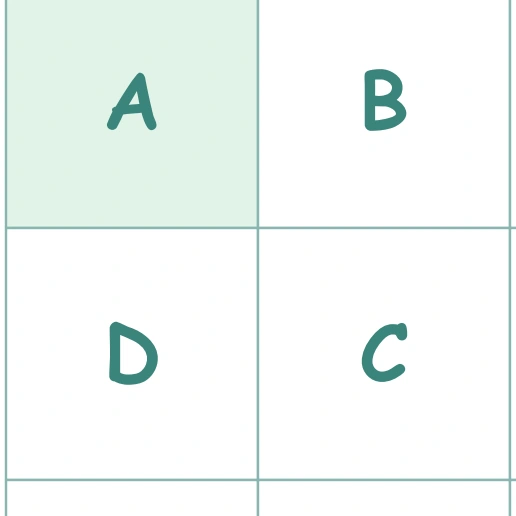
A goes right to B, then the path turns down to C and left to D. Point to the shared borders while naming that short sequence. The example shows that a changing physical direction can coexist with an unchanged alphabetical order, without requiring a long explanation before the child tries. This Alphabet Touching Trail distinction supports spatial rule keeping.
Do not read the top row as a list
Continuing rightward from B would lead to K, bypassing the required capitals. Ask which letter actually follows B and inspect the nearby squares. This keeps recognition of K separate from the decision that C must be the next stop on the announced alphabet journey.
Only shared sides qualify
A known successor across a diagonal is still not a legal move. Compare a side-sharing pair and a corner-touching pair with larger letter tiles if needed. The printed rule combines alphabetical order with a spatial condition, and both must support the proposed connection before a line is drawn. This Alphabet Touching Trail distinction supports route explanation.
A marker can support the search
Keep a finger or token at the current capital while checking its neighbours. Looking away to recall a letter name need not mean losing the route position. Move the marker after the successor has been found and the shared-side contact confirmed, preserving a visible record of the latest stop.
Keep capitals readable under the path
Draw a clear connection without repeatedly colouring over the letters. If the line becomes confusing, pause and point through a short section before adding more pencil marks. A child can demonstrate the correct ordered route even when producing a narrow, tidy line is still difficult. This Alphabet Touching Trail distinction supports alphabet-order use.
Narrate a legal journey to someone else
On a later visit, let the child guide an adult through a small turning section using both capital names and direction words. The adult can reconstruct those moves and ask about a doubtful contact. This communication role adds purpose without requiring the whole trail to be redrawn.
Another visit through controlled joining
Invite a child to guide an adult through one turning section on another visit. Explaining a leftward or upward move gives a fresh purpose to a route already recognised.
Revisit Alphabet Touching Trail through t endpoint. Recognise explanations about t endpoint from Arun.
Imagine Arun investigating at home
Arun’s mother sings a short alphabet segment with him, then pauses while he locates the next printed capital. At B he finds C below rather than beside it. They point across the shared border before making the downward line.
Try “Where does this letter trail begin?” during this imagined Alphabet Touching Trail visit. Let Arun explain capital entry before recording.
Revisit the touching edge difficulty
Reading the top row straight across would jump from B to K. Pause at the current capital and name the actual successor. Another common error is using a diagonal to a recognised letter without checking the shared-side condition.
Return to Alphabet Touching Trail evidence by asking “Can this move cross a shared side?” Separate pencil execution from Arun’s capital entry reasoning.
Five play invitations after alphabet successor
A-to-E tile corner with Alphabet Touching Trail
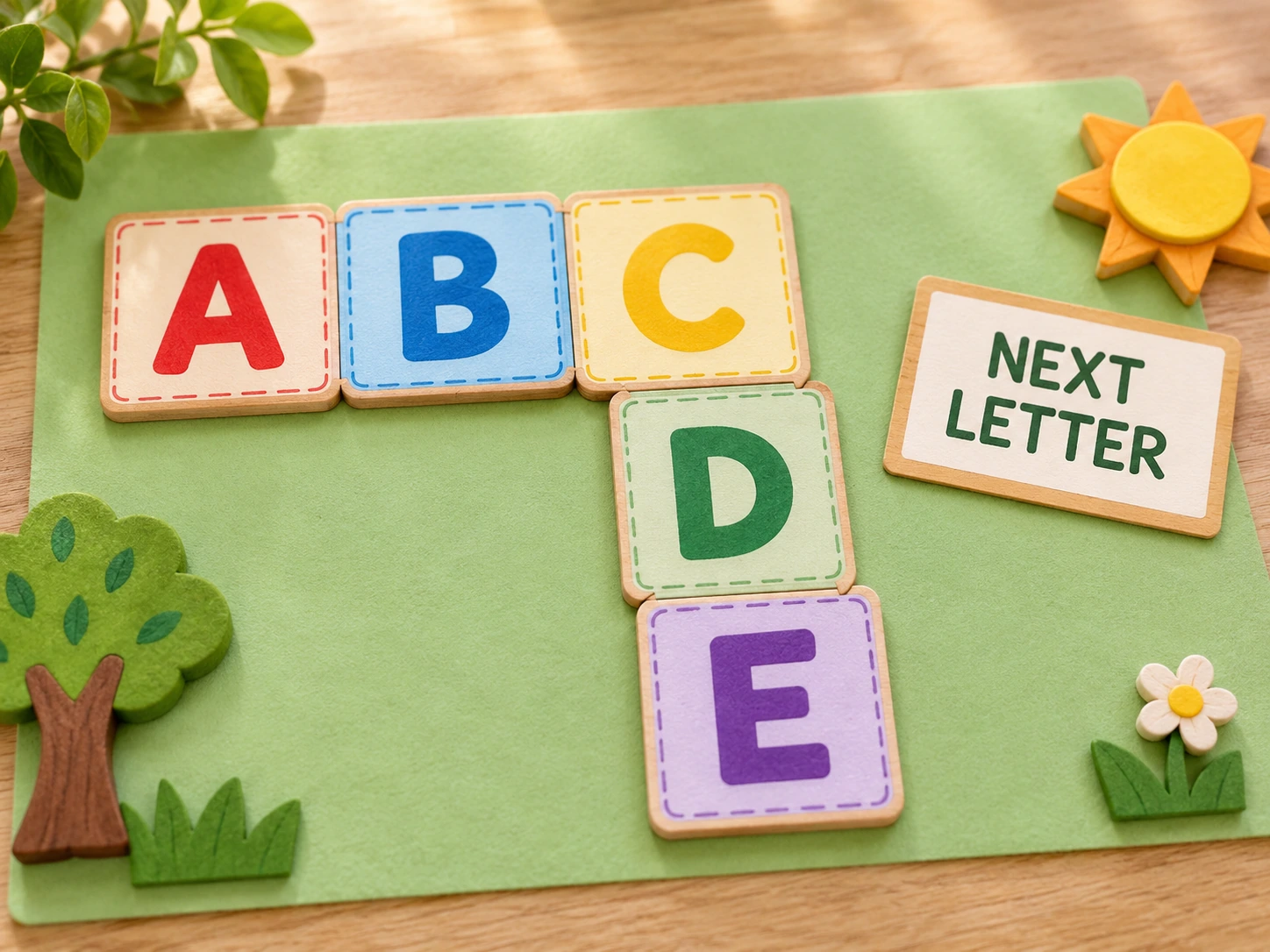
Build five large capital tiles into an edge-connected turning path and move a toy through their alphabetical order.
Singer and finder with Alphabet Touching Trail
One partner names a successor while another finds its capital in a small separate layout; reverse the jobs after a few moves.
No diagonal guide with Alphabet Touching Trail
Arrange capitals with one tempting corner contact, then explain which successor location is legal under the announced rule.
Row-reading trap with Alphabet Touching Trail
Place a later capital beside B in an invented model and ask why recognising it does not make it the next stop.
Letter journey narration with Alphabet Touching Trail
Dictate a short route with both capital names and direction words, allowing a partner to reconstruct the same legal moves.
Save and print Alphabet Touching Trail
Access the premium Alphabet Touching Trail printable with an eligible active membership. Its clean PDF preserves the A-to-T field and instructions while omitting domain branding, website watermark and advertisements. A different control provides the original upload. Review all four letter rows inside the portrait printer preview; the sheet ends at T rather than including U through Z.
Other choices beyond alphabet-order use
For Alphabet Touching Trail, the saved catalog suggests road-following after alphabet touching trail; aiming-and-stopping after alphabet touching trail; picture-recipe drawing after alphabet touching trail. Read each linked activity’s rule with Arun; its capital entry response may differ.
For Arun, browse NAEYC writing ideas alongside alphabet touching trail or PBS Parents activities beyond alphabet touching trail. Watch alphabet-order use with spatial rule keeping, then revisit capital entry.
Popular Worksheets
Printable resources families and teachers are downloading now.
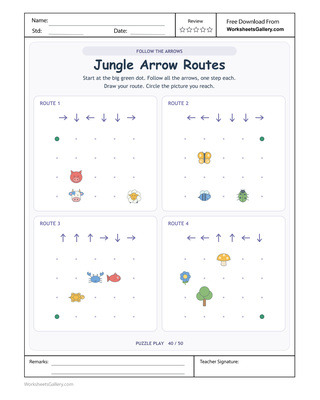 Free
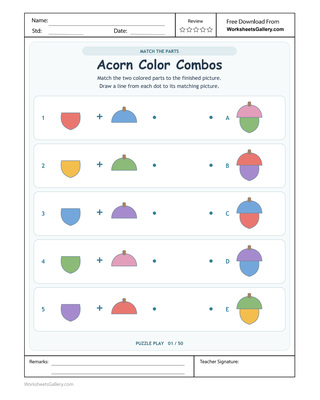 Free
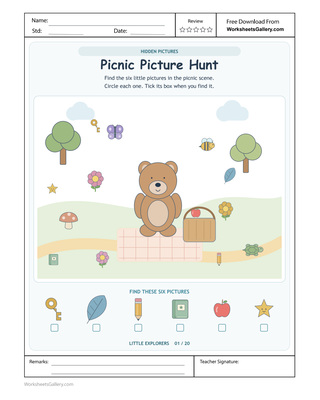 Free
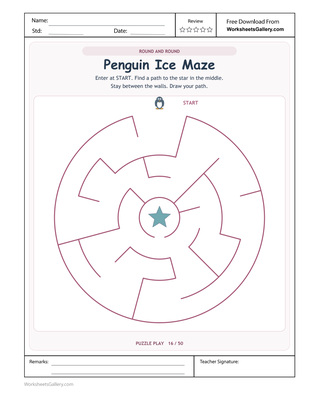 Free