
Little Explorers Collection: 20 Wonderful Ways to Think
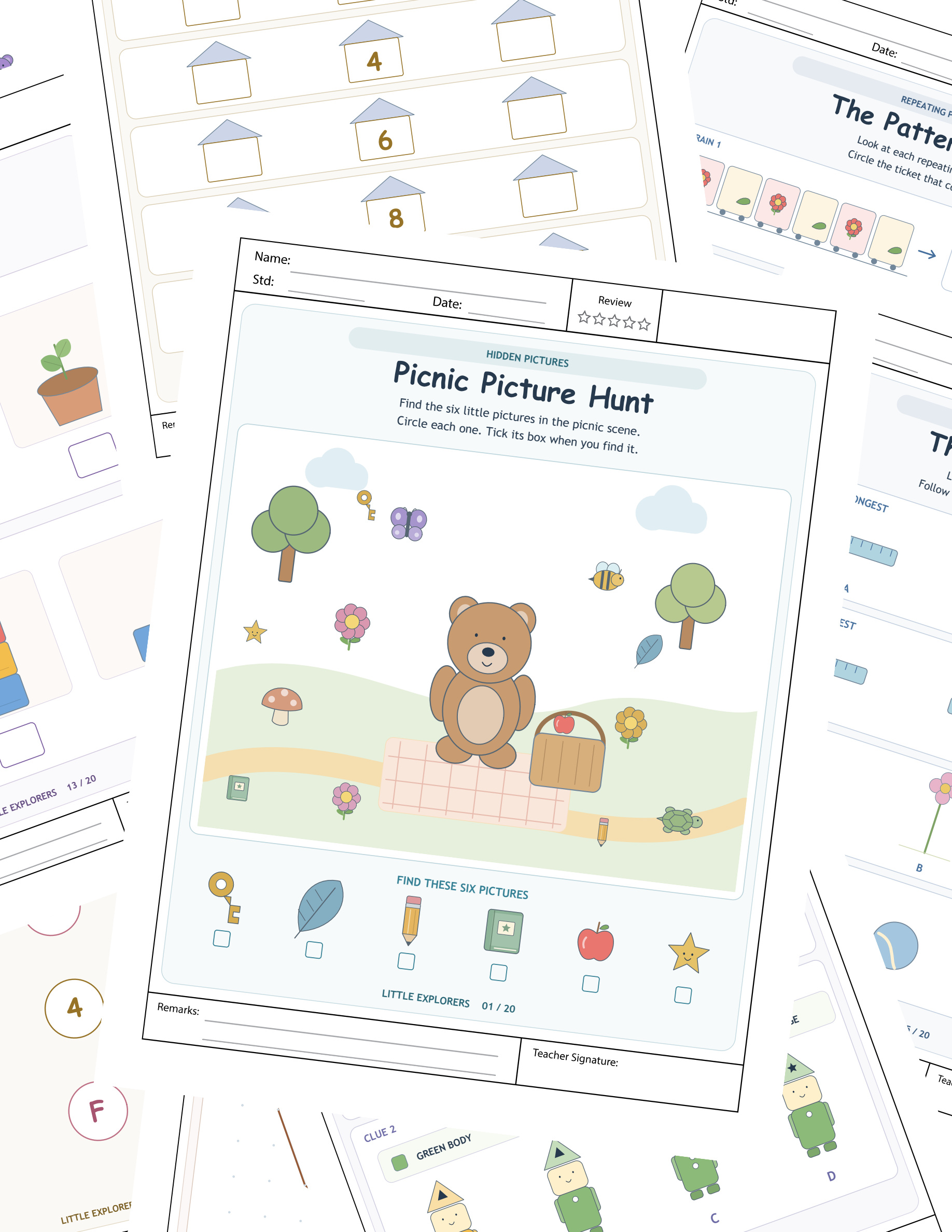
Iona wants something to investigate, but today she would rather talk than fill a page with writing. The Little Explorers Collection gives her learning partner twenty different starting points: a hidden-picture picnic, a remembered tray, sound games, number decisions and imaginative drawing among them. This $5 USD premium download gathers the supplied sheets into one clean, twenty-page PDF. Choose an activity by the kind of attention it asks for, then offer the support that particular instruction needs. There is no requirement to finish the collection in order or during one long session.
Begin with a decision about the response — Little Explorers Collection
Some children arrive ready to draw; others want to point, explain or search. Open Little Explorers Collection with that difference in mind. Bunny Balloon Party has dotted contours to trace, while Invent a Helper Robot invites additions that have not been predetermined. Neither activity should be introduced as finding the single correct robot or producing a perfectly copied colouring example.
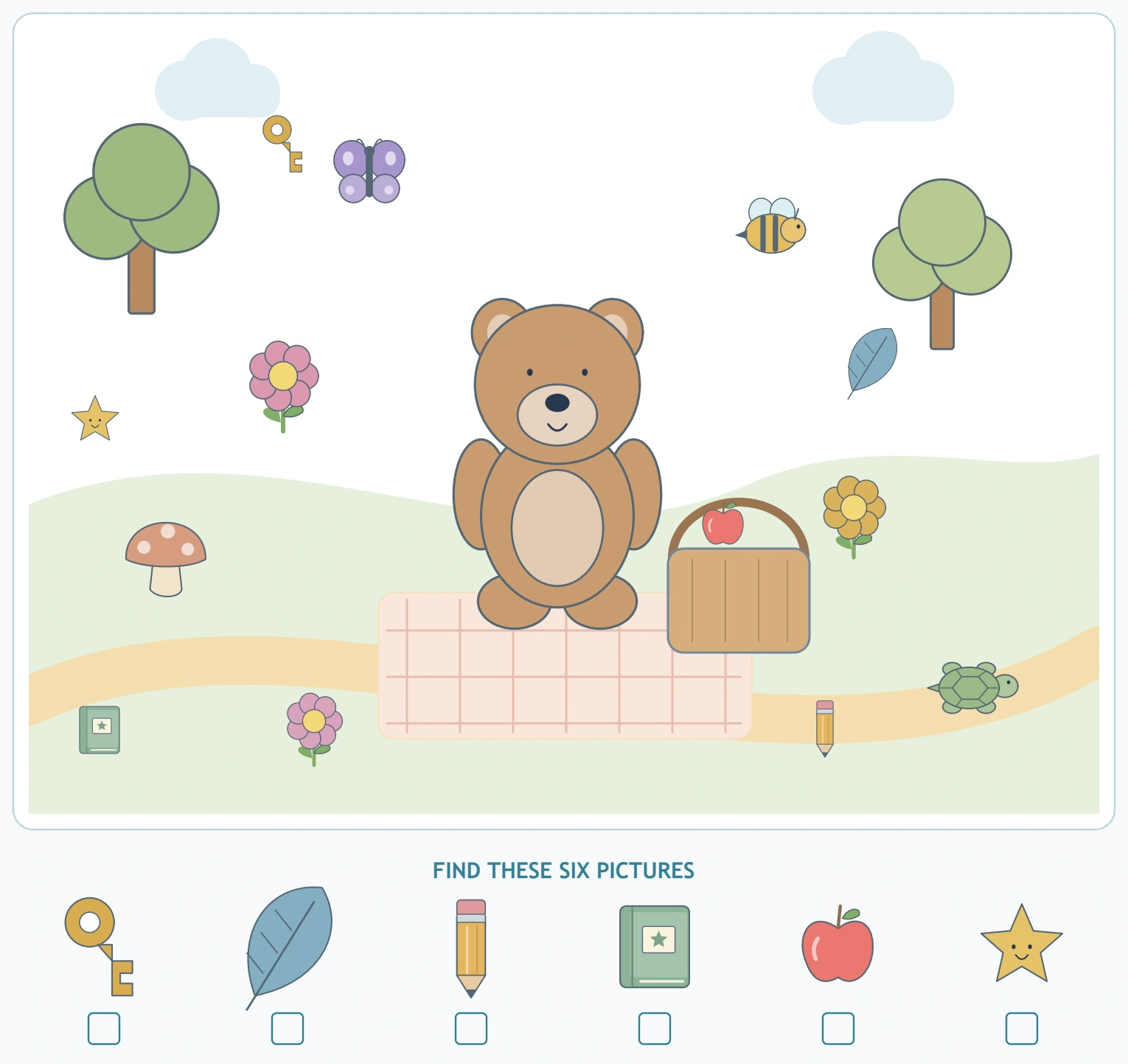
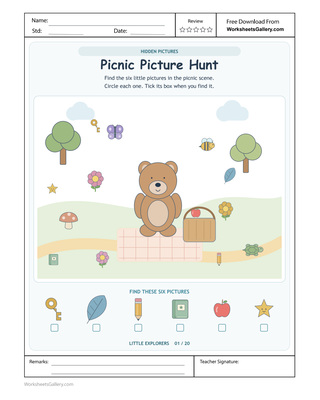
The observation tasks also ask different things. Picnic Picture Hunt keeps its six targets available while the child searches a scene. Teddy's Memory Tray specifically asks for the reference tray to be covered. Leaving that tray visible changes remembering into direct picture matching. The two experiences can both be worthwhile, but they are different experiences.
For Little Explorers Collection, the most useful first question is “What does this instruction want me to do?” Listen for a response verb: circle, trace, join, draw, write or colour. Then find the clue that controls that response. An adult can read the words without taking over the child's decision.
A small menu for a mixed collection: Little Explorers Collection
| Today's interest | A source activity to consider | Adult preparation |
|---|---|---|
| Looking closely | Picnic Picture Hunt or Little Path Detective | Point out the target and where the response belongs. |
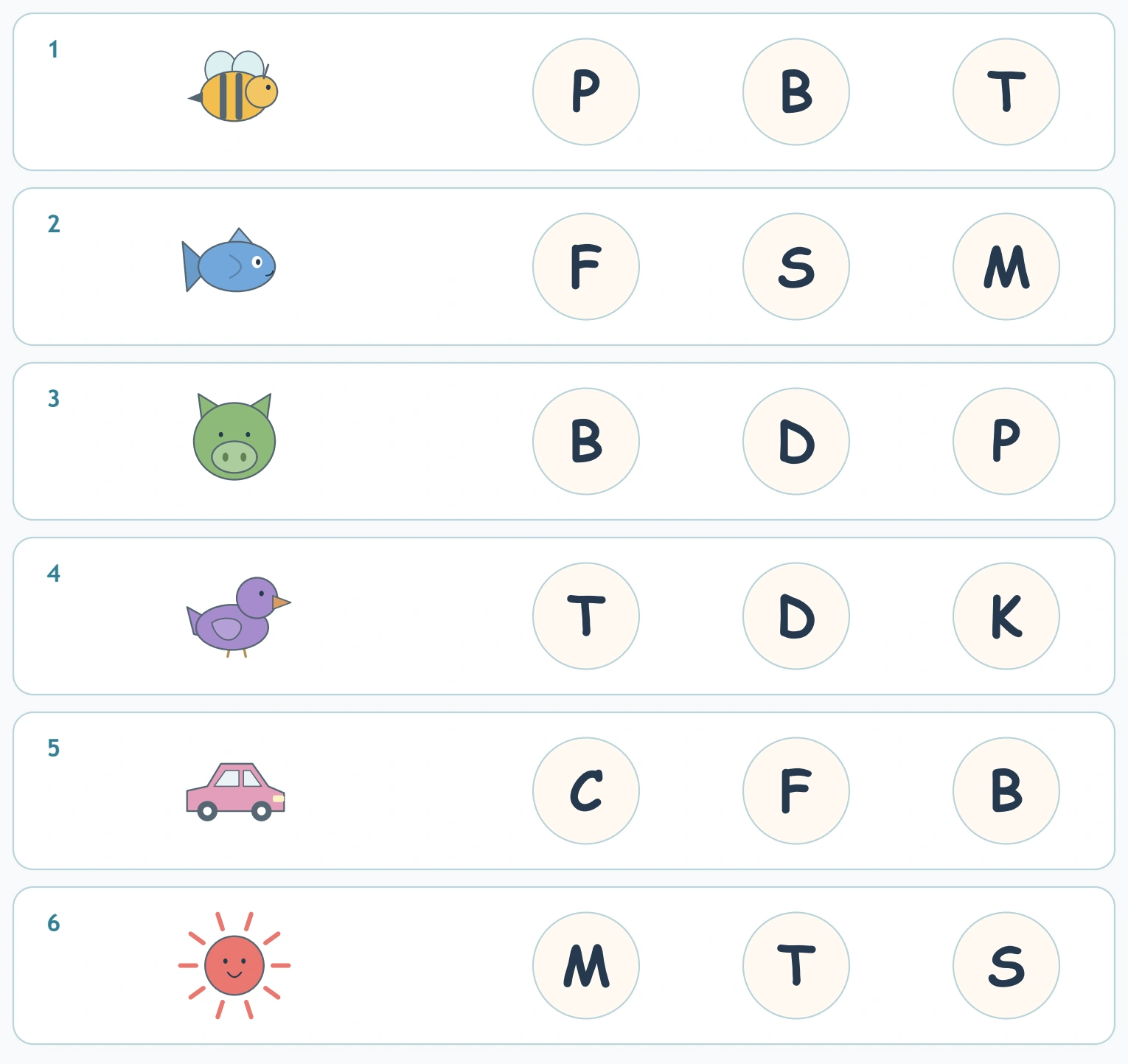
| Talking and listening | First Sound Friends or Rhyming Picture Pairs | Agree on picture names before discussing sounds. |
| Moving a pencil | Bunny Balloon Party or The Missing Butterfly Wing | Locate green starts or the vertical reflection line. |
| Comparing quantities | Share the Snack Picnic or Number Neighbor Homes | Have small counters available for explanation. |
This menu describes choices within Little Explorers Collection; it is not a ranking. A learner who explains number neighbours comfortably may still want support with rhyming. Familiarity with a theme does not establish familiarity with its rule. Give Iona a preview of two activities and let her select a manageable starting point.
A number can serve several jobs
In Little Explorers Collection, numerals label snail positions, identify colours, describe a button count and name neighbours in a counting sequence. Saying a numeral correctly does not answer all those tasks. Ask what the number means on the selected page before treating different activities as interchangeable number practice.
Why twenty different concepts provide useful choice
Flexible observation: Little Explorers Collection
Little Explorers Collection separates searching for a small object from inspecting a local difference. Notice whether Iona consults a target picture, compares shelf positions or checks a snail's shell marking. Her method gives more information than a total of circled answers.
Language attached to evidence: Little Explorers Collection
A child can describe a ball as UNDER a table or explain why B represents the opening sound in bee. Little Explorers Collection gives these spoken explanations a visible reference. Invite a gesture when a full sentence is still difficult.
Movement with a purpose
Tracing a balloon string, joining a rhyme pair and drawing an equal cookie share involve different marks. Within Little Explorers Collection, the reason for the movement stays visible. Pencil neatness can be observed separately from understanding what to represent.
Revising an initial guess
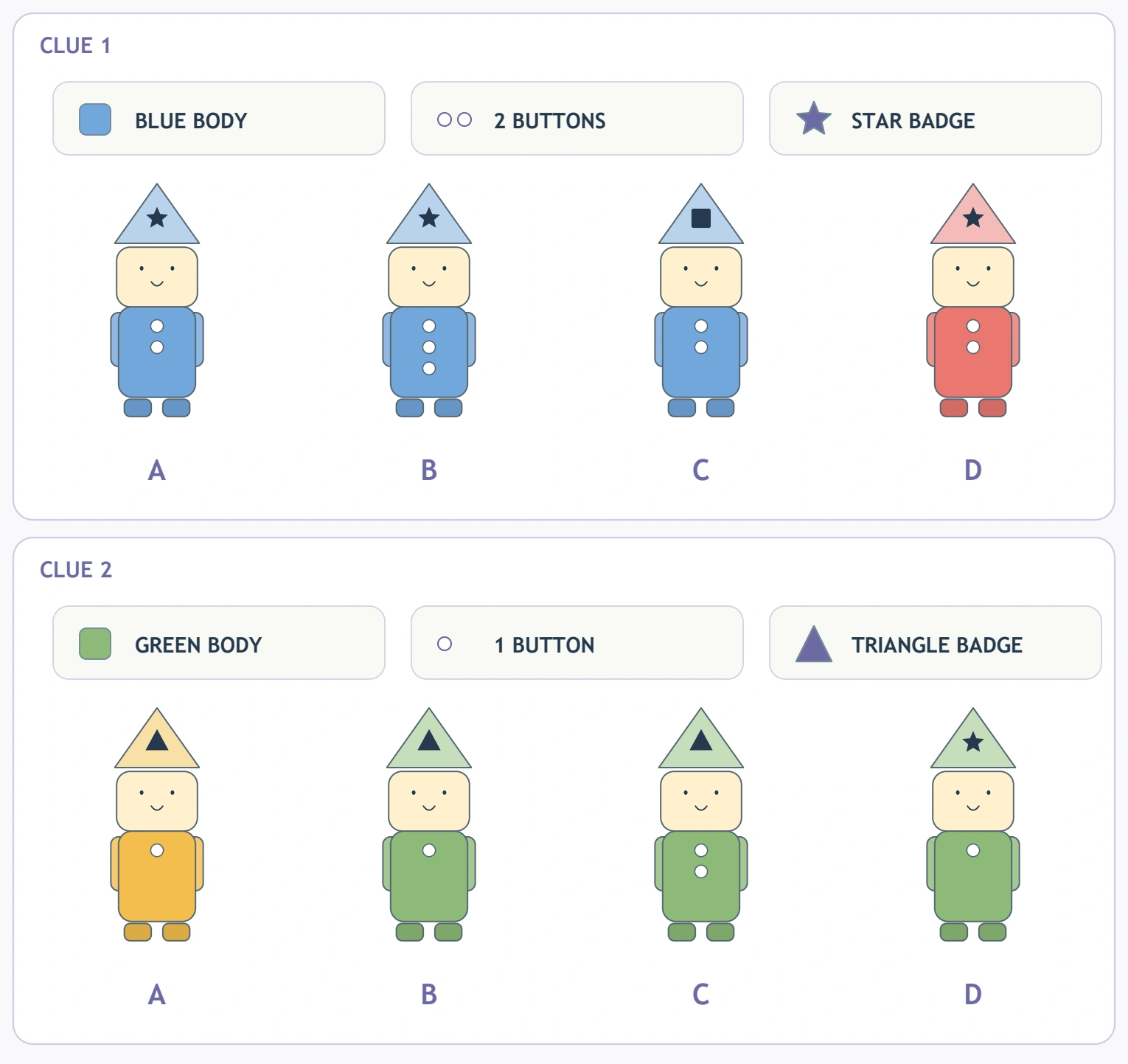
An appealing robot can fail one of its three clues. Little Explorers Collection offers opportunities to check a tempting choice against the whole instruction. A reasoned change of mind is worth noticing; it need not be treated as an embarrassing mistake.
Personal authorship: Little Explorers Collection
The campsite and robot activities leave important decisions open. Little Explorers Collection includes room for a child to choose colours, invent a function and explain a design. An adult's finished example should remain one possibility rather than a compulsory model.
Returning with a clearer strategy
On another day, Iona might remember to inspect every turn of the target path or cover the tray herself. Such changes in approach can guide the next Little Explorers Collection selection. A repeated activity need not become a race to improve a completion time.
One possible home session: a tray and a conversation
Imagine Iona choosing the memory page after looking through Little Explorers Collection. Her learning partner names its apple and turtle, the key and pencil, a hat beside a ball, and the flower and cupcake. They spend a comfortable period looking, without introducing a stopwatch or a promised score. Iona decides when she is ready for the paper cover.
Once the tray is hidden, the adult points out the twelve choices below without naming the answers. Iona circles what she recalls. If she asks to peek, the adult can reopen the reference and discuss the difference between a memory attempt and a supported matching attempt. Honesty about that change matters more than preserving a pretend perfect result.
At the end, they uncover the tray and compare it with her marks. The Little Explorers Collection conversation might focus on a remembered group, such as things that could be worn or used at a table. These are suggested ways to discuss an attempt, not claims about an actual child's performance or a validated memory test.
A classroom invitation with genuinely different stations
For an imagined classroom session, prepare a sound station, a sharing station and an invention station from Little Explorers Collection. The sound station needs someone who can establish the intended picture names. The sharing station benefits from counters that can be dealt one at a time. The robot station needs drawing materials and an adult willing to hear an unusual idea.
Give each group its own instruction rather than announcing “finish your puzzle.” Partners can exchange an explainer role and a checker role, but they should not compare output as though every station measured the same skill. A detailed robot description and two equal dot groups are different kinds of evidence.
Keep the remaining Little Explorers Collection sheets available for later choices. Twenty printed pages are a resource bank, not an automatic twenty-station lesson. Select a number of activities that fits the adults, materials and attention available that day.
Boundaries that keep the source tasks accurate
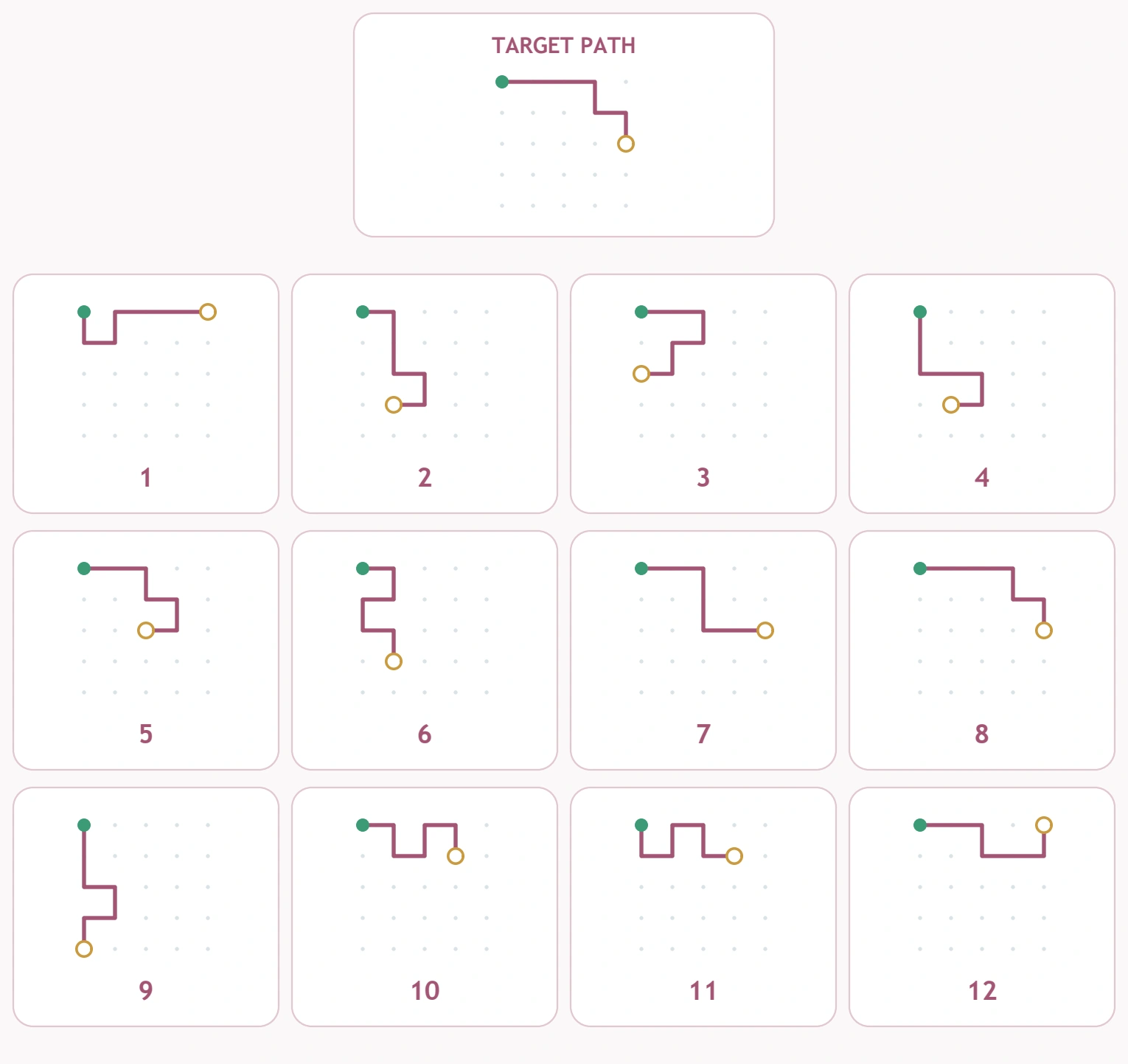
The alternating trail in Little Explorers Collection follows 1, A, 2, B and continues to 6, F. Its instruction permits crossing lines. Do not impose the no-diagonal or shared-edge rule used by a different puzzle series. Little Path Detective, by contrast, asks for one exact path match among twelve choices; its answer is not a route invented by the child.
The pattern trains all happen to need a flower next, although their repeats differ. The toy shelves contain six changed locations. The size page changes its requested comparison between rows. Each of these details rewards rereading the current instruction rather than carrying yesterday's answer strategy into a new Little Explorers Collection page.
Creative outcomes have another kind of review
The campsite has no compulsory palette. A helper robot can have many plausible additions. Ask whether an invented part suits the child's stated job, or invite an explanation of a colour choice. These discussions preserve the open nature of the Little Explorers Collection activity while still giving the child thoughtful attention.
Five playful bridges beyond the paper
Open a tiny looking museum
Arrange four familiar objects beside a handmade picture list. One partner finds a listed object and points to the matching entry. Use this as a short preparation for the search decisions in Little Explorers Collection, keeping the household display separate from the purchased pages.
Make an instruction switch
Show the same two blocks twice. First ask for a colour description, then ask which one is nearer a cup. Discuss why the object can stay the same while the requested decision changes. This echoes the range of instructions in Little Explorers Collection without requiring another worksheet.
Host a spoken rhyme exchange
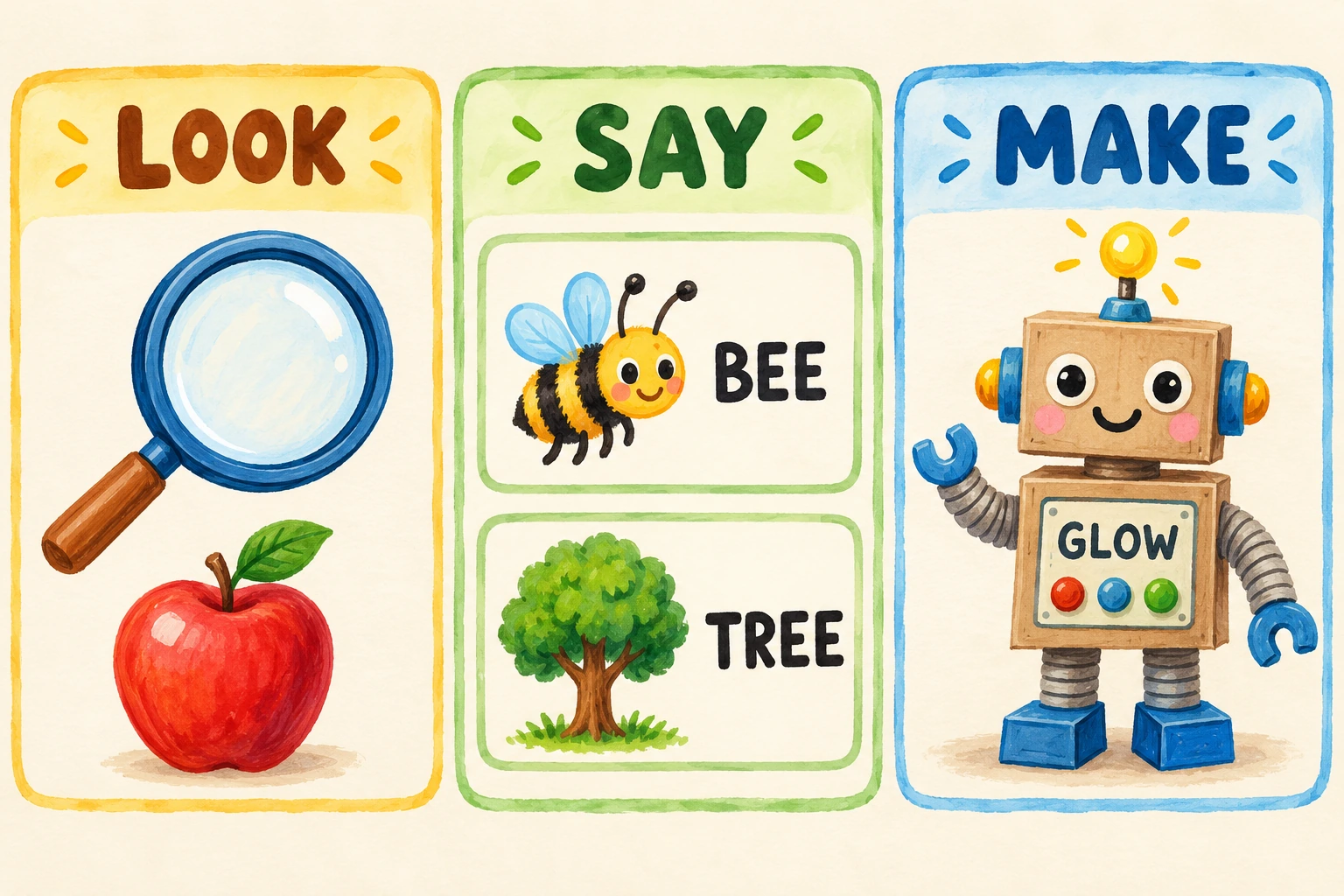
Say bee and tree while showing the corresponding props. Listen to their matching endings, then contrast bee with ball. An adult can model the sounds before asking for a new pair. Do not turn the oral extension into a spelling quiz.
Deal pretend picnic tokens
Place two toy plates on a mat and distribute six counters alternately. Ask whether the groups are equal and how many tokens each plate received. Connect the dealing to the printed sharing page only after the child has described the two groups.
Introduce a useful invention
Choose a small everyday job, such as lighting a reading corner. Draw one imaginary tool and explain how it would work. Name the invention and listen to another person's question. This extends the authorship available in Little Explorers Collection; a fantastical mechanism can still have a clearly described purpose.
Support, comfort and a reason to return
The suggested broad range for Little Explorers Collection is adult-supported preschool through early primary, approximately ages four to seven. Readiness varies across the twenty concepts. Naming a picture, hearing a rhyme, drawing a reflected point and dividing a quantity place different demands on language, attention and movement.
Reduce an extra demand before changing the actual rule. Let an adult read position words, let a child move a counter before making dots, or invite a spoken robot name that the adult writes down. Provide a stable page and comfortable materials. If Iona is tired, close the file and return to a preferred idea later.
Keep a brief note about an explanation worth revisiting. Perhaps she said that a missing toy still counts as one changed place, or noticed that a butterfly spot needs the same height on the opposite side. Such a note provides a natural invitation back to Little Explorers Collection, without stickers, speed targets or a compulsory daily quota.
Purchase, save and select what to print
The Little Explorers Collection premium bundle costs $5 USD and contains exactly twenty supplied worksheet pages in numbered order. Website watermark and domain branding have been removed from the clean PDF, and the file contains no embedded ads. It does not add an interactive game or a newly authored answer workbook. The supplied activity guide informs the page explanations but is not presented as an additional PDF sheet.
Use the bundle purchase control, complete the native checkout and save the authorised download. Membership access by itself does not replace this collection purchase. Inspect the twenty page thumbnails before choosing a print range. Preserve the complete portrait borders in printer preview, especially where picture choices or lower answer areas sit close to the activity frame.
The separate Little Explorers Collection activity pages retain their own original samples and membership-gated clean single sheets. Their package cards lead back to this purchase. Choosing the bundle is useful when one combined source file suits the adult's printing routine; it does not require a child to complete every activity.
Follow the learner's next interest
After Little Explorers Collection, explore Puzzle Discovery Collection beside Little Explorers Collection, Puzzle Explorer Collection after Little Explorers Collection, Prewriting Discovery Pack beyond Little Explorers Collection. Keep each new instruction separate from Little Explorers Collection.
For further adult ideas, explore NAEYC family ideas about early writing and the PBS Parents collection of literacy suggestions. Read their suggestions in relation to the particular child. A useful next invitation might involve explaining, noticing or simply choosing a different medium for an idea already enjoyed in Little Explorers Collection.
Popular Worksheets
Printable resources families and teachers are downloading now.
 Free
 Free
 Free
 Free