
Picture Event Order: 2 Brilliant Before-After Stories
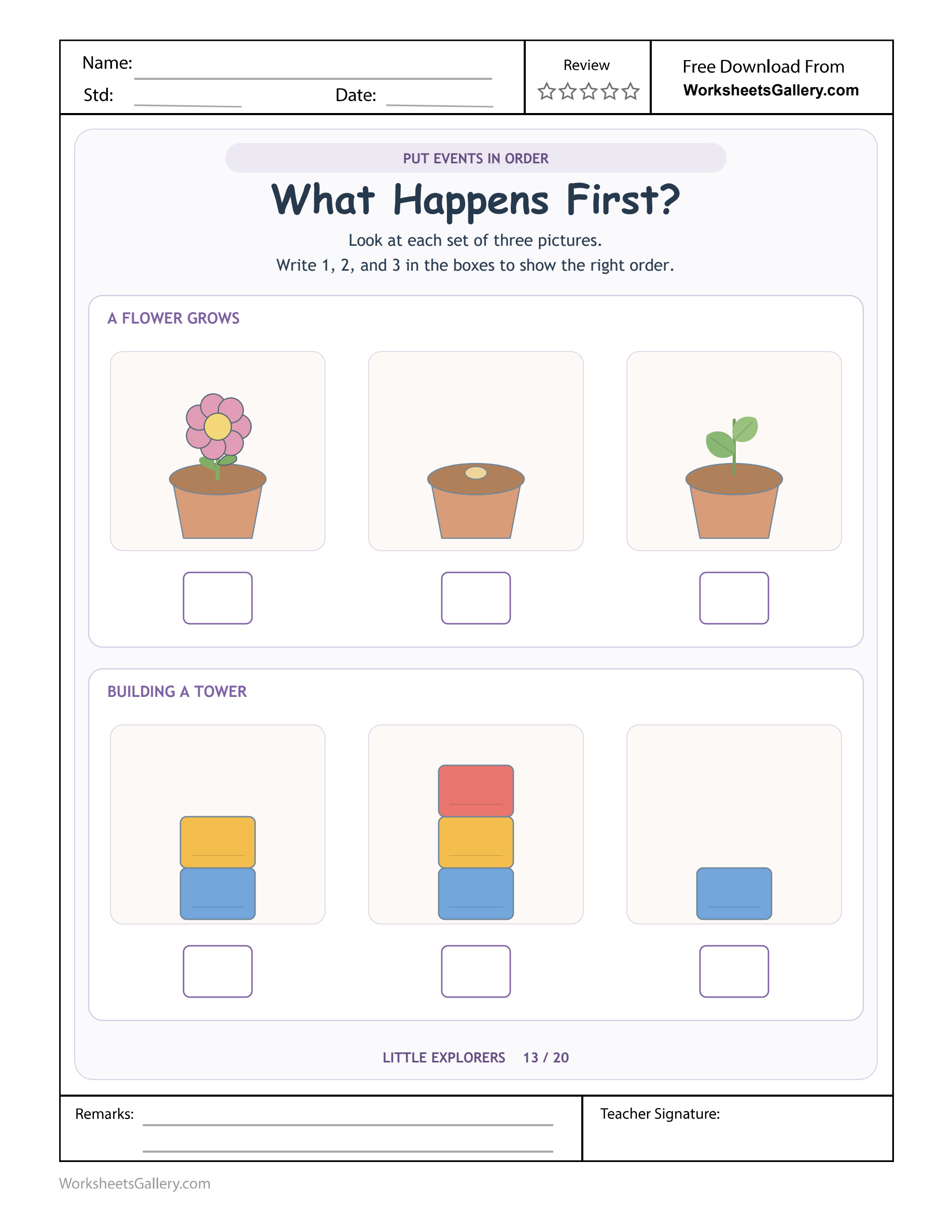
$5 collection companion: Picture Event Order. Assign time labels to flower growth and tower building rather than copying display positions.
The flower is the first picture on the page, but it is not the beginning of its story. Picture Event Order asks children to label two three-picture sequences by time rather than by display position. They consider a flower growing and a tower being built, then write 1, 2 and 3 in the boxes beneath the relevant stages. The pictures are deliberately out of chronological order. This supported preschool or kindergarten activity invites an adult to discuss visible clues, hear a proposed story and leave the number labels to express the child's decision about what happens first, next and last.
Resist the easy left-to-right numbering shortcut — Picture Event Order
A child accustomed to reading a row from the left may put 1 beneath its first picture automatically. In Picture Event Order, that would describe where a picture is printed rather than when its event happens. Begin by naming all three pictures in a set before reaching for the pencil.
The flower row shows a bloom, a seed in soil and a sprout. The tower row shows two blocks, three blocks and one block. These arrangements require a decision about the depicted process. Looking at the whole set helps Mina avoid treating each isolated picture as an unrelated item to label.
For Picture Event Order, a useful question is “Which picture shows the beginning of this particular story?” The printed headings supply the context: a flower grows and a tower is being built. Keep the discussion tied to those intended simple sequences instead of inventing a different event, such as taking a tower apart.
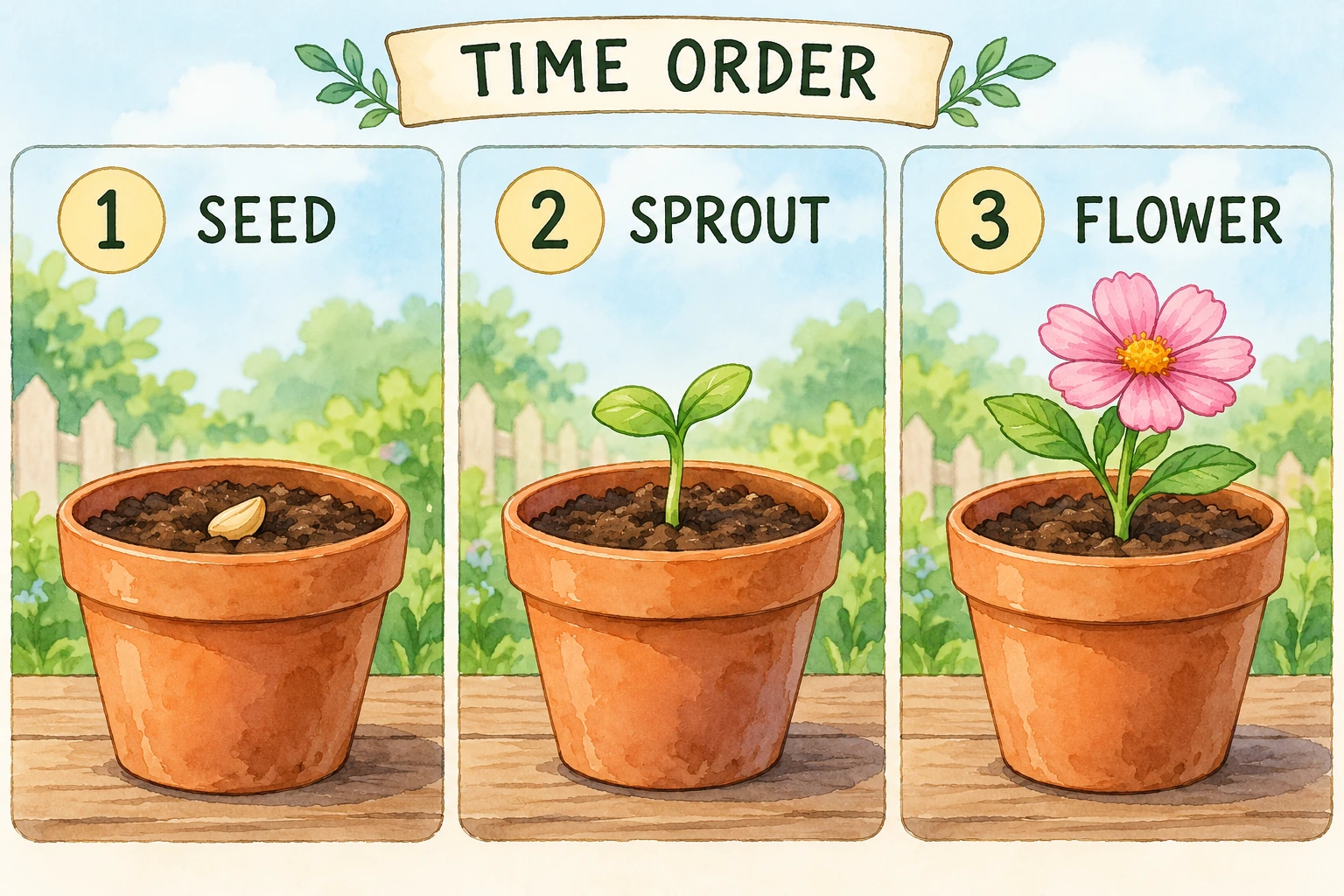
A flower story in three pictured stages
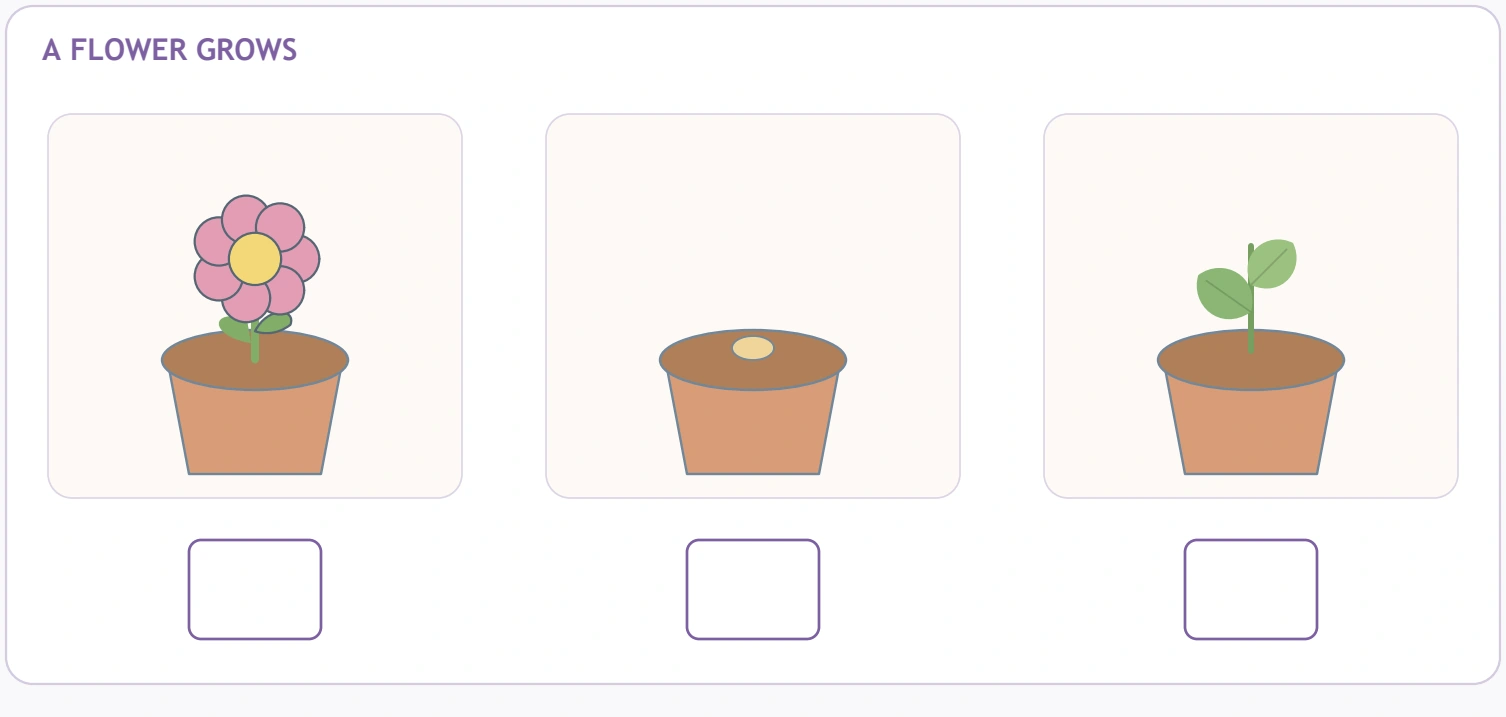
The intended growth sequence begins with the seed, continues with the sprout and finishes with the pictured flower. The source presents only these three broad stages. It does not ask for a timescale, growing instructions or every stage a real plant might experience.
Invite Mina to point through that order without writing. She can say seed, sprout, flower or use first, next, last with adult naming support. Once she has a proposed sequence, return to the pictures' actual positions and decide which number belongs beneath each one.
Keep the time label attached to its picture: Picture Event Order
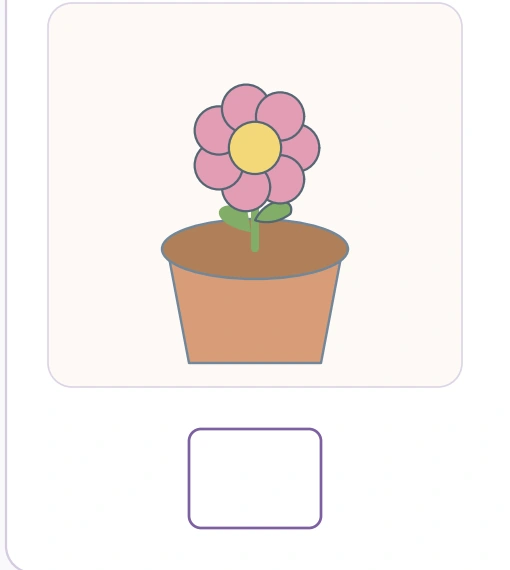
In Picture Event Order, the left-hand flower receives 3 even though it occupies the first display position. The middle seed receives 1 and the right-hand sprout receives 2. A finger rehearsal can make this relationship clear before the learner has to form the numerals.
A tower story with a stable beginning: Picture Event Order
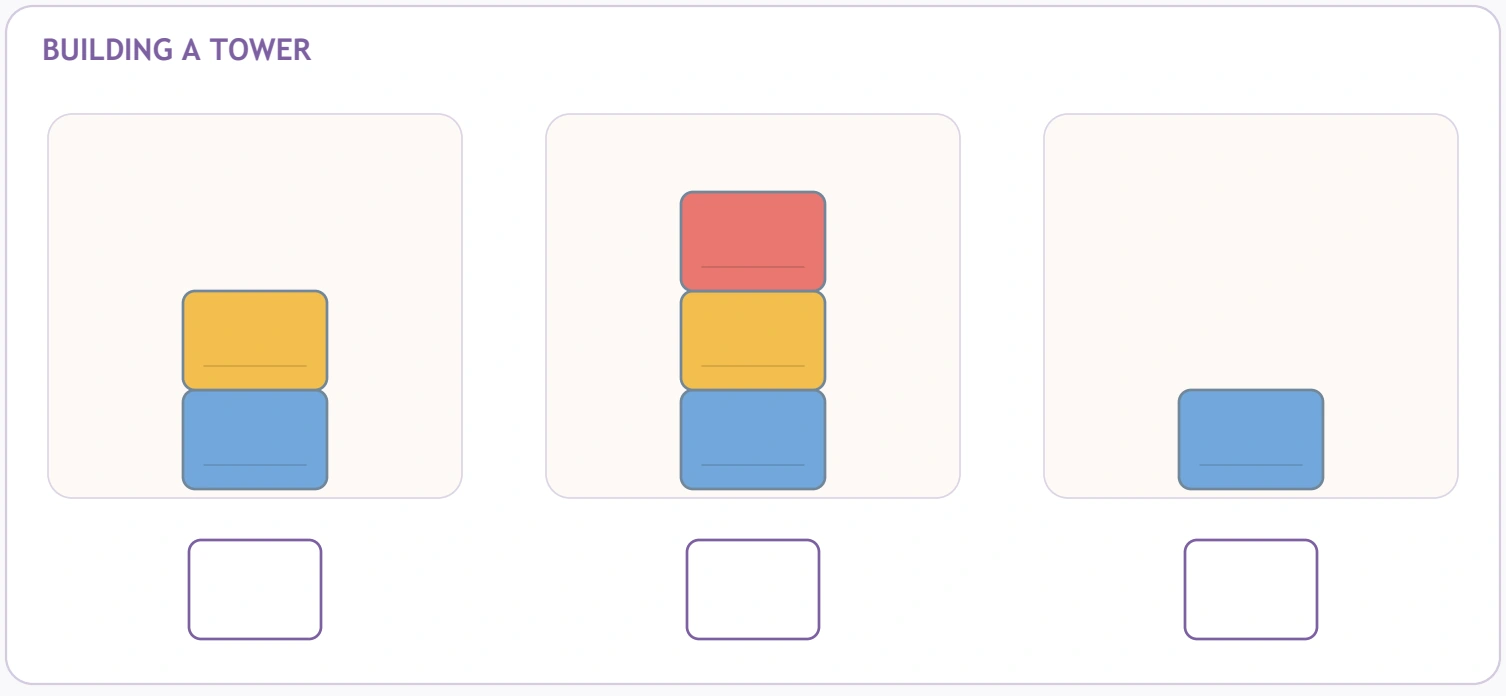
The tower set shows a blue block alone, then blue and yellow blocks together, then a stack with an additional red block. For the depicted building story, the single block is the start, two blocks are next and the three-block tower is last.
Compare the visible evidence rather than relying only on which picture looks tallest. Ask what has been added between the first and next stages. The consistent base and increasing stack give Mina something concrete to explain. Picture Event Order is asking about that intended construction sequence, not a general rule that the tallest object in any picture must always come last.
The rightmost picture can be the beginning: Picture Event Order
The one-block stage appears at the far right of the printed row. It receives 1. The two-block picture at the left receives 2, and the three-block picture in the middle receives 3. Naming the chronology aloud before returning to the display can help separate those two kinds of order.
An adult reference for the six boxes: Picture Event Order
| Printed set | Left picture label | Middle picture label | Right picture label |
|---|---|---|---|
| A flower grows | 3 beneath the flower | 1 beneath the seed | 2 beneath the sprout |
| Building a tower | 2 beneath two blocks | 3 beneath three blocks | 1 beneath one block |
Use the Picture Event Order table for checking after the child has proposed a story. A row of neatly written 1, 2, 3 from left to right would not answer these particular displays. Conversely, an unevenly formed numeral can still communicate a well-reasoned time label. Ask which picture the learner intended if a mark is unclear.
At home, tell before numbering
Imagine Mina examining the flower set with her parent. She begins by pointing to the bloom because it is the most attractive picture. The adult acknowledges what she noticed, then asks which picture would begin the growth story named by the heading.
Mina points to the seed, follows with the sprout and then returns to the flower. Before she writes, they say which time label belongs to each picture where it is printed. The adult supports the number formation only if requested, leaving the chronological decision with Mina.
For the tower row, they might use three loose blocks to act out the intended sequence beside Picture Event Order. The physical model makes the additions visible. It should support the picture discussion rather than replace it: Mina still returns to the printed stages and decides which box represents each moment.
In class, let two roles reveal the reasoning: Picture Event Order
For a hypothetical paired activity, one learner narrates the intended story while another points to the corresponding Picture Event Order pictures. They check that the pointing follows time rather than moving automatically along the printed row. After that rehearsal, the narrator chooses the number labels.
The teacher listens for how the child uses evidence. A learner might recognise the seed as the beginning but need help with the words before and after. Another may recite first, next, last while still numbering by display position. Those are different observations and call for different support.
Partners can exchange roles for the second story. Keep the goal cooperative: the pointer helps make a proposed sequence visible, without calling out labels before the narrator has decided. A brief explanation of one transition can be more informative than a race to fill all six boxes.
Five useful aspects of the sequencing conversation
A story inferred from pictured change: Picture Event Order
Picture Event Order gives the learner related stages rather than an explicit written story to copy. Ask what changes between the chosen moments. The seed-to-sprout relationship and the added blocks offer different kinds of visible evidence.
Display position separated from time: Picture Event Order
The beginning can sit in the middle or at the far right. Notice whether Mina can return to the same event after pointing through the chronological order. This is a central distinction in the task, not a minor layout detail.
Language attached to a transition: Picture Event Order
Words such as first, next, last, before and after become useful when describing a particular pair of stages. An adult can model one phrase while the child shows the corresponding pictures. Fluent use of every term is not required before participating.
A numeral used as a rank: Picture Event Order
The number beneath a picture describes its place in time, not the number of flowers or blocks to count in that card. Picture Event Order makes that meaning worth discussing. A child can point to the intended rank before recording it.
A decision checked against the whole set
After labelling, ask Mina to narrate the story again using the numbers she wrote. If the labels produce an unexpected sequence, she can revisit them. A reasoned revision shows attention to the story rather than a need to defend the first mark.
Common slips and a useful response to each
If the child labels both rows 1, 2, 3 across, return to a beginning picture and follow the story orally. If they use the number of blocks as the label without considering time, ask why that count happens to fit this building sequence and whether the flower row can be solved by counting objects in the same way.
If numeral formation is the difficult part, offer pointing or dictation before writing. Keep the reasoning about the Picture Event Order stages intact. A child should not have to demonstrate perfect handwriting before being allowed to show a sensible chronology.
An alternate story needs to be named openly: Picture Event Order
A child may invent a tower being dismantled. That can be a worthwhile separate story, but it changes the printed building context. Acknowledge the idea and then clarify which story the current boxes are intended to label. This keeps creativity welcome without quietly changing the source answer.
Four further ways to play with time order: Picture Event Order
Act out a tiny construction
Use one, two and then three blocks and describe what was added each time. Make quick drawings of the stages and mix them. Ask a partner to restore the building order, then compare that method with the printed tower set.
Tell a familiar three-moment routine: Picture Event Order
Choose an ordinary routine the child knows well and describe a beginning, middle and end. Act the moments out before drawing any cards. Keep the sequence simple enough that the child can explain why one event precedes another.
Move the beginning card
Arrange three homemade story cards correctly, then move their positions while keeping the story unchanged. Ask the child to point through time order again. This isolates the display-versus-chronology distinction explored by Picture Event Order.
Check a narrated mix-up: Picture Event Order
An adult deliberately tells a familiar sequence out of order and invites the child to explain which transition needs reconsidering. The child can use gestures or pictures to repair it. Give the explanation attention rather than requiring a quick correction.
Support a short story, then leave room to return: Picture Event Order
Picture Event Order offers children aged four to six an adult-supported opportunity to discuss changes between related pictures. Picture naming, event understanding, temporal vocabulary and numeral writing can require different amounts of help. Offer the support needed by the particular part instead of assuming those abilities must appear together.
Let Mina choose which story to investigate first. A child interested in blocks may find the tower more inviting than the plant. One completed explanation can be a satisfying visit, with the other set saved for another time. The source contains two concise stories rather than a requirement for a long lesson.
On returning, ask Mina to show where the beginning is printed and why it belongs first in time. She may remember the number labels already, but the evidence can still support a useful conversation. A new homemade story can provide fresh sequencing work once the two source sets are familiar.
Download the two-story printable
The original Picture Event Order sample is a distinct option from its clean premium PDF. Access to this clean event-order sheet requires a qualifying membership that is currently active, with website watermark and domain promotion removed and no advertising embedded. Save the edition selected by the corresponding download control.
Check the portrait printer view for all six pictures and their response boxes, including the rightmost single block. The $5 Little Explorers collection contains this sheet with the other nineteen supplied concepts in one clean combined PDF, available through the related package purchase page.
A next step in describing change: Picture Event Order
After Picture Event Order, explore Next Shape Thinking beside Picture Event Order, Picture Step Recipes after Picture Event Order, Space Pattern Choices beyond Picture Event Order. Keep each new instruction separate from Picture Event Order.
For adult ideas about language and meaningful marks, visit PBS Parents' early literacy play resources and read NAEYC guidance for family writing experiences. With Picture Event Order, recognise a pictured beginning, an explainable transition and a time label placed beneath the intended event.
Popular Worksheets
Printable resources families and teachers are downloading now.
 Free
 Free
 Free
 Free