
First Sound Choices: 6 Wonderful Picture Connections
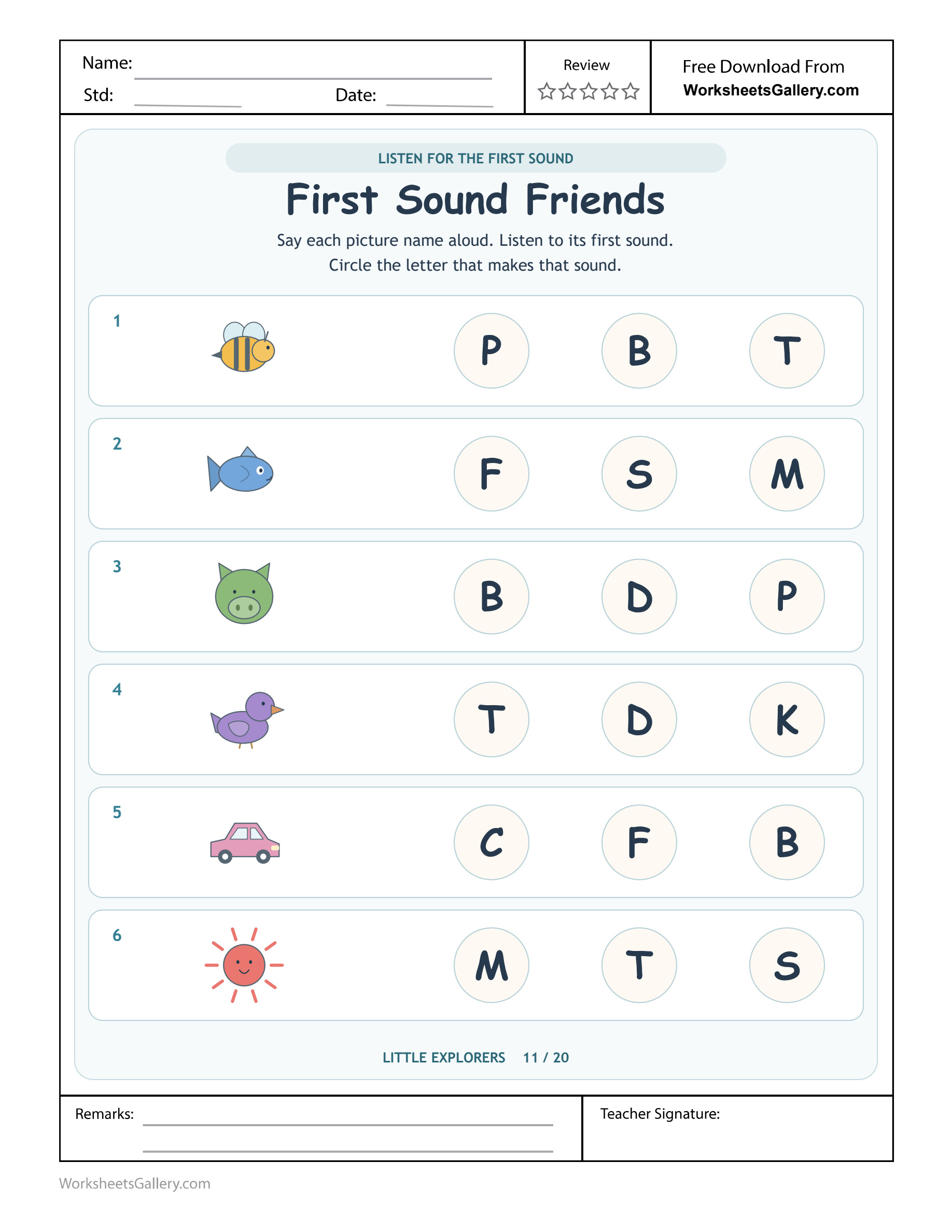
$5 collection companion: First Sound Choices. Say the intended picture name before mapping its initial sound to one capital letter.
A picture must have a shared name before its first sound becomes a fair question. First Sound Choices gives children six familiar pictures, each beside three capital-letter choices. They say the intended English picture name, listen to its opening sound and circle the letter that represents it. The page offers a short, supported phonics investigation rather than a task in reading printed word labels or tracing letter shapes. An adult can establish the names and model careful listening while leaving the letter decision to the child. Keep the conversation about a sound the learner can hear.
Picture naming is the first useful step — First Sound Choices
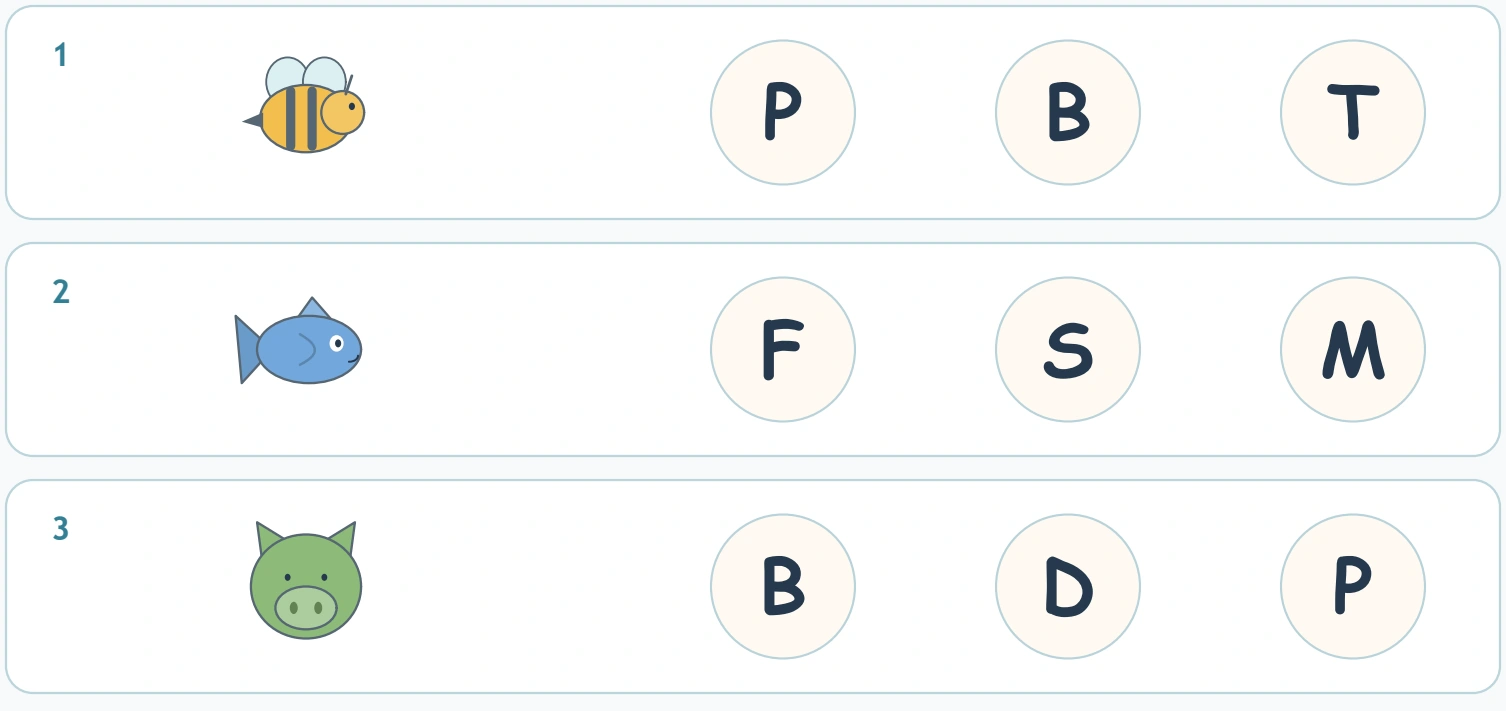
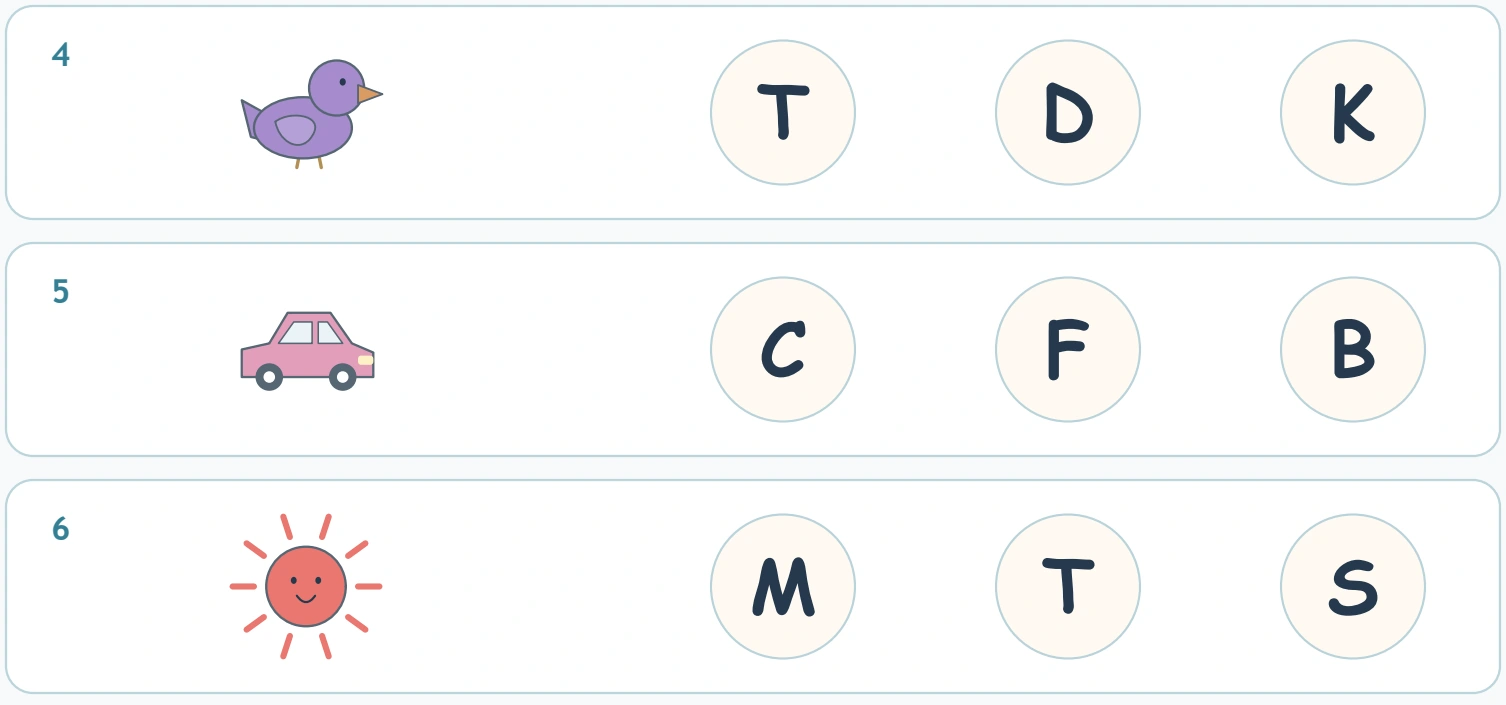
The six First Sound Choices pictures represent bee, fish, pig, duck, car and sun. Some drawings may invite another reasonable name. The purple duck could be called a bird, for example, and a child might describe the car as a vehicle. Those words would create different listening questions.
Agree on the intended source names before asking for the opening sound. An adult can say “We are calling this picture duck” without presenting D as the answer. The child can then listen to the same word the printed choices are designed to support.
For First Sound Choices, this naming support matters more than insisting that every picture must have been identified without help. A learner can understand a beginning-sound relationship once an unfamiliar or ambiguous image has been named. Observe the naming and listening parts separately rather than treating one hesitation as evidence about both.
Listen to the spoken word before inspecting the letters: First Sound Choices
Say one picture name naturally, then say it again with attention to the beginning. Let Keira repeat it or simply listen. Ask what she notices at the start before inviting her to scan the three capitals. This keeps the letter choice connected to an actual spoken word.
Letter names and the sounds they represent are related, but they are not the same response. In First Sound Choices, the adult can point to a correct choice and still ask what part of the pictured word supports it. A learner who recites the alphabet fluently may need a separate demonstration of listening to a word's opening.
The response is one circled capital
The worksheet does not ask the child to write the whole picture name or produce a lowercase partner. Choose a letter from the three offered in that row and circle it. A child can point first, giving an adult a chance to hear the reasoning before the pencil mark is made.
Six rows, with their intended names and choices
| Picture name | Printed capitals | Source choice |
|---|---|---|
| Bee | P, B, T | B |
| Fish | F, S, M | F |
| Pig | B, D, P | P |
| Duck | T, D, K | D |
| Car | C, F, B | C |
| Sun | M, T, S | S |
Use this First Sound Choices reference when checking an explanation or preparing an adult demonstration. The sequence of answers is B, F, P, D, C, S. A learner circles the actual printed capital, not its position number. The correct choice appears in different places across the rows, so one remembered column cannot solve the whole activity.
The car row uses C: First Sound Choices
The source offers C, F and B for car. C is the relevant choice in this printed set. Keep the discussion tied to that word and those options rather than introducing every spelling that might represent a similar sound elsewhere. Extra letter knowledge can be explored separately when the learner is interested.
A home conversation about the duck: First Sound Choices
Imagine Keira calling the purple picture a bird. Her parent listens, then explains that the worksheet uses the name duck for this drawing. They say duck together and attend to its beginning before Keira looks at the three letters in that row.
If she initially chooses K because she likes its shape, the adult returns to the spoken word rather than simply pointing at D. Keira can listen to duck again, compare the intended opening with the letter choices and revise her selection. The correction has a reason beyond an adult saying that another answer is preferred.
This First Sound Choices session may cover only a few rows. Keira can finish with a picture name she enjoys saying or point to a row she wants to revisit. Keep naming support visible in the discussion: the adult supplied duck, while Keira made the sound-letter choice after hearing it.
A classroom routine with two different listening jobs: First Sound Choices
For a hypothetical small group, one partner names a First Sound Choices picture and another repeats the intended word. The first learner then listens to the opening and points to a capital. Their partner checks the word and choice together rather than announcing the answer from the adult reference table.
The teacher can note whether a learner needed help naming the image, isolating its opening sound or recognising the relevant printed capital. Those are distinct observations. A child who hears the beginning accurately may still be learning the letter shape; another may recognise a letter without yet explaining why it belongs beside the picture.
If a familiar home-language name differs from the English word used by the source, acknowledge that name and state which English word the current row is using. Keep the activity clear rather than treating a sensible alternative label as careless listening. The printed choices depend on the intended spoken name.
Six observations that are more useful than speed: First Sound Choices
An agreed picture word: First Sound Choices
First Sound Choices begins fairly when adult and child are attending to the same named object. Notice whether Keira recognises the picture or benefits from a supplied word. That support can be offered before asking her to make the sound-letter decision.
Attention to the opening: First Sound Choices
Ask which part of bee or fish is heard first. The learner can repeat a word, gesture toward the picture or listen to an adult model. There is no need to rush through all six names before the child has understood what listening at the beginning means.
A connection to a printed capital: First Sound Choices
The next step is selecting a letter from the row's three options. A correct spoken observation and a correct visual choice can occur with different levels of support. First Sound Choices makes both steps visible when the adult asks before the circle is drawn.
Searching a new choice set: First Sound Choices
The letters change from row to row, and their positions vary. Notice whether Keira inspects the new set or automatically chooses the place that worked previously. A brief pause to look at all three capitals can clarify the intended response.
A circle with an identifiable target: First Sound Choices
One clear mark should show which capital the child means. A shaky circle can still communicate the choice. If the mark touches two options, ask Keira to point to the intended one rather than assuming that the reasoning was uncertain too.
A reasoned revision
Returning to the word and changing a choice can be useful evidence of listening. Invite a short explanation of what changed in the learner's thinking. First Sound Choices need not reward an immediate answer more than a carefully checked one.
When a wrong choice suggests another useful question: First Sound Choices
If Keira chooses a letter associated with a different picture name, revisit naming first. If she supplies the intended word but attends to its ending, ask for another listen at the beginning. If she hears the relevant opening but cannot locate the capital, provide a separate visual letter comparison.
These responses address different difficulties. Repeating “try again” without identifying the step can make First Sound Choices feel like guessing what an adult wants. Keep the picture, spoken word and capital choices available so that the learner can reconnect the evidence.
Do not turn listening into a handwriting test: First Sound Choices
The child can point to a capital before circling it, or dictate a choice while an adult records the mark if necessary. Independent formation of B, F or another letter is not required by this sheet. Add tracing only as an optional separate activity rather than changing the meaning of the phonics attempt.
Five sound games to try after a row: First Sound Choices
Give one picture a spoken companion: First Sound Choices
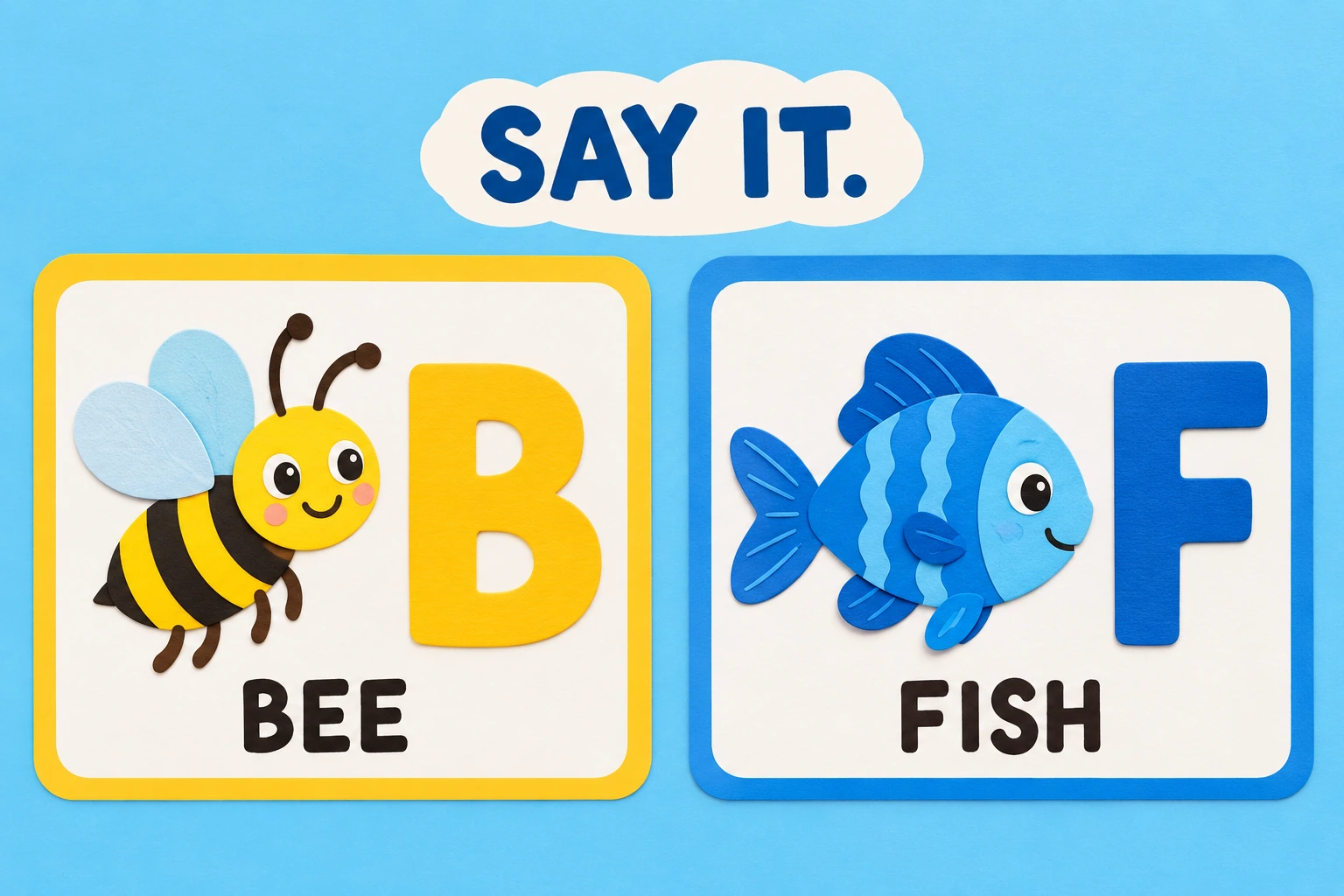
Say fish and fan, then listen to their openings. Ask whether those beginnings belong together. Keep both words clear and familiar; the child is comparing speech rather than deciding which two objects look alike.
An opening-sound visitor
A toy visitor says a word such as duck or dog and asks which First Sound Choices picture begins similarly. Let the child repeat the word or hear it again. Do not require a fast answer before they have had a comfortable listening opportunity.
A picture-name check: First Sound Choices
Show a simple household drawing and ask what the child calls it. Discuss which name a particular sound game will use before beginning. This echoes the naming issue on the duck row and keeps the listening question consistent.
Choose between two capitals on spare paper
After an oral sound comparison, place two large letter cards beside the picture and ask which one fits the intended opening. Use a small separate set before returning to three options on the source sheet. Explain the adaptation instead of pretending the original row has fewer choices.
Become the adult's checker: First Sound Choices
An adult deliberately pairs a familiar picture word with an incorrect opening capital. The child explains what should be reconsidered. Let the learner ask for the spoken word again, showing that checking a sound is a reasonable part of the game.
Keep the challenge small enough to hear clearly: First Sound Choices
First Sound Choices is suggested for adult-supported learners around four to seven who are exploring spoken beginnings and printed capitals. Readiness can differ between naming, listening and letter recognition. Offer the support required by the particular step rather than expecting age alone to determine independence.
Common mistakes include choosing a favourite capital, listening to the whole letter name instead of the pictured word, silently using a different picture label or copying an earlier answer position. Return to the row's intended word and the three actual options. Give the learner a chance to make the connection again.
For another visit, Keira can choose a picture and explain its beginning to a toy. Once the six printed choices are familiar, an oral companion word can provide a new reason to listen. A brief, clear exchange is a better invitation back than a demand to complete the same six circles repeatedly without discussion.
Save all six sound rows clearly: First Sound Choices
The First Sound Choices premium single-sheet download is available to eligible members with an active plan. It retains every picture and capital option without the website watermark or domain branding; the clean PDF contains no advertisements. An independent original sample preserves the uploaded edition for inspection.
In portrait print preview, inspect the lower sun row as well as the upper choices. All circles and capitals should remain complete within the paper area. The $5 Little Explorers collection also includes this page with nineteen other supplied concepts in one clean PDF, reached through the related purchase page.
Follow a new language interest: First Sound Choices
After First Sound Choices, explore Toy Picture Crossword beside First Sound Choices, Farm Word Searching after First Sound Choices, Beach Word Discovery beyond First Sound Choices. Keep each new instruction separate from First Sound Choices.
For further adult ideas, explore PBS Parents resources about literacy through play and read NAEYC's family discussion of early written communication. With First Sound Choices, value the shared picture name, an audible opening and the capital selected for that sound.
Popular Worksheets
Printable resources families and teachers are downloading now.
 Free
 Free
 Free
 Free