
Beach Word Discovery: 5 Brilliant Letter Trails
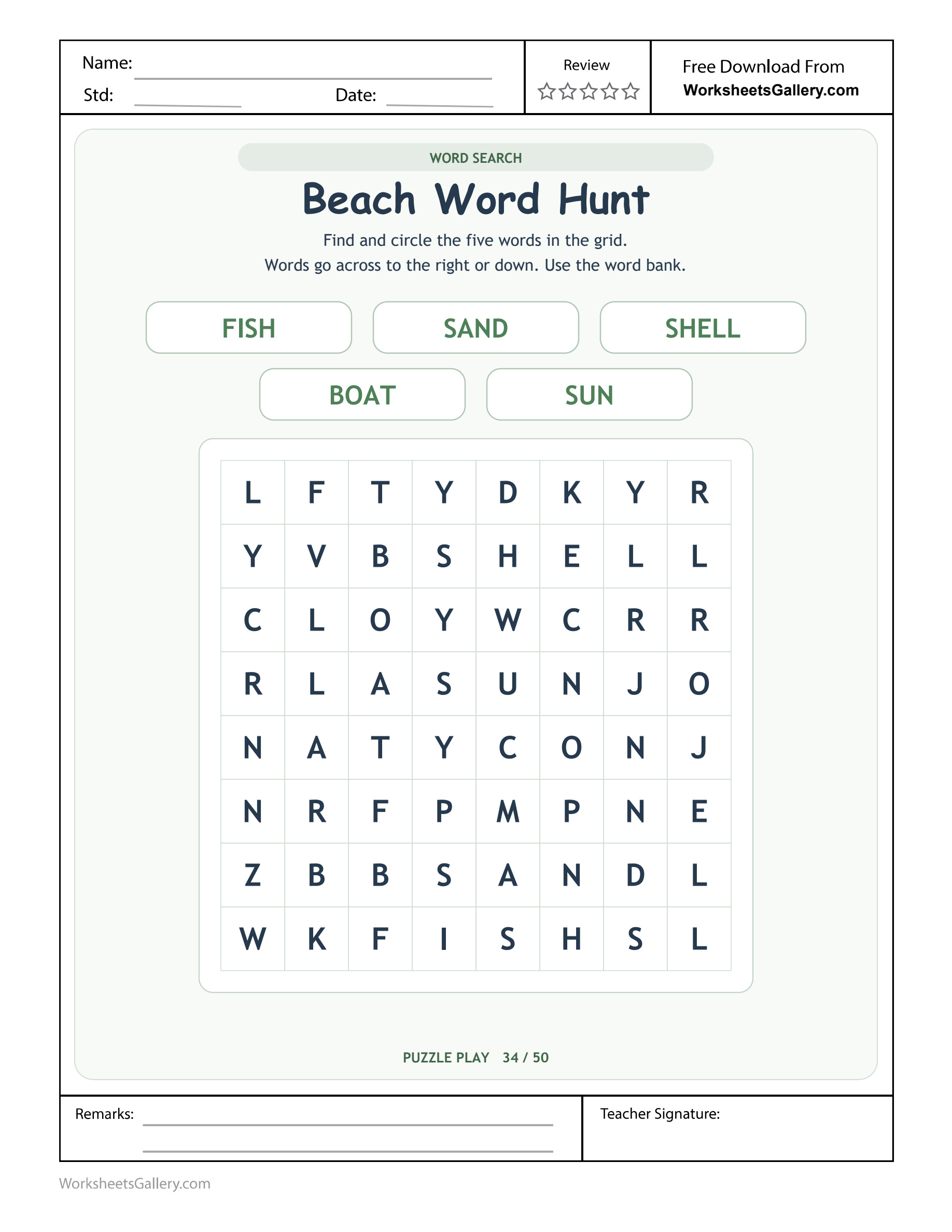
$5 · 25 supplied sheets: Beach Word Discovery. Check a promising first letter against every following letter before circling the full word.
Five beach words are hidden among a busy field of capitals. Beach Word Discovery invites a child to compare whole letter runs with a visible bank, moving only right or down. FISH, SAND, SHELL, BOAT and SUN provide targets of different lengths, so a promising start needs a complete check. Read an unfamiliar bank word together and let the child investigate its written sequence. A finger can hold the current place before a pencil draws the final loop. The useful habit is finishing the comparison, even when the first few letters already look convincing.
Beach Word Discovery: read the actual puzzle
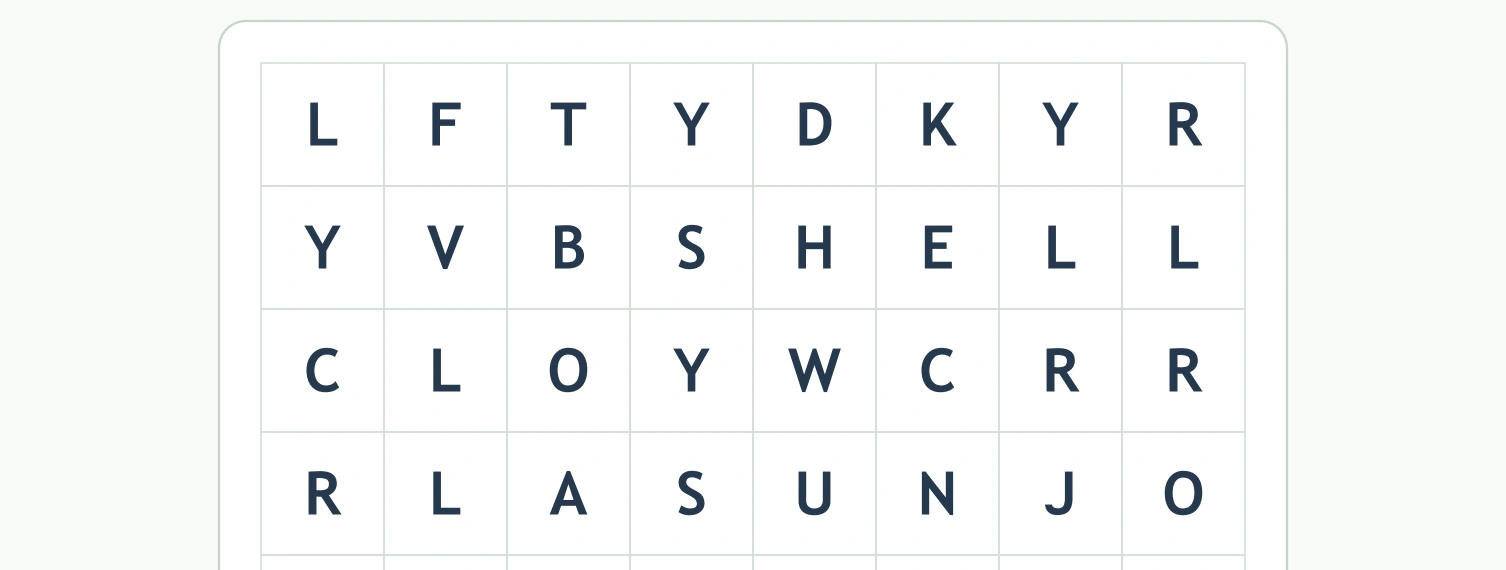
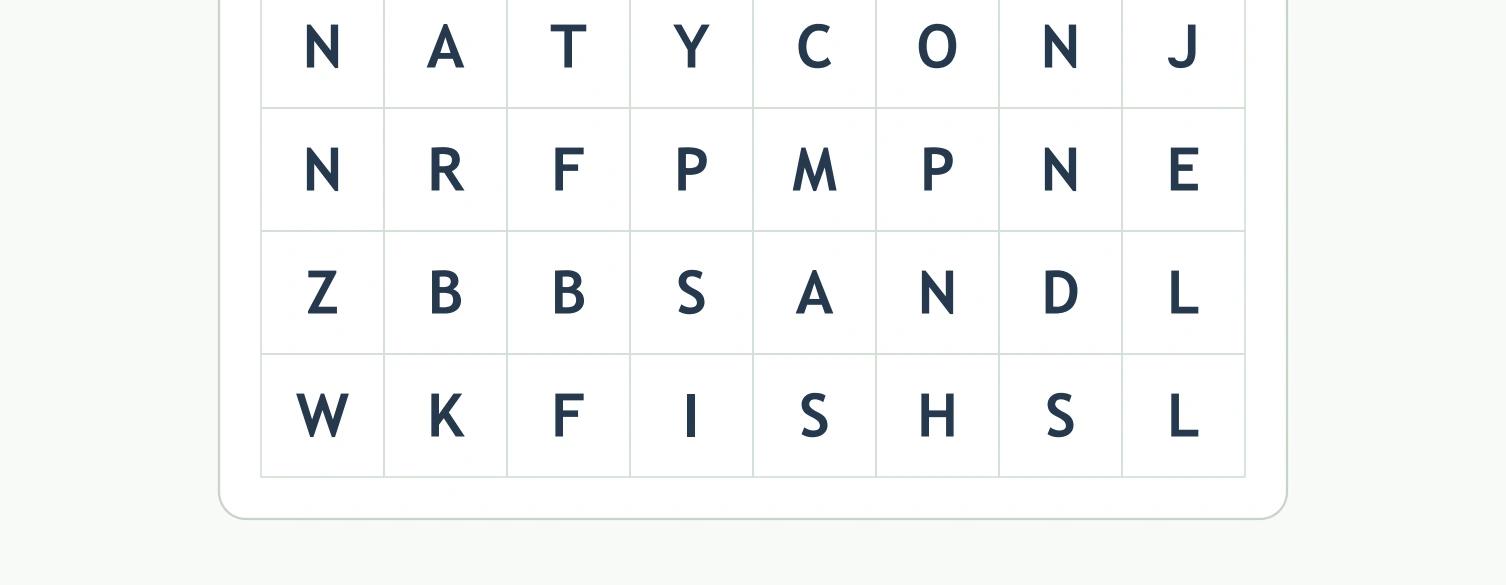
Beach Word Discovery: The eight-by-eight field contains five specified bank words. Their different lengths matter: SUN has three letters while SHELL has five. Consult the full bank entry instead of stopping when the beginning resembles a familiar word.
A possible start leads into one permitted straight direction. Check the next capital immediately to the right or below, then keep moving along that line. Switching directions partway through would create a path rather than a printed word run.

Fixed search line deserves a second look
Repeated letters deserve separate positions. In SHELL, the two L letters occupy two cells. A child who counts only one has recognised part of the spelling but has not yet verified the complete target.
A clear loop records a confirmed find. Before marking, point from the first letter through the last and say the bank word’s letters. This final rehearsal lets a child reject a near-match without leaving distracting pencil trails.
Four checkpoints for Beach Word Discovery
| Pause here | Inspect this clue |
|---|---|
| Target length | Count every letter in the selected bank entry. |
| Next-letter test | Compare the next cell with the next required capital. |
| Fixed search line | Stay within one rightward row or downward column. |
| Last-letter confirmation | Verify the final target position before circling. |
Target length — Felix’s inspection
For Beach Word Discovery, ask “How many positions must this word occupy?” Count every letter in the selected bank entry.
Next-letter test — Felix’s inspection
For Beach Word Discovery, ask “Does this candidate keep the correct spelling?” Compare the next cell with the next required capital.
Fixed search line — Felix’s inspection
For Beach Word Discovery, ask “Did the direction change halfway through?” Stay within one rightward row or downward column.
Last-letter confirmation — Felix’s inspection
For Beach Word Discovery, ask “Where does this complete word end?” Verify the final target position before circling.
Readiness for next-letter test
Keep the target card near the current grid row when repeated eye movements are tiring. An adult can name capitals or read the completed word while leaving the sequence comparison to the child.
Suggested Beach Word Discovery range: ages five to seven. Felix’s readiness depends on complete-word matching and interest in next-letter test. Shorten this Beach Word Discovery visit when needed.
Five play invitations after next-letter test
Double-letter beach hut with Beach Word Discovery
Build SHELL with tiles and give each L a separate doorway. Count five positions before asking a partner to read the word.
Word-length footprints with Beach Word Discovery
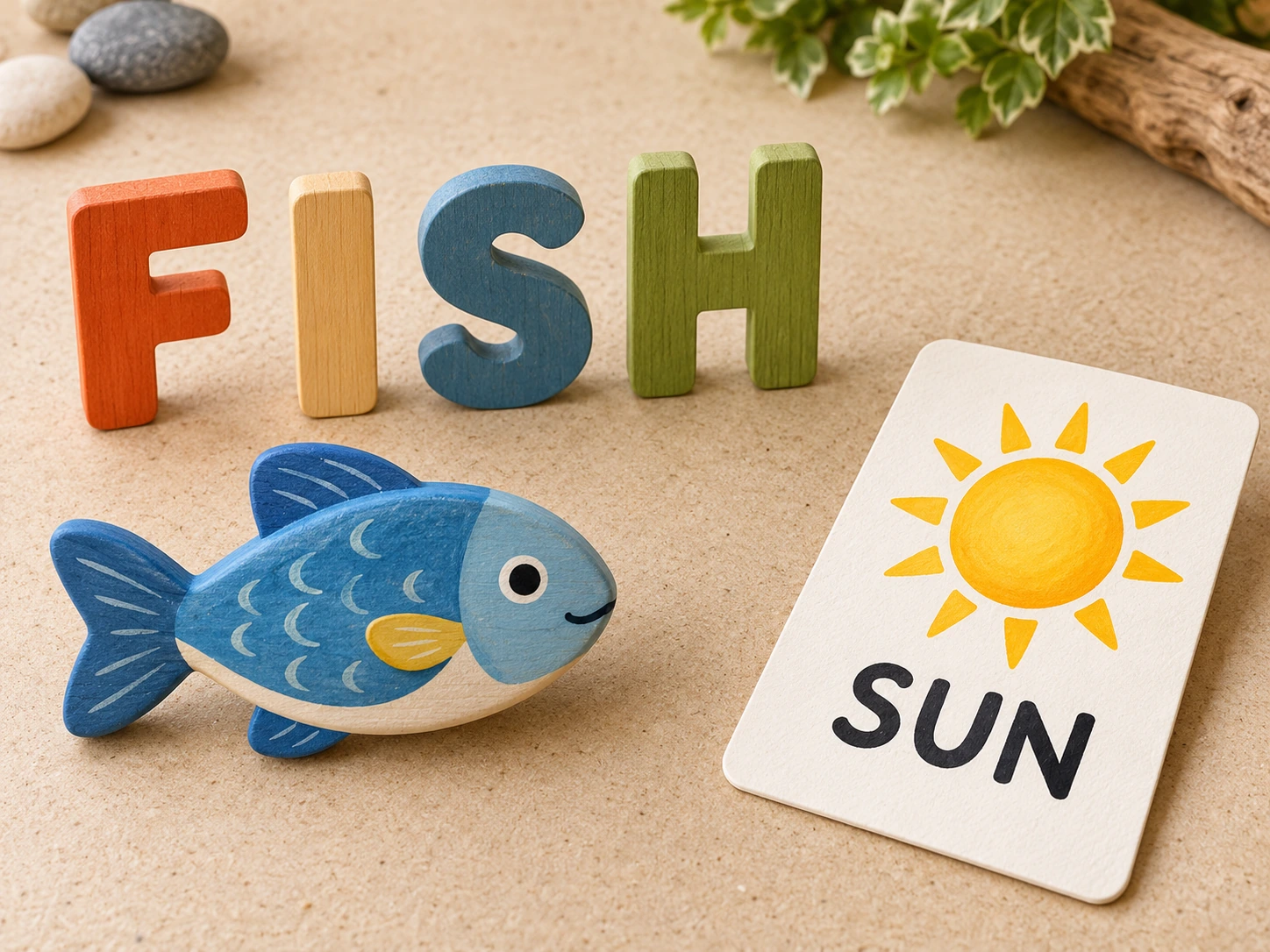
Place one counter per letter beneath SUN and SHELL cards. Compare the lengths without changing either spelling.
Straight-line captain with Beach Word Discovery
Create a short row and column of letters. A captain announces RIGHT or DOWN before a partner tests a target.
Finish the check with Beach Word Discovery
Show a word strip with a convincing beginning and one wrong ending. Identify the last position that prevents a full match.
Beach bank designer with Beach Word Discovery
Choose a few fully written beach words and make a tiny search for an adult, stating the permitted directions clearly.
Six observations from target length
Complete-word matching — target length
Beach Word Discovery invites checking every capital instead of accepting a familiar opening. Notice Felix’s complete-word matching explanation: “How many positions must this word occupy?”
Repeated-letter awareness — next-letter test
Beach Word Discovery invites giving both L positions their own place in SHELL. Notice Felix’s repeated-letter awareness explanation: “Does this candidate keep the correct spelling?”
Spatial scanning — fixed search line
Beach Word Discovery invites moving through a grid while preserving a chosen search line. Notice Felix’s spatial scanning explanation: “Did the direction change halfway through?”
Length discrimination — last-letter confirmation
Beach Word Discovery invites using a three-letter or five-letter target appropriately. Notice Felix’s length discrimination explanation: “Where does this complete word end?”
Pencil restraint — target length
Beach Word Discovery invites delaying a loop until a candidate is fully checked. Notice Felix’s pencil restraint explanation: “How many positions must this word occupy?”
Evidence language — next-letter test
Beach Word Discovery invites explaining which letter confirms or rejects a possible find. Notice Felix’s evidence language explanation: “Does this candidate keep the correct spelling?”
Imagine Felix investigating at home
Felix’s grandmother writes SHELL on a separate card. Felix finds S-H-E-L and prepares to circle. She asks him to compare the number of occupied cells with the bank card, and he notices that one more L still needs a place.
Try “How many positions must this word occupy?” during this imagined Beach Word Discovery visit. Let Felix explain target length before recording.
Another visit through evidence language
Let a child report one convincing near-match before the next search. Explaining why that run was rejected makes careful inspection feel like a discovery rather than wasted work.
Revisit Beach Word Discovery through last-letter confirmation. Recognise explanations about last-letter confirmation from Felix.
Eight closer readings of target length
Compare the whole beach word
The bank provides complete spellings of different lengths. Ask the child to identify where the chosen word begins and ends on its bank card before inspecting a candidate in the grid. A familiar opening can guide a search, but every remaining letter must still occupy the correct next position. This Beach Word Discovery distinction supports complete-word matching.
Give each L its own cell
SHELL contains two separate L positions. Touch both while reading the bank entry, then count five required cells in a candidate run. This concrete comparison addresses a common early stopping point without assuming that the child failed to recognise the word’s beginning or its meaning.
Use one permitted direction
Choose a rightward row or downward column from a possible starting letter and keep that line fixed. Following the next desired capital diagonally changes the puzzle. Explain the direction rule through a short visible example before expecting a child to search an entire eight-by-eight field independently. This Beach Word Discovery distinction supports spatial scanning.
Check a final letter deliberately
A child may prepare to circle after seeing S-U. Invite a check of the required N rather than announcing that the word is nearly complete. Finishing the comparison makes the loop evidence of a whole match, and the same habit applies to longer targets with convincing beginnings.
Hold a promising starting place
A finger or movable marker can retain a candidate start while the child looks back at the word bank. Use it to keep a place, not to indicate which candidate is correct. Returning to the same position reduces unnecessary rescanning and allows attention to stay on the next required letter. This Beach Word Discovery distinction supports pencil restraint.
Distinguish scanning from spelling
If the child cannot say a bank word aloud, offer its reading and let them compare the written capitals. If the letters are recognised but candidates are repeatedly overlooked, model a systematic sweep. Spoken vocabulary, exact spelling and organised visual search are separate contributions to the activity.
Leave failed candidates readable
Avoid crossing out every letter that did not begin the current target. Those same cells may matter to another bank word. A rejected run can simply be left untouched. Keep final loops for confirmed whole words so the field stays usable during the remaining beach search. This Beach Word Discovery distinction supports complete-word matching.
Use a fresh short field later
Create a tiny new search with two beach words and clearly announced right-or-down directions. Let the child choose a target and demonstrate a complete-letter check. The smaller field can reveal a transferable method without requiring another long sweep through a layout already partly memorised.
Revisit the fixed search line difficulty
Following any neighbouring matching letter can lead into a diagonal or a turn. Revisit the permitted directions without dismissing the correct letters the child noticed. Another common slip is ending a long word as soon as a shorter familiar fragment appears.
Return to Beach Word Discovery evidence by asking “Did the direction change halfway through?” Separate pencil execution from Felix’s target length reasoning.
Partners explore repeated-letter awareness
Pairs alternate checker and searcher jobs at a beach-word station. The checker names the next required letter while the searcher points along a candidate line. They verify the last letter together before either child records the discovery.
A Beach Word Discovery classroom note can describe moving through a grid while preserving a chosen search line. Record the actual next-letter test prompt, too.
Distinctions behind fixed search line
Target length — the Felix discussion
A word search is not a test of how many beach words a child can say. Spoken vocabulary supports interest, while the printed bank specifies exactly what counts as a find. Keep those two contributions distinct when offering encouragement.
Next-letter test — the Felix discussion
Stopping to verify a final letter can look slower than immediate circling, but it leaves clearer evidence. Notice a child who changes a prediction after checking the end. That adjustment is a useful search strategy, not hesitation to eliminate.
Fixed search line — the Felix discussion
Use a finger or movable marker to retain a candidate start while glancing at the bank. The aid reduces the need to rediscover the same square. It supports comparison without revealing which starting cell contains the target.
Save and print Beach Word Discovery
The clean Beach Word Discovery printable is the premium membership download; eligible active members can save it after signing in. It contains no website watermark, domain wording or embedded advertising. Use the separate original sample to inspect the uploaded edition. Before printing, confirm that the beach bank and all eight grid rows fit inside the page edges.
Other choices beyond complete-word matching
For Beach Word Discovery, the saved catalog suggests road-following after beach word discovery; aiming-and-stopping after beach word discovery; picture-recipe drawing after beach word discovery. Read each linked activity’s rule with Felix; its target length response may differ.
For Felix, browse NAEYC writing ideas alongside beach word discovery or PBS Parents activities beyond beach word discovery. Watch complete-word matching with spatial scanning, then revisit target length.
Popular Worksheets
Printable resources families and teachers are downloading now.
 Free
 Free
 Free
 Free