
Fish Dot Connections: 16 Wonderful Number Stops
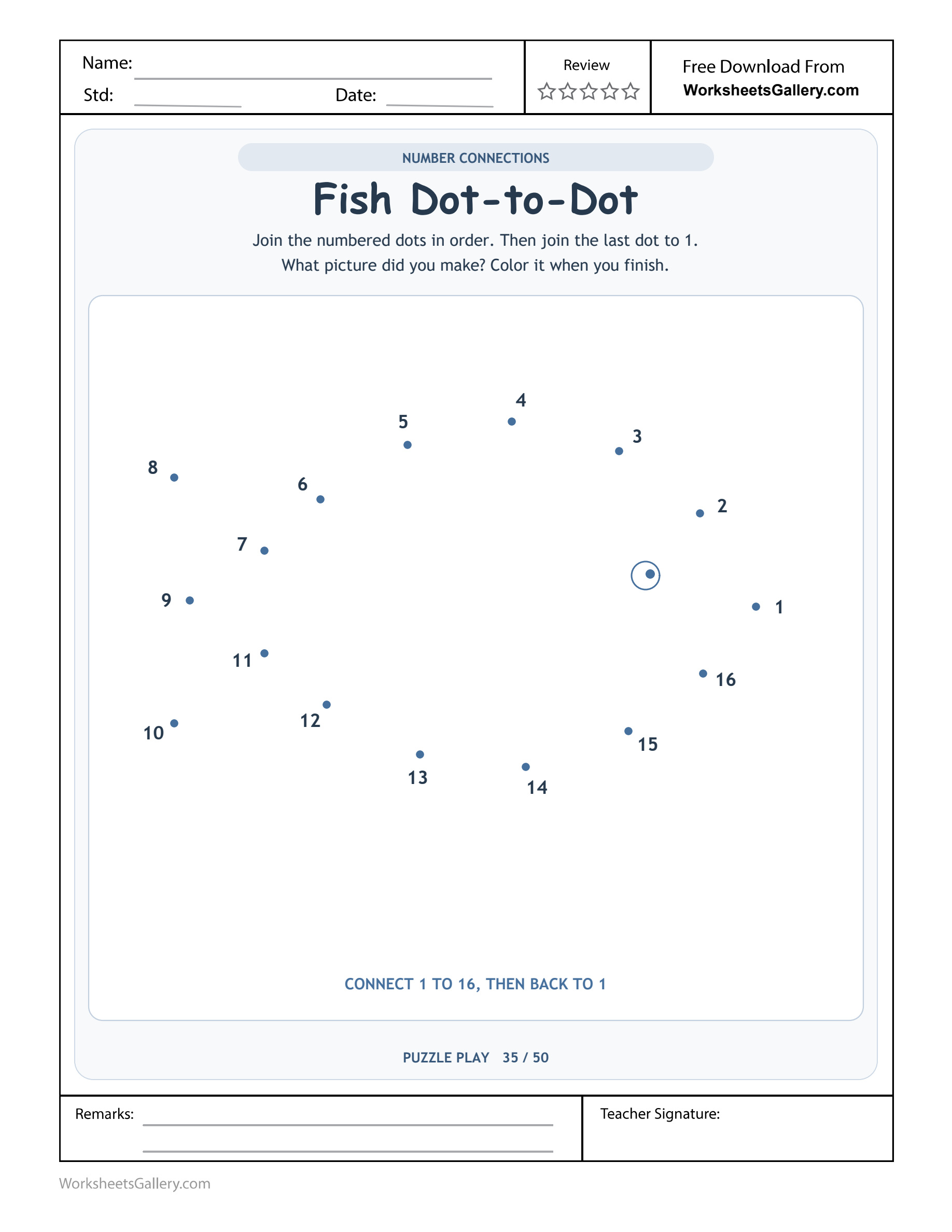
$5 · 25 supplied sheets: Fish Dot Connections. Find each successor before moving the pencil, then close the fish outline by returning to one.
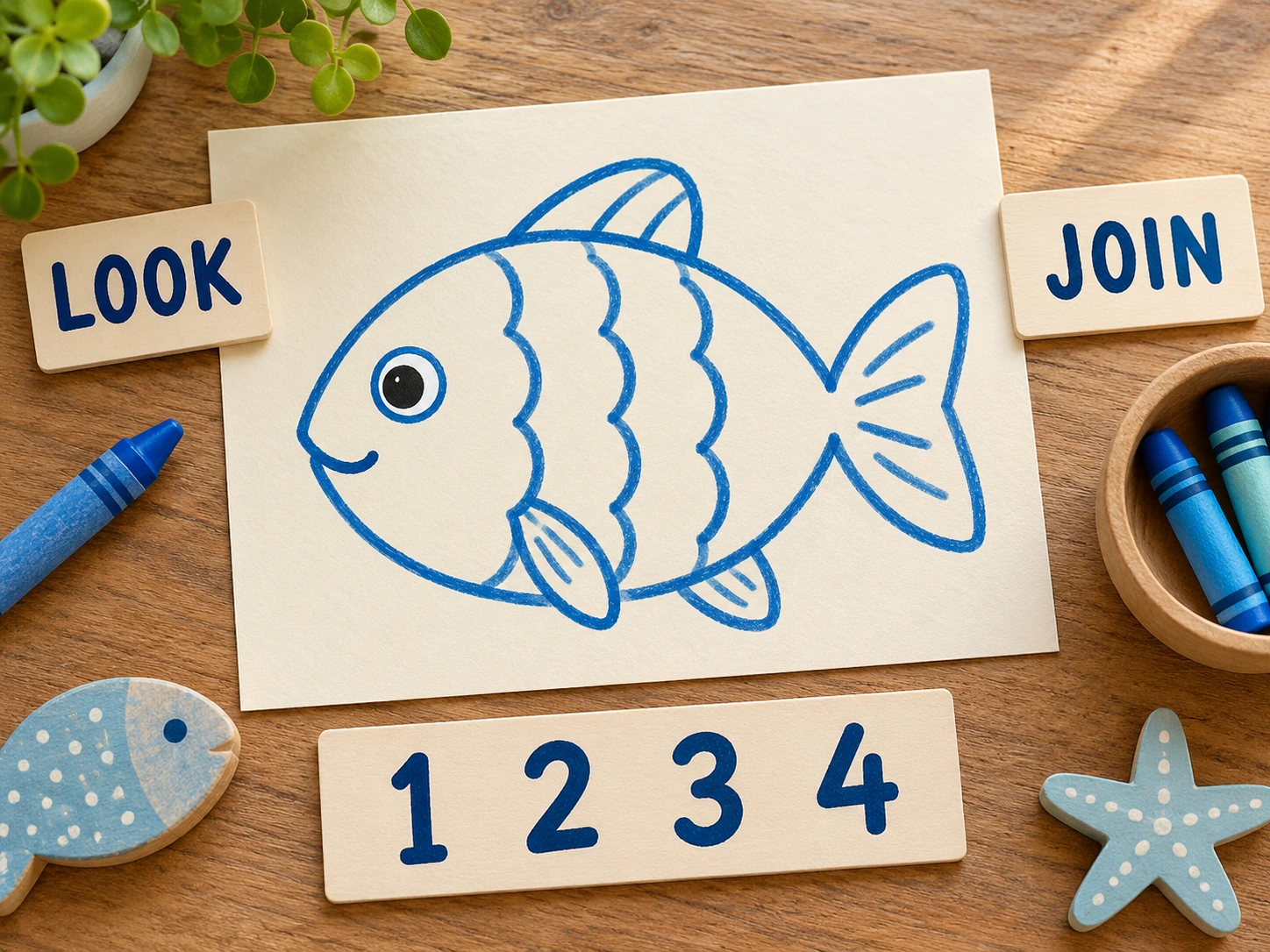
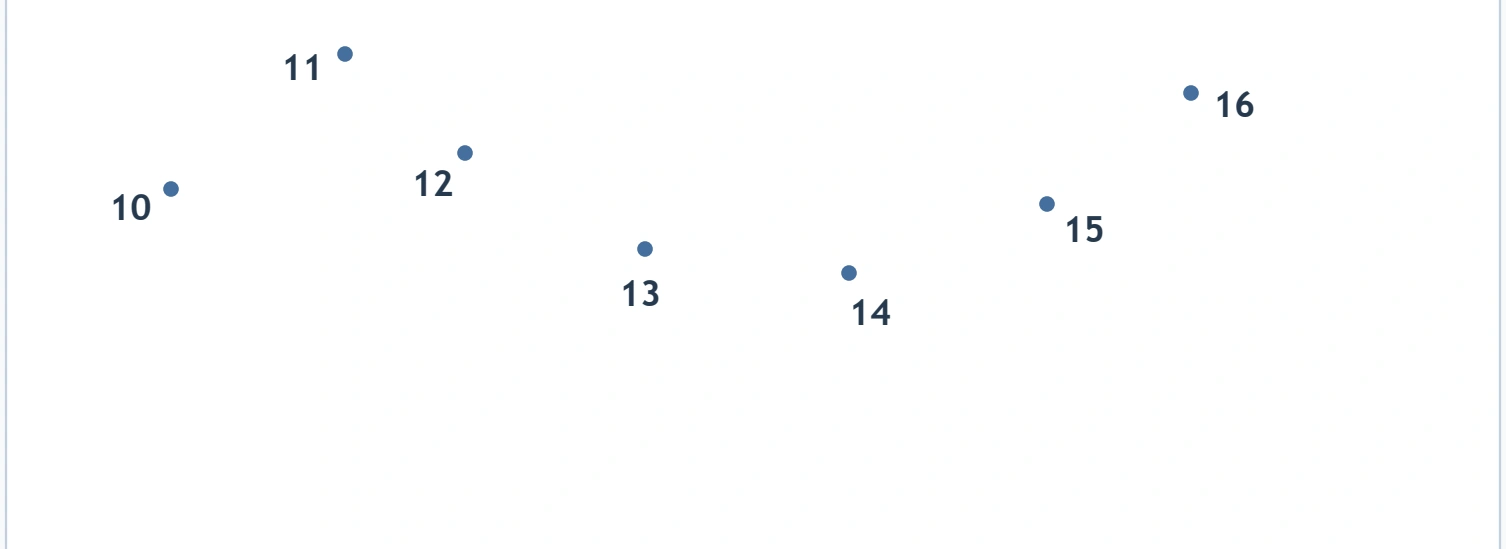
A scattered set of numbers becomes a fish when each connection follows the sequence. Fish Dot Connections asks children to join one through sixteen, then return from sixteen to one to close the outline. The eye is already printed and does not belong in the numbered route. Begin by finding the next number with a finger before moving the pencil. An adult can supply a number name while the child searches its position. Once the outline is joined, colouring offers a different, optional way to enjoy the picture that has appeared.
Fish Dot Connections: read the actual puzzle
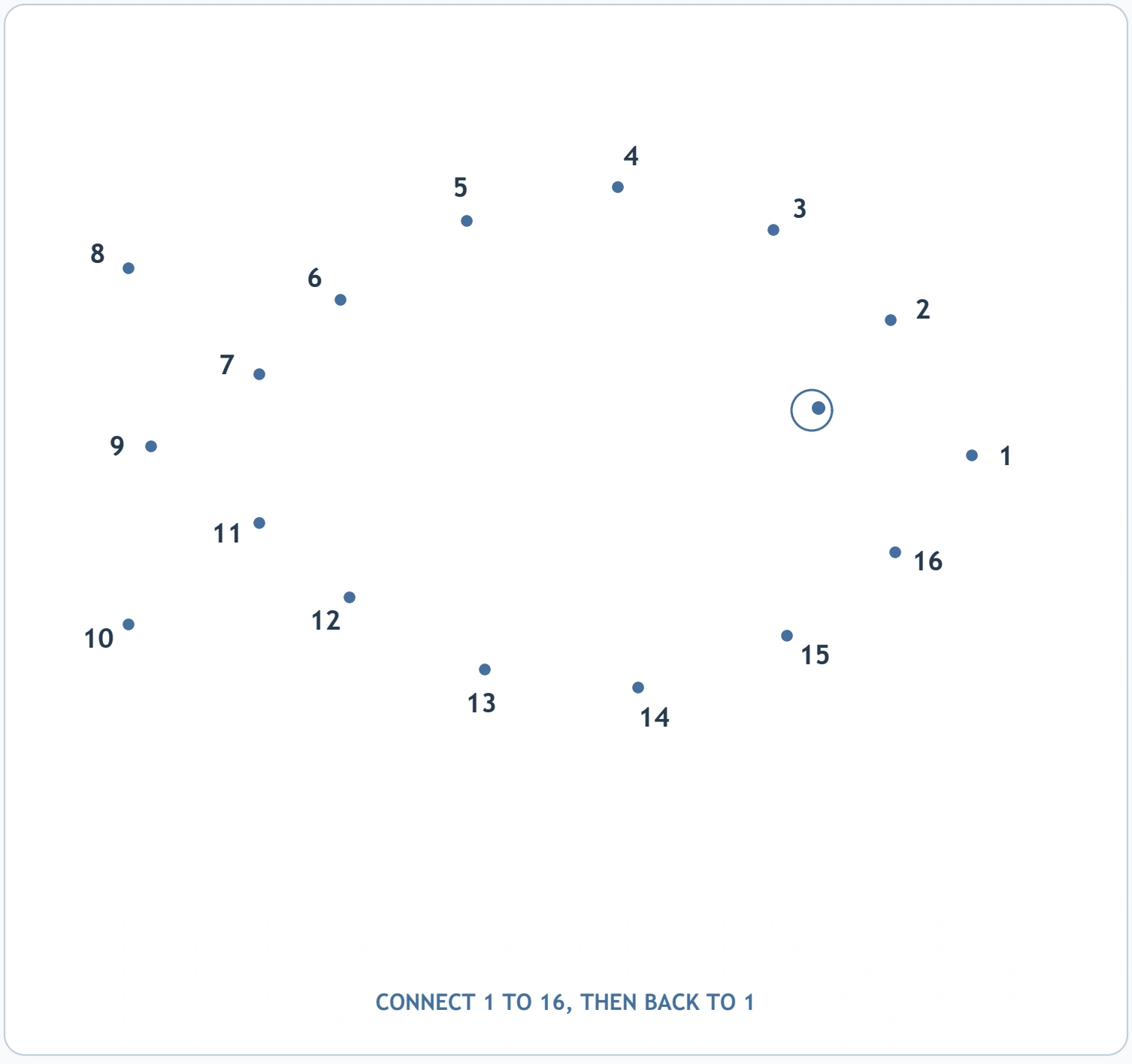
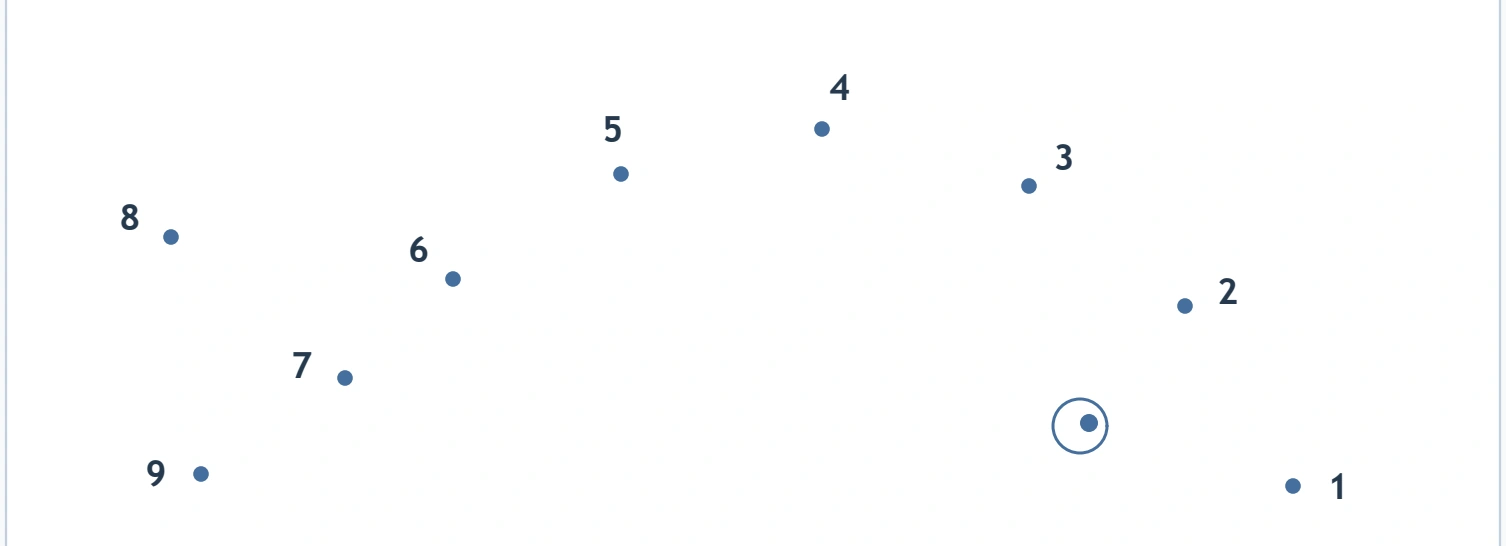
Fish Dot Connections: The numbered dots run from one to sixteen, but their positions do not form a simple reading row. Search for the numerical successor each time. The nearest dot in space may belong much later in the sequence.
Join dot centres rather than drawing through the printed number labels. The labels identify destinations; the small dots are where the line meets. Pointing to both before drawing clarifies that difference for a first-time dot-to-dot user.
Place keeper deserves a second look
The upper and lower contour change direction repeatedly. A child can pause at a dot, lift the pencil if useful and locate the next stop. A brief pause does not interrupt the rule or require restarting at one.
After sixteen, the instruction explicitly returns to one. This closes the fish outline. The preprinted eye remains separate, and colouring is invited only after the numbered route has been completed.
Five play invitations after dot destination
Human dot announcer with Fish Dot Connections
Place four large numbered cards around a table. A child announces each successor before a toy moves to that card.
Dot or label with Fish Dot Connections
Draw a number beside a small dot on separate paper. Ask a partner to touch the label for reading and the dot for joining.
Pause marker with Fish Dot Connections
Move a large token along a simple numbered route, pausing to name the current stop before searching again.
Close the pond with Fish Dot Connections
Connect a short numbered polygon, then discuss the final line back to its starting point.
Fish-story colours with Fish Dot Connections
After finishing the printed outline, choose colours for a pretend fish habitat and dictate a short sentence about its journey.
Another visit through completion awareness
Save the joined fish for a later colour choice or a story about where it swims. A future numbered drawing can reuse the same look-before-joining habit without requiring this page to be redone immediately.
Invite Anya to revisit closing connection. Recognise explanations about closing connection from Anya.
Six observations from next numeral
Number-order use — next numeral
Fish Dot Connections invites applying a counting sequence to scattered spatial positions. Notice Anya’s number-order use explanation: “Which number comes immediately after this one?”
Visual locating — dot destination
Fish Dot Connections invites finding a requested numeral among nearby alternatives. Notice Anya’s visual locating explanation: “Where should the pencil line actually meet?”
Eye-hand coordination — place keeper
Fish Dot Connections invites bringing a deliberate line to a small chosen dot. Notice Anya’s eye-hand coordination explanation: “Which stop have you already reached?”
Movement planning — closing connection
Fish Dot Connections invites looking ahead before changing the line’s direction. Notice Anya’s movement planning explanation: “Is the outside outline now closed?”
Task memory — next numeral
Fish Dot Connections invites remembering the current stop while searching for its successor. Notice Anya’s task memory explanation: “Which number comes immediately after this one?”
Completion awareness — dot destination
Fish Dot Connections invites distinguishing the final return line from optional colouring. Notice Anya’s completion awareness explanation: “Where should the pencil line actually meet?”

Revisit the place keeper difficulty
Connecting to the nearest point can produce a plausible-looking shape while skipping numbers. Check the spoken sequence, not just the picture’s appearance. Also keep the eye separate; its circular outline is not an extra numbered destination.
Return to Fish Dot Connections evidence by asking “Which stop have you already reached?” Separate pencil execution from Anya’s next numeral reasoning.
Imagine Anya investigating at home
Anya names the next numeral while her aunt points to the current stop. When Anya’s pencil hovers over a closer but later dot, they say the two number names and return to the actual successor. The fish emerges from those separate decisions.
Try “Which number comes immediately after this one?” during this imagined Fish Dot Connections visit. Let Anya explain next numeral before recording.
Partners explore visual locating
A teacher demonstrates a few connections on a separate large numbered drawing. On the printed fish, one partner names a next stop and the other finds it with a finger before each child makes their own line.
A Fish Dot Connections classroom note can describe bringing a deliberate line to a small chosen dot. Record the actual dot destination prompt, too.
Eight closer readings of next numeral
Separate successor and destination
Ask what number comes next before searching for its printed label. Then locate the associated small dot. Those are two decisions: numerical order chooses the stop, and the page supplies its position. A child may understand the first while needing more time for the second. This Fish Dot Connections distinction supports number-order use.
The eye stays out of the route
The printed eye is a drawing detail with no number attached. Point to the difference between that circle and the labelled dots before joining if needed. Treating every visible mark as a destination would create a different path from the one the instructions specify.
Nearby does not mean next
Several points lie close together around the fish’s outline. Compare their numeral labels rather than selecting whichever is easiest to reach. If the pencil heads toward a later number, pause before drawing and name the intended successor, leaving the child to find its actual position. This Fish Dot Connections distinction supports eye-hand coordination.
Pause without losing the place
A child can stop at a reached dot, lift the pencil and look ahead. Keep a finger or small marker at the current stop if that helps. A break in pencil movement does not break numerical order; restarting unnecessarily can introduce repeated lines or skipped positions.
Notice the two-digit stops
The lower outline includes numbers beyond nine. Read a two-digit label together when necessary, then allow the child to locate its dot. This support can preserve the spatial joining task without turning every unfamiliar numeral into an adult-directed point-and-draw instruction. This Fish Dot Connections distinction supports task memory.
Check the last return
After reaching sixteen, compare the outline with the instruction strip beneath it. The final line returns to one and closes the outside shape. Ask the child to find the remaining gap before drawing it, giving a visible reason for the final movement rather than presenting it as extra work.
Let accuracy have several parts
A connection may be correctly ordered but a little wobbly. Name the successful endpoint choice before offering movement support. If a line reaches the wrong numbered stop, inspect the sequence instead. Distinguishing those outcomes helps an adult respond to the actual difficulty rather than treating all untidy lines alike. This Fish Dot Connections distinction supports number-order use.
Colouring is a changed purpose
Once the outline is joined, the child may choose to colour the fish. Announce that the numerical route is complete and the creative choice has begun. Colours need not encode the number sequence, and a child who prefers to tell a fish story can enjoy another extension without additional marking.
Readiness for dot destination
An adult may name a numeral, leaving the child to locate its written form. Use a larger pencil or pointing response when small-dot accuracy would otherwise obscure an understood sequence.
Suggested Fish Dot Connections range: ages four to six. Anya’s readiness depends on number-order use and interest in dot destination. Shorten this Fish Dot Connections visit when needed.
Four checkpoints for Fish Dot Connections
| Pause here | Inspect this clue |
|---|---|
| Next numeral | Name or identify the numerical successor before drawing. |
| Dot destination | Find the small point associated with the label. |
| Place keeper | Retain the last reached dot during a search pause. |
| Closing connection | Join sixteen back to one after the final numbered step. |
Next numeral — Anya’s inspection
For Fish Dot Connections, ask “Which number comes immediately after this one?” Name or identify the numerical successor before drawing.
Dot destination — Anya’s inspection
For Fish Dot Connections, ask “Where should the pencil line actually meet?” Find the small point associated with the label.
Place keeper — Anya’s inspection
For Fish Dot Connections, ask “Which stop have you already reached?” Retain the last reached dot during a search pause.
Closing connection — Anya’s inspection
For Fish Dot Connections, ask “Is the outside outline now closed?” Join sixteen back to one after the final numbered step.
Distinctions behind place keeper
Next numeral — the Anya discussion
Saying numbers in order and locating their printed forms are related but different tasks. A child may know what comes next yet need time to find it on the page. Offer a number-name cue without pointing directly at the target when locating is the intended challenge.
Dot destination — the Anya discussion
A line can be wobbly while its endpoint decisions remain accurate. Ask which dots were connected before commenting on neatness. The next support may concern steadier movement, while the child’s number sequence already deserves recognition.
Place keeper — the Anya discussion
Closing an outline changes its visual character. Invite the child to notice the gap before the last return line and the enclosed shape afterward. That observation gives a concrete reason for obeying the final instruction rather than treating it as extra pencil work.
Save and print Fish Dot Connections
Members with an eligible current plan can save the clean Fish Dot Connections printable using its premium control. The supplied original has an independent sample option. Domain branding and website watermark have been removed from the premium PDF, which contains no advertisements. Inspect sixteen dot labels, the preprinted eye and the closing instruction in the portrait printer preview.
Other choices beyond number-order use
For Fish Dot Connections, the saved catalog suggests road-following after fish dot connections; aiming-and-stopping after fish dot connections; picture-recipe drawing after fish dot connections. Read each linked activity’s rule with Anya; its next numeral response may differ.
For Anya, browse NAEYC writing ideas alongside fish dot connections or PBS Parents activities beyond fish dot connections. Watch number-order use with eye-hand coordination, then revisit next numeral.
Popular Worksheets
Printable resources families and teachers are downloading now.
 Free
 Free
 Free
 Free