
Rocket Number Joining: 15 Brilliant Outline Steps
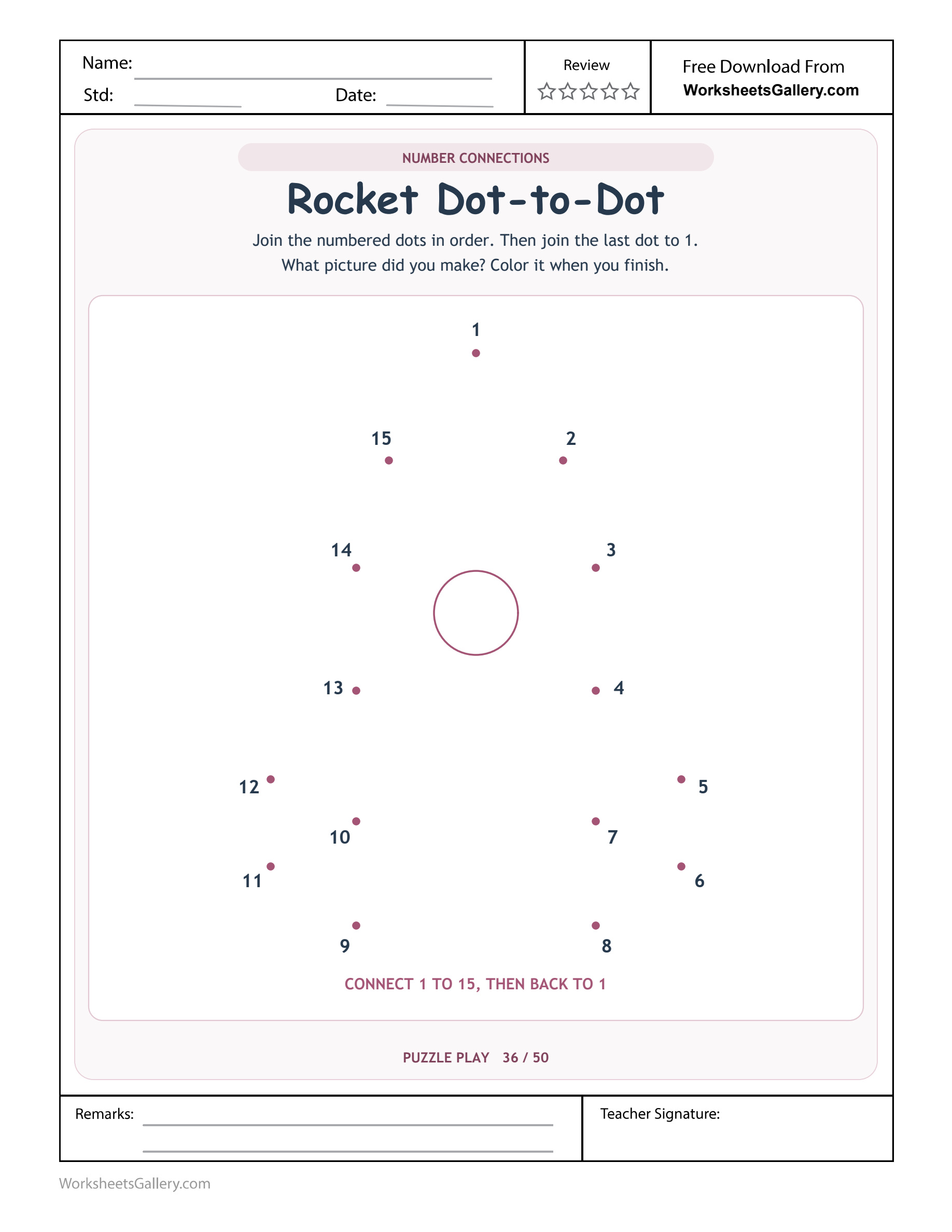
$5 · 25 supplied sheets: Rocket Number Joining. Keep numerical order through the fins rather than joining whichever dot looks nearest.
A rocket outline appears through a sequence of fifteen small decisions. Rocket Number Joining asks children to locate each next numeral, connect its dot and finally return to one. The circular window is already drawn and stays separate from the numbered outline. Begin by saying a successor and finding it before the pencil moves, especially around the lower fins where points sit close together. An adult can help with number names while the child chooses the destination. After the final return line, colouring can celebrate the picture without changing the joining rule.
Rocket Number Joining: read the actual puzzle
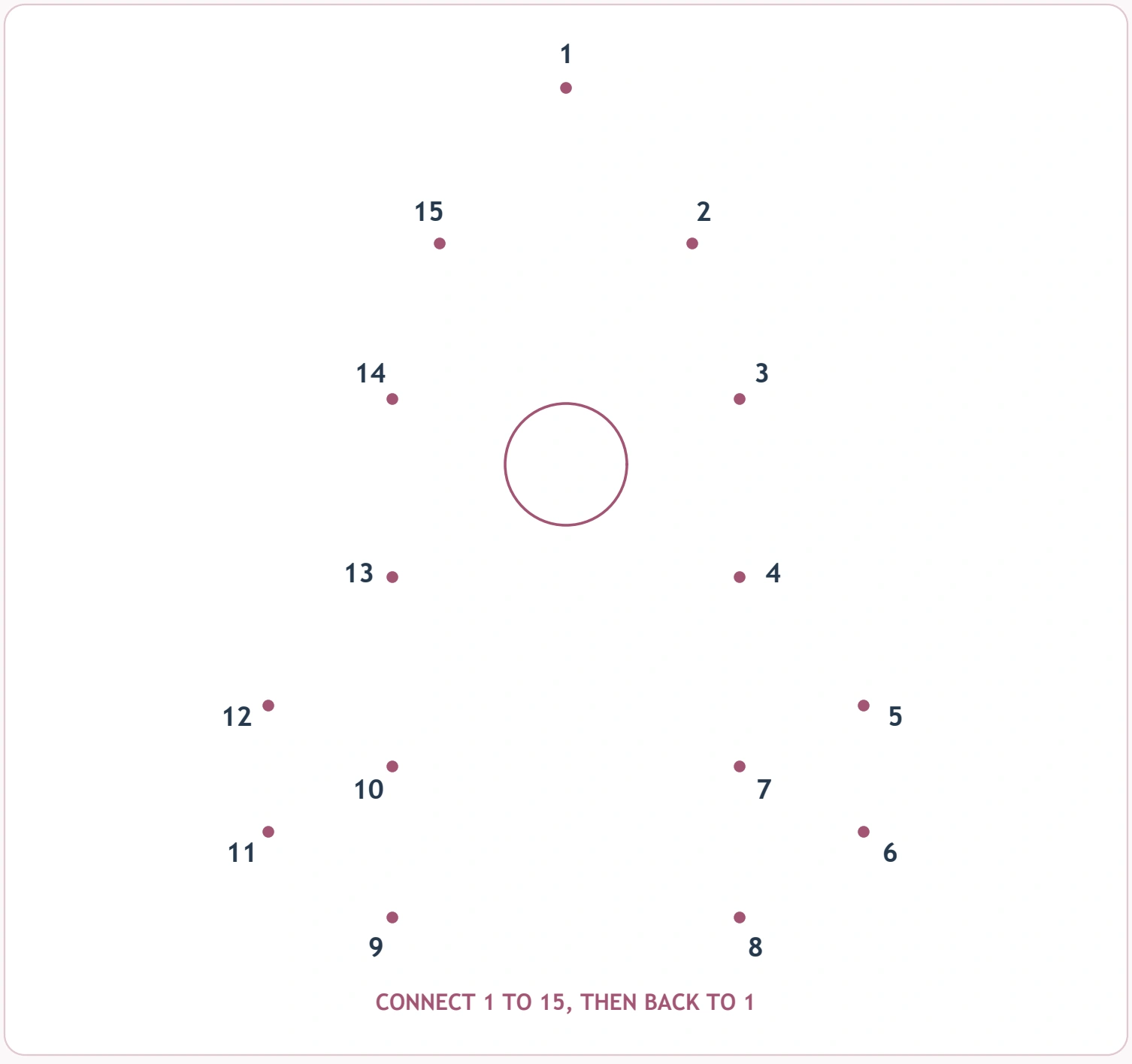
Rocket Number Joining: The route starts at the top with one and continues through fifteen. Its numbers surround the outline rather than running along a reading line. Use numerical order to choose the next point, not an assumption about which edge of a rocket ought to come next.
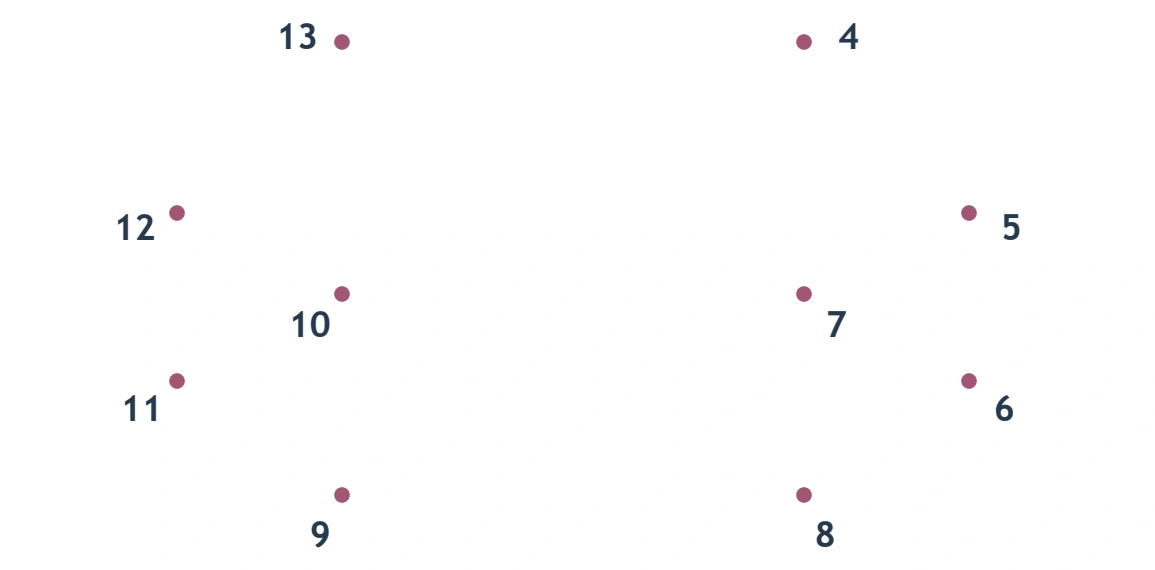
The lower points change direction sharply around the fins. Nearby labels can tempt a child to skip a stop. Pause at the current dot, identify the next numeral and trace the intended short segment with a finger before drawing.
Number-to-dot link deserves a second look
A dot and its numeral serve different purposes. The numeral names the stop while the point gives the exact place for the line. Aiming at the middle of a large printed digit can distort the contour even when the sequence is correct.
Join fifteen back to one to close the outline. The preprinted round window should remain intact inside the rocket. It is not another point to include, and completing its circle is not part of the numerical route.
Imagine Hadi investigating at home
Hadi’s father asks him to find the next numeral before every lower-fin segment. Hadi notices a closer dot but names it as a later stop. They leave it for its proper turn, keeping number order in charge of the developing shape.
Try “Which number belongs after this stop?” during this imagined Rocket Number Joining visit. Let Hadi explain successor choice before recording.
Revisit the number-to-dot link difficulty
Drawing a recognisable rocket from memory can bypass the supplied points. Return to the next numbered destination. If a child includes the window in the route, distinguish an existing drawing detail from a numbered stop without erasing the entire attempt.
Return to Rocket Number Joining evidence by asking “Which dot does this label identify?” Separate pencil execution from Hadi’s successor choice reasoning.
Readiness for fin sequence
Pointing through the sequence is a useful first response when line accuracy is demanding. Provide numeral names as needed, while leaving enough time for the child to locate the matching point.
Suggested Rocket Number Joining range: ages four to six. Hadi’s readiness depends on successor recognition and interest in fin sequence. Shorten this Rocket Number Joining visit when needed.
Eight closer readings of successor choice
The sequence chooses the outline
A child may recognise a rocket before making any connection and want to draw its familiar shape directly. Appreciate that recognition, then return to the next numbered point. In this activity the image emerges through the supplied order; an independently drawn rocket would be a different creative task. This Rocket Number Joining distinction supports successor recognition.
A fin needs an intentional turn
The lower points bring sharp changes of direction. Invite the child to locate a successor before beginning the segment, especially when two labels are close. A brief finger rehearsal lets the intended turn become visible without requiring the adult to take over the pencil or complete the outline.
Read a label, aim at its dot
Touch the number for naming and the small point for joining. Their separate jobs are easy to demonstrate on a spare piece of paper. A child who draws through a numeral may understand the sequence but need this recording distinction to produce a clearer rocket contour. This Rocket Number Joining distinction supports turn preparation.
The window is already complete
The circular window sits inside the future outline and carries no route number. It does not need to be joined into the sequence. Pointing out its separate purpose can prevent a detour while preserving the child’s sensible observation that it is another visible feature of the rocket picture.
Allow a lifted pencil
The directions require ordered connections, not an uninterrupted stroke from beginning to end. Let the child pause, lift and reposition when a turn is awkward. Retain the current numbered stop with a finger so restarting the movement does not accidentally restart the numerical route. This Rocket Number Joining distinction supports place retention.
Recheck an unexpected segment
If the growing shape looks surprising, compare the last two number labels before erasing. The route may be correct despite a child’s expectation of how a rocket should look. Numerical evidence should settle that question, while line neatness can be addressed separately if the correct endpoints were chosen.
Fifteen is not quite the finish
The instruction strip adds a return from fifteen to one. Ask the child to locate those two ends and inspect the gap between them. Closing that gap completes the outline and supplies a concrete purpose for the last segment instead of treating it as an adult’s extra request. This Rocket Number Joining distinction supports successor recognition.
A launch story comes afterward
Once the route is complete, invite colours or a spoken launch story. First, next and finally can describe the rocket’s invented journey. Mark this as a new purpose: imaginative flight directions need not reproduce the numbered pencil path, and enjoying the story does not require completing another worksheet immediately.
Six observations from successor choice
Successor recognition — successor choice
Rocket Number Joining invites applying number order to a spatially scattered outline. Notice Hadi’s successor recognition explanation: “Which number belongs after this stop?”
Fine-point aiming — fin sequence
Rocket Number Joining invites bringing a line to the intended small destination. Notice Hadi’s fine-point aiming explanation: “Have any numbers been skipped around this fin?”
Turn preparation — number-to-dot link
Rocket Number Joining invites looking ahead before a sharp change in pencil direction. Notice Hadi’s turn preparation explanation: “Which dot does this label identify?”
Visual separation — outline closure
Rocket Number Joining invites distinguishing number labels from dots and the window. Notice Hadi’s visual separation explanation: “What final segment makes the rocket complete?”
Place retention — successor choice
Rocket Number Joining invites remembering the last reached number during a search pause. Notice Hadi’s place retention explanation: “Which number belongs after this stop?”
Instruction completion — fin sequence
Rocket Number Joining invites including the final return rather than stopping at fifteen. Notice Hadi’s instruction completion explanation: “Have any numbers been skipped around this fin?”
Another visit through instruction completion
A later colouring session can begin with a quick inspection of the final fifteen-to-one segment. Let the child explain how the rocket became a closed shape before inventing a launch story.
Revisit Rocket Number Joining through outline closure. Recognise explanations about outline closure from Hadi.
Four checkpoints for Rocket Number Joining
| Pause here | Inspect this clue |
|---|---|
| Successor choice | Find the next numeral before deciding the line direction. |
| Fin sequence | Slow down where several lower points sit near one another. |
| Number-to-dot link | Aim for the small point associated with the chosen numeral. |
| Outline closure | Connect fifteen to the original one after the sequence. |
Successor choice — Hadi’s inspection
For Rocket Number Joining, ask “Which number belongs after this stop?” Find the next numeral before deciding the line direction.
Fin sequence — Hadi’s inspection
For Rocket Number Joining, ask “Have any numbers been skipped around this fin?” Slow down where several lower points sit near one another.
Number-to-dot link — Hadi’s inspection
For Rocket Number Joining, ask “Which dot does this label identify?” Aim for the small point associated with the chosen numeral.
Outline closure — Hadi’s inspection
For Rocket Number Joining, ask “What final segment makes the rocket complete?” Connect fifteen to the original one after the sequence.
Five play invitations after fin sequence
Fin pause with Rocket Number Joining
On a separate short zigzag of numbered points, stop before each turn and announce the intended next destination.
Window or stop with Rocket Number Joining
Draw a complete circle beside a few labelled dots. Have a partner identify which marks belong to the joining instructions.

Flight controller with Rocket Number Joining
One child names a successor while another moves a toy across large numbered cards; exchange roles without adding speed pressure.
Missing return with Rocket Number Joining
Leave a small homemade outline open after its last numbered point. Ask what the return instruction would add.
Launch narration with Rocket Number Joining
After joining the printed rocket, dictate a short launch account using first, next and finally to recount a sequence.
Partners explore fine-point aiming
A teaching assistant models a short unrelated numbered path, demonstrating how to stop at a point and look ahead. Children then work on the rocket, with partners checking a successor aloud when requested rather than drawing for one another.
A Rocket Number Joining classroom note can describe looking ahead before a sharp change in pencil direction. Record the actual fin sequence prompt, too.
Distinctions behind number-to-dot link
Successor choice — the Hadi discussion
A sharp turn can make a long segment feel difficult even when the next numeral is known. Allow lifting and repositioning the pencil. The aim is an intentional connection, not proving that the entire outline can be drawn without a pause.
Fin sequence — the Hadi discussion
Notice whether support is needed for counting, numeral recognition or movement. Those are different parts of the task. Asking the child to say the next number before locating it gives a simple way to distinguish a sequence question from a search difficulty.
Number-to-dot link — the Hadi discussion
A rocket story can celebrate the result, but it should not dictate the outline’s order. The number labels are the evidence during joining. Once the contour is complete, imaginative colours, destinations and characters can follow a different creative rule.
Save and print Rocket Number Joining
Use an eligible active membership to obtain the premium Rocket Number Joining PDF. The clean edition is free of website watermark, domain branding and embedded ads, with a separate original sample for inspection. Save the file before printing and review its portrait edges: all fifteen labels, the window and the final return instruction should remain on the page.
Other choices beyond successor recognition
For Rocket Number Joining, the saved catalog suggests road-following after rocket number joining; aiming-and-stopping after rocket number joining; picture-recipe drawing after rocket number joining. Read each linked activity’s rule with Hadi; its successor choice response may differ.
For Hadi, browse NAEYC writing ideas alongside rocket number joining or PBS Parents activities beyond rocket number joining. Watch successor recognition with turn preparation, then revisit successor choice.
Popular Worksheets
Printable resources families and teachers are downloading now.
 Free
 Free
 Free
 Free