
Treasure Map Squares: 6 Clever Location Discoveries
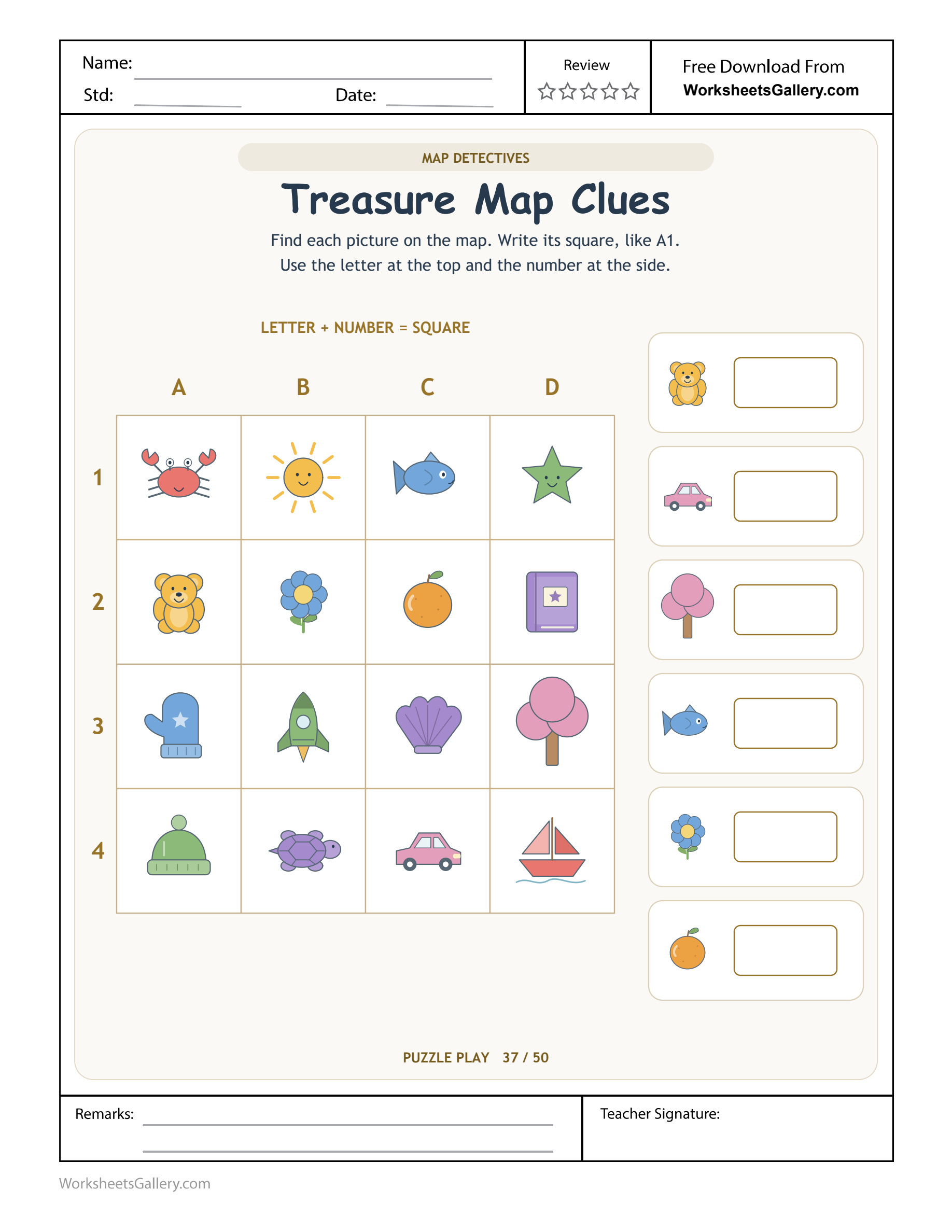
$5 · 25 supplied sheets: Treasure Map Squares. Combine a column letter with a row number to identify a square rather than a route.
Finding a picture is only half of giving its location. Treasure Map Squares combines a letter across the top with a number down the side to name one map square. Children locate six pictured targets and record references such as A2 in the adjacent boxes. Read unfamiliar picture names together, then follow the column and row labels back to the grid. The task asks for addresses rather than a drawn journey. A calm pointing routine makes both parts of a reference visible and gives a partner enough information to find the same square.
Treasure Map Squares: read the actual puzzle
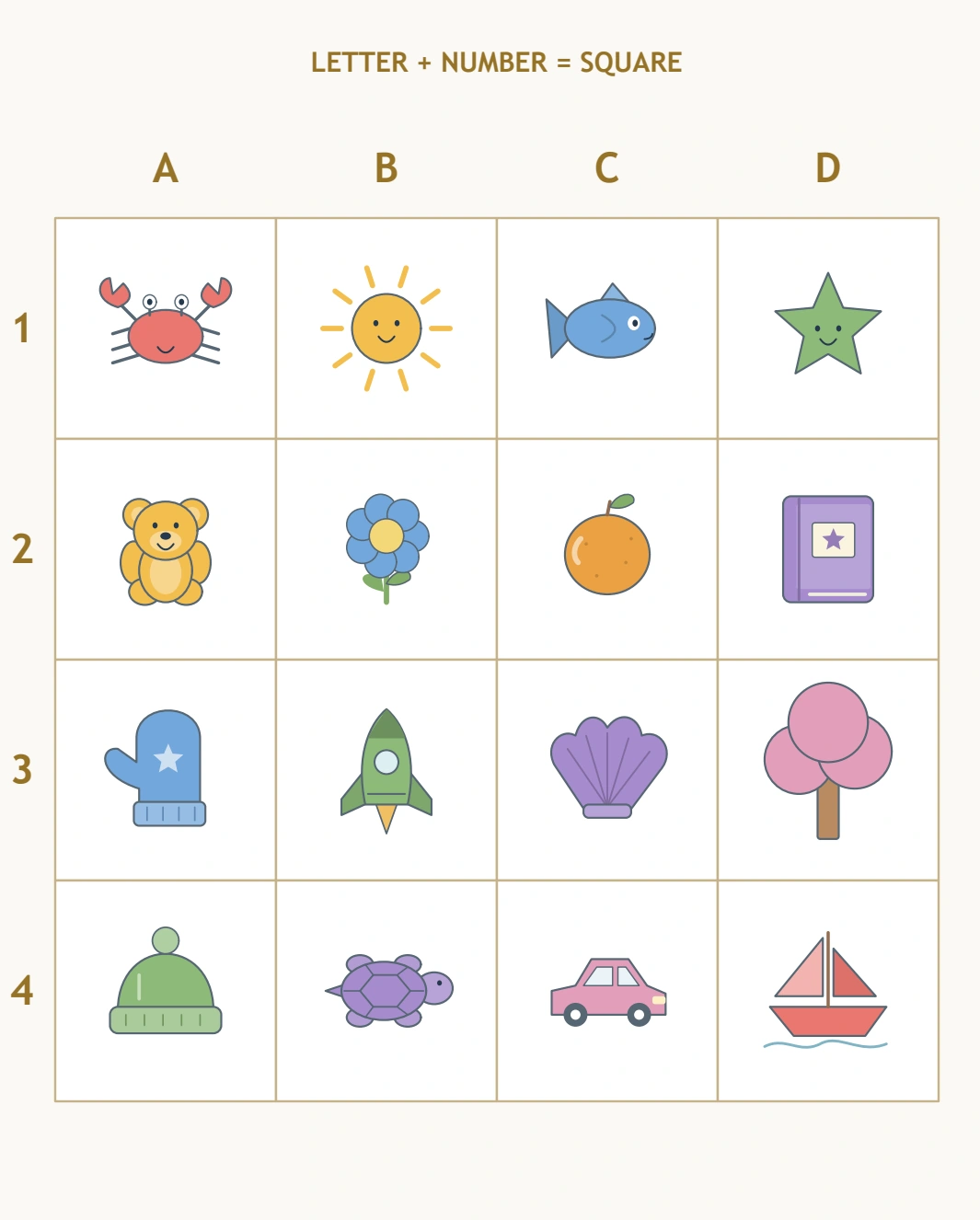
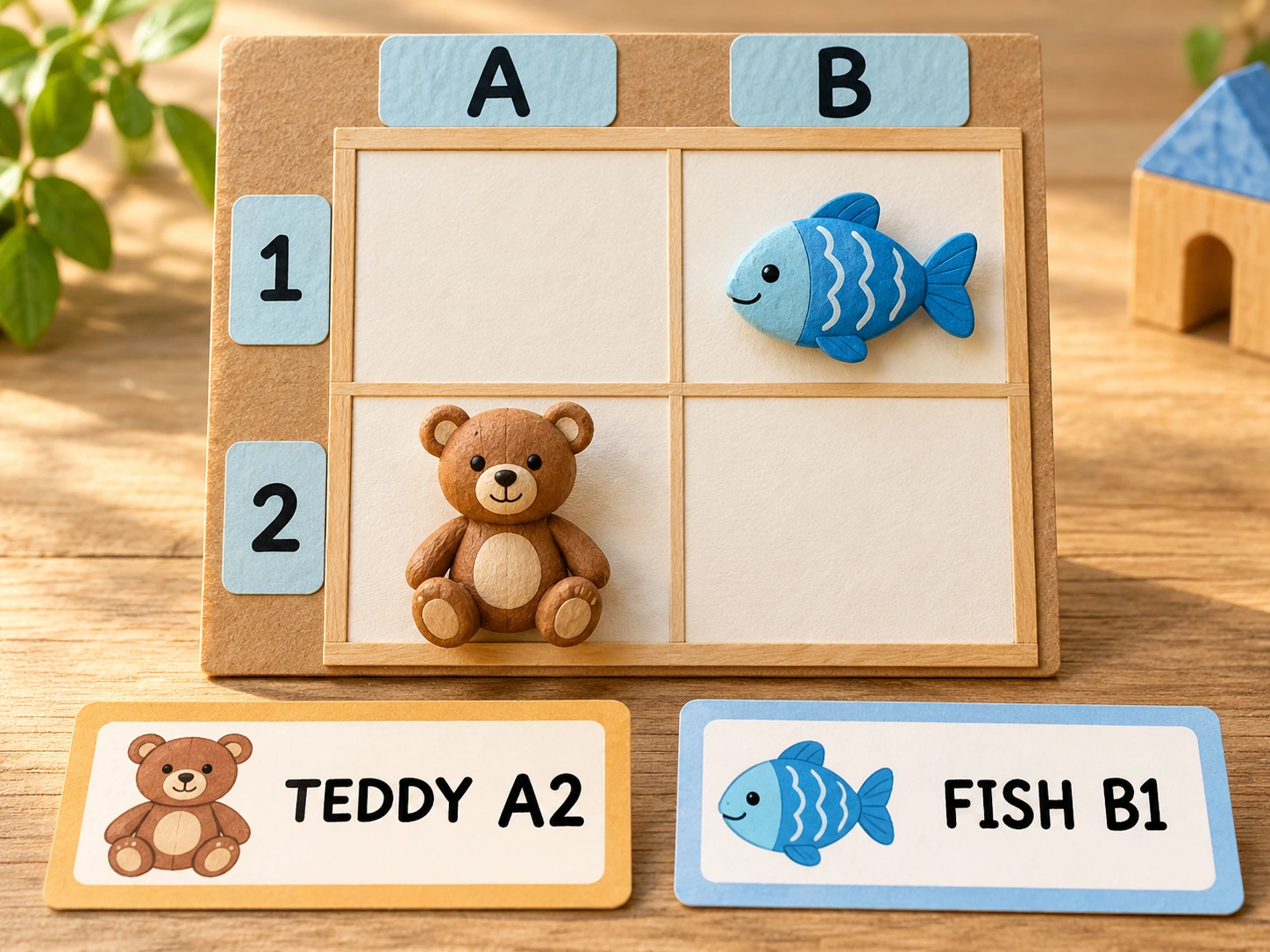
Treasure Map Squares: The grid has four columns labelled A through D and four rows numbered one through four. The numbers begin at the top. A reference identifies the square where one column and one row meet; it is not a direction to walk.
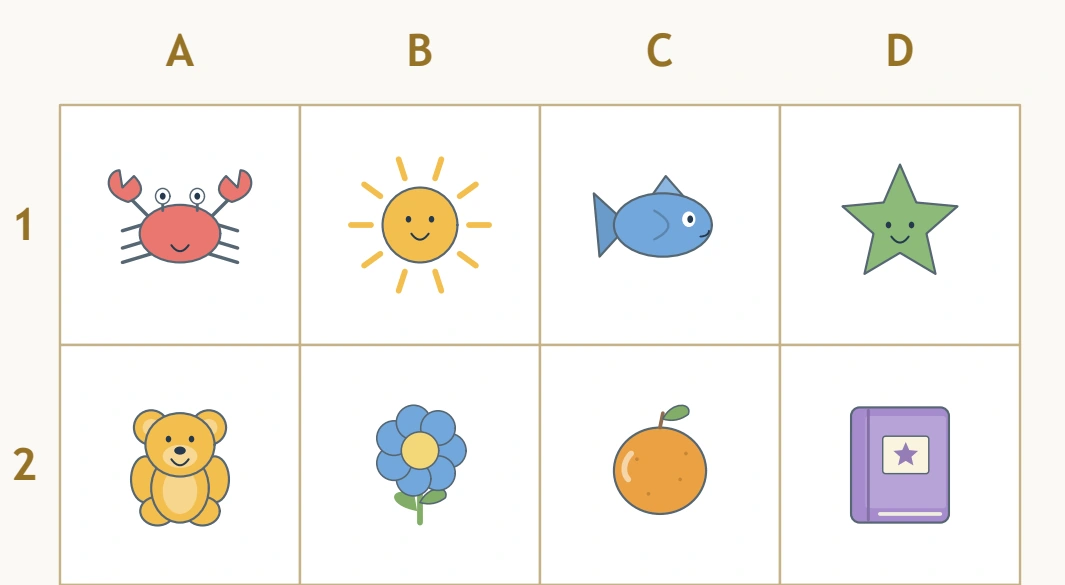
Locate the target picture before copying any labels. The teddy sits in column A and row two, so its reference is A2. Saying the two labels while pointing to their headings keeps the address grounded in the actual map.
Row number deserves a second look
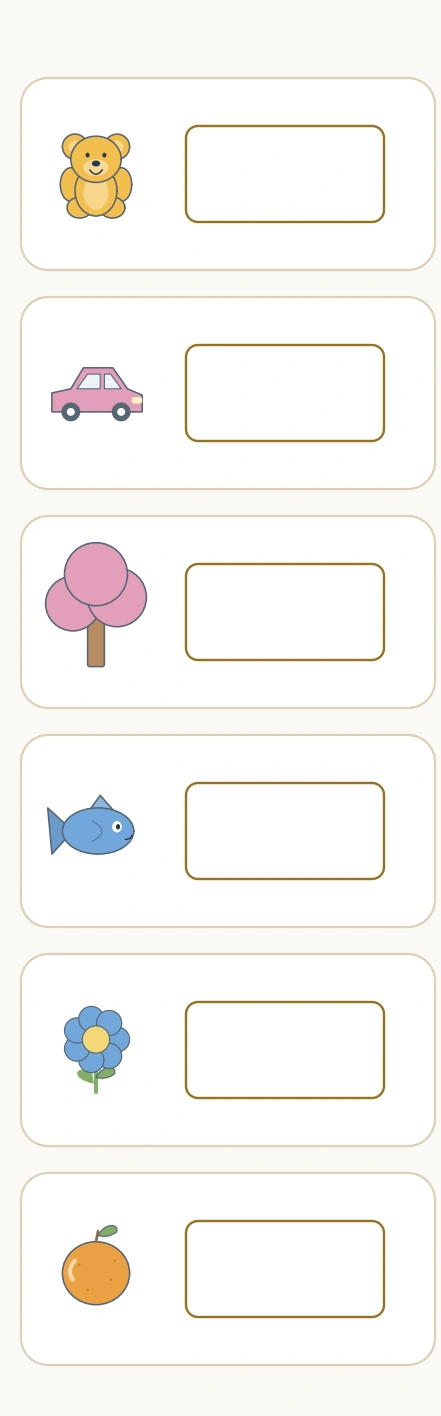
Six response cards show bear, car, tree, fish, flower and orange. Their pictures are prompts, not extra objects to locate on the grid. Match each prompt with its map counterpart, then record a letter followed by a number.
A letter alone names a column with four possible squares. A number alone names a row with four possible squares. Both components are needed for the address to select one location and allow another reader to find it.
Eight closer readings of target match
One square needs two labels
Give only A as a pretend teddy address and inspect the four squares in that column. Add two to identify a single location. This demonstration makes the number’s contribution visible: it narrows a column into one square rather than acting as decorative extra information after a letter. This Treasure Map Squares distinction supports grid location.
Read the printed row convention
The side labels start with one at the top. Use those numbers instead of bringing a bottom-up rule from another map or game. Point from a target to its printed row label, allowing the page itself to establish the reference convention for this activity.
Match before recording an address
The response-card bear identifies the same kind of picture as the map’s teddy. Agree on the target first, then find its row and column. A vocabulary discussion can precede the location task without supplying either label, preventing a naming uncertainty from masquerading as a coordinate error. This Treasure Map Squares distinction supports spatial language.
Trace upward without changing columns
Keep a finger on the target square while another follows the column to its capital heading. This visible relationship is useful when nearby columns contain attractive pictures. The heading names the whole vertical strip, so the child need not count unrelated objects to infer its letter.
Keep the row at one height
After identifying the column, trace horizontally to the side number without drifting into a neighbouring row. A broad gesture or straight paper edge can support alignment. The aid should retain the chosen target’s height rather than point directly at the completed two-symbol answer. This Treasure Map Squares distinction supports visual correspondence.
Letter first is an agreed record
The activity models references as letter followed by number. A child who says the correct two components but writes them backwards understands part of the location task. Rehearse the agreed order with separate tiles, then compare that spoken address with the entry in the response box.
An address can travel to a partner
Hide only the original target request, leaving the map available, and let a partner use a finished reference. If it identifies the intended picture, the address has communicated successfully. If it leads elsewhere, compare its column and row components separately before changing both. This Treasure Map Squares distinction supports grid location.
Locations are not travel instructions
A square reference tells where a picture is, not how to move from another picture to reach it. Inventing journeys is a possible extension, but announce that changed question. Keep the original answer boxes focused on one independently identifiable location for each of the six target pictures.
Imagine Vera investigating at home
Vera’s grandmother asks for the teddy’s address. Vera first says A, and her grandmother points to several pictures in that column. Vera adds two, then watches the adult find the intended square from the complete reference.
Try “Which map picture matches this target?” during this imagined Treasure Map Squares visit. Let Vera explain target match before recording.
Another visit through partner communication
Let the child choose an unlisted map picture and give an adult its address. Watching the adult locate it provides an immediate reason to include both reference components.
Revisit Treasure Map Squares through address order. Recognise explanations about address order from Vera.
Partners explore two-part reference use
Partners play map reader and ticket writer. The reader locates a target and names its column and row; the writer checks that both labels point to the same square. They exchange jobs after one address, avoiding a single child doing all the recording.
A Treasure Map Squares classroom note can describe describing above, across and the same row with a visible map. Record the actual column label prompt, too.
Readiness for column label
Adults can read target names aloud and offer movable A-D and 1-4 tiles. Combining two selected tiles can show a correct address before the child forms both symbols in a small box.
Suggested Treasure Map Squares range: ages five to seven. Vera’s readiness depends on grid location and interest in column label. Shorten this Treasure Map Squares visit when needed.
Revisit the row number difficulty
Swapping the reference order or counting from the bottom changes the address convention. Return to the printed top letters and side numbers. A child who locates the correct object but writes 2A needs help recording the agreed order rather than finding the teddy again.
Return to Treasure Map Squares evidence by asking “Which numbered row contains this picture?” Separate pencil execution from Vera’s target match reasoning.
Six observations from target match
Grid location — target match
Treasure Map Squares invites finding an object within a labelled arrangement of squares. Notice Vera’s grid location explanation: “Which map picture matches this target?”
Two-part reference use — column label
Treasure Map Squares invites combining column and row information to select one position. Notice Vera’s two-part reference use explanation: “Which letter stands above this column?”
Spatial language — row number
Treasure Map Squares invites describing above, across and the same row with a visible map. Notice Vera’s spatial language explanation: “Which numbered row contains this picture?”
Symbol recording — address order
Treasure Map Squares invites writing a capital and numeral together as a compact address. Notice Vera’s symbol recording explanation: “Could a partner find the square from this reference?”
Visual correspondence — target match
Treasure Map Squares invites matching a prompt picture to the same object in the grid. Notice Vera’s visual correspondence explanation: “Which map picture matches this target?”
Partner communication — column label
Treasure Map Squares invites giving information precise enough for someone else to locate a square. Notice Vera’s partner communication explanation: “Which letter stands above this column?”
Five play invitations after column label
Teddy post with Treasure Map Squares
Build a small labelled grid and deliver a toy teddy to a spoken letter-number address.
Half an address with Treasure Map Squares
Give a partner only a column letter and ask how many squares are still possible. Add the row to settle the location.
Map ticket exchange with Treasure Map Squares
Write a complete reference on a card and let another player point to its square before naming the object.
Wrong-row visitor with Treasure Map Squares
An adult chooses the correct column but a different row. Ask the child which part of the address needs attention.
Design four squares with Treasure Map Squares
Create a separate two-by-two map with labelled columns and rows, place familiar objects and exchange precise addresses.
Four checkpoints for Treasure Map Squares
| Pause here | Inspect this clue |
|---|---|
| Target match | Identify the same object in the map and response card. |
| Column label | Trace upward from the chosen square to its letter. |
| Row number | Trace sideways to the number at the chosen square’s height. |
| Address order | Record the letter before its row number. |
Target match — Vera’s inspection
For Treasure Map Squares, ask “Which map picture matches this target?” Identify the same object in the map and response card.
Column label — Vera’s inspection
For Treasure Map Squares, ask “Which letter stands above this column?” Trace upward from the chosen square to its letter.
Row number — Vera’s inspection
For Treasure Map Squares, ask “Which numbered row contains this picture?” Trace sideways to the number at the chosen square’s height.
Address order — Vera’s inspection
For Treasure Map Squares, ask “Could a partner find the square from this reference?” Record the letter before its row number.
Distinctions behind row number
Target match — the Vera discussion
The map’s row numbers are already printed, so use them rather than importing another coordinate convention. In this activity row one is at the top. Reading the actual labels is more reliable than applying a remembered rule from a different game.
Column label — the Vera discussion
Following an imaginary route between two pictures would be an enjoyable extension, but it answers another question. The worksheet’s response boxes ask where each target is located, not how to get there. Announce the changed purpose before inventing journeys.
Row number — the Vera discussion
A complete address can be tested by another person. That makes partner work a natural check rather than an adult judgement announced from above. If the reader reaches a different square, compare the letter and number separately to identify the mismatch.
Save and print Treasure Map Squares
The Treasure Map Squares page offers the original upload separately from its clean premium PDF. Eligible active members can select that premium printable without website watermark, domain name or embedded advertisements. After downloading, inspect the map headings and all six address tickets in the portrait print preview so the reference clues are not clipped.
Other choices beyond grid location
For Treasure Map Squares, the saved catalog suggests road-following after treasure map squares; aiming-and-stopping after treasure map squares; picture-recipe drawing after treasure map squares. Read each linked activity’s rule with Vera; its target match response may differ.
For Vera, browse NAEYC writing ideas alongside treasure map squares or PBS Parents activities beyond treasure map squares. Watch grid location with spatial language, then revisit target match.
Popular Worksheets
Printable resources families and teachers are downloading now.
 Free
 Free
 Free
 Free