
Happy Handwriting: Letter H in 4 Powerful Play Plans
⌂ High starts, lower arches, familiar words
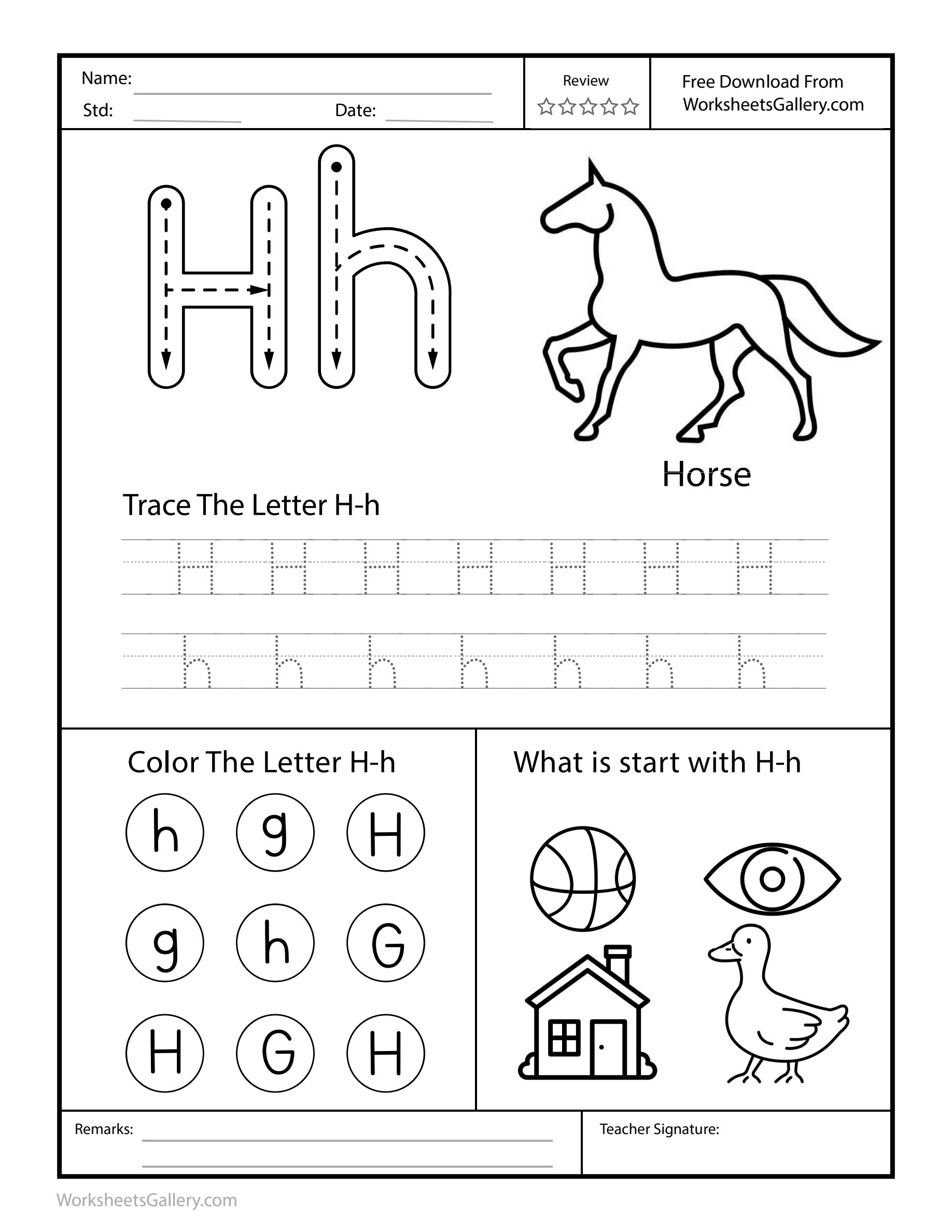
A little h can still stand tall. Its first stroke rises well above the rounded arch, a detail that is easy to miss when a child hears “lowercase” and thinks “short.” This Letter H worksheet makes that relationship visible beside a capital H, a horse, and a house picture choice. Seven dotted models of each case invite supported practice, while five matching letters reward careful looking. Start with a small observation about height, then choose a pencil task, a pointing task, or a playful house conversation that fits the learner today.
Give the tall Letter H stroke its full share of space
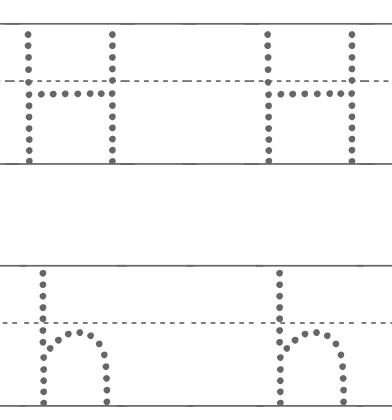
The complete sheet has seven models in each row. This close view shows only the opening pair, not the entire practice area.
The lowercase Letter H has a long upright stem and a rounded shoulder leading down on the right. Point to the tall part, then to the top of the shoulder. Ask which reaches higher. That simple comparison gives the child a feature to watch before trying the route with a pencil.
Capital H has two upright strokes linked by a middle bar. Lowercase h replaces that arrangement with a stem and arch. Both belong to Letter H, even though the upper parts differ. Use the ruled practice examples for position comparisons; the larger introduction drawings are movement references rather than a scale chart.
Follow the printed arrows and the handwriting approach used by your setting. For lowercase Letter H, notice the tall start as well as the curved return. If a learner draws only a short Letter H arch, demonstrate the whole model again before requesting another attempt.
Seven useful things to notice during Letter H practice
Letter H practice can give you several kinds of information. These are opportunities to observe a small action, not targets that every child must demonstrate in a single sitting.
- Attention to relative height. In Letter H work, the child compares a tall stem with a lower shoulder. Position words become useful because they describe something visible on the page.
- Recognition of a shared identity. Capital H and lowercase h are both accepted as Letter H. The model gives the learner a reference when a familiar form looks different.
- A planned change in direction. Following the dotted Letter H route links looking ahead with pencil movement. The child can practice a straight stroke and an arch without inventing the entire form independently.
- A steady supporting hand. Keeping the worksheet in place gives the writing hand a more stable surface. Watch the setup as well as the line itself.
- Selective visual search. Finding Letter H while leaving G and g untouched requires a clear rule. The learner has to compare features instead of coloring every recognizable symbol.
- A sound linked to a named object. Horse and house provide familiar /h/ examples for Letter H. Accurate naming gives the spoken beginning a clear referent.
- An explanation that another person can follow. Pointing to the arch or describing a tall stroke makes the child's reasoning available to the adult, even before a long verbal explanation is comfortable.
The cognitive side of Letter H work includes comparing, remembering a target, and following a short instruction. Motor demands involve steering and stabilizing. Language enters through picture names, position words, and little explanations. A child can be ready for one of those demands while still needing support with another.
A classroom pointing sequence introduces Letter H
A teacher opens the Letter H session with three directions: “Show me the horse. Now the house. Now a little h.” Children point on their own sheets. The teacher can see whether each learner understands the picture names, finds the lower panel, and recognizes a lowercase form without first asking for handwriting.
Next, the teacher demonstrates one Letter H route while sitting in the same viewing direction as the group. Children may finger-trace, try a few dotted examples, or continue pointing with adult guidance. The shared pointing sequence has supplied a clear entry into the task while keeping individual responses visible.
For supported preschool and kindergarten learners, roughly ages three to six is a useful starting range. Select the amount of writing from the child's current control and attention. Age does not require a complete row, and a pointing response can be enough to begin a thoughtful lesson.
Find five Letter H matches among the G/g distractions
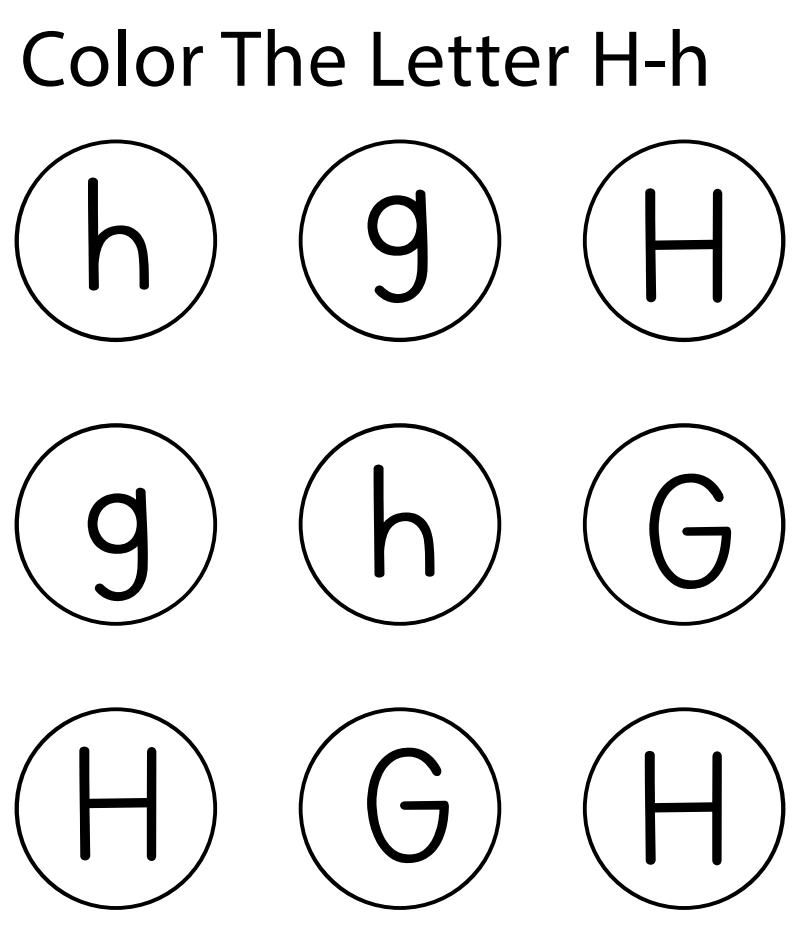
The Letter H choices are left and right in the first row, middle in the second row, then left and right in the third row. That gives three Hs and two hs. Ask the learner to point before coloring if the rule is still new, and check one row at a time.
Unlike the lower part of g, the printed h has an upright stem and open arch without a descending loop. Use the large Letter H model as the reference when comparing the lowercase choices. For a capital comparison, inspect H's two posts and bar beside G's curve. Keep the explanation tied to the actual entries on this sheet.
If only the capitals are chosen, show the child one lowercase Letter H and let them find the other. If G/g receives color, pause for a feature comparison before continuing. The count of five is useful for adult checking; it should not turn the activity into a guessing exercise about how many circles need filling.
Horse and house give Letter H a clear listening pair
The upper Letter H picture is a horse. In the lower panel, the options are ball, eye, house, and duck. House, at the lower left, is the intended /h/ match. Name all four pictures before asking the child to identify the one that begins like horse.
Say horse and house naturally, letting the gentle /h/ lead into each word. Avoid adding a separate, heavy “huh” syllable. A learner may respond by pointing to house, circling it, or coloring lightly. The goal is the connection between a named object and its spoken beginning, not a particular coloring style.
A child who chooses a favorite picture may need the listening instruction modeled once. Say the names together and return to the Letter H reference. Keep the picture response separate from pencil feedback: recognizing the sound does not require an already polished lowercase form.
A short Letter H route with a useful stopping point
| Moment | What to try | When to pause |
|---|---|---|
| Settle | Place the page upright with a familiar pencil and one crayon. | When the learner can see and steady it. |
| Model | Name the Letter H case and finger-trace one large route. | After the child notices one feature. |
| Attempt | Trace a small selection, then point to a search match. | After an understandable try or explanation. |
| Reconnect | Name horse and house, or revisit a favorite letter detail. | While the child still feels involved. |
The Letter H sheet contains seven capital and seven lowercase dotted examples. All fourteen are guided models, and there is no separate blank writing strip. Save unused spaces for another visit. An adult can write the name field if that would otherwise take the learner's attention away from the main comparison.
Try one case first if moving between forms is demanding. Later, compare it with its partner and continue to the recognition task. This Letter H route can be spread across several short encounters rather than treated as a race from the header to the final picture.
At home, let the learner lead a house tour
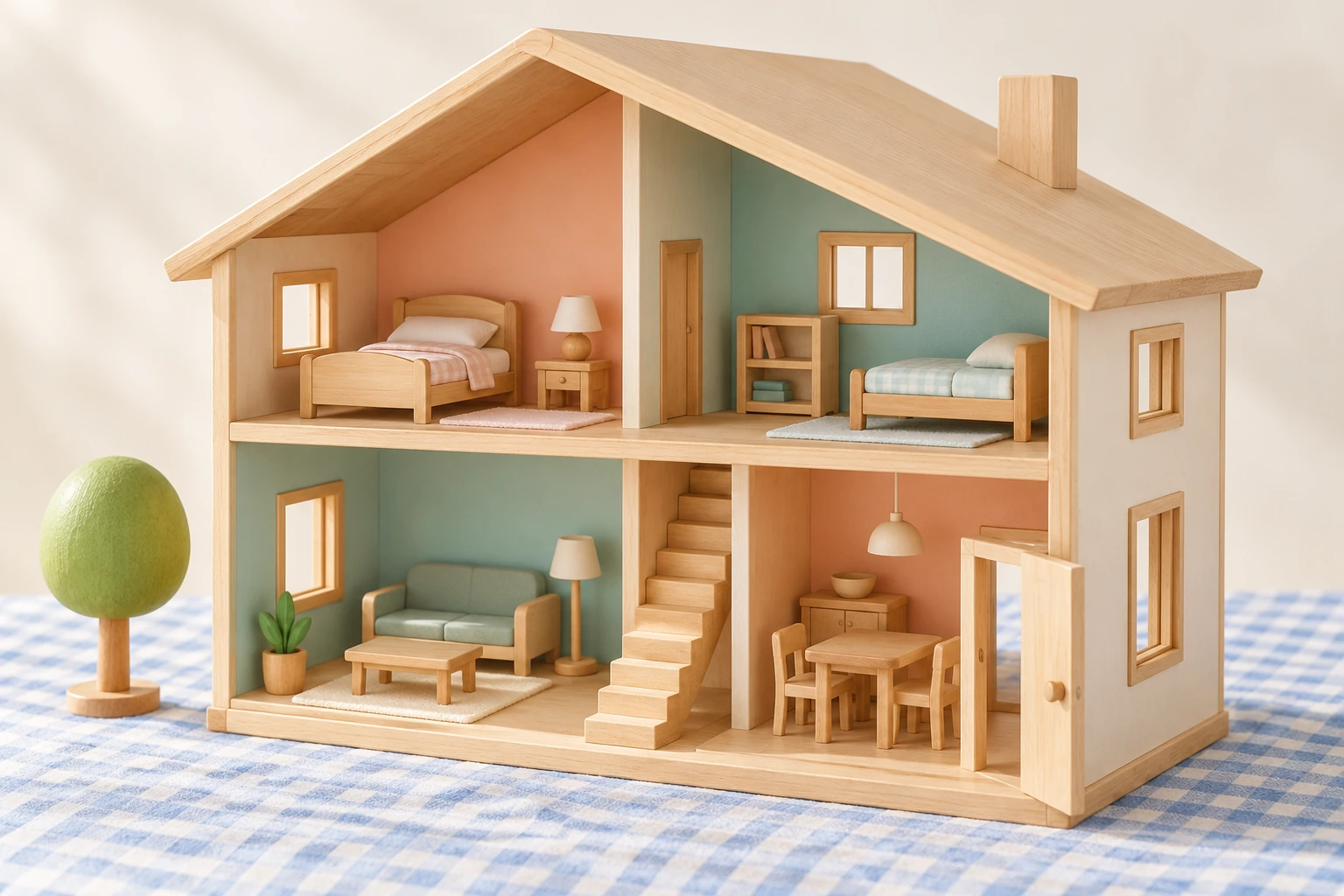
During a pretend tour, the child chooses a room in the image and announces, “This is my bedroom.” The adult follows their pointing, asks where a visitor should go next, and uses the word house in a natural reply. The Letter H connection belongs inside a conversation that the child is helping to direct.
After the tour, return to the printed house picture and say horse and house together. Invite one Letter H point or one guided trace before putting the page away. The learner has had a reason to name, describe, listen, and make a mark without being asked to repeat the same question until enthusiasm disappears.
Four play plans for a different Letter H visit
⌂ The doorway riddle
Offer the clue, “I have a roof and a door.” Let the learner point to house on the worksheet, then show either Letter H case. Give the child a turn to invent another clue about a familiar picture, even if that new answer begins differently.
✎ The high-and-low sketch
On scrap paper, an adult models h with a tall stem and lower arch. Invite the child to add a small dot beside the highest part, then point to the lower shoulder. Keep this an observation game before another Letter H tracing attempt.
👋 Head, hand, house
Name head and hand, then return to house. Listen to the /h/ beginning in all three. The child can choose a gentle gesture for each word. Those body-part examples extend the spoken Letter H conversation; they are not extra pictures hidden in the printable.
📖 A two-case title search
Inspect large book print for H and h. Compare any examples with the worksheet models, discussing differences in typeface while preserving their Letter H identity. Stop after a useful find rather than turning a favorite book into a long search assignment.
For a later contrast with the distractors, explore a separate G/g tracing page. When basic pencil routes need more space, use simple line practice. The complete alphabet tracing collection can support a gradual sequence.
Make the next invitation easier to accept
Choose one Letter H feature for feedback. “Your first stroke reached high” or “You checked the shoulder” tells the child what worked. If the arch becomes a closed round shape, follow the open route on the large h again. If the stem is shortened, compare the two heights before trying another Letter H model.
A tight grip or sliding page calls for a setup adjustment and perhaps a pause. Regular practice can mean a few thoughtful moments. Return during an established drawing time, offer a choice between pointing and tracing, and note whether the learner needs less help with a familiar action.
Children often enjoy having a recognizable word to talk about and a small decision to make. Let them choose the first case or the next picture description. Keep Letter H participation visible through their response, rather than measuring the lesson by the number of completed rows.
Choose a Letter H PDF and protect the whole print area
This Letter H resource uses a single portrait US Letter page. The featured JPG includes its entire original layout. A free source sample carries the original branding; active members can obtain a clean premium PDF without the website watermark, source promotion, or ads inside the printable. The exercises remain intact.
- Take the branded sample using the free button. If your plan is active, log into the member account and request the clean premium variant.
- Save the file and open a portrait US Letter print preview.
- Check the outer border at actual size. If an edge would be clipped, fit the page inside the printer's usable area and inspect the result.
- Keep all tracing rows and lower activities in view. Print one copy, prepare the tools, and choose a Letter H starting point that feels manageable.
Popular Worksheets
Printable resources families and teachers are downloading now.
 Free
Free
 Free
Free
 Free
Free
 Free
Free