
Letter I: 5 Brilliant Dot Games for a Happy Start
● A mark above the line matters
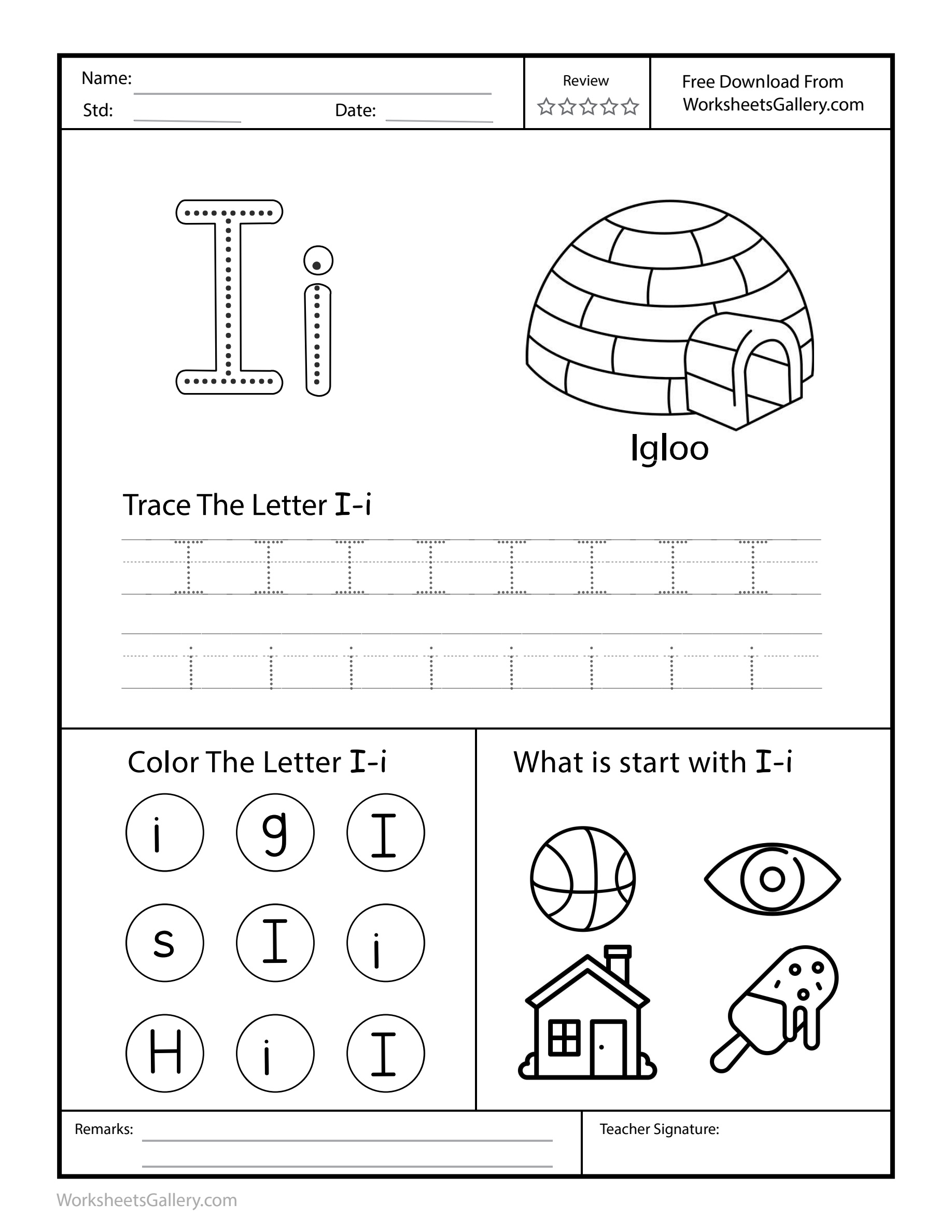
One small dot deserves a second look. On this Letter I sheet, the lowercase form asks a child to make a short upright mark and remember something separate above it. The capital uses a taller stem with bars, while an igloo supplies a picture name to discuss. Six search matches and sixteen dotted examples give you several starting places. There is also a useful sound question hiding among the lower pictures: ice and igloo begin with the same written letter, but their first vowel sounds are different. That distinction deserves a friendly explanation.
Let Letter I introduce two separate pencil actions
The small Letter I form is more than a shortened capital. Its stem sits in the lower writing space, and its dot stands apart. A learner may steer the stem accurately yet omit the dot because moving back to a separate location is a different part of the task. Demonstrate both actions without turning the omission into a failure.
For Letter I, point to the ruled examples before comparing height. The large introduction models offer a clear shape reference, but they are not a measurement diagram. In the small practice rows, the capital reaches higher; the lowercase stem is short and its dot occupies space above it.
See the gap above the lowercase Letter I stem
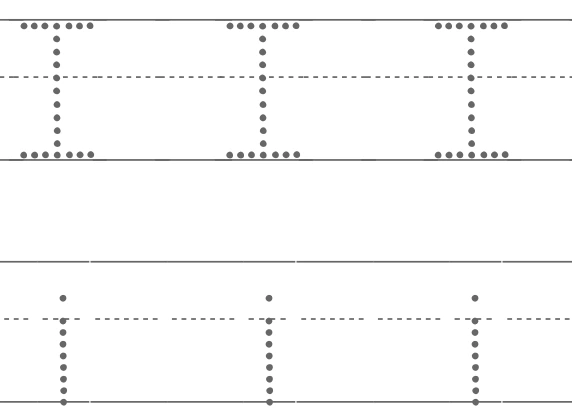
Trace one Letter I model together, then pause before beginning another. Ask, “Is this little i finished?” A pointing answer is enough. If the dot is missing, return to the printed example and let the child identify the absent part. That comparison is more useful than adding the dot yourself without explanation.
The capital Letter I shown here has top and bottom bars. Some books use a simpler upright capital. Introduce the page's model clearly and acknowledge that printed fonts can vary when a child notices another version. Keep the current task small: follow this example, including its visible bars.
Igloo and ice share Letter I, not one vowel sound
Say igloo naturally. Its first vowel is the short i sound heard in insect. The frozen treat at the lower right can be called an ice pop, ice lolly or ice cream on a stick. With an ice-based name, its beginning uses long i, which sounds like the letter name. Both spellings start with Letter I; they do not demonstrate the same initial vowel.
The other pictures are a ball, an eye and a house. Eye sounds like the name of Letter I but begins with written e. For a written-letter choice, name the frozen treat with an ice word and identify its initial I. For a Letter I listening-only question, a child who points to eye has heard a reasonable connection. Explain the different spellings instead of insisting that the hearing was wrong.
Before using Letter I as a single-sound lesson, make that choice explicit. You can teach short i using igloo and leave the lower pictures for a separate spelling conversation. The sheet supports careful discussion when an adult names the objects and explains the aim.
| Word | What to notice |
|---|---|
| Igloo | Written I at the start; short vowel. |
| Ice pop | Written I at the start; long vowel. |
| Eye | Sounds like the letter name; spelling starts with E. |
Five small gains you can observe, one at a time
- Remembering an unfinished action. Letter I offers a visible reason to pause and check. The child recalls that a short stroke still needs its separate dot.
- Comparing related forms. Finding I and i as partners broadens recognition beyond a single familiar outline. The bars, height and dot provide concrete evidence to discuss.
- Controlling a brief mark. A small lowercase Letter I stem asks for a deliberate stop. Staying within the model matters more than finishing the strip quickly.
- Searching under a rule. The learner accepts both cases while ignoring g, s and H. Choosing a target requires selective attention instead of coloring every circle.
- Separating sound from spelling. A supported Letter I conversation can acknowledge a sensible answer about eye while explaining the written beginning. It gives language to a real observation.
These gains involve different skills. Remembering the dot draws on working attention; guiding the pencil involves fine movement and vision; naming a picture uses vocabulary. Do not assume that a missed Letter I circle proves weak handwriting, or that a shaky stem means the child has not understood the sound discussion.
Find the six Letter I circles
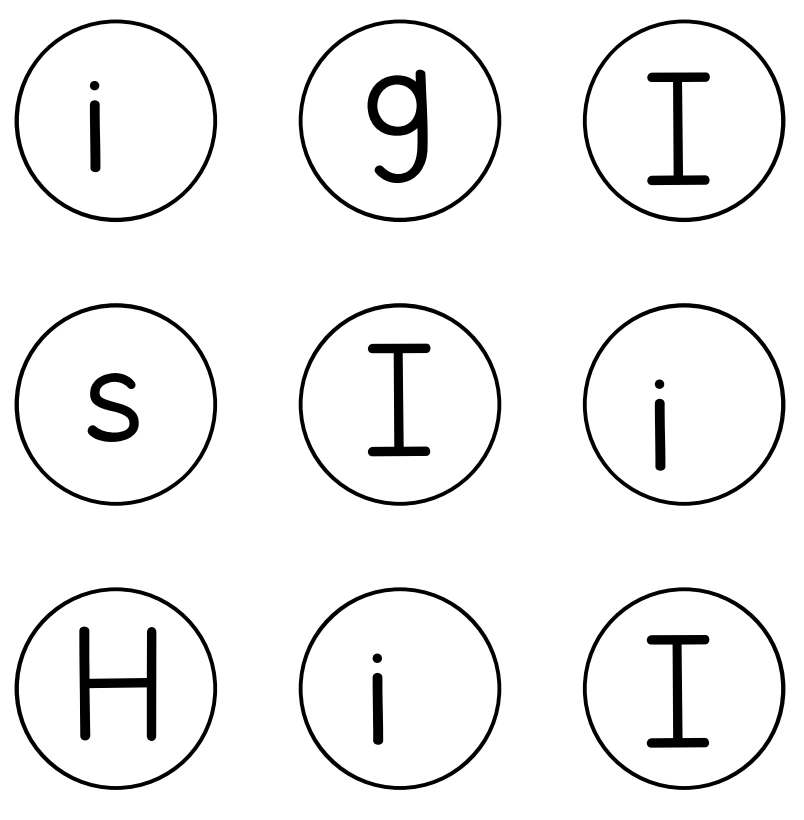
The exact rows read i, g, I; s, I, i; and H, i, I. There are three lowercase and three capital matches. In the first row, accept the outer circles. In the middle row, accept the middle and right. On the bottom row, accept the middle and right again.
Invite the child to touch each Letter I before choosing a color. A finger search keeps coloring control separate from recognition. Afterward, use the model to reconsider any g, s or H that was selected. Ask what feature made that circle seem promising.
The Letter I target is six matches, but counting is a check after the choices, not a reason to mark extra circles. A learner may find the correct Letter I forms without being ready to count them independently.
At the kitchen table, an unfinished i starts a conversation
Mira traces a little i, puts down her pencil and reaches for a crayon. Her uncle asks her to compare it with the next untouched model. She points above the stem, remembers the dot and adds it. They have completed one Letter I example thoughtfully; neither needs to rush through the remaining seven.
At home, begin Letter I by naming the igloo and showing the case you will practice. Demonstrate one Letter I, let the child attempt a chosen model, then ask what is complete. Move to a few circles or stop there. Keep the paper upright and let the other hand steady its edge.
If the child prefers talking, ask about the igloo entrance or the shape of the ice treat. Return to Letter I after the picture words are familiar. The conversation has a purpose: it establishes what you are asking the learner to name, rather than testing an unfamiliar object label.
In a group, make the dot-check a partner exchange
A teacher gives each pair a spoken job: one learner points to a lowercase example, and the other names its two parts. They swap roles before pencils come out. During Letter I tracing, the teacher watches whether children can locate the separate dot without a reminder. Partners can describe; they do not correct or mark one another's sheets.
Demonstrate Letter I from the learners' viewing direction, select a short portion of the row and leave a clear stopping place. Then ask each child to explain one Letter I decision privately or by pointing. The eight examples per case are available across visits. They are not a class-speed challenge.
When an easier movement task is needed first, choose a broad line-making sheet. Later, the separate capital-I tracing resource offers another format. Keep the A-to-Z tracing set for gradual alphabet comparisons rather than presenting all letters at once.
Five dot games after the paper task
The missing-mark message
On scrap paper, an adult draws one complete Letter I in lowercase and one undotted stem. The child chooses which Letter I needs a finishing mark and tells a toy messenger where to put it.
Above, beside, below
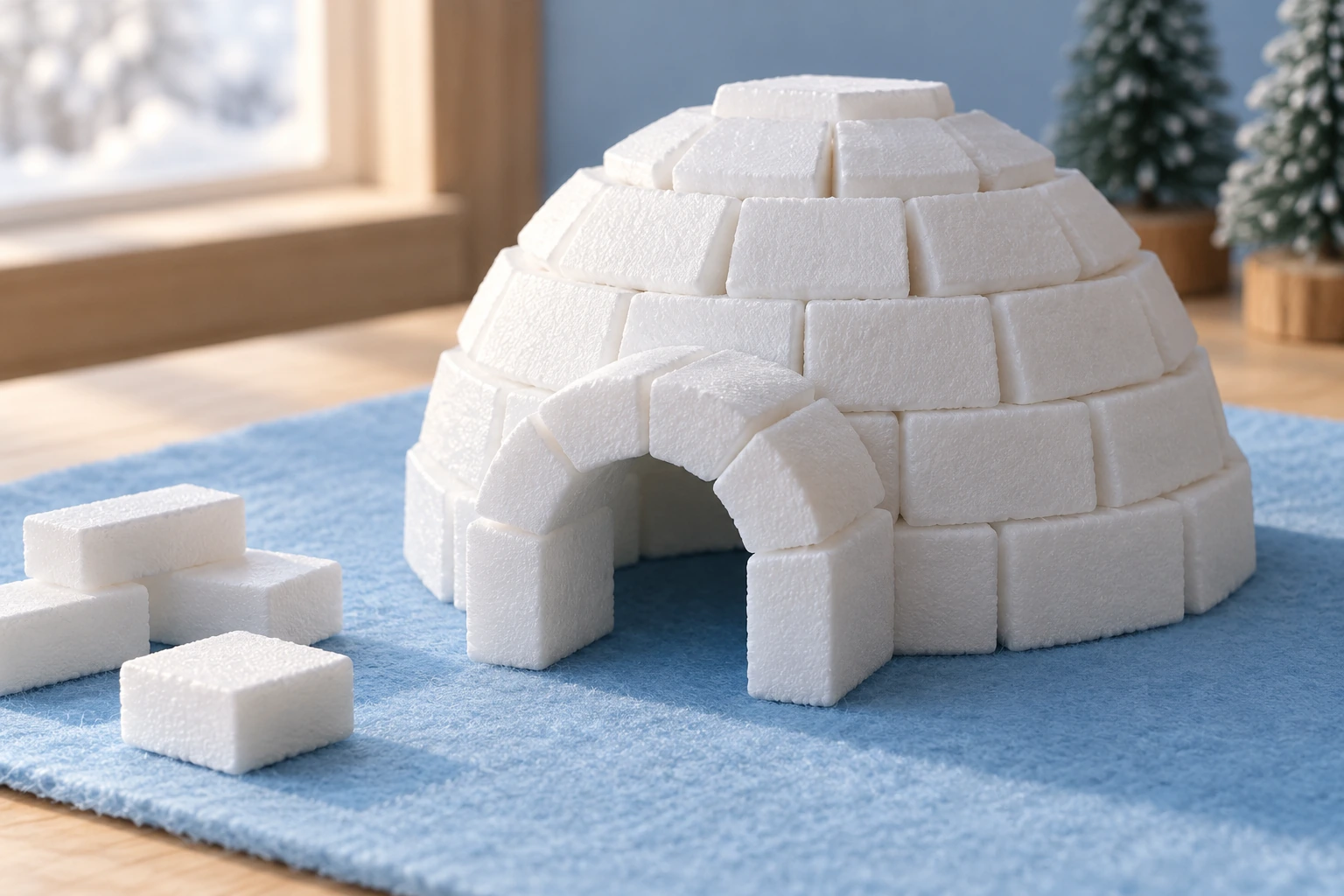
Describe a spare block beside the model igloo, then describe a dot above a drawn stem. Move a large paper dot to different positions and let the learner direct it back.
A one-mark rhythm
Say “stem, pause, dot” while making a large lowercase Letter I with an arm movement and a separate pointing gesture. The pause makes the second action noticeable in Letter I practice.
A typeface detective note
Look at one book cover for a capital I with bars. Compare it with the worksheet and describe a similarity. If no I appears, choose another cover without inventing a match.
The vowel voice switch
An adult says igloo, then ice, with a brief pause. The child decides whether the first sounds match. Explain that Letter I can represent both before returning to short-i words.
Leave a clear reason to return
Common Letter I problems include joining the dot to the stem, extending the short stroke too high and treating eye as an incorrect listening response. Show the gap, compare the ruled examples and explain the task's spelling aim. Address the specific issue without asking for a whole new Letter I page.
For regular practice, save one untouched model as tomorrow's starting place. Let the child choose between a dot check and a circle search. The small surprise of discovering an unfinished mark can be enjoyable; repeated demands to make every example identical soon remove that curiosity. Praise an observable decision: “You went back for the separate dot.”
Choose the Letter I download and print the complete sheet
The original free sample retains its website branding. The premium Letter I PDF has that branding removed and is available through an eligible active membership plan. The clean printable has no watermark or added ads inside the PDF. It keeps the exercises and picture choices shown here.
- Select the sample control, or sign in with an eligible membership and choose the clean premium file.
- Open the downloaded PDF in a reader. Check the page preview before printing; this is one portrait US Letter sheet, 8.5 by 11 inches.
- Use actual size when your printer supports the margins. If an edge disappears, fit the full page to the printable area and inspect the dotted rows.
- Print a single trial sheet, check both lower panels and set a comfortable starting task for Letter I practice.
Popular Worksheets
Printable resources families and teachers are downloading now.
 Free
Free
 Free
Free
 Free
Free
 Free
Free