
Letter L: 5 Brilliant Lamp Games for Happy Learners
↓ then →
One corner.
One straight stop.
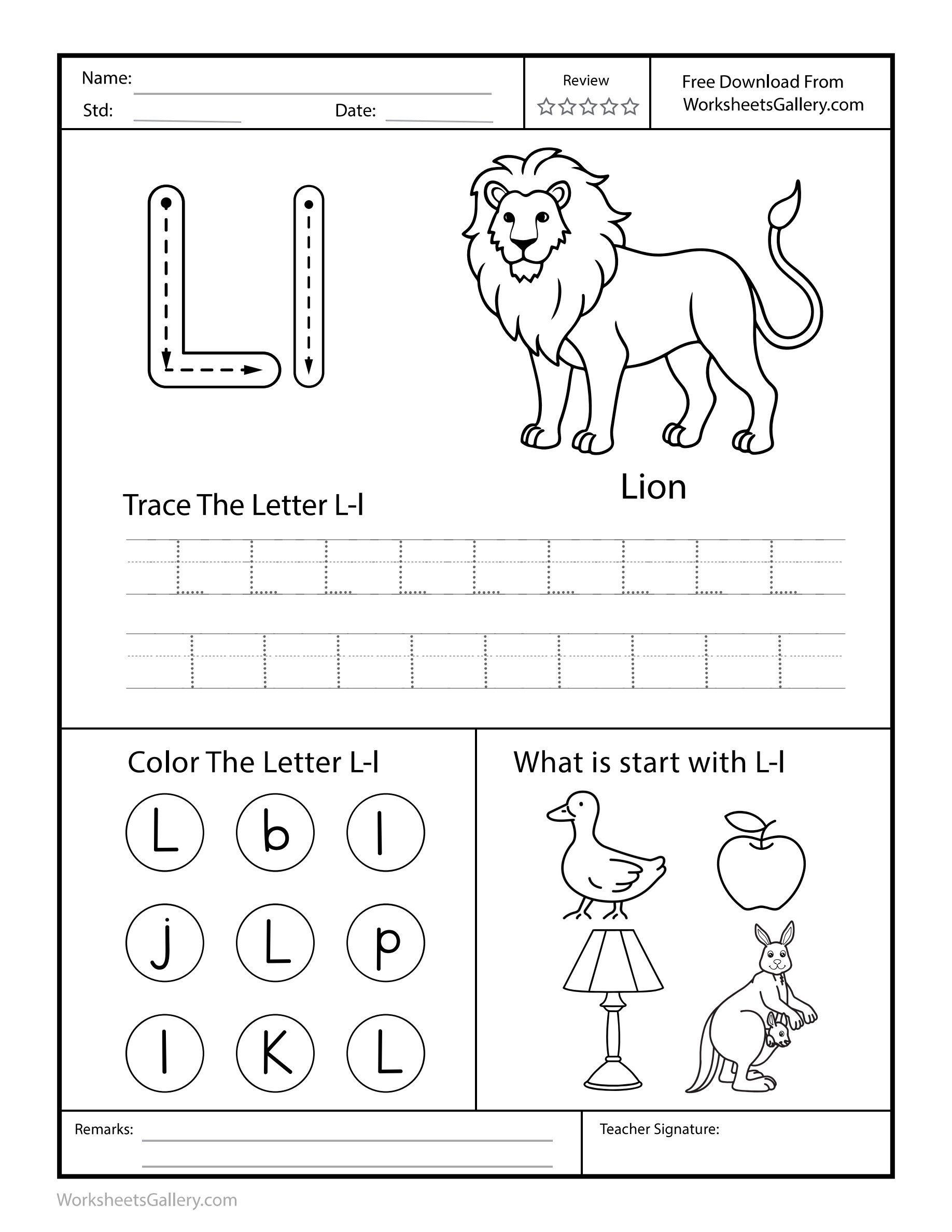
A pencil can reach the bottom and still have a decision to make. With capital L, it turns right; with lowercase l, it stops after a straight downward route. This Letter L worksheet gives that small contrast room to stand out beside a lion, eighteen dotted tracing examples and a five-match letter search. A lamp in the picture panel offers a familiar sound connection, too. Begin with the ending of the stroke, then move into looking, naming or coloring as the learner is ready. A few well-observed attempts can make a useful session.
Two endings give Letter L a clear comparison
Capital L carries on to the right
Show the downward stem, then follow the printed turn along the bottom. The short horizontal foot belongs to this capital Letter L. Pointing to the corner before tracing gives the child a destination to anticipate.
Lowercase l finishes its straight route
The little l shown here is a tall upright without a dot or bottom foot. Its height matters: lowercase does not always mean short. Compare the actual Letter L examples instead of asking the child to shrink every stroke.
The oversized Letter L models introduce the route, and the small ruled rows show how each form sits in its writing space. Follow the arrows with the handwriting approach used in your setting. If a child adds a foot to the little l, revisit the pair and identify which Letter L form needs that extra movement.
Keep all eighteen Letter L guides available
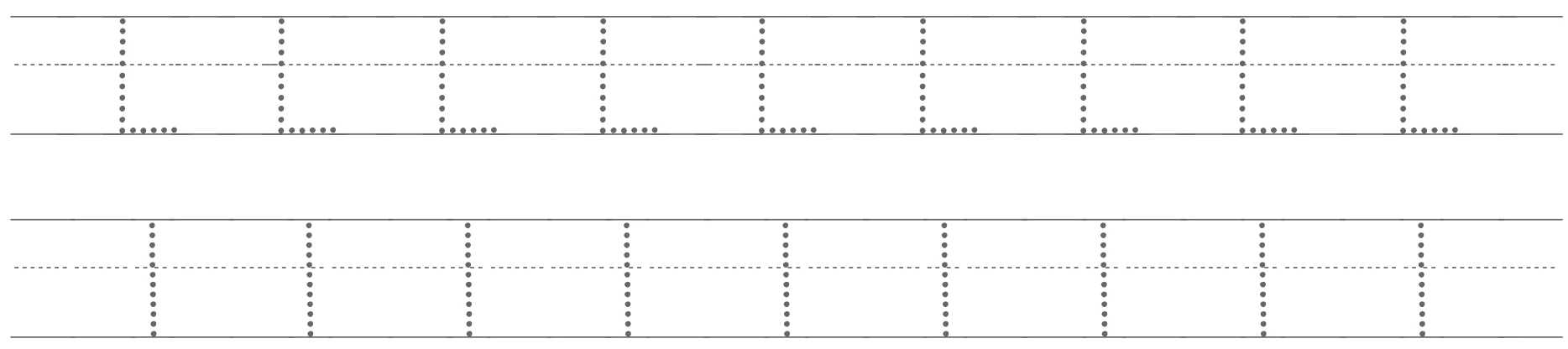
Nine examples of each case make eighteen guided opportunities, not eighteen compulsory repetitions. Choose a short selection, observe the ending and leave other Letter L models untouched. The page does not contain a separate blank writing row. Later independent attempts can go on another piece of paper.
For a first Letter L try, finger-follow the route, demonstrate one example with a pencil and hand the next attempt to the child. Pause after it. Ask, “Did this one turn, or did it stop?” A gesture toward the relevant model can answer that question before a child is comfortable explaining in words.
A slow straight stroke still requires control. The learner has to look ahead, move downward and stop without dragging beyond the guide. Avoid assuming that lowercase Letter L is effortless because it has fewer parts. Give its start and finish the same attention as the capital's corner.
Seven useful responses to watch during Letter L work
- Noticing an absent feature
- The child recognizes that little l does not need the capital's foot. Letter L comparison includes what is missing as well as what is present.
- Anticipating a direction change
- A learner points right before turning the pencil at the capital's corner. The movement begins with looking and planning rather than a last-second correction.
- Stopping with intention
- The lowercase Letter L route ends near the lower rule. A controlled stop is worth noticing even when the traced line is a little uneven.
- Keeping the page steady
- The supporting hand prevents the worksheet from sliding as the writing hand moves. This coordination can make the Letter L route easier to follow.
- Holding one search category
- Both L and l belong in the chosen group. The learner maintains that Letter L rule while looking past b, j, p and K.
- Connecting familiar names
- Saying lion and lamp gives the /l/ beginning a concrete meaning. A named object makes the sound comparison more accessible than an unexplained noise.
- Describing a decision
- “This one has a foot” is a useful Letter L explanation. Accept a short phrase or pointing response and build the vocabulary from there.
These observations span thinking, movement and language. Comparing features is a cognitive task; controlling the pencil is a motor task; naming a lamp and explaining a turn use spoken language. A child may understand the Letter L distinction before their hand can reproduce it neatly.
In class, predict the ending before the pencil gets there
A teacher starts two large vertical routes on spare paper and pauses near the bottom. The group is told that one will become capital L and the other lowercase l. Children predict which Letter L needs a turn. The teacher completes each model and compares it with the worksheet before anyone begins a dotted row.
Next, demonstrate from beside the learners so that rightward means the same direction for everyone. Let each child finger-follow a chosen Letter L example, then try a small pencil selection. Finish with an individual question about a corner or a straight ending, rather than judging the whole group by how quickly a row fills.
For guided preschool and kindergarten use, think roughly ages three to six, adjusting for present attention and control. A child who is not ready for pencil work can point to a model, name the lion or indicate a matching circle. Give that response a clear purpose within the Letter L lesson.
The five Letter L matches follow this exact map
Read the search by rows: L, b, l; then j, L, p; then l, K, L. Select the two outer circles in the first row, the center circle in the second, and the two outer circles in the third. That produces three capitals and two lowercase matches.
Ask for a pointing pass before coloring. If the child selects K, compare its diagonals with the foot of capital Letter L. If b attracts attention, examine its rounded part. Give a feature to compare instead of simply announcing that a circle is wrong.
The straight lowercase l may resemble symbols a child has seen elsewhere. Name it within this Letter L activity and point back to the model. Recognition depends on the printed form and context, so a question about its identity is a useful opening for explanation.
Counting five choices can confirm the search afterward. It should not drive the learner to color extra circles merely to reach a number. Watch the Letter L decisions first; counting and keeping color inside a circle are additional demands that can be supported separately.
Lion and lamp make a natural Letter L pair
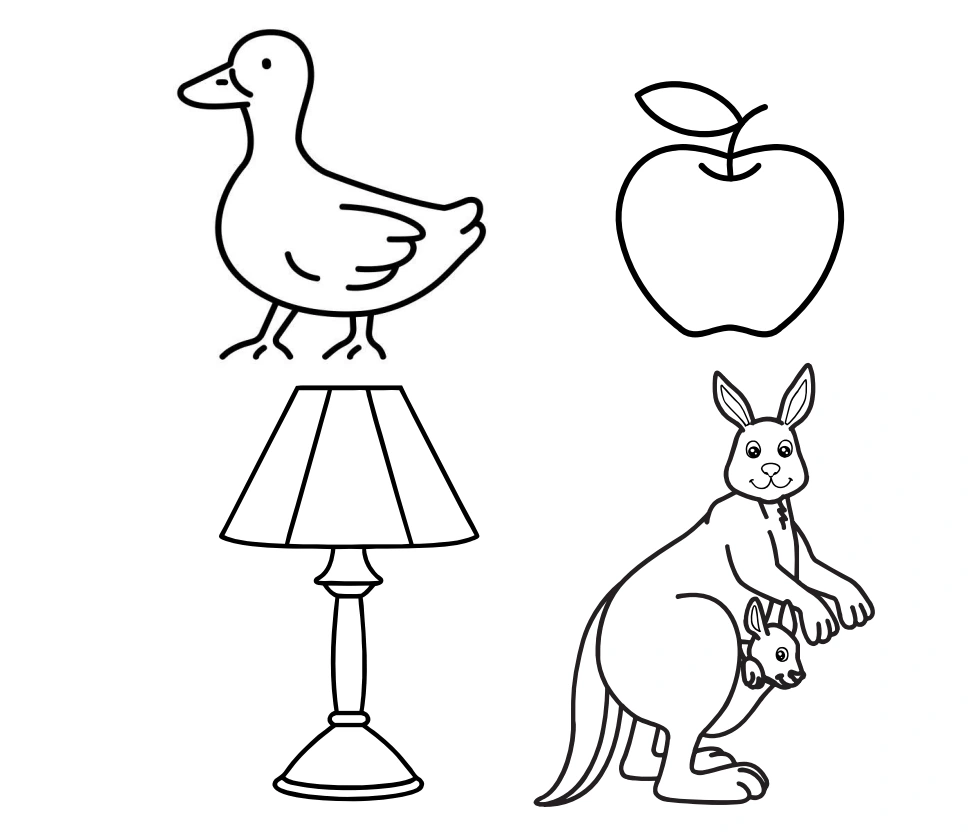
The introduction word is lion. In the lower panel, lamp supplies the matching /l/ beginning. Say both names naturally and listen to the first sound, rather than comparing the loudness or length of the whole words.
The other pictured objects are duck, apple and kangaroo. Those usual names do not begin with /l/. If a child notices the apple's leaf, acknowledge the accurate word leaf. Then clarify that this Letter L question is naming the main object, the apple, rather than every detail inside the picture.
A child may describe a lamp as a light. Light also starts with L, so accept that meaningful connection and introduce lamp as the object's name. The purpose of Letter L vocabulary work is to make a shared word clear, not to penalize a sensible description.
Try a brief contrast: lion, lamp, duck. Ask which two start alike and give the learner time to respond. A prolonged adult explanation is unnecessary once the Letter L connection is understood.
At home, a reading-lamp label brings the cases together
Amir asks his mother to label the lamp beside their reading chair. She writes Lamp on one card and lamp on another, reading both aloud. He recognizes the large L but wonders whether the little l should have a foot too. They compare the Letter L models, then he traces one straight lowercase example.
For a home session, choose a case, name its ending and try a few guides. Follow with the lamp picture or a handful of search choices. Keep the Letter L sheet on a firm surface, position it comfortably and let the child's other hand hold an edge. An adult can fill the name field if that would otherwise use all the learner's energy.
When the basic route needs more space, begin with larger prewriting lines. For a later lesson, the separate capital-L tracing page offers another format. Use the alphabet-wide tracing collection to introduce comparisons gradually.
Five lamp games give Letter L another setting

- Reading-spot reporter. Ask the child to report what is near the lamp in the artwork. One might mention the chair, rug or book. Write a large L beside the report and reconnect the spoken lamp name with Letter L.
- A delivery with directions. Sketch a room and a separate paper lamp. Let the learner tell you where the lamp should go, then describe the final position. Point out the initial Letter L on an adult-written delivery label.
- Two labels, one object. Show Lamp and lamp cards, read them and let the child place both beside the pictured lamp. Compare their starting forms. The Letter L case changes while the object name stays the same.
- Shade designer. Draw a large lampshade outline on spare paper. Invite a pattern using capital L, lowercase l or a mixture. Let the child explain where a foot belongs, using the worksheet's Letter L models as references.
- A lion chooses a reading place. Pretend a toy lion needs somewhere to sit with a book. The child chooses a spot in the illustrated room and explains the choice. Say lion and lamp again before returning to one Letter L example.
These games are invitations for separate visits, not a checklist to complete after tracing. Choose conversation, pattern-making or pretend play according to the learner's interest. The calm room and familiar lamp can make Letter L feel connected to an everyday place.
A specific adjustment makes the next try clearer
| What you notice | A useful response |
|---|---|
| A foot added to little l | Compare the cases and show the straight lowercase ending on one untouched model. |
| Capital L turns left | Place both viewers on the same side and follow the rightward arrow together. |
| The pencil runs past the lower rule | Enlarge the route on spare paper, identify its stopping place and try one shorter selection. |
| Every circle gets colored | Put coloring aside briefly and return to pointing under the L/l search rule. |
For regular Letter L practice, keep one question from the previous visit: “Which ending will this case need?” Return at a quiet moment and stop after a useful attempt or explanation. Notice an actual decision, such as remembering the corner or leaving a distractor uncolored. That gives the child something concrete to feel pleased about.
Prepare a Letter L PDF for a complete-page print
The free sample is the uploaded original with its website branding. For the clean premium Letter L edition, use the membership download while your eligible plan is active; website branding has been removed from this PDF. The premium printable has no website watermark and no added ads inside the PDF. Its letter guides, pictures and response areas are preserved.
- Use the sample control for the original. To obtain the clean file, first sign in to a qualifying current membership and choose the premium option.
- Open your saved Letter L download in a PDF reader. Check for one US Letter sheet in portrait orientation: 8.5 inches wide and 11 inches tall.
- Check that the outer border fits at actual size. If your printer cuts an edge, fit the complete page to its printable area and inspect the preview again.
- Make one test print. Confirm that all eighteen dotted examples, the nine search circles and the four object choices remain clear before preparing more copies.
Set out a comfortable pencil and one coloring tool. Choose a modest Letter L starting point and let the first observation guide what happens next.
Popular Worksheets
Printable resources families and teachers are downloading now.
 Free
Free
 Free
Free
 Free
Free
 Free
Free