
Letter K: 5 Remarkable Kite Tasks for Confident Kids
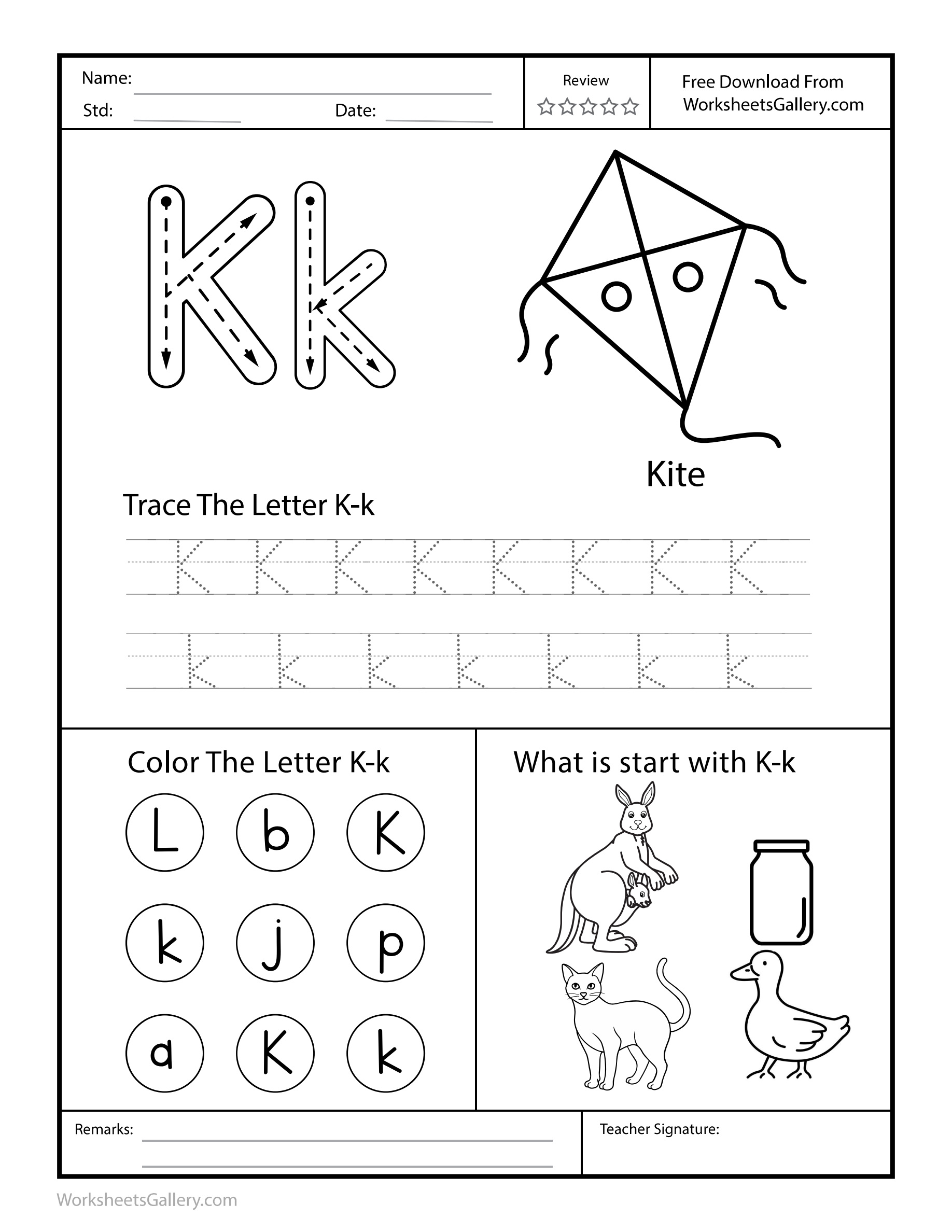
K + k
Upright.
Angle.
Meeting point.
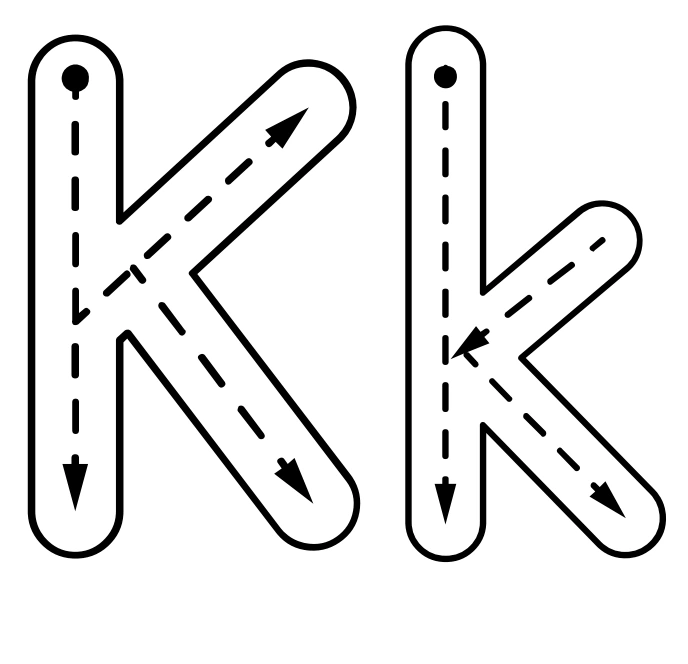
Where do the sloping lines meet? That question gives this Letter K worksheet a useful starting point before a pencil touches the dots. A kite introduces the letter, two large route models show the branches, and fifteen guided examples offer practice in both cases. Four matching circles invite a second kind of looking. The picture choices also deserve a conversation: kangaroo begins with written K, while cat shares its opening sound with a different spelling. Move between those details at the child's pace, using the meeting point as a clear feature to revisit.
A kite makes Letter K angles worth investigating
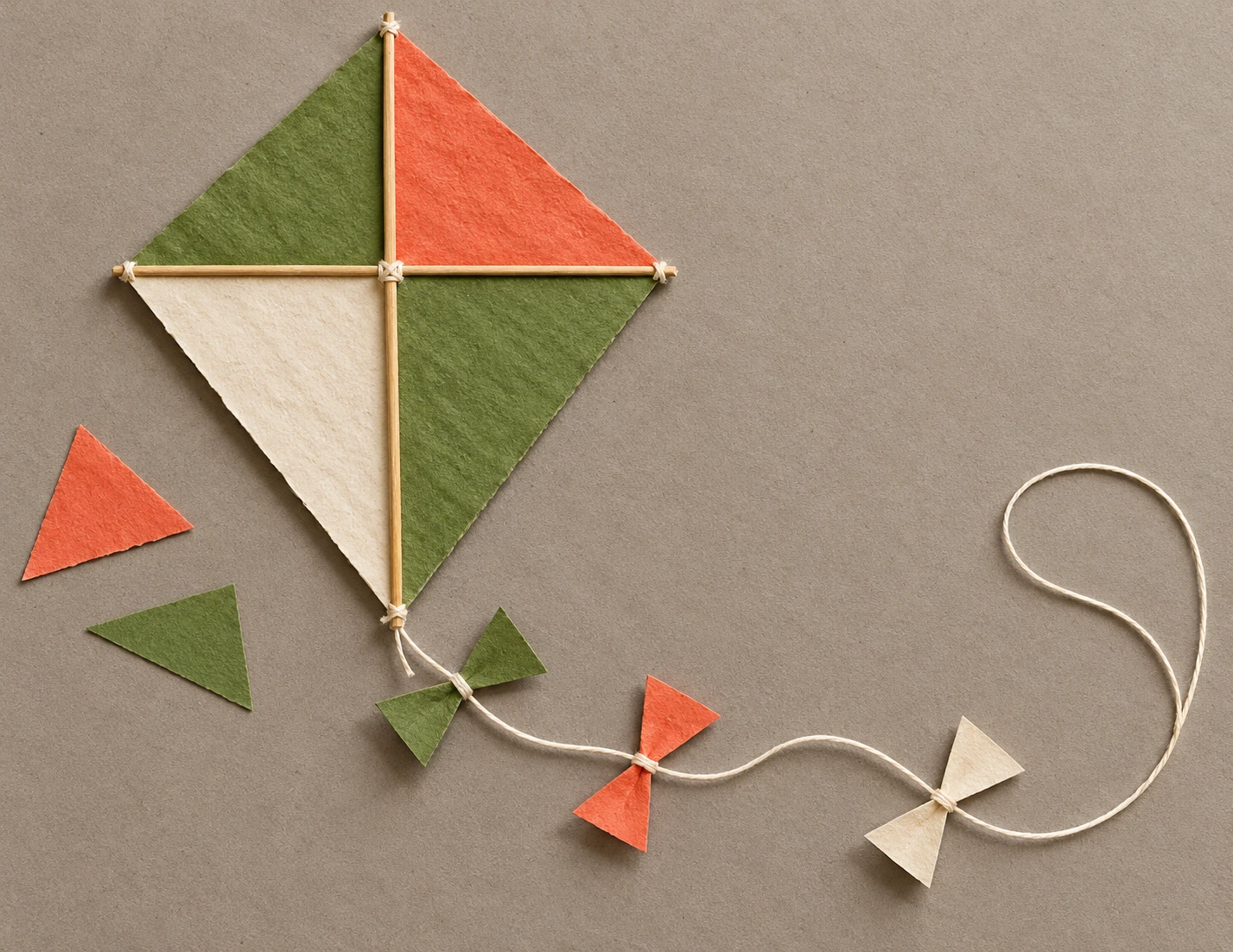
The worksheet's kite and this optional collage both contain sloping lines. Neither picture is a literal outline of Letter K. Use them to introduce words such as angle, edge, middle and join, then point back to the actual letter model. A comparison is useful when the adult explains which feature is being compared.
Ask the child to choose one diagonal in the artwork and follow it with a pointing finger in the air. Then find a sloping stroke in Letter K. This short visual connection can give a learner a reason to study the branches before trying to steer a pencil through them.
Five kite tasks to choose across several visits
These invitations extend Letter K through describing, constructing and deciding. Use one when it fits the child's question. They are separate play suggestions, so the learner does not need to finish the worksheet before participating.
Triangle courier
Offer large paper triangles and ask the learner to deliver one with its point facing upward, then sideways. Compare an angled paper edge with a Letter K branch. The child can give the adult the next direction.
A join that moved
An adult draws two simple K examples on scrap paper, one with a clear shared junction and one with widely separated branches. Let the child describe which looks closer to the printed Letter K model and why.
Kite weather reporter
Invite a pretend report about a kite moving up, down or sideways. Add a large K on the adult's report card. The child points out Letter K while deciding the kite's next direction.
Quiet sound, visible spelling
Read kite and cat from two adult-written labels. Ask whether their first sounds resemble each other, then show K and C. Return to the kangaroo choice and explain the worksheet's written-Letter K aim.
The crossing-point clue
Describe the middle of the collage without naming it: “The wooden pieces cross here.” The learner points, then gives a clue about where the Letter K strokes meet. Accept a gesture when position words are still developing.
Compare the two Letter K junctions
Capital K and lowercase k each have a long upright stem and two sloping branches. The branches of the lowercase model sit lower. “Lowercase” does not mean every stroke becomes short: its upright still reaches high in the ruled practice examples. Use the smaller rows to compare positions.
The large Letter K drawings include starting dots and arrows. Follow those printed guides with your setting's handwriting approach. Pause at the junction so the child can see where a diagonal reaches the stem and where the next branch goes away from it.
Watch the meeting point rather than demanding identical angles. Branches that float away from the stem can make Letter K harder to recognize. A clear Letter K join is a manageable observation; exact geometric symmetry is unnecessary for an early handwriting attempt.
Kangaroo, cat and the question an adult needs to clarify
The lower pictures show a kangaroo, jar, cat and duck. Kangaroo, at the upper left, begins with written Letter K. Cat begins with C even though its first sound matches the /k/ in kite and kangaroo. If your direction asks only for a sound match, both animals are reasonable responses.
For the worksheet's Letter K spelling choice, name kangaroo and show its initial written K on a separate adult-made label. Explain that cat uses another letter for that sound. A preschool learner is not expected to infer spelling from a drawing alone; the adult supplies the written information.
Keep the /k/ brief when practicing it. Avoid stretching it into “kuh” and then treating the extra vowel as part of the word. The child may point to kite or kangaroo while you say the natural beginning. This Letter K conversation can stay short, accurate and encouraging.
When a learner chooses cat, begin with the good observation: the starting sounds agree. Then clarify whether you are comparing sounds or choosing a word whose spelling starts with K. That response preserves the child's reasoning while making the Letter K task more precise.
What six different skills can look like here
| Opportunity | A useful observation during practice |
|---|---|
| Visual analysis | The child finds where Letter K branches touch the upright instead of treating the symbol as one undivided shape. |
| Direction planning | A diagonal route is anticipated before the pencil moves. The learner can point toward its destination on the Letter K guide. |
| Coordinated movement | One hand holds the paper while the other follows the dotted route, giving the writing hand a steadier surface. |
| Category decisions | K and k are both accepted as Letter K despite their different branch heights. The rule stays consistent across the search grid. |
| Sound awareness | The child hears the shared /k/ in kangaroo and cat while an adult explains the different written beginnings. |
| Spatial vocabulary | Words such as middle, lower, toward and away describe a visible Letter K feature or a chosen diagonal in the kite. |
Motor control, cognitive comparison and language demands overlap, but they are not interchangeable scores. A learner can hear the sound accurately and still need help keeping Letter K branches connected. Observe the response you requested, then decide what support would make the next attempt clearer.
Use the four-circle Letter K answer pattern carefully
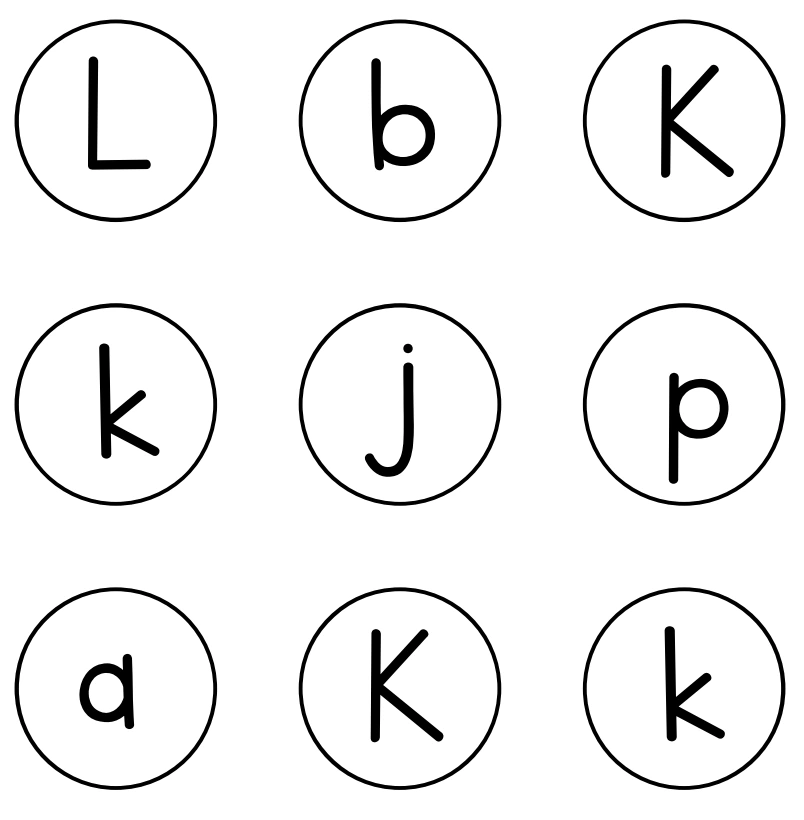
Choose the right circle in the top row, the left circle in the middle row, and the middle and right circles in the bottom row.
Start by pointing to a model, then ask the learner to touch Letter K matches without coloring. Once the choices are clear, coloring becomes a separate action. The five nonmatching letters are L, b, j, p and a; they should remain outside the selected group.
One useful comparison is K beside L: both have an upright, but Letter K needs its diagonals. Let the child point to those extra features. If a learner colors an L, a brief feature check gives a more useful next step than asking for another complete worksheet.
A home design question: where should the branches attach?
Nora draws a pretend kite delivery ticket for her grandfather. She adds a K, but its two branches hover beside the stem. He points to the worksheet's Letter K junction and asks where the ticket's strokes could meet. Nora joins them and returns to one dotted model to compare the result.
At home, place the paper upright and introduce one case. Finger-follow the model, choose a few tracing guides, then invite a single feature check. End by naming the kangaroo or finding a Letter K circle. The ticket story is optional; a simple comparison on scrap paper can do the same teaching work.
For guided Letter K work, consider roughly ages three through six and adapt to the individual learner. Let present control guide the amount. A child who can discuss the kite but is not ready for diagonals can point while an adult demonstrates. That participation still has a clear Letter K purpose.
In class, separate the route demonstration from the search
A teacher displays one large Letter K model and invites children to point toward each branch's endpoint. Pencils remain down while the group watches the join. Children then attempt a short tracing selection on their own sheets. The teacher checks the connection before introducing the recognition panel.
There are eight capital and seven lowercase dotted models, fifteen altogether. Those spaces can be spread over more than one visit. During a later Letter K session, children can work on the search rule while the teacher gives individual movement feedback. Everyone need not finish the same row at the same moment.
If broad diagonal practice is more suitable first, try prewriting paths with simple lines. A separate K tracing lesson offers another practice format. When comparing letters later, select a small portion from the full alphabet tracing collection.
Make the next Letter K attempt feel possible
Common difficulties include detached branches, a lowercase stem shortened to the branch height, or a rushed diagonal that travels past the join. Enlarge the model and name the one feature you are addressing. Avoid changing the grip, speed, case and number of examples all at once; the child needs a clear reason for the new demonstration.
For regular practice, keep a small record of an observation rather than a row count: “The lower branch reached the stem today.” Offer the choice of a pointing task or one guided Letter K. Children often enjoy a construction problem they can solve, and a visible improvement can give the next visit a purpose.
Let the child explain a kite detail or select a favorite completed example. Encouragement can be concrete without grading every stroke. A thoughtful pause at the Letter K junction is already evidence that the learner is looking before moving.
Download Letter K and check the print boundary
The original branded worksheet is provided as the free sample. An eligible active membership gives access to the clean premium Letter K PDF, with the website name and domain removed. The member printable has no website watermark or added ads inside the PDF. All worksheet tasks stay in place.
- Use the sample download, or sign in to an eligible plan and select the clean member version.
- Open the saved PDF and confirm that the preview shows one portrait US Letter page measuring 8.5 by 11 inches.
- Choose actual-size printing when the complete border fits. Otherwise fit the page to your printer's usable area and recheck the preview.
- Print one copy and inspect the diagonal dots, lower picture choices and four-target search before preparing additional Letter K sheets.
Choose a comfortable tool, leave room beside the paper for the supporting hand and begin with one feature the learner is ready to explore.
Popular Worksheets
Printable resources families and teachers are downloading now.
 Free
Free
 Free
Free
 Free
Free
 Free
Free