
Close the Curve: 5 Powerful Letter O Wins for Happy Kids
◯ Follow a curve all the way home
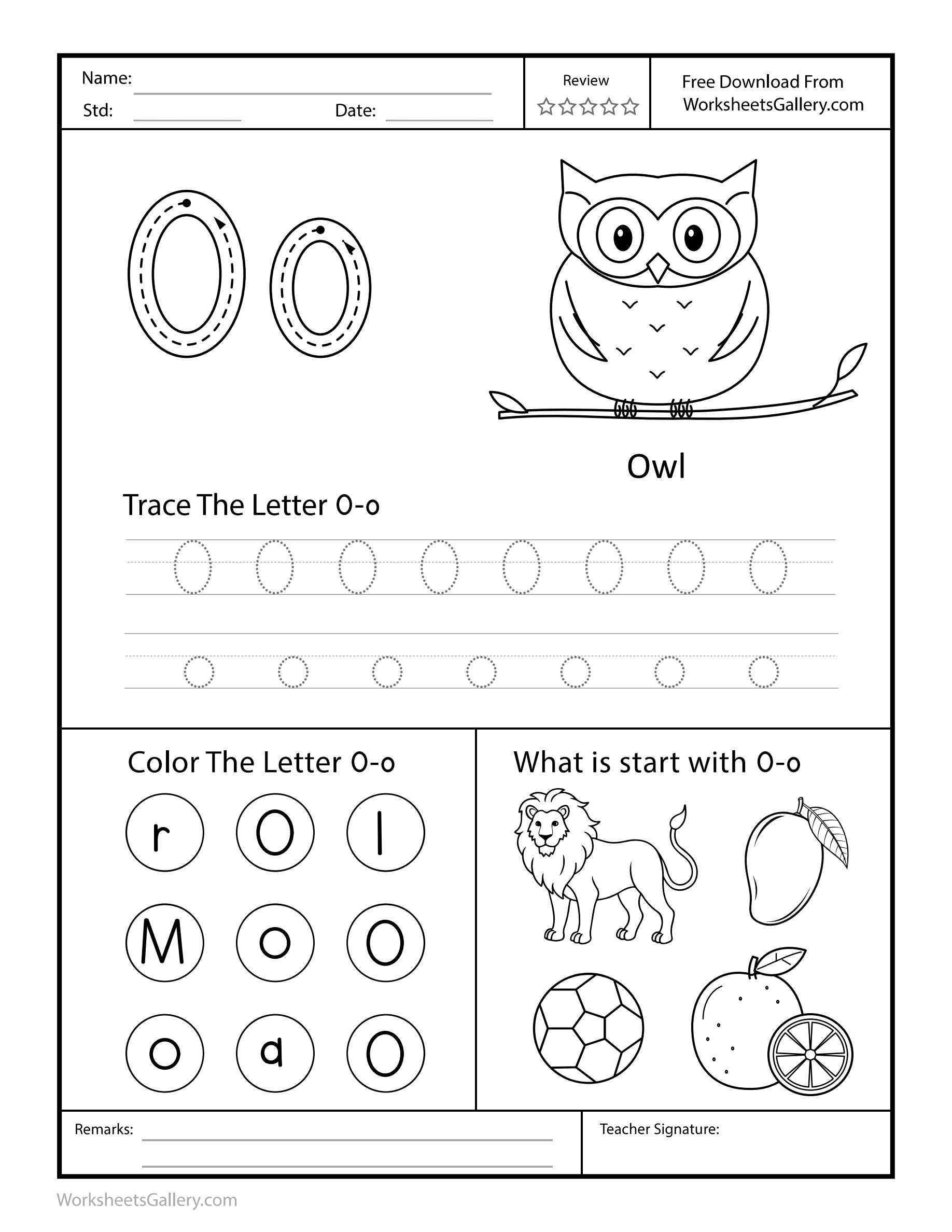
The important moment comes when the curve finds its beginning again. A small gap can turn a nearly finished O into a shape that still looks open. This Letter O worksheet invites children to notice that meeting point while comparing a taller capital with a smaller lowercase partner. Eight capital guides, seven lowercase guides and five search matches offer several manageable tasks. An owl introduces written O, while an orange supplies the lower picture choice. Explore the shapes first, then add a puppet game or a careful word conversation without expecting every job to fit one sitting.
Bring Letter O back toward the starting dot
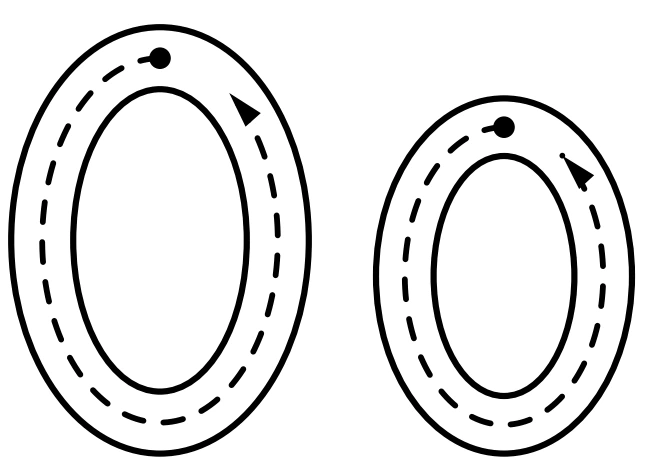
These Letter O drawings are oval rather than perfect circles. Use their actual contours as references and give a young learner room for an uneven first attempt.
Begin at the printed dot and follow the guide around the left, lower and right portions of the model, returning toward the beginning. Use the arrows together with the handwriting sequence taught in your setting. Letter O has a continuous curved route; avoid replacing it with several disconnected short strokes.
Pause after one Letter O circuit. Ask the child to find where the route began and whether the ending reached it. That question makes completion visible. Repeatedly circling over the same Letter O can produce a thick mark without helping the learner judge where the first circuit finished.
If steering the small guide is difficult, demonstrate a larger oval on spare paper. Finger-follow it once and identify the return point before trying a dotted Letter O. The aim is a recognizable closed form, with control developing through supported attempts.
Five Letter O wins that are easy to describe
A finish that refers back to a beginning
The learner checks whether the curve meets its start. Letter O gives a clear reason to look back at an earlier part of the movement rather than stopping wherever the pencil happens to arrive.
A smaller route with the same basic identity
Capital O and lowercase o share a closed curved form. Comparing their writing spaces makes Letter O case size meaningful without asking the child to memorize two unrelated outlines.
Steering through a changing direction
There is no long straight section to coast along. The hand keeps adjusting as the Letter O curve changes direction, while the eyes look ahead toward the next part of the guide.
A rule that survives tempting round shapes
The ball, fruit and letter a contain curved details, but that does not make each one Letter O. The learner must use the actual target model rather than a vague rule that everything round counts.
A precise word-and-spelling conversation
Owl and orange offer two visible words beginning with written O. Explaining their different opening sounds gives the Letter O lesson a truthful vocabulary connection instead of forcing an inaccurate sound match.
These opportunities draw on several skills: comparing and checking are cognitive work; steadying the sheet and guiding the pencil involve coordinated movement; describing a gap or naming an orange uses language. Notice which Letter O response you requested before deciding what the child needs next.
Owl and orange share written O, with different sounds
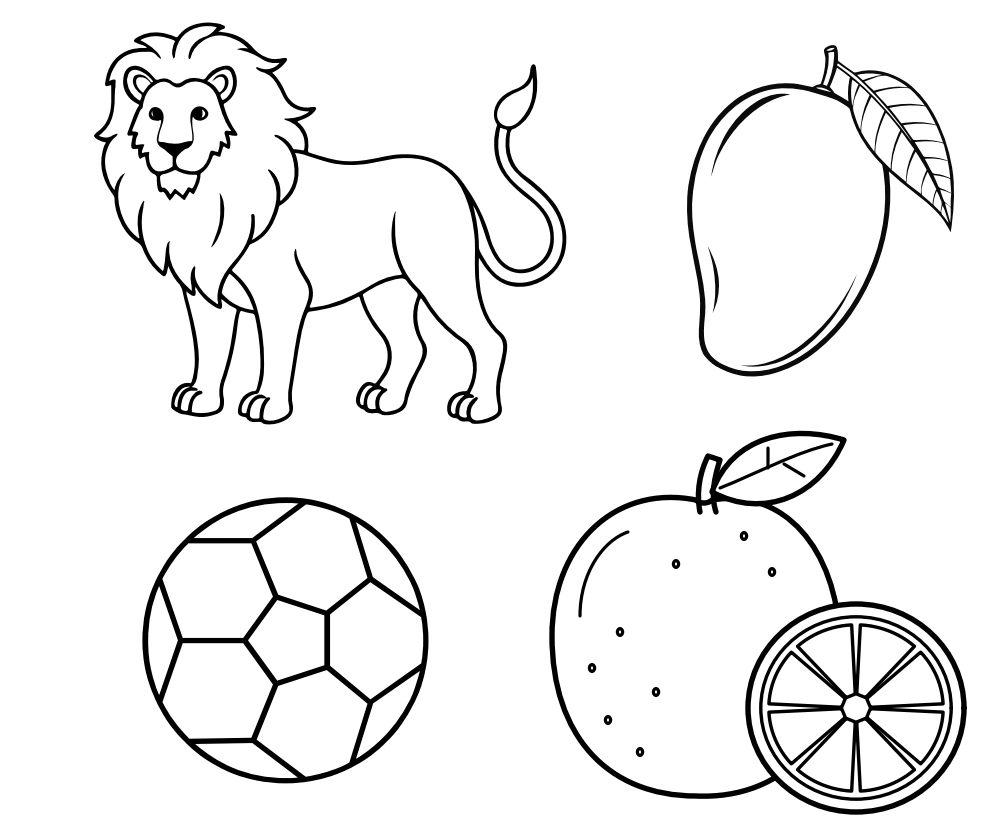
The top picture is labeled owl. Its opening sounds like the beginning of out, rather than the long-O letter name. The lower-right fruit is an orange, whose usual opening vowel differs from owl. Both words start with the written Letter O; they are not examples of one identical beginning sound.
Treat this picture activity as an initial-letter choice with adult support. Write Owl and Orange on separate cards, read them and show the starting O. The learner does not have to infer an unfamiliar spelling from a drawing. If teaching one vowel sound is today's aim, choose suitable examples separately instead of claiming these two words sound alike.
The remaining choices are lion, mango and ball. Mango is also a fruit, but its name begins with M. A ball's outline may look round; that visual detail does not make its spoken name or spelling a Letter O answer.
Select five Letter O matches by position
The nine circles read r, O, l; M, o, O; and o, a, O. There are three capital O forms and two lowercase o forms. Point to the models before beginning, then let the learner search without a crayon if that keeps the decision clearer.
First row
Choose only the middle O. The r and l stay outside the Letter O group.
Second row
Choose the middle o and right O. Capital M is the distractor.
Third row
Choose the outer o and O. Leave the central a unselected.
The letter a has a rounded part, making it a useful comparison. Ask the child to find the extra stroke that changes its identity. The Letter O task rewards a specific feature decision, not simply spotting a curve somewhere in a symbol.
Count the five accepted Letter O circles after making the choices. If the learner needs help with the tally, an adult can count while the child points. Recognition and counting can support one another without becoming the same test.
At home, an owl visitor badge reveals an opening
Maya makes a pretend badge for an owl visiting her toy library. Her O stops just short of its beginning, leaving a visible gap. Her father points to the return area on the worksheet. She follows one Letter O model and then decides whether her badge needs a small finishing movement.
For home Letter O practice, name a case and demonstrate a single circuit. Let the learner choose a few guides, then compare one completed example with a fresh model. A picture choice or one Letter O search row can provide the final task. Keep the badge story optional; an ordinary scrap-paper oval can make the same observation possible.
Young learners often enjoy the owl's face and the satisfying moment when a curve meets itself. Give that discovery room to happen. A specific comment such as “Your ending reached the start” identifies a Letter O success more clearly than praising speed or a filled row.
A classroom marker reveals one complete Letter O circuit
A teacher places a removable paper marker beside the start of a large drawn O. Children watch a finger follow the curve and return to the marker. The teacher stops there, lifts the marker and asks where the first Letter O circuit ended. The demonstration separates a complete route from repeatedly going round.
Each child then finger-follows a chosen model and attempts a short tracing selection. The sheet has eight capital and seven lowercase dotted guides, fifteen in total. The lower examples sit within the smaller writing space. Compare those ruled Letter O models when discussing size; the oversized drawings mainly explain movement.
Guided preschool and kindergarten learners, typically around three to six years of age, can use different parts of this page. Choose the amount of writing from present control. A learner who is ready to point and describe may need less pencil work than a peer who already steers a small Letter O comfortably.
Five questions for playful Letter O exploration
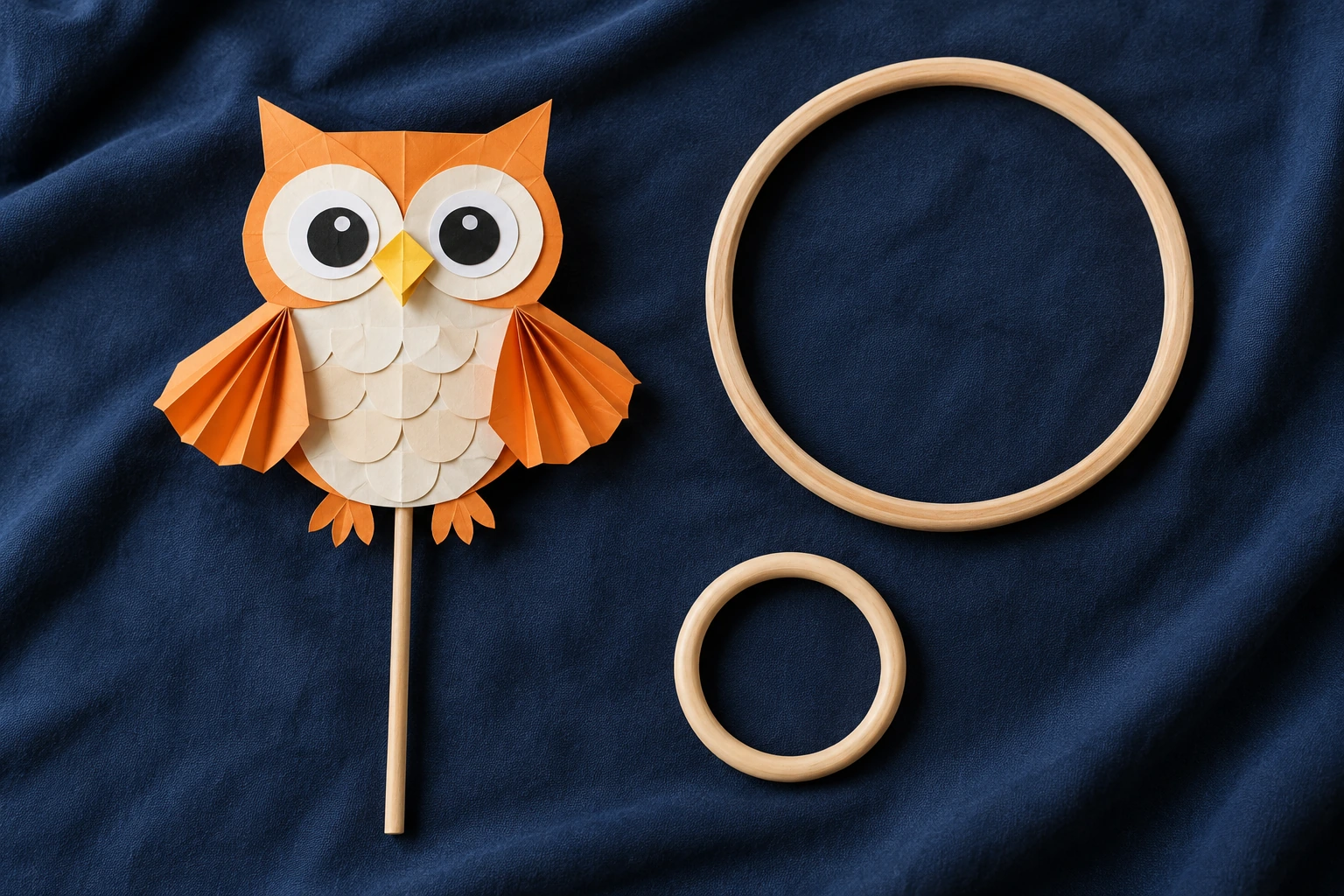
Can the owl find the meeting place?
A puppet asks where an adult's large drawn O began. Let the learner point to a marked start and follow one circuit back to it. The child explains when the Letter O trip is complete.
Which boundary encloses more space?
Discuss the large and small hoops in the picture, or draw two closed shapes on spare paper. Compare their sizes before looking at capital and lowercase Letter O in the ruled rows. Shared shape does not require shared size.
What would a tiny gap change?
An adult draws a nearly closed oval beside a closed one. The learner identifies the opening and describes a finishing move. Keep the gap visible until the child has explained the Letter O comparison.
Can two different words keep the same initial?
Read adult-written Owl and Orange cards. The child pairs them with pictures and points to their initial Letter O. Say the words naturally again, preserving the distinction between shared spelling and different opening sounds.
Where could a little o belong?
Make a simple pretend seating plan for the owl puppet using large O and small o markers. The child chooses a marker, names its case and explains its size. The game adds a decision without requiring another full row.
Adjust the demand, then invite another visit
Common difficulties include leaving a gap, circling repeatedly, squeezing the lowercase form into a dot, or making both cases equally tall. Address one observation at a time. An enlarged route can support closure; the ruled models can clarify case size. Do not demand a mathematically perfect circle from a learner practicing an oval Letter O.
| Set up | Observe |
|---|---|
| Place the sheet upright on a steady surface. | The supporting hand keeps the page from slipping. |
| Choose a comfortable pencil and a small guide selection. | The learner can see the route and its returning end. |
| Leave a few guides unused for another day. | The next Letter O invitation has an obvious starting point. |
For regular Letter O practice, offer a familiar short choice: check a closure, compare sizes or find a search match. The page has no separate blank writing strip; use scrap paper for later independent attempts. Preserve curiosity by stopping after an understandable observation rather than extending the session until every model is filled.
For broader movement work, choose a prewriting line activity. A later visit can use the separate O tracing lesson. The whole-alphabet tracing resource offers additional forms for carefully chosen comparisons.
Print a Letter O PDF with every activity in view
The sample download provides the original branded worksheet. Members on an eligible active plan can choose the clean premium Letter O file, from which the website branding has been removed. That printable PDF carries no website watermark and includes no added advertisements. Its source activities remain in place.
- Use the sample button for the original, or sign in under a qualifying membership and request the premium version.
- Open the saved PDF and inspect one vertical US Letter page: its width is 8.5 inches and its height is 11 inches.
- Preview the outer border. Actual-size printing is suitable when all edges fit; otherwise use your printer's fit option and inspect the full page again.
- Check a trial print for fifteen dotted guides, nine recognition circles and four picture options. Choose the first manageable Letter O observation before making extra copies.
Popular Worksheets
Printable resources families and teachers are downloading now.
 Free
 Free
 Free
 Free