
Quilt Clues: 5 Powerful Letter Q Ideas for Happy Kids
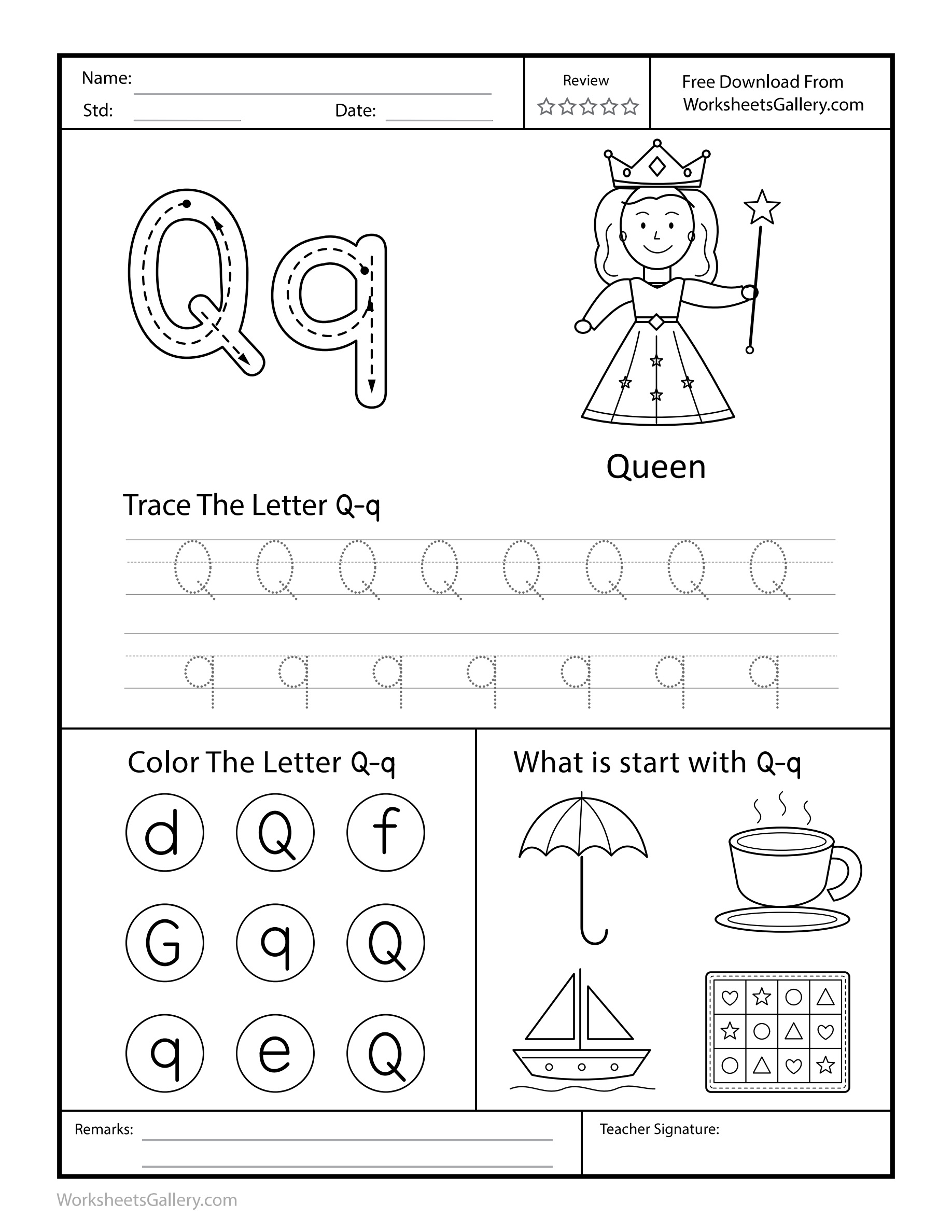
One small finishing mark can change which letter a child sees. On this Letter Q page, the capital has a short diagonal tail, while its lowercase partner ends with a stem on the right. A queen introduces the pair, and a patterned quilt supplies the matching picture word. There are fifteen dotted guides and five correct circles to find. Start by noticing those final features, then let a familiar piece of fabric become part of a playful conversation. Letter Q can enter a child's story before every pencil movement feels easy.
Read the two Letter Q finishes before picking up a pencil
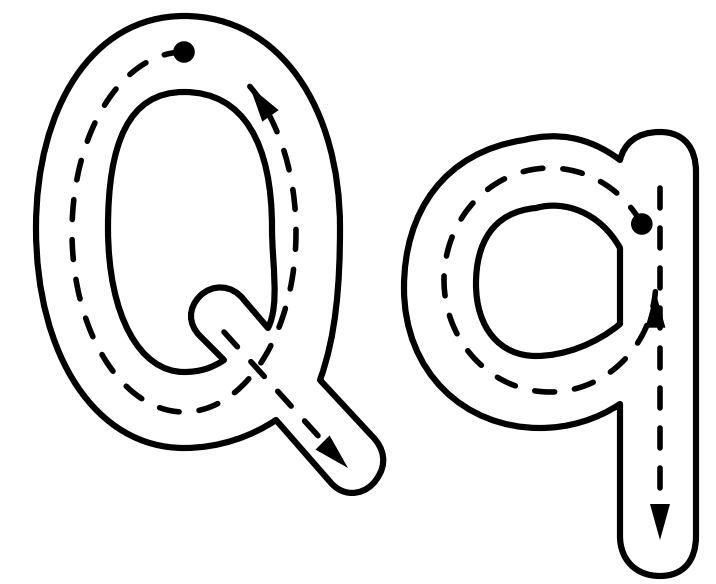
The tall Letter Q form is a closed oval with a short stroke crossing its lower-right area. That extra mark distinguishes the printed capital from O. The small Letter Q form has a rounded bowl and a straight stem at its right edge. The stem reaches beneath the bowl. They are two forms of Letter Q, rather than one shape enlarged and reduced.
Invite a pointing response: “Show me the part that finishes this one.” Then demonstrate along the worksheet's arrows using your usual handwriting approach. The Letter Q models provide movement information; there is no need to invent a decorative curl or add a second tail.
🧵 A useful distinction: the queen's crown belongs to the picture. The diagonal tail belongs to the capital letter. Naming each part keeps the Letter Q observation about print.
Seven useful payoffs from a small Letter Q investigation
Usually suitable for ages three to six, the sheet can be approached through pointing, conversation or supported tracing. Readiness matters more than completing every space. These seven observations give an adult specific things to notice during Letter Q work.
| What develops | What that can look like here |
|---|---|
| Attention to a small feature | A learner notices the capital's tail instead of treating every oval as the same letter. |
| Side awareness | The child locates the lowercase upright on the right and describes where it joins the bowl. |
| Controlled changes of movement | Curving, stopping and making the finishing stroke become separate actions the hand can rehearse. |
| A stable page | One hand holds the paper as the other traces, giving both hands a purposeful role. |
| Case flexibility | Both Q and q count in the search, even though the finishing details do not look identical. |
| Explanatory language | “A line on this side” becomes a reason for choosing a circle, rather than a lucky guess. |
| Meaningful vocabulary | Queen and quilt name different things, giving the written initial a connection beyond pencil practice. |
These Letter Q observations are opportunities to explore, not promises from one page. A child may explain a Letter Q feature accurately while still finding its dotted path difficult. That difference can guide the next invitation.
Name the objects, then select the quilt
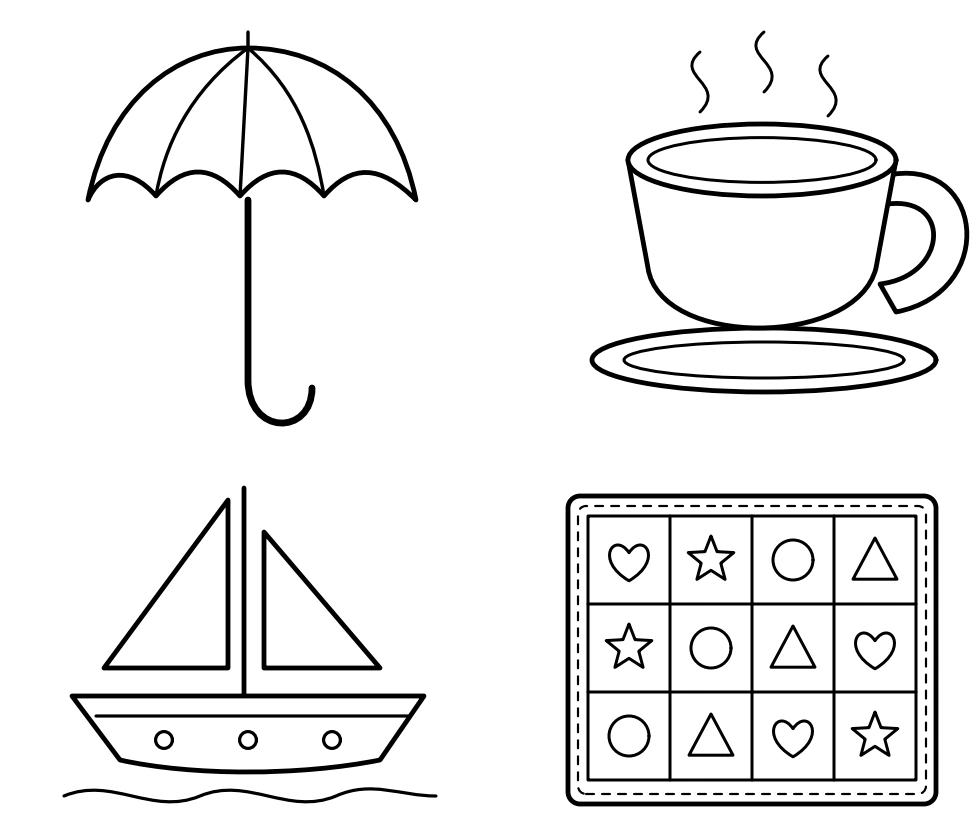
The lower panel offers an umbrella at upper left, a cup at upper right, a sailboat below the umbrella and a quilt below the cup. Establish those names before asking for the Letter Q answer. A child who calls the quilt “a blanket” may understand the object perfectly well.
Explain that a quilt is a kind of covering made with layers, often showing pieces joined in a pattern. Here, the illustrated patchwork makes the intended word clear. Accept the child's familiar word, supply quilt, and then repeat the Letter Q choice.
Coloring can follow the decision. Elaborate patterns are optional; the goal is to connect the named picture with the written beginning. The queen at the top supplies another Letter Q word, although she is outside this four-picture task.
At home, let a quilt welcome Letter Q
Ravi and his cousin are arranging a resting place for an imaginary visiting queen. A folded blanket becomes the quilt in their story. Ravi points to the worksheet's small q and says, “This side goes down.” His cousin repeats his observation, then asks whether he wants to trace one example or choose the picture first.
The story gives him a reason to look again without requiring a costume or a completed row. His Letter Q contribution can be a spoken clue. If he traces, his cousin notices the right-side stem and leaves the other models available.
- Make the setting comfortable. Put the paper on a firm surface with enough room for the writing arm. The fabric stays beside the sheet.
- Choose one Letter Q feature to inspect. Ask about the capital tail or the lowercase side, rather than correcting both simultaneously.
- Try a short route. Demonstrate first, then let the child choose an unused Letter Q guide.
- Return to the welcome. Ask what the guest needs next. A child's answer keeps language and handwriting connected.
A nursery blanket, towel or scrap of cloth can stand in for the quilt. The invitation is pretend play; special materials are unnecessary.
Five Letter Q selections need a reason, not a race
Read the nine circles by rows: d, Q, f / G, q, Q / q, e, Q. The answers are the middle circle in row one, the middle and right circles in row two, and the left and right circles in row three. Count three capitals plus two lowercase forms: five Letter Q matches altogether.
The Letter Q distractors reward a closer look. Lowercase d has an upright rising above its bowl; this printed q extends downward on the right. Capital G has an opening and an inward stroke, unlike the closed Q with its diagonal tail. Ask for the relevant feature before adding color. Correct reasoning matters more than selecting circles quickly.
In a classroom pair, one child points to a candidate while the partner names the feature. They swap jobs for the next selection. Each child controls their own pencil. The listener can offer a Letter Q clue without reaching across to move another person's hand.
If a learner selects d, compare its upper extension with q's lower extension on the same sheet. A calm “Where does the line go?” leaves room to reconsider. Do not label a single mistaken choice as a persistent reversal problem. One selection tells only part of the Letter Q story.
Queen and quilt bring u into the conversation
The worksheet practices the single written forms Q and q. In the words queen and quilt, q is followed by u, and the usual beginning is /kw/: a quick /k/ flowing into /w/. Say each complete word naturally before briefly drawing attention to that beginning. Letter Q is the letter name; /kw/ describes the beginning heard in these examples.
Keep the explanation proportionate to the child. “These words start with qu” may be plenty. Avoid presenting /kw/ as one stretched sound or asking a beginner to invent the missing u on the dotted row. The Letter Q models should remain the shapes actually printed.
For the Letter Q word comparison, an adult can write queen and quilt on separate paper, then point out their first two letters. That addition supports the spoken comparison without turning the worksheet into a spelling test. Invite the child to say which object could keep someone warm and which word names a person in the story.
Five fabric invitations beyond the Letter Q sheet
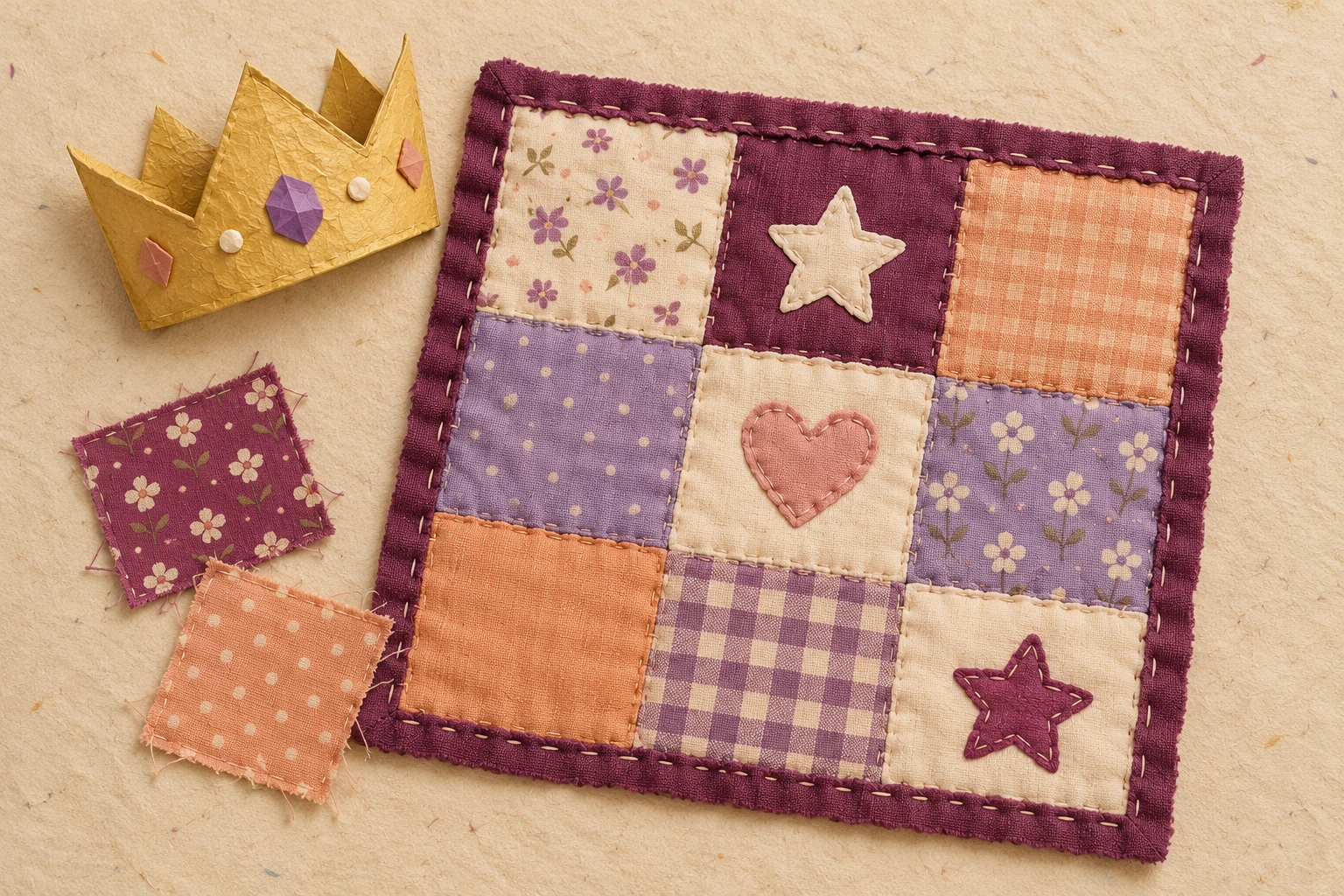
Pick whichever invitation fits the learner's interest. The five ideas extend Letter Q through decisions, descriptions and purposeful looking; they need not become five extra assignments.
1. Plan an unstitched patch
Arrange fabric scraps or paper squares on a tray. Choose which patch belongs next and explain its color or texture. Call the arrangement a pretend quilt, then find its initial on the Letter Q sheet. Joining the pieces is optional.
2. Give the guest a practical choice
Offer the imagined queen a warm quilt or a light covering. The child explains the choice using a reason, such as cold weather. Return to Letter Q by locating the queen's printed name, rather than rewarding a correct answer with a crown.
3. Make two capital cards disagree
An adult writes O and Q clearly on separate cards. Ask the child to describe the extra finishing mark and match Q with the source model. Rearrange the cards so position alone cannot decide the Letter Q answer.
4. Describe a hidden covering
Keep a cloth behind your back and offer clues: “It is soft. It covers knees.” Let the child guess, then discuss whether quilt is the right name for that particular cloth. A reasoned alternative counts as useful language.
5. Choose a spoken ending
Begin, “The queen unfolded the quilt and found…” The learner supplies what happens next. Write the sentence if requested and let them point to Q/q in the two familiar words. The story may finish without additional tracing.
Choose the next Letter Q attempt from what you notice
When a Letter Q shape changes accidentally
A missing capital tail can leave O; an extra looping flourish can hide the intended ending. Point back to the actual model. For lowercase Letter Q, check that the stem joins the bowl on the right. If it floats beside the bowl, demonstrate the connection on larger paper.
When Letter Q effort becomes too much
The page contains eight upper guides and seven lower guides, fifteen in total. They are choices for guided practice, not a deadline. The lower stem needs its full space beneath the writing rule. Pause when pressure increases or attention fades.
For another day, remember one concrete discovery: a tail that appeared, a joined stem, or a well-explained circle. Invite the learner to revisit that detail in a short, familiar moment. Naming what improved gives Letter Q practice a clearer purpose than “Be neater.”
If curved routes need more room first, try larger line-and-curve pathways. Compare formats with the separate queen tracing resource, or choose a future letter from the full alphabet tracing selection.
Print the Letter Q page with its finishing marks intact
Choose the branded source for a free sample. With a current eligible membership, the premium option supplies a clean Letter Q PDF: the website name and domain have been removed, no website watermark remains, and no advertisements have been added to the printable. Both editions retain the learning activities.
- Use the sample download, or sign in with a qualifying membership and select the clean premium edition.
- Open the downloaded PDF in your usual viewer. Check that the queen, all fifteen guides and both lower tasks are present.
- Select US Letter portrait paper, 8.5 × 11 inches. Use a setting that keeps every border inside your printer's printable area.
- Inspect one print before making more copies. The small diagonal tails and dotted lowercase stems should remain visible.
Offer the printed Letter Q sheet with a pencil and a few coloring choices. Leave the tail and stem visible when discussing a response, and let the learner decide which detail to show you first.
Popular Worksheets
Printable resources families and teachers are downloading now.
 Free
 Free
 Free
 Free