
Rabbit Repairs: 6 Powerful Letter R Playtime Wins
⚙ Rabbit workshop notebook
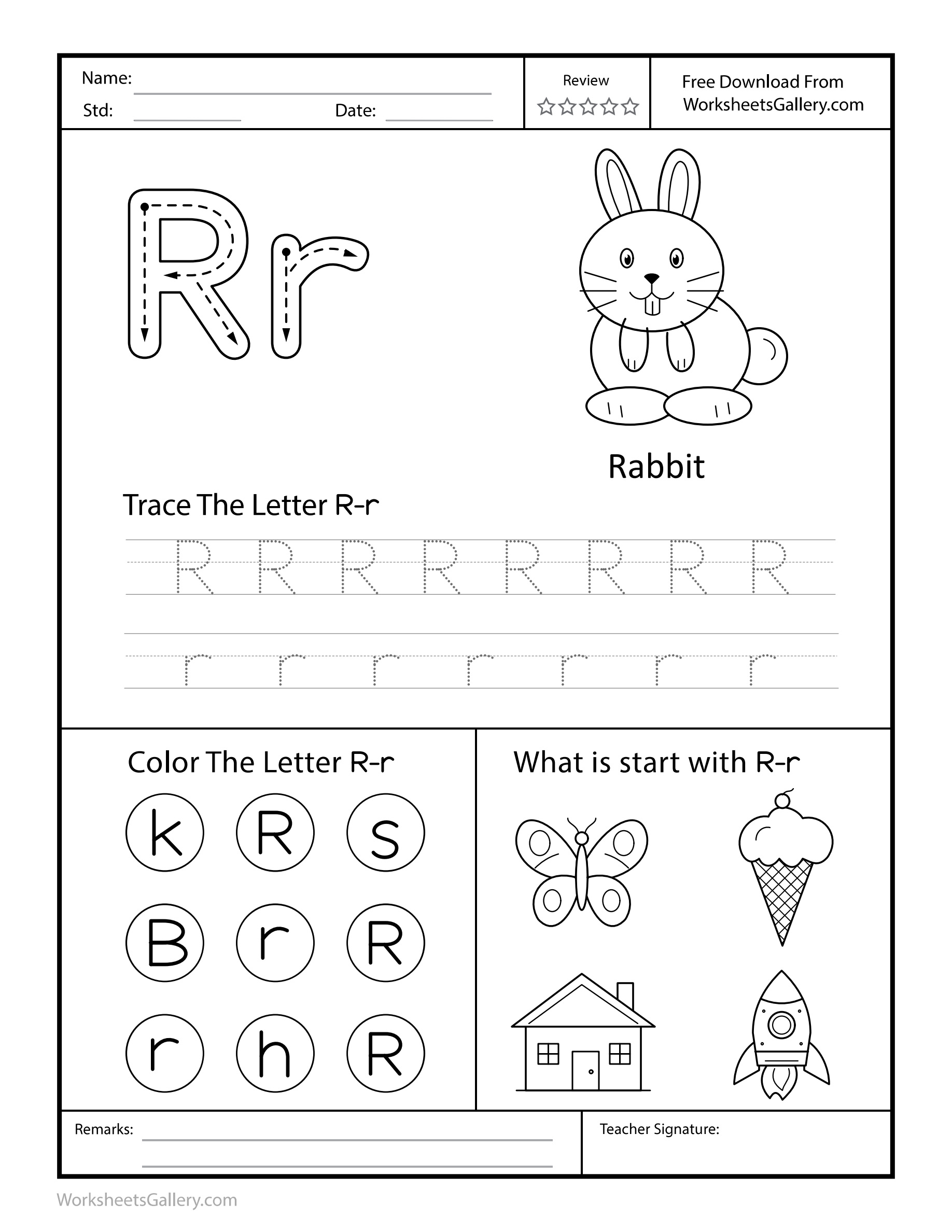
Before the rabbit can launch its rocket, the repair crew needs a plan. That playful idea carries this Letter R session: describe a movement, try it, then inspect the result. Capital R combines a tall stem, an upper bowl and a sloping leg. Lowercase r uses a much shorter shoulder. The printable pairs those forms with a rabbit, fifteen tracing guides and a rocket picture to choose. Give Letter R a job in a pretend workshop, where explaining a sensible next step matters as much as making a tidy mark.
15 guidesEight capitals and seven lowercase forms.
5 matchesBoth R and r belong in the selection.
1 rocketThe lower-right picture supplies the word.
Open the Letter R notebook at the two lower tasks
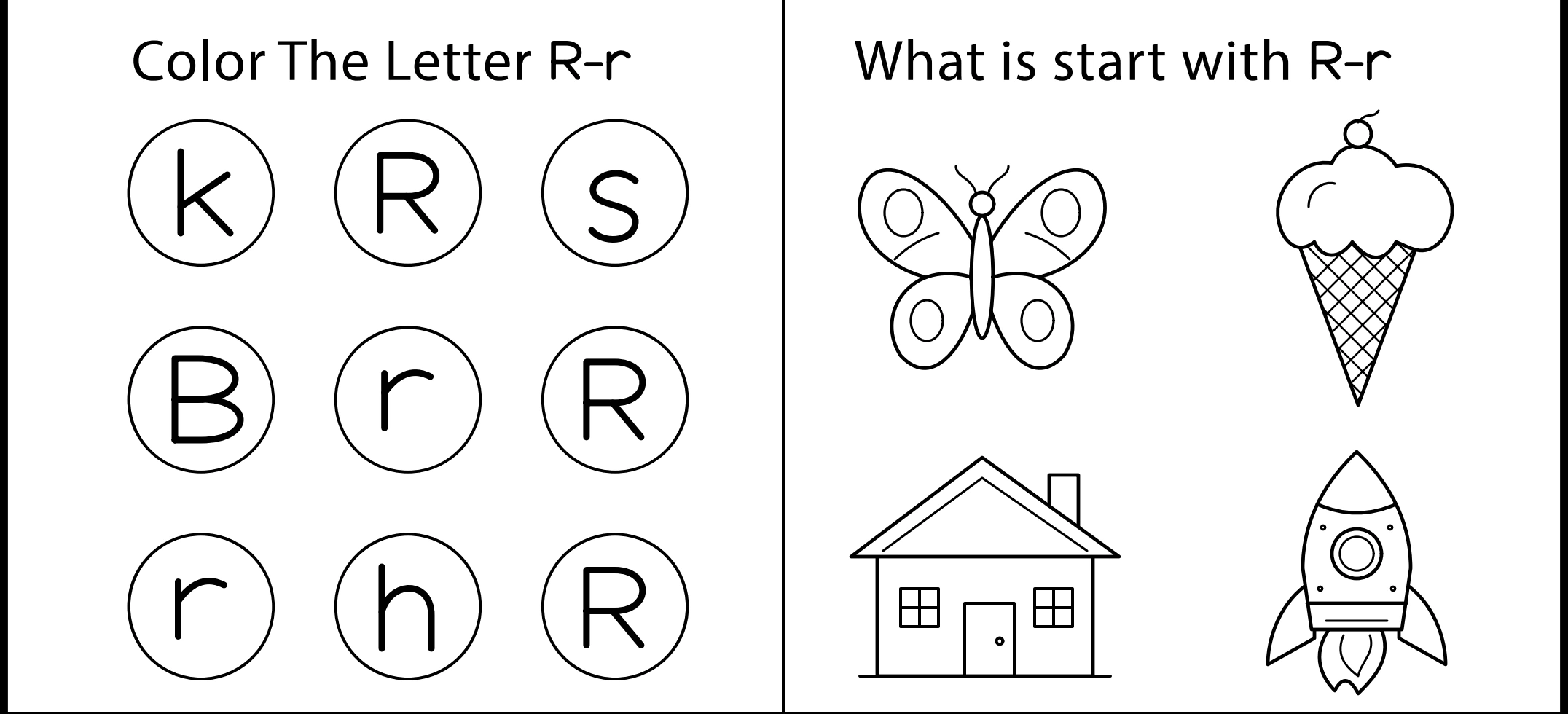
Two adjacent boxes call for different decisions. In the left box, select Letter R in either case. In the right, say the picture names and choose the one beginning with the target sound. A learner may manage one task before the other; check which decision is causing difficulty.
The pictures are butterfly, ice cream, house and rocket, arranged in that order from upper left to lower right. Supply unfamiliar vocabulary before judging the response. Calling the rocket “a spaceship” is understandable, but the intended Letter R word is rocket. Give the intended name, then offer the choice again.
Rabbit and rocket share their opening /r/. Say the words in your natural accent and briefly notice that beginning. An exaggerated roar is unnecessary. The rabbit at the top introduces Letter R; it is not an extra option inside the four-picture box.
A classroom caller plans the Letter R movement
At a small-group table, a teacher becomes the workshop's movement caller. Before anyone traces, she points to capital R and describes its parts: an upright, a rounded upper section and a diagonal reaching down to the right. A child repeats whichever part they noticed. The group is planning a route, not reciting a speed chant.
- Observe the printed route. Let the start dots and arrows guide your demonstration, using the handwriting method taught in your setting.
- Choose a caller and a tracer. The caller describes a Letter R feature; the tracer first points to it on their own copy.
- Make one attempt. Allow time to lift or reposition the pencil where your demonstrated route requires it.
- Review a visible Letter R result. Ask whether the sloping leg joined the middle area, then swap roles.
Repeat the process with lowercase r, using a shorter description for its stem and shoulder. Children can hear that the Letter R plan changes with case. The caller advises; the tracer retains control of the pencil.
Give capital Letter R a leg; let lowercase r stay short
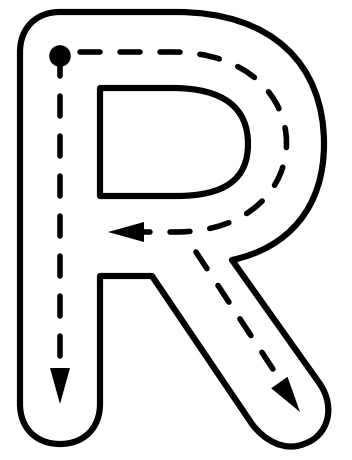
Compare the height of the two cases on the ruled rows. Capital Letter R reaches through the taller writing space. Its bowl occupies the upper portion, leaving room below for the diagonal. Drawing another rounded lower bowl would change the form toward B, one of the actual search distractors.
Lowercase r does not copy that construction. Its upright sits in the smaller writing space, and a short curved shoulder turns to the right near the top. The shoulder does not descend into a second full leg. That distinction helps separate the little Letter R form from h.
Point to the places where components meet. Keep the capital's diagonal connected to its middle region, and keep the lowercase Letter R shoulder attached to the upright. Use the printed model as the reference instead of asking for an ornamental version or a miniature capital.
Six Letter R gains to watch at the workbench
For many children aged three to six, a manageable entry is one spoken observation followed by a chosen guide. These six learning opportunities connect the Letter R tasks with actions an adult can actually see.
The learner considers the route before pressing the pencil down, linking a description with an intended action.
The bowl, diagonal and upright need a useful relationship. Checking their meeting area encourages spatial reasoning.
The tall capital leg contrasts with the little shoulder, giving the hand a reason to stop sooner.
Choosing R/r among k, S, B and h requires comparing features, rather than coloring every curved symbol.
Words such as upper, middle, sloping and short help a child explain a choice or request assistance.
Calling, pointing and tracing offer different ways to participate. A confident speaker can contribute before pencil control catches up.
Thinking, hand control and language are working together here. A steady helping hand keeps the page still while the writing hand changes direction. Letter R recognition may develop ahead of accurate formation, so notice both separately.
At home, start Letter R with a spoken repair request
Mina and her babysitter have a toy rocket with a loose cardboard fin. Mina plays the repair caller: “The red rocket needs its side piece.” Her babysitter repeats the request, then asks which part should be checked first. They move the toy and discuss what changed.
When they turn to the page, Mina chooses a lowercase guide. The short shoulder suits the tiny movement she wants to try. Her babysitter describes that Letter R action, lets her attempt it and asks what she notices. The repair story supplies interest without making a perfect letter the price of continuing to play.
Keep the toy beside a firm writing surface, with a small selection of pencils or crayons. Demonstrate the Letter R route in view of the child. If the child prefers to answer through pointing or speech, use that response to decide whether tracing is a helpful next step.
A workshop can run on imagination. A block, paper tube or drawn rocket can replace the toy; the child still gets to plan, explain and inspect.
Check all five Letter R circles before adding color
The search reads k, R, S / B, r, R / r, h, R. Start with the middle circle of the first row. In the second row, choose the middle and right circles. In the final row, choose the two outside circles. The Letter R total is five: three R forms plus two r forms.
Invite a Letter R reason for one selection and one rejection. The B has a second rounded section where R has its diagonal. The h rises above its arch and continues down the other side; the printed r has a shorter shoulder. Compare those details on the worksheet before asking for another Letter R decision.
A finger point can preserve the search for later coloring. If several learners share a demonstration sheet, give each an independent turn before revealing the whole answer set. Someone else's successful selection does not show what an individual child noticed.
Leave a wrong circle uncolored while discussing it. That keeps the original options readable and allows a changed decision without erasing a large patch of crayon.
Six repair-bench invitations for Letter R play
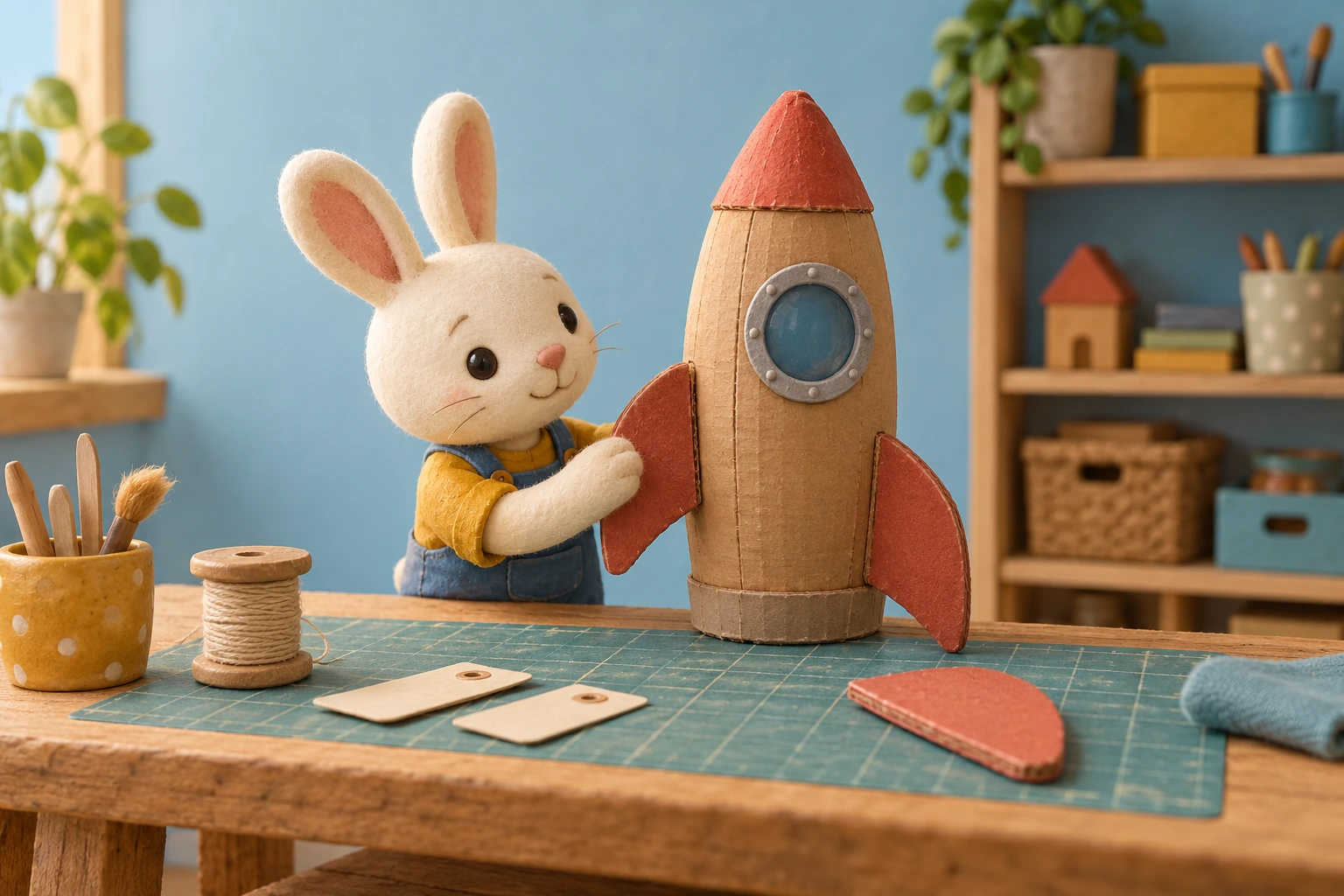
Choose one of these six extensions when the child wants the workshop to continue. Each adds a different demand to Letter R play. Stop after a satisfying exchange; finishing the entire list is unnecessary.
1. Ask for a part precisely
Place two large paper shapes beside a pretend rocket. The child describes which one is needed using shape, color or position. An adult can model “round window” and “red fin,” then return to the initial Letter R in rabbit or rocket.
2. Allocate two Letter R storage spaces
An adult writes several clear R and r cards. Sort capitals into one tray and lowercase forms into another. Explain one difference, then bring both trays together as the Letter R collection. Separate cases can still belong to one letter.
3. Report the result aloud
After a pretend repair, tell another family member what changed: “The rocket has its fin again.” Ask a follow-up question about the action. Revisit one Letter R guide only if the learner wants to connect the report with writing.
4. Set a Letter R caller's puzzle
Describe either an upper bowl with a diagonal leg or a short shoulder on an upright. Let the listener point to R or r on the page. Swap roles so the child also produces a Letter R description.
5. Give the rocket a destination
Choose a pretend place the rocket will visit. Say what the rabbit needs to pack and why. The destination need not begin with r; the purpose is an understandable plan that grows from the familiar rabbit-and-rocket pair.
6. Compare two Letter R inspection marks
An adult writes R and B on scrap paper. The child describes their different lower sections, then finds R in the original search. Keep the comparison brief and visible. This Letter R check can be completed entirely by pointing.
Use the next Letter R attempt to answer one question
The sheet supplies eight capital models and seven lowercase models. They offer several chances to investigate a feature, not a requirement to fill two rows at once. Choose the next Letter R guide after noticing what made the previous attempt hard.
| If you notice… | Investigate this next |
|---|---|
| A capital that resembles P | Locate the missing diagonal on the printed R before trying another model. |
| A floating sloping leg | Look at where the original diagonal joins the central region. |
| A little r turning into h | Compare how soon r's shoulder ends; a full downward arch changes the form. |
| Heavy pressure or a moving sheet | Steady the paper, check comfort and offer a pause before more tracing. |
A single clear question keeps feedback usable. Letter R does not need every detail corrected at once. Discuss the printed mark rather than describing the child as careless.
Reopen the Letter R workshop when there is something to notice
Save an unused model or a spoken repair idea for another brief session. Ask whether the child wants to be the caller, inspector or tracer. Choosing a role can make Letter R practice feel like joining an activity instead of repeating a demand.
Notice a particular change: a connected diagonal, a shorter shoulder or an explained rejection of B. Children often enjoy being the person who spots a useful detail. Their pleasure may come from the rabbit story, choosing colors or telling an adult what to do next.
For a larger movement warm-up, use varied tracing-line challenges. An alternative R tracing lesson offers another format, while the A-to-Z printable group gives options for later comparisons.
Prepare the Letter R print for the next crew
Download the original branded sample for free, or use an active qualifying membership to obtain the clean premium Letter R PDF. The premium printable has its website name and domain removed, no website watermark remains, and the pages contain no added advertisements. Its exercises match the original learning page.
- Choose the sample option or sign in and select the member edition available with your eligible plan.
- Open the PDF and inspect the rabbit, upper and lower tracing rows, nine search circles and four pictures.
- Print in portrait orientation on US Letter paper. Keep the outside frame within the printable area of your particular printer.
- Examine the dotted lines on a test copy, including the capital diagonals and the small shoulders, before printing for a group.
Place the Letter R page on a steady surface with enough space for both hands. Invite a plan first. The learner can tell you what the rabbit's crew should inspect, then choose a trace, a circle or a picture to show it.
Popular Worksheets
Printable resources families and teachers are downloading now.
 Free
 Free
 Free
 Free