
Sock Stage: 4 Remarkable Letter S Games to Enjoy
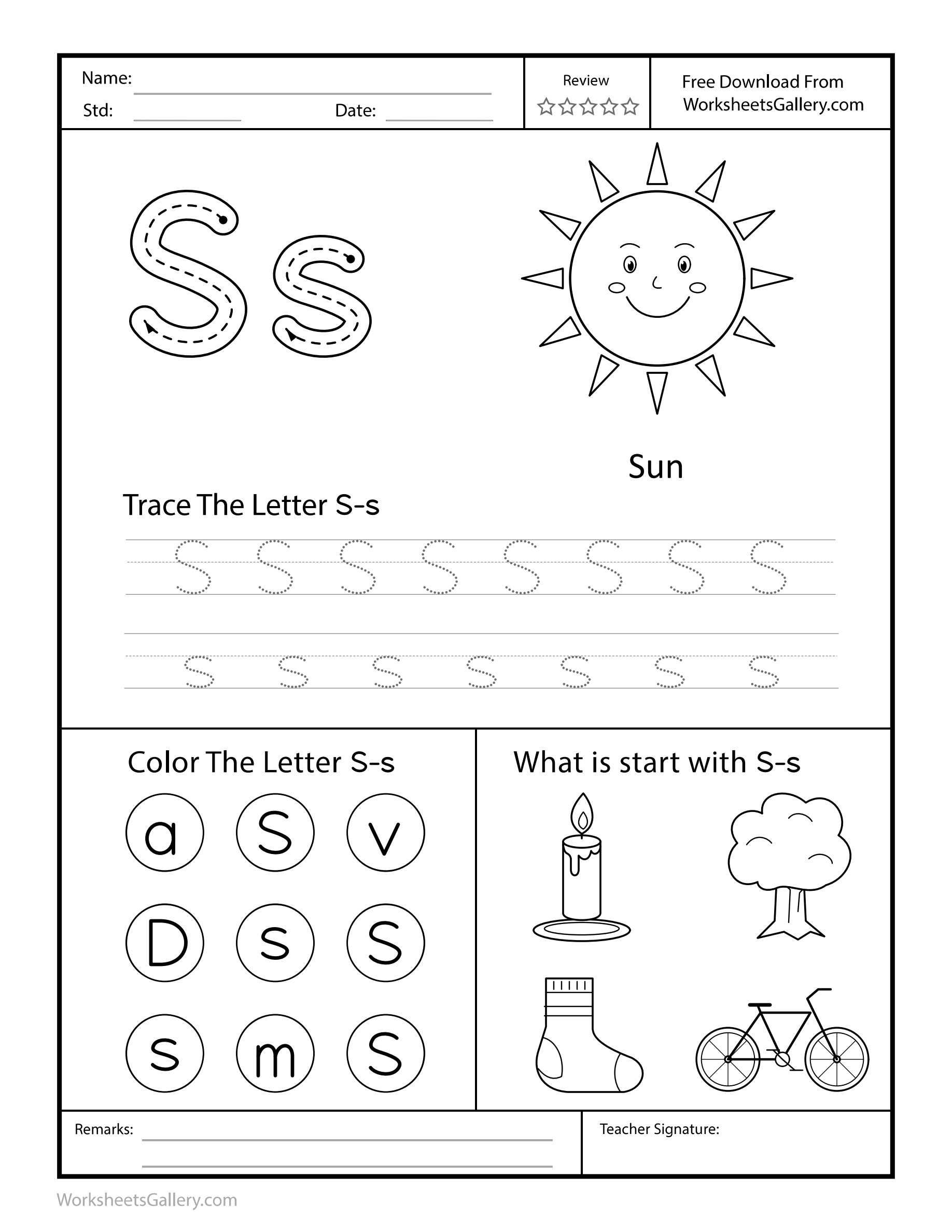
A sock can become a storyteller before it ever becomes a matching pair. With this Letter S printable, that everyday object links a spoken beginning to a shape that bends in two directions. Sun introduces the letter, sock supplies the picture answer, and fifteen dotted examples offer different sizes to try. The five matching circles ask children to recognize both cases. Bring a little theatre into Letter S practice: give a sock a voice, examine the changing curve, then choose one response that the learner is ready to make today.
☀ Stage note: a smooth change of bend matters more than a speedy row.
Two sock voices give Letter S a reason to be heard
Tara and her older sister make a small show behind the sofa. One sock says the sun is going down; the other asks where it should sleep. Tara decides which puppet speaks next. Their short Letter S exchange gives the words sun and sock a purpose before anyone opens a pencil box.
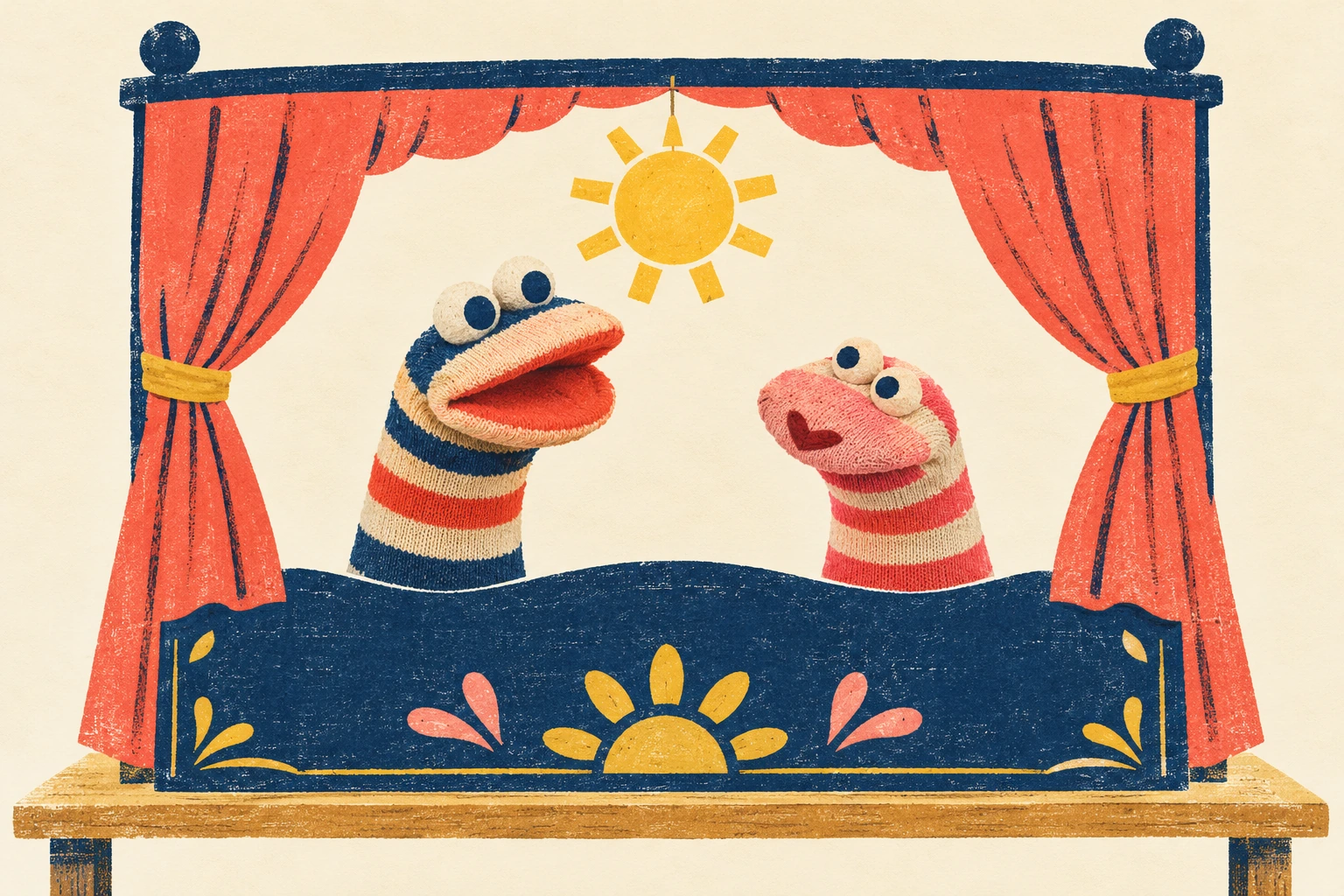
When the sheet appears, Tara points from the illustrated sun to a large S. Her sister briefly notices /s/ at the beginning of both familiar words. Tara can contribute to Letter S by speaking, pointing or choosing a model to trace. The show continues whichever response she chooses.
A clean sock and a low cushion can supply a home stage. Keep the writing page flat on a nearby firm surface when tracing begins. The Letter S picture connection can stay playful while the hand gets a stable place to work.
Through the middle, Letter S changes the bend
The upper curve rounds one way; the lower curve rounds the other. The middle connects them. On this worksheet, neither end closes into a loop, and there is no long straight stem. Follow the oversized models with a fingertip, noticing how the Letter S route changes without becoming a sharp zigzag.
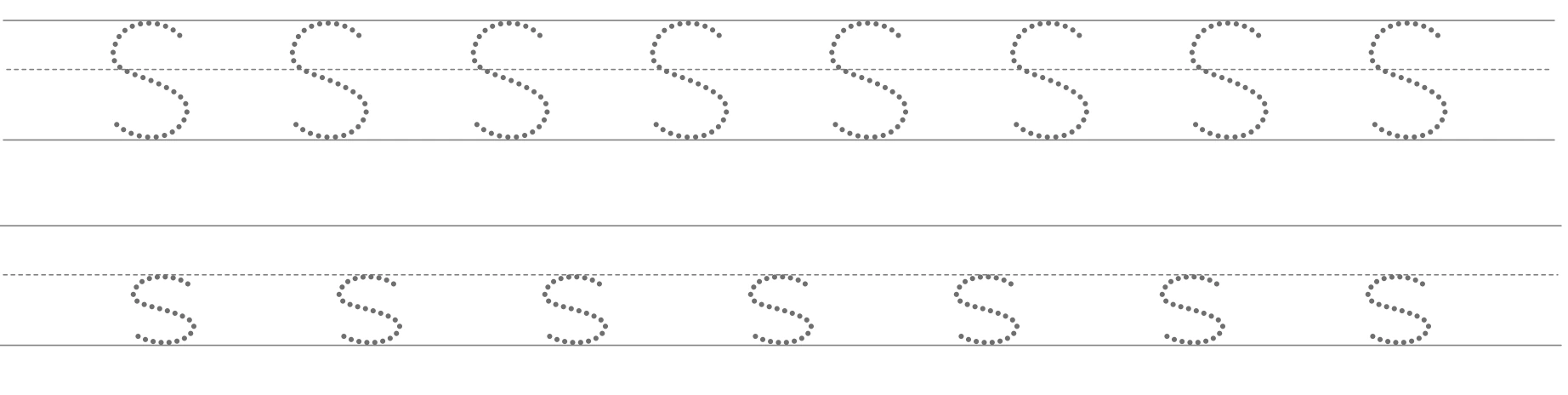
Capital S and lowercase s retain a similar overall shape here. Their writing height changes. The taller examples occupy the upper row's full writing space; the smaller Letter S forms fit between the middle and lower rules in their row.
Demonstrate from the printed start dot and follow its arrows using your setting's handwriting routine. Offer a slow glide through the middle. The learner is coordinating two bends within one Letter S route, rather than joining two closed circles.
Choose a Letter S response that fits the learner
Many preschool and kindergarten children, roughly ages three to six, can use parts of the page with adult support. Some will recognize the letter before they can reproduce its curves. Choose the task from the response you see, rather than expecting every learner to begin with a pencil.
| Ready to show… | Try this Letter S invitation |
|---|---|
| A familiar word | Name sock, say its beginning and find the pictured item. |
| A visual decision | Point to one matching circle and explain what belongs. |
| A movement idea | Travel along a large model with a finger before using a ruled guide. |
| A pencil attempt | Select an unused example, trace it and notice the middle turn. |
The table offers entry points, not a test ladder. Letter S listening, recognition and hand control can progress at different rates. A spoken explanation is useful evidence even when the pencil route still looks uneven.
Five worthwhile changes to notice during Letter S work
- A smoother Letter S change of direction. Moving through the middle gives the hand practice adjusting its curve without inserting a corner. Watch one route, not just the finished outline.
- More deliberate Letter S size control. Similar shapes at two heights invite a child to reduce a movement while keeping its recognizable features.
- A reasoned choice among distractors. Selecting S/s while leaving a, v, D and m requires attention to the whole form, rather than choosing anything rounded.
- A word connected with print. Naming sun and sock links something heard with something seen. The adult can check vocabulary separately from letter recognition.
- A turn in a conversation. Sock theatre invites a child to ask, answer and listen. Choosing the next speaker can support participation before independent writing is comfortable.
These Letter S opportunities involve thinking, movement and language together. The helping hand steadies the paper; the writing hand adjusts direction; the learner explains a choice. Improvement may appear in one part of that combination before the others change.
Notice specific evidence, such as a curve that continued through the middle or a child who explained why D was left uncolored. One page provides observations, rather than a promise of immediate mastery.
Sock is the Letter S word in the lower picture task
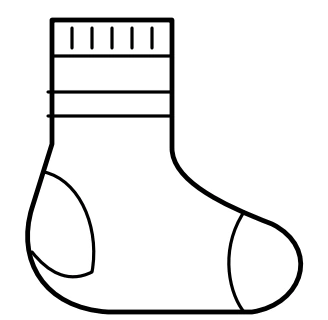
The four choices are a candle at upper left, a tree at upper right, a sock below the candle and a bicycle below the tree. Sock supplies the intended Letter S answer. Ask for the object names before inviting a sound decision.
Say sun and sock naturally, then briefly prolong their opening /s/ if that helps the child hear it. Keep the following vowel separate. The Letter S name and the sound heard at the start of these words are different kinds of information.
Color the sock after the choice if the learner enjoys coloring. A spoken answer or a point is enough to show the word connection. The other pictures remain useful comparisons; they do not need to be crossed out.
The Letter S search includes three capitals and two small forms
Keep these five choices
Read the rows as a, S, v / D, s, S / s, m, S. Select the first row's middle circle, the second row's middle and right circles, and the last row's left and right circles. Both cases count toward the five Letter S matches.
Look at what stays outside
The distractors are a, v, D and m. A curved section alone does not make one of these an S. Compare the open-ended, changing route with the full distractor shape before making the next Letter S selection.
If a child colors only the large forms, point back to the smaller practice row and discuss its relationship with the capital. The purpose is to accept both forms, rather than using height as the sole decision rule.
Give the learner time to explain one choice before announcing every answer. An independent Letter S observation tells an adult more than a row copied from a neighboring sheet. Keep an unused circle or two for a later conversation if attention is fading.
In class, let Letter S glide through its middle
A teacher uses a large demonstration S to make the middle change visible. She follows the curved route slowly, then draws a separate angular zigzag beside it. Children describe which demonstration agrees with the printed Letter S model. The comparison concerns movement, not how fast anyone can finish.
- Position the worksheet so each learner sees the models upright from their own seat.
- Point to the upper start dot and watch the complete Letter S demonstration before attempting it.
- Follow a large route with a fingertip, keeping the sheet still with the other hand.
- Choose one dotted example and try a similar movement with a pencil.
- Inspect the middle together, then decide whether another trace or a different task would be useful.
A corner may show where the hand found the directional change hard. Enlarge that part on separate paper and demonstrate again. Avoid turning an ordinary Letter S difficulty into a demand to fill all fifteen guides. A smaller, clearer attempt can provide a better next step.
Four theatre games keep Letter S connected with meaning
1. Give the two socks different needs
One puppet wants somewhere sunny; the other wants somewhere soft. The child chooses which place each would enjoy and explains the decision. Repeat sun, sock and soft naturally during the exchange. Then let a puppet point toward Letter S on the sheet. The conversation can be playful without requiring every sentence to begin with the target sound.
2. Change the Letter S stage sign size
An adult writes a clear capital S and lowercase s on separate pieces of paper. Place them beside a large pretend stage and a smaller one, then swap the settings and discuss the letters themselves. The point is to compare the two Letter S forms without assuming that any large prop must receive a capital.
3. Let a puppet request a useful word
Offer a sock and another familiar object. A puppet asks for the item whose name begins like sun. Let the learner hand over the object, name it and explain the choice. Return to the pictured sock to connect the real object with the Letter S task. Supply unfamiliar names before expecting a response.
4. Tell what happened before the curtain closed
Give the show a beginning, a small problem and an ending. Ask the child to recall one event in order or choose what happens next. An adult may write the spoken line on scrap paper. Point out a familiar Letter S only where it actually occurs, preserving the child's chosen story rather than forcing extra words into it.
Bring Letter S back with one manageable choice
Some common difficulties are a sharp middle corner, a reversed overall form, two loops that close like an eight, or every example being made the same height. Compare the attempt with the original model and choose just one feature to discuss. Keep the Letter S reference upright rather than rotating the page to make an accidental reversal appear correct.
For regular Letter S practice, offer a brief return at a familiar time: choose a puppet voice, select one guide or locate a matching circle. Save work the child wants to revisit. The fun may come from making a sibling laugh, choosing a sock's name or showing an adult a newly noticed curve.
If wider movements would be helpful first, explore open line-and-curve routes. Compare the format with the separate S tracing activity, or plan another day using the A-to-Z tracing collection.
Download Letter S and check the curves on the print
A free sample uses the original worksheet with its website branding. For a clean premium Letter S PDF, sign in through a currently eligible membership. The premium copy removes the website name and domain: no website watermark remains, and the printable has no added advertisements. Every learning task is preserved.
- Choose the original sample or the premium member download appropriate to your current plan.
- Open the PDF and confirm that the sun, both practice rows and the two lower activities are visible.
- Use US Letter paper in portrait orientation, selecting a print scale that retains the entire page frame.
- Check a single printed copy for clear dotted curves and open endpoints before preparing several copies.
Place the Letter S page where the child can steady it comfortably. Invite a word, a point or a trace, and give the next sock speaker a turn when the learner is ready.
Popular Worksheets
Printable resources families and teachers are downloading now.
 Free
 Free
 Free
 Free