
Turtle Tent: 5 Brilliant Letter T Moments of Joy
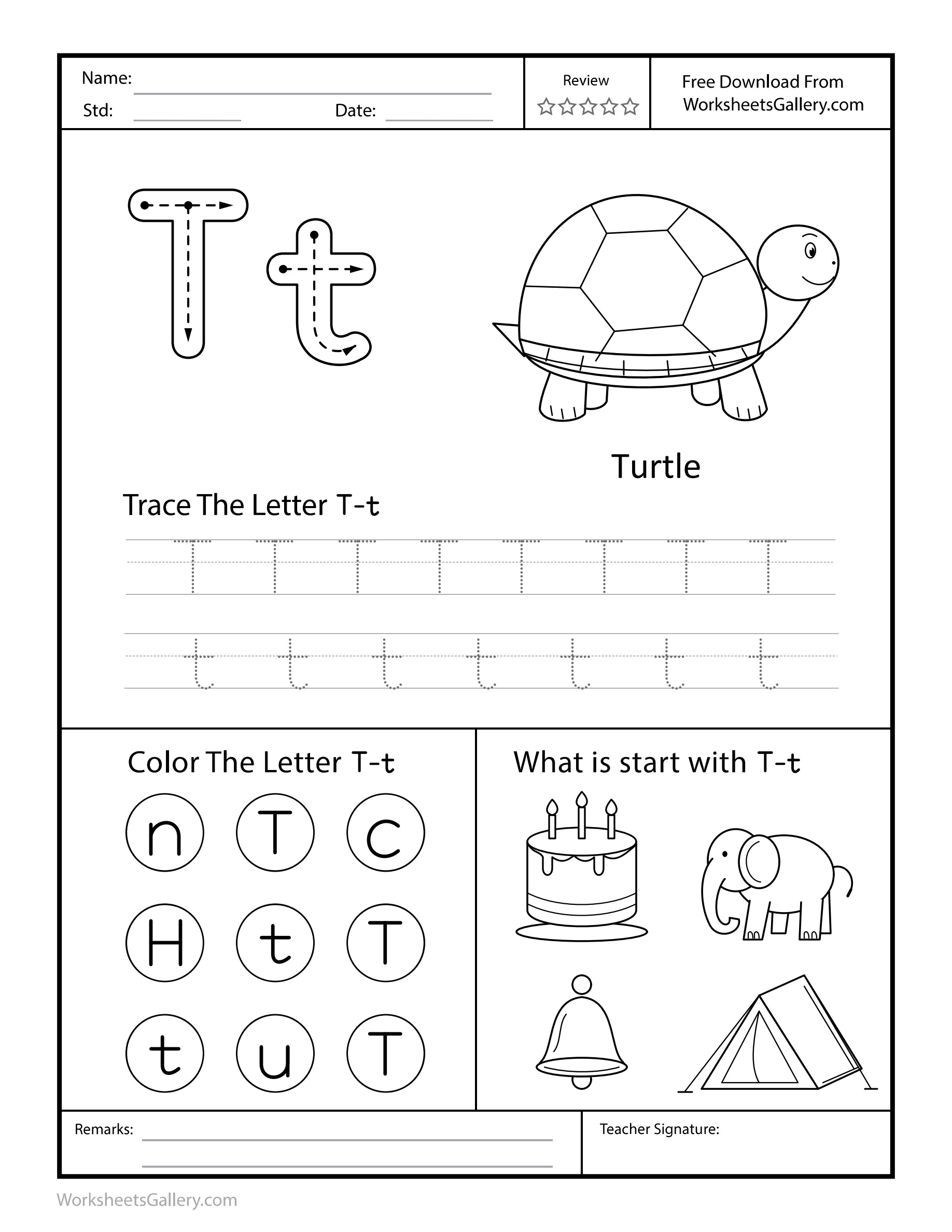
Where the bar sits changes the letter you are building. In this Letter T printable, the capital wears its horizontal line at the very top, while lowercase t rises above its crossing. Turtle introduces the pair, tent supplies the picture word, and fifteen dotted guides invite careful comparison. There are also five matching circles to select. Bring the shapes into an imaginary campsite, where a turtle guest needs somewhere to rest. Letter T can become a conversation about position, a short pencil attempt and a reason to invent what happens next.
Compare the Letter T top bar with the lowercase crossing
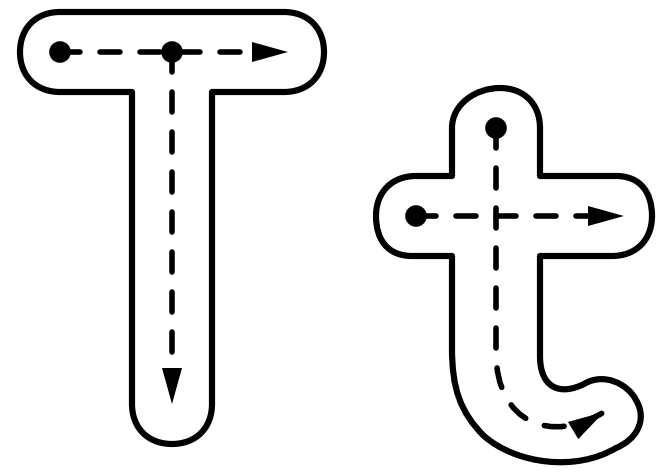
Capital Letter T has a horizontal bar meeting the upper end of one upright. The upright drops from around the bar's middle. The lowercase form is different: its horizontal stroke crosses the upright below the top, so the stem continues above the crossing.
Look at the foot as well. In this printed lowercase t, the lower stroke curves to the right. The capital finishes with a straight lower stem. These details give the learner more to compare than “one is big and one is small.” Both forms belong to Letter T.
Use the worksheet's start marks and arrows for the demonstration, alongside the handwriting routine used in your setting. Call the lowercase intersection a crossing if that word helps. Show how the strokes connect before asking for another Letter T attempt.
Tent is the intended Letter T picture word
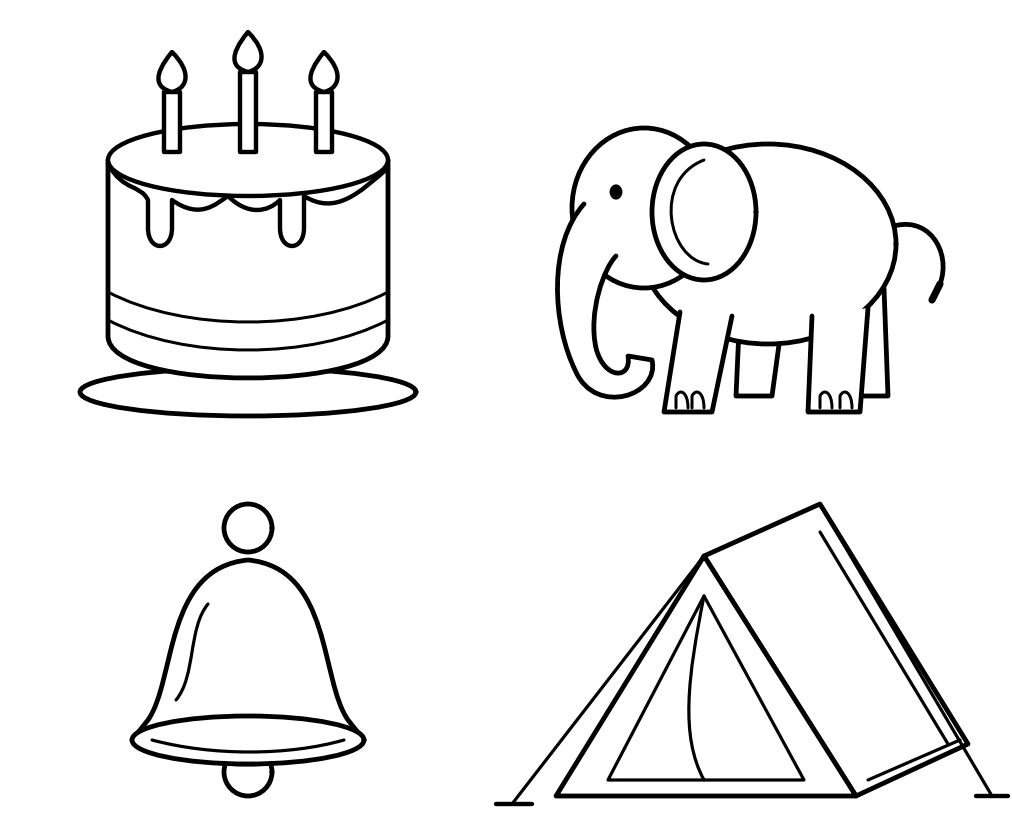
The lower-right picture box contains cake at upper left, elephant at upper right, bell at lower left and tent at lower right. Name the whole objects together. Tent is the intended Letter T choice, connecting with the turtle pictured above the writing rows.
Say turtle and tent in an ordinary voice and briefly notice the opening /t/. It is a short sound, so model it briefly rather than trying to stretch it. Avoid adding a whole extra syllable to the beginning. Letter T names a written letter; the spoken beginning is something the learner hears.
An elephant has a trunk. If a child names that part, acknowledge the /t/ beginning in trunk, then explain that the whole pictured animal is called elephant. This keeps a thoughtful alternative from being treated as a listening failure. Return to the intended object names for the Letter T task.
Six Letter T observations that reveal useful learning
The page offers more than a completed row. These six observations make it easier to see what a learner understands during Letter T work, including progress that appears through speech or pointing.
| Look for | Why it is useful |
|---|---|
| Bar position | Noticing top versus below the top develops a specific spatial comparison between the two cases. |
| Connected strokes | Making the horizontal line meet the upright gives the hand a clear target, rather than two unrelated marks. |
| A controlled foot turn | The lowercase curve adds a small change of movement after the straight downward section. |
| Both cases accepted | Choosing T and t in one search shows recognition across related but visibly different forms. |
| A named object | Turtle and tent connect a written initial with vocabulary the child can use in conversation. |
| An explained decision | Saying where a bar belongs or what a guest needs brings reasoning and descriptive language into the activity. |
Thinking, hand control and language overlap in these tasks. One hand keeps the paper steady while the other guides a pencil; the child notices a relationship and describes it. A spoken Letter T explanation may become clear before the corresponding mark does.
In class, compare Letter T bars and stem extensions
A teacher draws two separate uprights on a large board. She places a horizontal line at the top of one and below the top of the other. Children point to the upright that still projects above its bar, then compare that relationship with the printed Letter T models.
Complete the lowercase example with the foot shown on the worksheet. The demonstration concerns how components relate, so the whole form needs to stay visible. Invite the children to describe the difference before tracing on their own copies.
- Let learners face the oversized Letter T pair directly, with the models upright.
- Locate each bar and the place where it meets the upright.
- Demonstrate a complete route using the printed dots and arrows.
- Let each learner choose an unused capital or lowercase guide.
- Discuss one connection before continuing to another task.
A child can point to the correct relationship without yet controlling the pencil precisely. Keep that Letter T understanding separate from neatness when deciding what to offer next.
At home, welcome Letter T with a turtle tent
Omar and his mother arrange a blanket over a low play space and imagine a turtle arriving for a visit. Omar chooses a soft mat for the guest. Asked what should go beside the tent, he suggests a tiny bag and explains what belongs inside it.
When they return to the Letter T page, he notices the part of lowercase t above its bar. His mother repeats his description and offers a choice: trace a guide or find tent in the pictures. His decision becomes the next small activity, while the story remains available to continue.
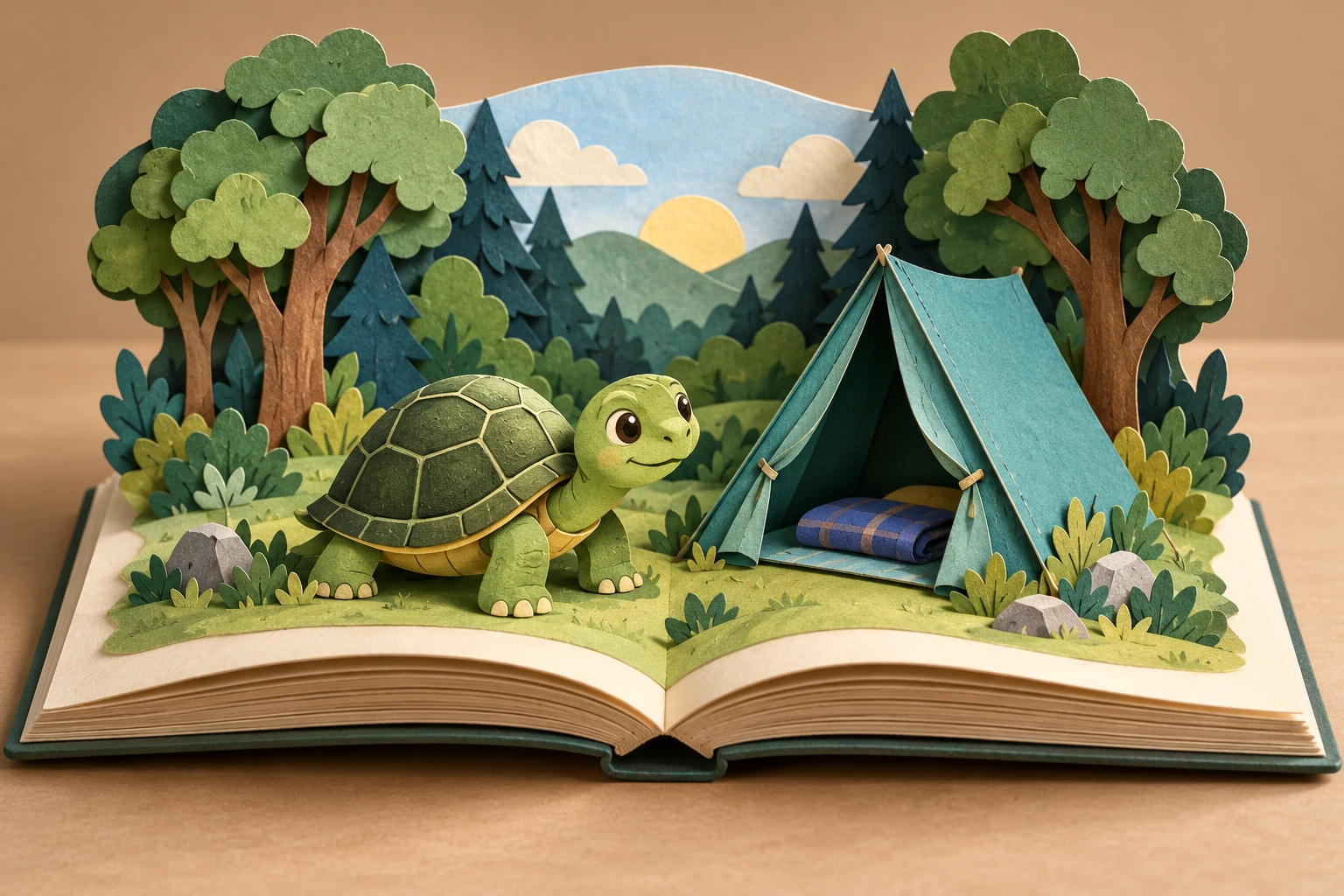
The scene is an invented story setting. A drawn tent or folded sheet of paper can serve just as well for Letter T play. Put the actual tracing page on a firm surface where both hands have room.
Find five Letter T matches and leave four distractors
The nine circles read n, T, c / H, t, T / t, u, T. The targets total three capital T forms and two lowercase t forms. Both cases belong in the Letter T selection.
- First row: choose the middle circle.
- Second row: select its central circle and the one to its right.
- Third row: choose the left and right circles.
H also has a horizontal connection, but it joins two uprights. The printed T has one upright beneath its top bar. Lowercase n, c and u have different curved constructions. A child who compares these features is doing more than memorizing where the Letter T circles happen to sit.
Ask for an explanation of one chosen circle and one circle left out. Let the learner point before coloring if that keeps the options easier to inspect. A changed answer after a useful comparison can be a productive part of the task.
Five camp invitations extend Letter T beyond tracing
1. Design a Letter T welcome sign in two cases
An adult writes a clear T and t on separate sign cards. The child chooses which to place beside the pretend tent, then describes where that form's bar sits. Swap signs and compare. Both Letter T choices are valid; the explanation reveals what the child noticed.
2. Ask the turtle to choose a comfort
Offer two imaginary things for the tent, such as a cushion and a blanket. The learner speaks for the turtle and gives a reason. Say turtle and tent during the exchange, then locate their shared initial on the Letter T page. The choice itself has no single correct answer.
3. Make a camp inventory with familiar names
Choose a few real or drawn objects and name them together. Include a T word the learner knows, such as towel. Ask which named item begins like tent. Accept a spoken response before returning to a Letter T guide; the inventory adds a listening demand, not a spelling requirement.
4. Give a Letter T bar-placement clue
Describe “right at the top” or “crossing below the top,” and let the child point to the corresponding form. Reverse the roles so the child gives the clue. The Letter T models stay visible, making this an explanation game rather than a memory test.
5. Add one event to the visit
Begin a short scene: “The turtle reached the tent and found…” Let the child invent the next event. Write the spoken sentence on separate paper if requested. Point out Letter T where it occurs naturally, and let the learner decide whether the guest stays or sets off again.
Use a short Letter T routine when you return
Start with a look, a word, a movement and a check. Look at one model. Name turtle or tent. Demonstrate the chosen route. Check where the horizontal line meets the upright. The sequence gives Letter T practice a familiar shape without requiring a complete row every time.
The sheet contains eight capital guides and seven lowercase guides, fifteen altogether. Save some for another visit. Offer a short return when the child is comfortable, and let interest in the guest or campsite carry part of the motivation.
Acknowledge a specific discovery: “You left part of the stem above that crossing.” Children may enjoy explaining their camp decisions, choosing colors for a tent or spotting the small foot turn. Their participation matters even when the pencil marks remain uneven.
For earlier movement practice, choose straight and curved handwriting lines. Compare the worksheet with an alternative T tracing format, or select another letter from the alphabet-wide tracing set.
When Letter T looks different from the model
Return to the meeting point. A floating horizontal line needs a connection; a capital bar placed down the stem changes its relationship. Compare the actual model before choosing another Letter T attempt.
If the small upright stops at the crossing, show the part that should remain above it. Discuss the curved foot separately if necessary. Keep feedback focused on one visible relationship.
Pressure, awkward seating or a slipping sheet can also interrupt the route. Offer a pause and a comfortable setup. A mistake is information about the next useful demonstration, rather than a reason to rush through more guides.
Choose and print the Letter T edition you need
Choose the original branded sample for a free download. Members with an active eligible plan can select the premium Letter T PDF. The clean edition has its website name, domain and website watermark removed. No advertisements are added to the printable, and every exercise is retained.
- Download the branded sample, or sign in and use the premium option available with your qualifying membership.
- Open the PDF and check for the turtle, two practice rows, letter search and all four object pictures.
- Print on US Letter paper in portrait orientation, keeping the whole outer border within your printer's usable area.
- Inspect one copy before making a class set. The little crossings, stem extensions and dotted foot curves should remain clear.
Keep a pencil and chosen coloring tools beside the Letter T sheet. The learner can begin by explaining a bar position or choosing something for the turtle's visit.
Popular Worksheets
Printable resources families and teachers are downloading now.
 Free
 Free
 Free
 Free