
Parcel Number 9 Tracing for a Brilliant One-Short-of-Ten Check
Keep the nine lesson handy alongside the other 99 original tracing sheets in one $8 printable collection.
The original NINE worksheet retains every numeral, word and sequence activity.
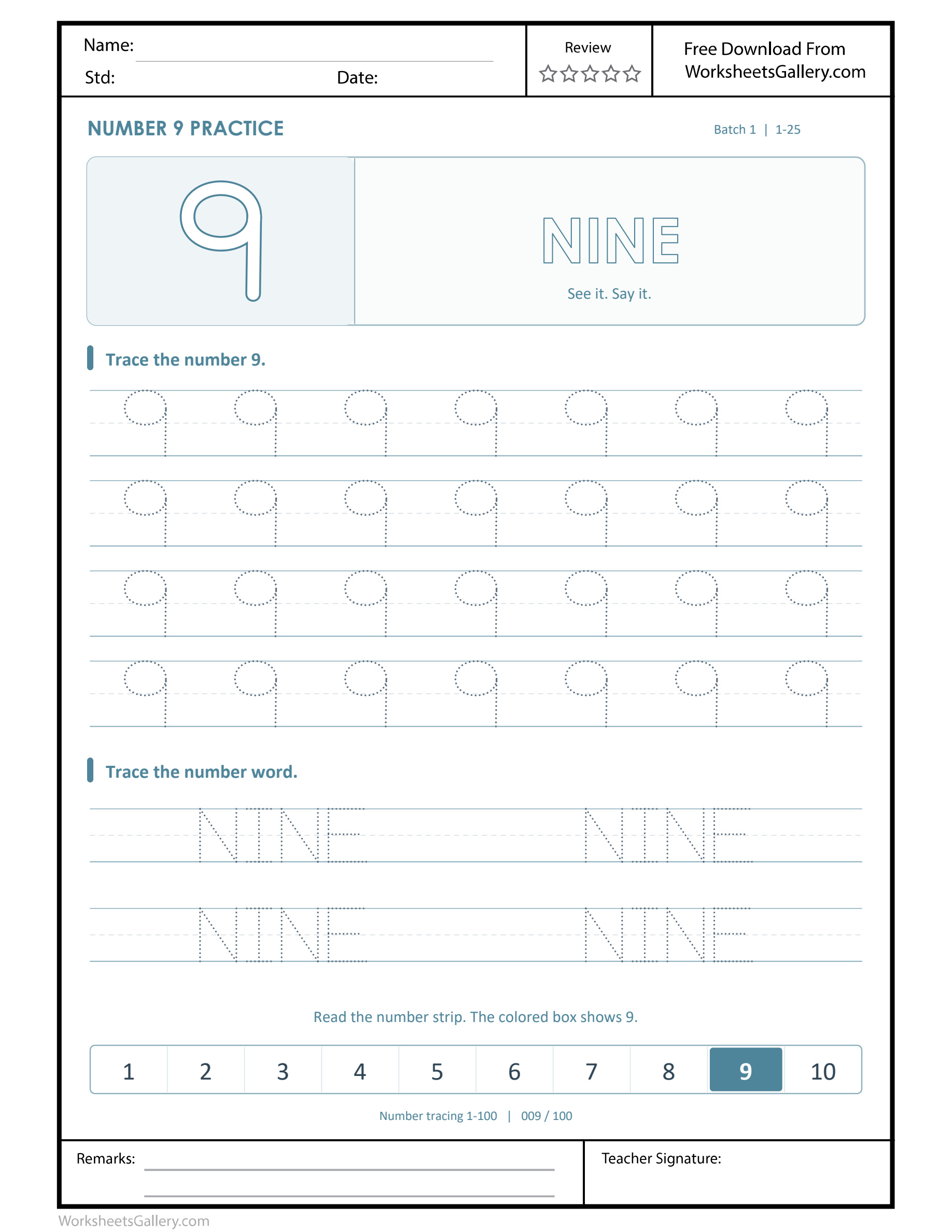
The full sheet pairs the large 9 model with four numeral lines, two NINE writing rows and its ten-number strip.
A shipping tray has ten slots and one is still empty. Sam thinks a full-looking tray must hold ten parcels. His partner checks the open slot and counts the nine filled places instead of treating the tray as the quantity. On Number 9 Tracing, the parcel answer has a numeral and a name. Find 9 in the outline above the dotted guides, and read nine to a partner. The colored box gives 9 a second job by placing it among the nearby numbers from 1 through 10.
The count behind the parcel example
Nine is useful when the total number of spaces and the occupied places are close but unequal. A nearly full tray encourages a quick ten response. Sam can check the amount by filling one more position and comparing the two displays. The change is the newly occupied slot, even though the tray never grew.
Can Sam find the missing parcel's slot before saying how many parcels are there? Listen for nine occupied places in a tray that could hold ten. With the mini parcels in view, decide together whether 9 still fits.
Classroom practice that gives 9 a purpose
In a small group, place a paper tray label next to a removable contents label. Read 9 together first. Then divide the parcel jobs.
Assign one partner to move the mini parcels and another to read 9. A third child can ask, “Can Sam find the missing parcel's slot before saying how many parcels are there?” Rotate after one parcel explanation. Leave 9 in view for the partner who checks it.
Make a second parcel display by rearranging the mini parcels. While one learner writes 9, another can explain nine occupied places in a tray that could hold ten. Ask the group to find 9 on the 1–10 strip.
Locate 9 without relying on the color
Look for 10 to the right of 9. Hide the shaded 9, read its exposed neighbors and ask which value is covered. Reveal 9 and read nine. One correct location is enough during the parcel exercise.
Start at 9 after using the colored clue once. Move one position toward a printed neighbor and ask what number appears. Move back to 9 and let the learner explain how a step along the strip relates to adding or taking away one parcel.

An adult's map of the NINE handout
- Find 9 and NINE. The top panel separates 9 from its name. Say nine, then point to the outlined 9.
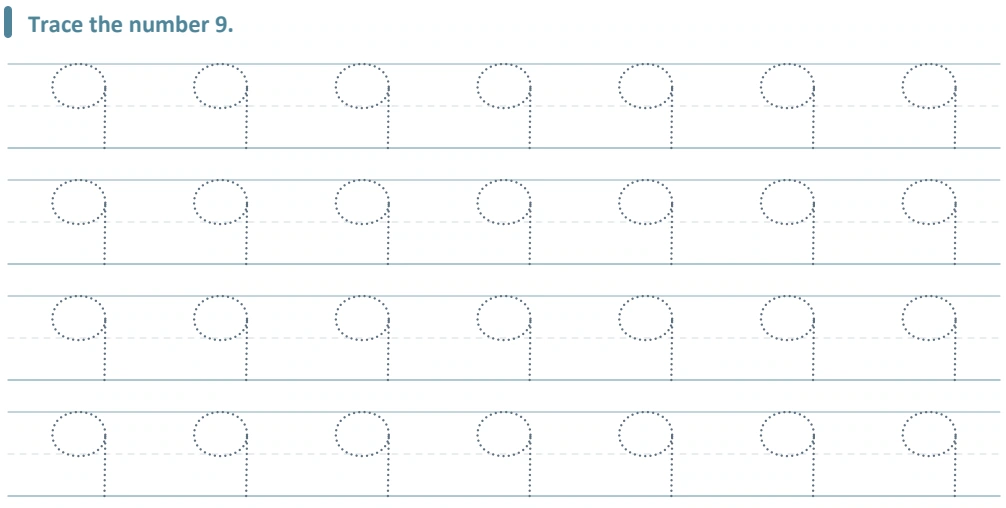
- Choose a line for 9. Each line has 7 dotted models of 9. Use just part of a row to keep the loop above the descending part so it does not read like a 6.
- Trace NINE. Its two ruled lines show NINE in dotted capitals. Save the lower NINE line for another day.
- Locate 9. Position 9 on the strip shows 9. Point at 1 and 10 and decide whether 9 sits near an end.

Six skills visible in the NINE practice
Two labels on the same tray
Make a large 10 card for the tray and a small 9 for today's shipment. Let the child place both cards where the intended reader can find them. On the next turn put a parcel in the open place. Decide which card changes and which stays. Point at 9 and 10 on the same printed strip so the change is visible. Remove two parcels on a third turn only if the learner wants another challenge. Ask the child whether “a nine-slot tray” would describe today's arrangement, and have them show why the capacity label belongs to the tray.
The written name on the 9 page
Say NINE while showing 9. In this reading turn, notice that NINE begins and ends with different letters even though the N sound appears twice. Track NINE from its first letter onward. After one NINE trace, read 9 aloud again.
Use two voices in the parcel activity. The adult reads NINE once, and the child looks for 9 in print. Switch the jobs and let the child name the amount while the adult traces one NINE model with a finger.

Number 9 Tracing with a single movement cue
Choose one dotted 9 and ask the child to point at a part worth watching. In this case, keep the loop above the descending part so it does not read like a 6. Follow the model once together and allow a break before working on a smaller copy of 9.
The loop of 9 sits high, with a lower stroke dropping away. Ask the learner to touch that loop on the large reference without tracing yet. If 6 appears instead, compare the high and low white spaces inside the digits. Keep a slow finger copy as a choice before offering a new pencil attempt.
Give the empty compartment a move
Make two tray drawings with one empty space in each, in different locations. Have a child compare the two labels before tracing NINE. Moving the gap does not give the tray another parcel. Draw a separate box for a label meaning all spaces, then write the amount of the shipment in a new spot. The two writing purposes can coexist on a pretend delivery note. After a gentle trace of 9, invite the learner to find the high loop on both the large outline and the numeral printed in the strip.
Troubleshoot 9 with a small second attempt
| What happened with 9 | Cue | Check for NINE |
|---|---|---|
| Writing ten for the capacity instead of nine for the contents. | Return to nine occupied places in a tray that could hold ten. | Show the mini parcels and check the first label. |
| The pencil leaves a dotted 9. | Show where the printed 9 changes direction. | Follow one dotted 9 slowly and compare that turn. |
| The NINE label gets a quick guess. | Point across NINE. | Revisit a missed letter from NINE. |
| The reader misnames the 9 cell. | Look for 10 to the right of 9. | Hide 9 and read a neighbor. |
Choose one cue for the parcel moment. If the child rushes 9, check the count with the mini parcels first. Return to a short 9 attempt once the amount is clear.
Bring the 9 idea to the kitchen table
Draw ten cells on an envelope and cover all but one with folded paper. Move the open place to the middle so a child sees that the count stays nine regardless of which space is free.
- Start with the parcel supplies. Say 9 together before pointing at its outline.
- Ask how the mini parcels show nine occupied places in a tray that could hold ten. Let the child move those mini parcels while explaining.
- After the parcel activity, pick a dotted 9 model and have an adult read NINE.
- Note which part of 9 needed a cue. Plan the next parcel visit around that movement.
Return to 9 when the child is ready
The NINE page suits preschool and kindergarten children around 3–6 with some pencil control. During parcel play, a younger child can point at 9 or move the mini parcels. Let the child choose when to try writing 9.
Give each visit to 9 a purpose. Try the shape of 9 today and explain the parcel count another day. Ask which NINE task to revisit.
Ask what changed in the latest 9. Did it help to keep the loop above the descending part so it does not read like a 6? Save one NINE line for later. End with the child's description of 9.
Follow-up games with the NINE label
- Make a parcel sign. Ask the learner to write a 9 count tag for three rows of three parcels. Let a partner explain why 9 fits before tracing it.
- Rearrange the mini parcels. Count 9, move the mini parcels and predict the recount. Add one to 9 for a different result.
- Point to 9 in silence. Indicate 9 and a neighbor on the 1–10 strip. A partner reads 9 and chooses the NINE card.
- Record the parcel report. A child can explain nine occupied places in a tray that could hold ten in a pretend message. Give the report a 9 label.
- Write 9 on another surface. Set NINE next to a board or dark paper. Compare your two 9 attempts with the outline.
Practice to pair with the parcel lesson
Compare the even-number dice game with your 9 lesson. Try the printable 1–6 dice activity after parcel play, or pair 9 with a page of pencil-control paths.
Family play with mini parcels can grow from NAEYC family play ideas. For a parcel variation, browse PBS KIDS for Parents and adapt an activity around 9.
Print a full 9 handout
Use the free download on this page for the original NINE worksheet. If you have an eligible active membership, sign in and choose the member download for the clean 9 PDF.
Select US Letter portrait for the 9 PDF. Check the border around NINE in print preview. Give the 9 dots a standard-quality test.
Print the clean NINE file without watermarks or ads. The $8 collection includes 9 and the other 99 sheets.
Related Topics
Popular Worksheets
Printable resources families and teachers are downloading now.
 Free
 Free
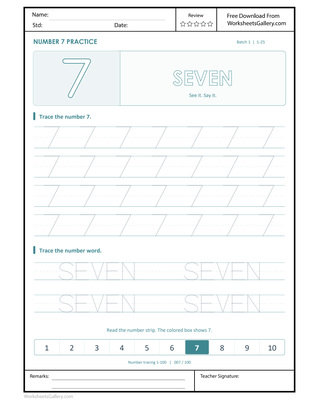 Free
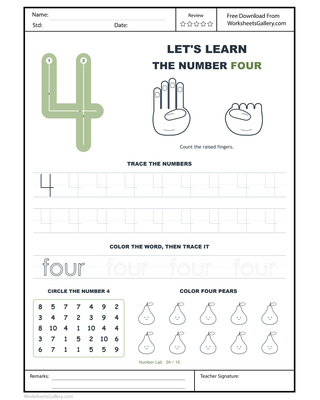 Free