
Toy Lane: Wagon Tracing, 4 Easy Drawing Steps
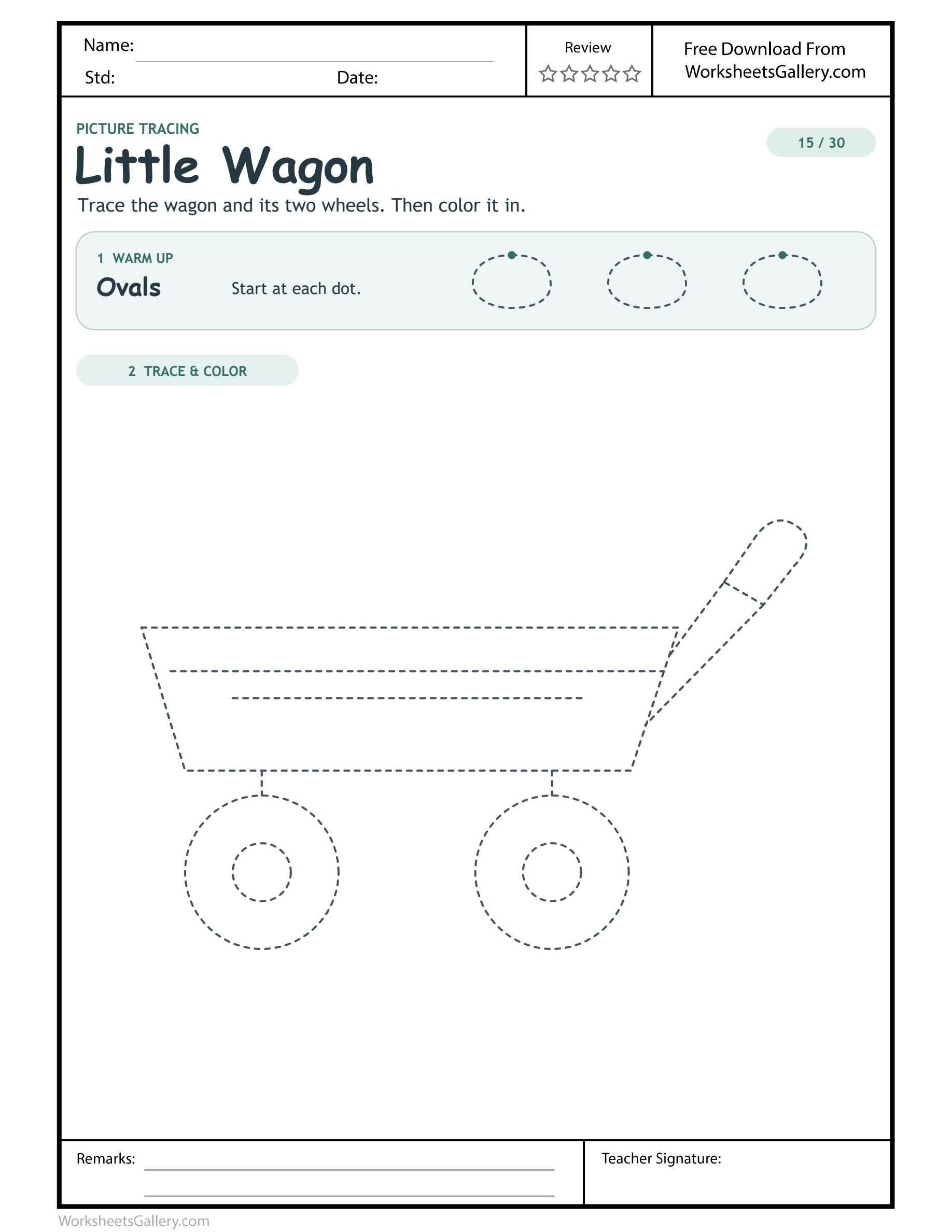
Keep the little wagon printable alongside the other 29 drawings. The collection includes each original activity layout in one clean PDF.
Toy wagons leave two clear shapes where their wheels should be. With Wagon Tracing, the first practice movement is ovals. Look ahead to outer wheel returning to its start before handing over a pencil. A small pointing tour gives a preschooler time to build a plan and gives a kindergarten learner a way to explain why a line has to change direction. Let Luz decide which part will be ready for color first. That choice makes the second half of the activity feel like finishing a drawing of their own.
Toy Lane picture notes for grown-ups
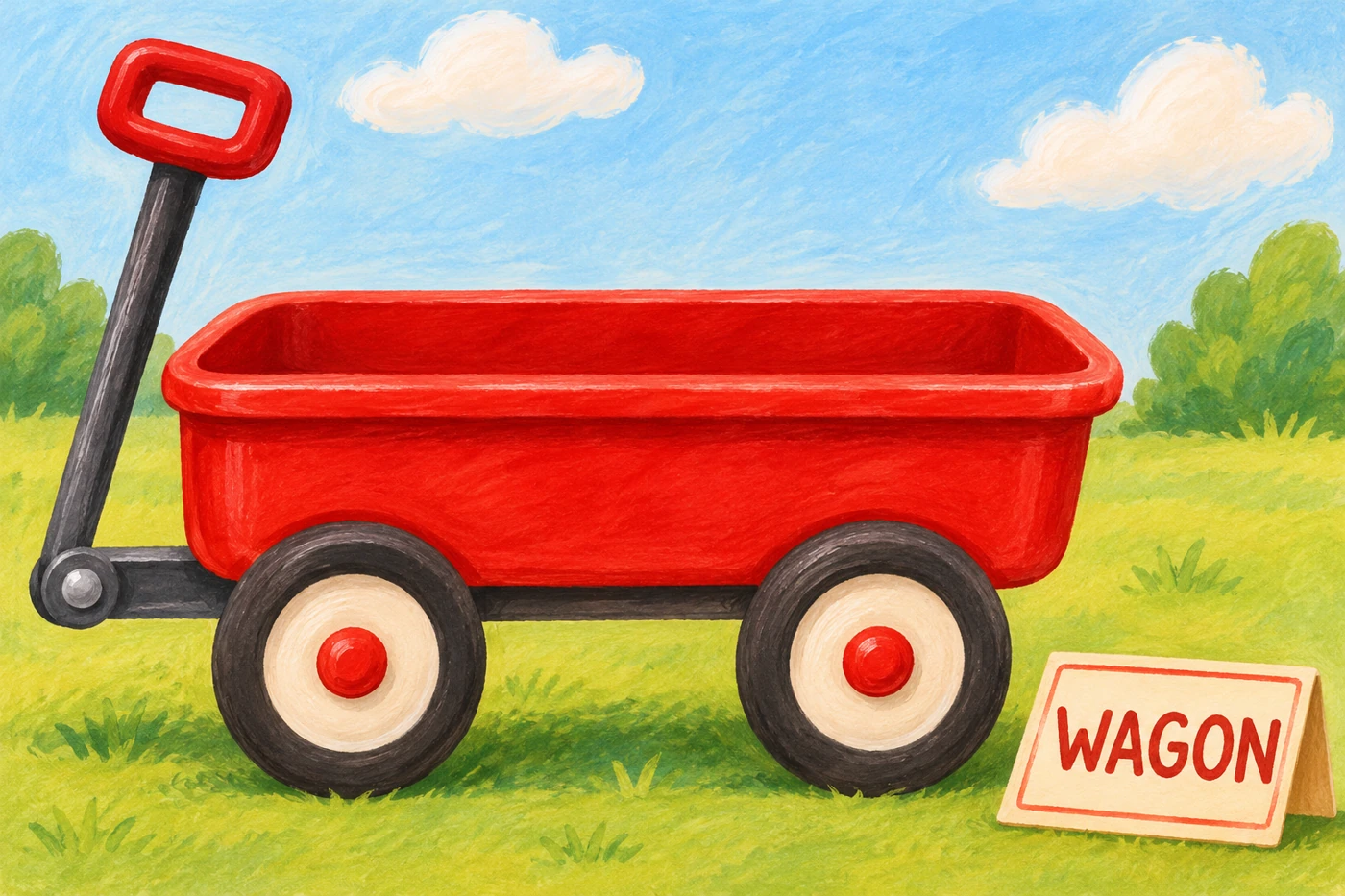
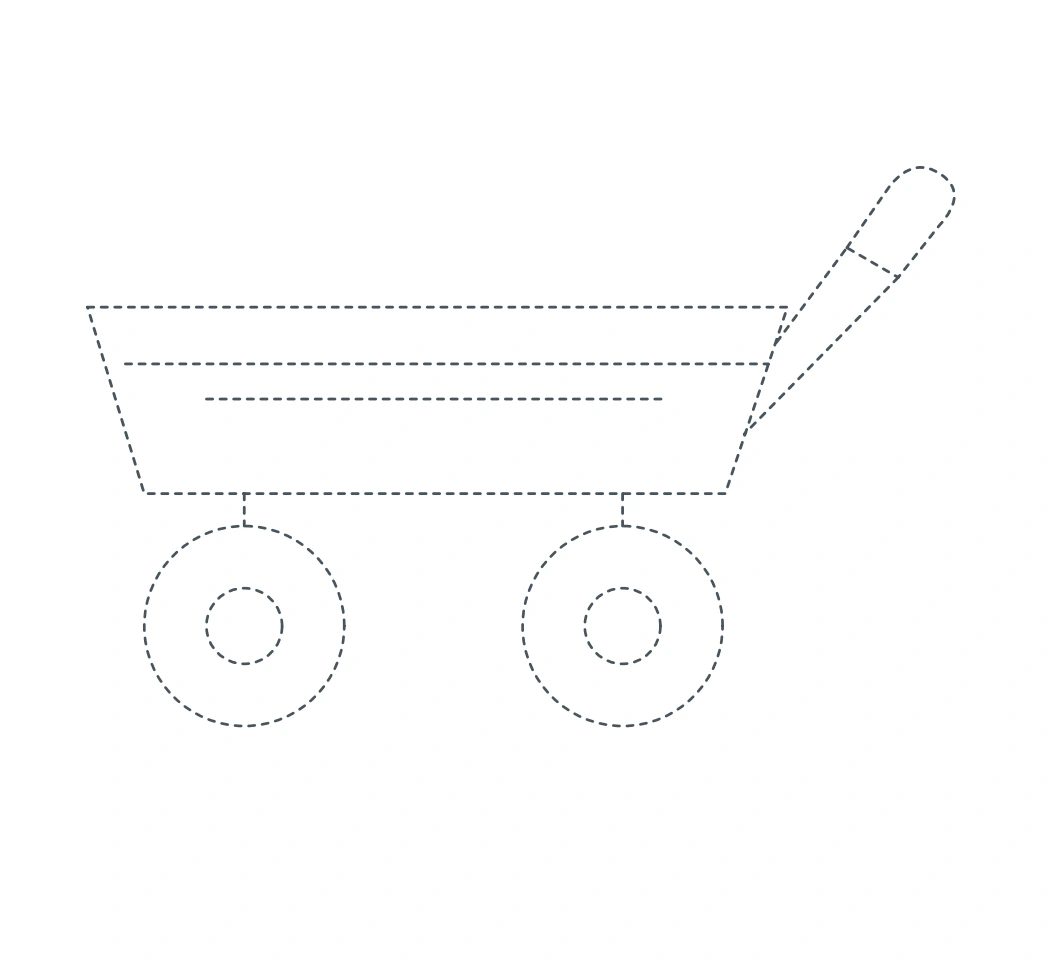
Luz parks a toy wagon beside a block house. Before labeling the parking place she uses her finger to distinguish the big rim from the small hub on each wheel. Read the printed direction on the little wagon sheet aloud. Trace the wagon and its two wheels. Then color it in. Walk through the labeled parts with Luz and invite a prediction about which requires the tightest turn. Explain that a color choice can wait until the relevant edge is easier to recognize.
Each wheel has a smaller inner ring. Start those at different moments, with a pencil lift in between. If the handle seems to run into the wagon rather than away from it, find its attachment point and look at how the handle rises on the right side.
At outer wheel returning to its start, look toward the next visible mark before the pencil moves. That practice can make a crowded area easier to navigate. In the block transport job, one learner can point to the next mark while a partner describes the change of direction. Make room for a second explanation after the roles switch.
What a color choice reveals at Toy Lane
Imagine ruby body and gray hubs. Ask what changes near handle slant rising away from the body when a new shade touches the neighboring area. A child may choose a surprising combination and still show where one shape gives way to the next. Test the colors on a clean scrap if the region is small. Put the larger coloring areas within easy reach so the child can move the whole arm comfortably.
Roll a toy wagon a short way before letting Luz check the wheel outlines. Find the large rim and the center that travels with it. At the delivery table, a partner can draw two little circles going under a passenger tray. Offer a second color to the center of one wheel and ask what shape stays clear outside it. After the drawing, see whether the same finger movement helped both wheels.
A second attempt at the toy lane detail
When you see a little gap where the oval should meet, take a pause around outer wheel returning to its start before adding another mark. Ask about the printed line while keeping both the dotted guide and the attempt in view. For Luz, an erasable pencil can make a tiny revision feel possible. A finger-only rehearsal also lets the learner solve the route separately from pressing on a tool.
Return to one little wagon sheet action on a calm day. Near the toy delivery route, offer a choice of finding the dot, showing handle slant rising away from the body, or trying a crayon in the largest clear area. Brief visits can be easier to repeat if they end with a recognizable feature the learner can talk about. Let the child name an upcoming step on a slip of paper and keep it beside the drawing.
| Where | What to look for | What to try |
|---|---|---|
| At outer wheel returning to its start | Check for a little gap where the oval should meet. | Ask the learner to compare the end of the stroke with the starting point. |
| Near handle slant rising away from the body | Check whether Luz knows which route belongs to the part. | Offer a temporary paper pointer at the place they want to reach. |
| After an attempt at little wagon | Check how much pressure the tool needed in the smallest region. | Test a lighter mark beside the printed ovals examples. |
A home visit and a class turn with Little Wagon
Set a pencil, two crayons and a spare sheet beside the toy delivery route. Let Luz point to the first part of the picture they would like to finish. Name that landmark together, try one warm-up path, and work on the chosen part while the picture is still upright. Give the print a slight turn if it makes the movement around outer wheel returning to its start feel less awkward.
Start the block transport job with a silent look at the large outline. Ask two learners to show different places where the line changes. Set up a practice turn for each learner, with the adult holding a finger near handle slant rising away from the body only if it helps to find the route. During the coloring turn, have the children describe one area that should stay separate from another.
For a child around three who is new to pencil paths, choose the most open portion of little wagon sheet and let a fingertip do some of the work. A four- or five-year-old who can track the larger route might try a smaller feature. An older kindergartner can offer a reason for an intentional pencil lift near outer wheel returning to its start. Pick tasks by what the child can explain and comfortably attempt with the tool in hand.
The first pencil movement in Wagon Tracing

Ovals is the starter movement for the little wagon sheet.
During a practice pass near the toy delivery route, have Luz find the printed dot and follow the long side and round the narrow end. Explain that an oval returns to its own starting location. Follow a dotted example with the finger if the pencil is still getting pressed hard into the paper. The purpose is to see what the direction does. On the large little wagon drawing, find a line that uses a comparable movement and decide whether it asks for the same speed.
Watch where the movement ends. An adult can place a loose paper pointer beside handle slant rising away from the body and ask the learner to name the place where the guide comes to a stop. Offer one chance to lift and start again after that landmark. Try changing the size of the movement in the air before deciding how far the hand should travel on the paper.
Off-page drawing invitations from Toy Lane
Play an illustrator and a reviewer for Little Wagon
One child points to a section of wagon body, long handle and concentric wheels. A partner predicts a good place for the pencil to rest. Switch jobs after trying a tiny route with a finger, then discuss why an interruption might make that detail easier to handle.
Invent a matching object for Little Wagon
Imagine a different household object with one version of outer wheel returning to its start. Sketch just that part large on a sticky note. Let a partner guess where it might go, then compare the proposed sketch with the worksheet detail.
Tell a before-and-after story for Little Wagon
Imagine who would find Little Wagon near a toy delivery route. Ask what they would notice first after a blank dotted shape turns into a tracing. Give the storyteller a chance to compare the finished color area with the area they chose to leave plain.
Draw a route with yarn for Little Wagon
Lay a piece of yarn along a surface. Have the child change one section so it feels like the motion used near outer wheel returning to its start. Mark the endpoint with a removable paper circle and ask how the route would feel from the opposite direction.
What to observe in the Toy Lane lesson
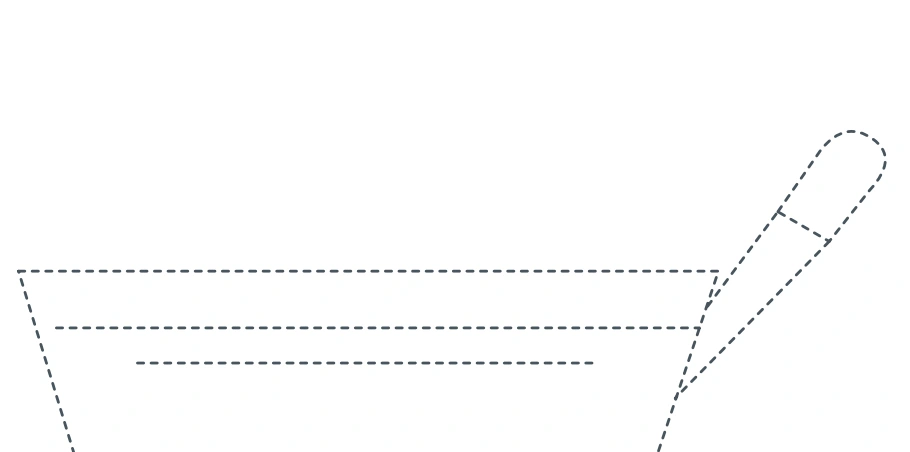
- Try a steady hand movement A printed sample gives the hand a short place to practice how to come back to the opening point.
- Know where a part belongs Comparing handle slant rising away from the body with the picture outline gives a child a reason to read the shape in context.
- Describe a decision Talk through the meaning of words from wagon body, long handle and concentric wheels while matching them to parts on the page.
- Return after a pause Pick a sensible restart spot in the little wagon sheet and see whether the learner can explain what comes next.
- Select a coloring area Using ruby body and gray hubs gives the child a chance to distinguish adjacent regions by a visible choice.
Write down one thing that Luz said or did around handle slant rising away from the body. In a subsequent session at the block transport job, use that observation to choose a smaller or broader line. Early drawing makes room for cognitive planning, coordination of the eyes and hand, and the words a learner uses to describe positions. A single filled-in picture gives only part of that account.
Where to go after the Toy Lane drawing
If the child wanted to stay with outer wheel returning to its start, open short closed shapes with a return point. For a fresh tracing start, a simpler set of tracing paths gives space to rehearse foundational directions. Try a shell spiral with growing turns when Luz can explain how one kind of path differs from another. The Head Start guidance on hand and eye coordination offers additional ways to include drawing tools in everyday play.
Use the free download button for the original little wagon PDF with the site credit. With an eligible membership, open the clean version to get the same sheet without the watermark or promotional text. The $4 collection brings this activity together with all 29 other printables.
Check portrait US Letter paper and preview at Actual Size or 100% before sending the little wagon sheet to print. Look closely at the dashed lines near handle slant rising away from the body. If they are hard to see, try a standard quality print. Start with one sheet for Luz and set out a pencil and the colors the learner wants to use.
Related Topics
Popular Worksheets
Printable resources families and teachers are downloading now.
 Free
 Free
 Free
 Free