
Castle Grid Building: 3 Clever Tower Challenges
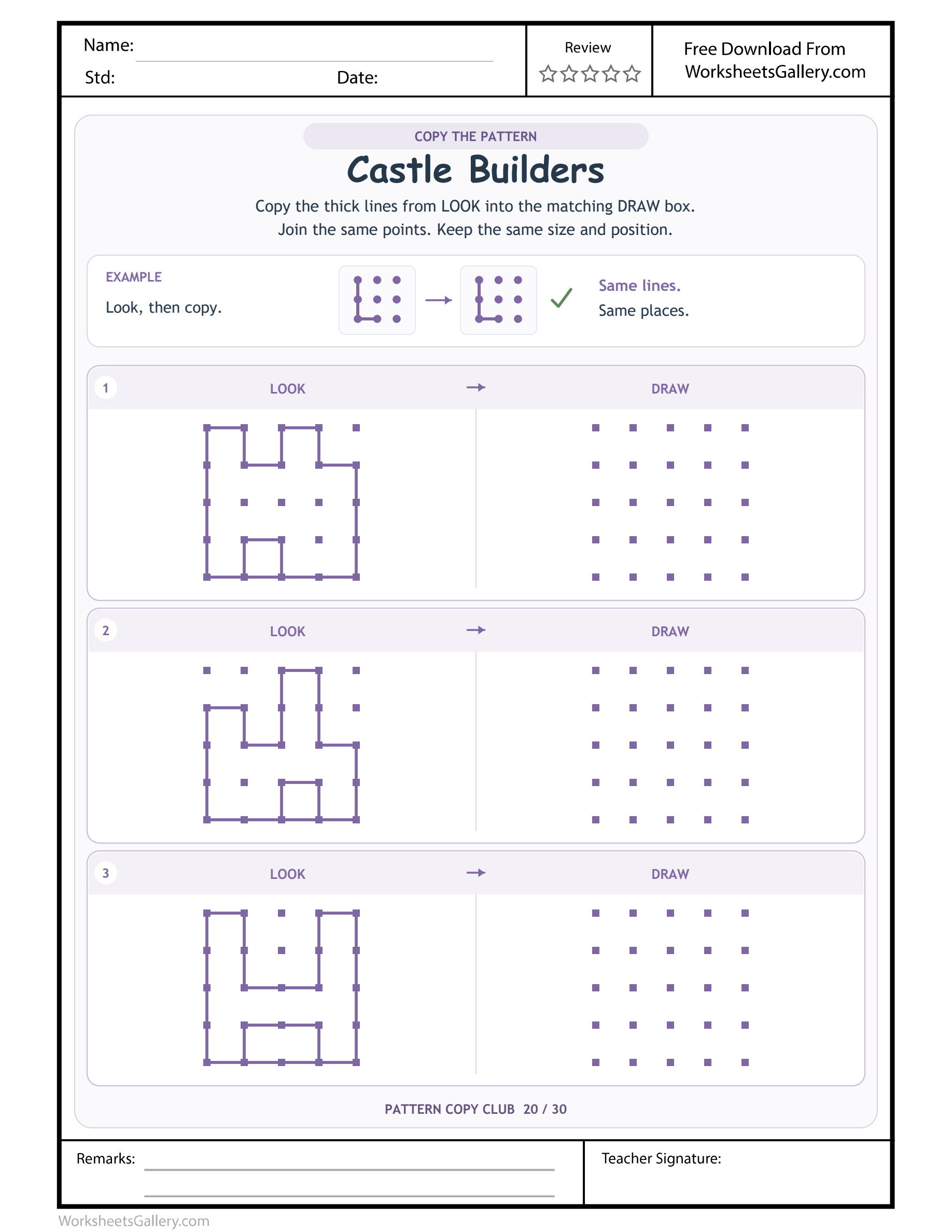
Castle Grid Building: Locate each battlement and doorway before copying the detailed castle contour.
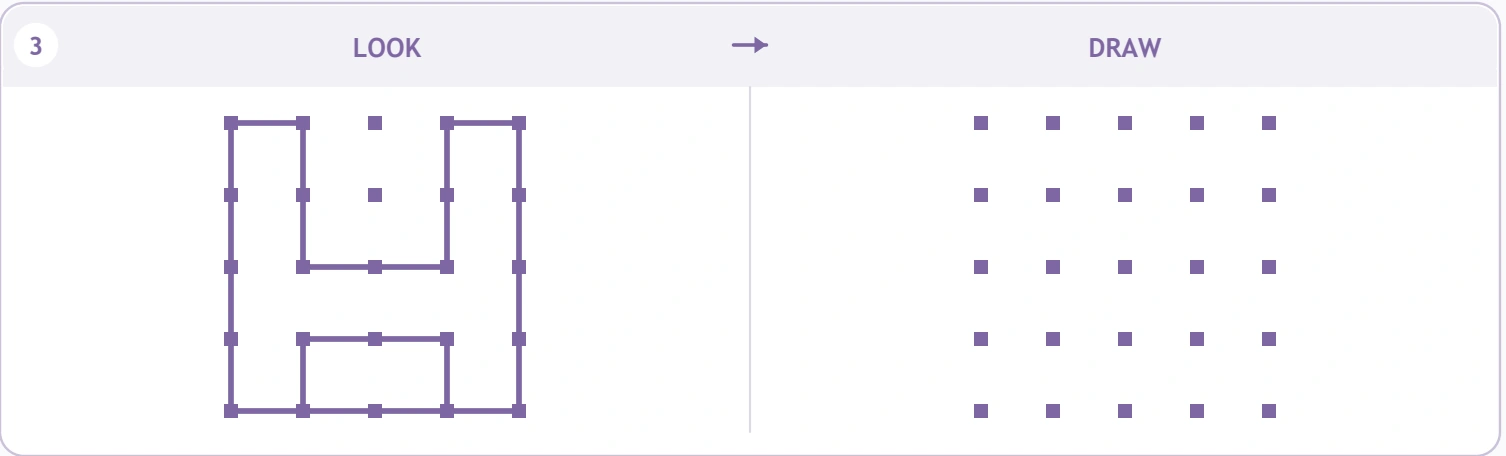
Battlements make these buildings recognisable, but their small changes are the real drawing challenge. Castle Grid Building contains three castle-inspired models on paired twenty-five-point fields. Children reproduce the printed towers, stepped rooflines and low doorway details without adding a favourite flag or window. The Castle Builders sheet also includes a completed example that introduces the LOOK-to-DRAW relationship. Bring out this page for a learner who enjoys construction pictures and can work through a detailed model in short sections, returning to the reference whenever a wall or corner needs another look.
Tess opens an imaginary building office — Castle Grid Building
Imagine Tess designing a block castle at home. An adult offers Castle Grid Building as a builder's plan to inspect. Tess notices two high parts but initially draws their top edges at the same level in a model where the towers differ. They place two block stacks beside the paper and compare the height relationship.
This invented scenario illustrates a helpful distinction: the child can freely invent a block castle while the paper task preserves a supplied design. Ask Tess which tower detail to copy next. One carefully located step may be enough building work for the day, even if the overall drawing remains incomplete.
What the castle sheet actually contains: Castle Grid Building
| Castle Grid Building pair | Visible Castle Builders model | Model structure |
|---|---|---|
| 1 | Two square battlements and a low door | 25 anchors / 21 bold pieces in Castle Builders |
| 2 | Uneven towers with a right-side doorway | 25 anchors / 21 bold pieces in Castle Builders |
| 3 | Two high towers above a wide lower doorway | 25 anchors / 24 bold pieces in Castle Builders |
The Castle Grid Building counts include aligned pieces divided by anchors. A wall containing several counted segments can still be drawn as a practical straight portion. The totals describe the models; they are not targets for pencil lifts, timing or scoring. Each answer field provides twenty-five markers, including positions that a chosen castle does not use.
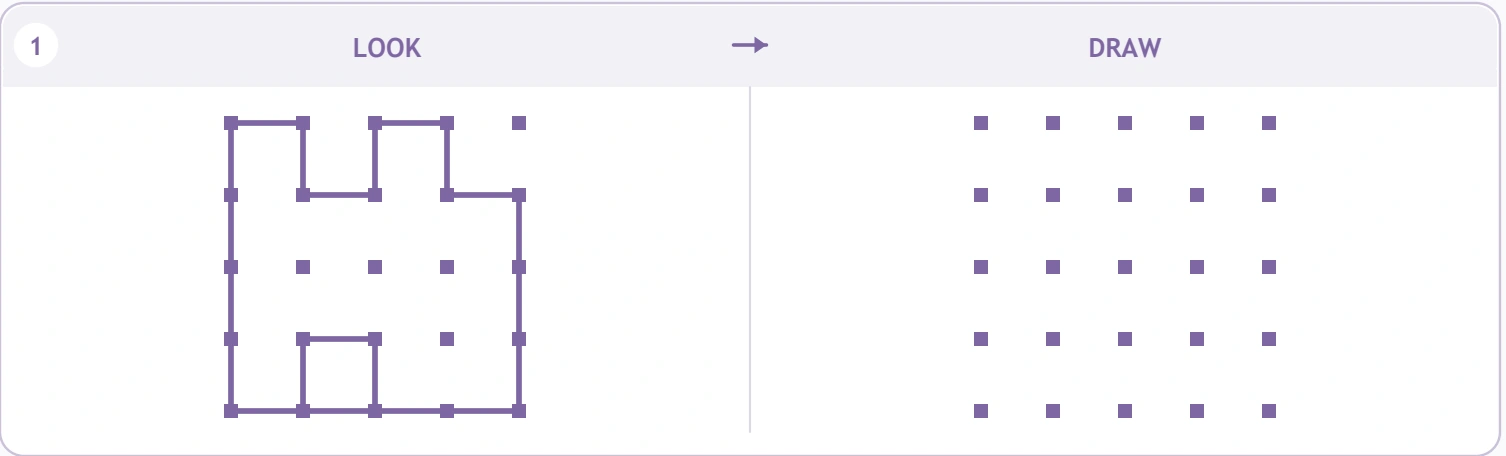
Plan a small section before approaching the whole fortress: Castle Grid Building
Start Castle Grid Building with a clear outer corner or the highest tower point. Locate its counterpart in DRAW, then identify the next change in direction. Copy that portion and compare it while the working area is still simple. A complete castle need not be held in memory.
Move between roof steps, wall sections and doorway details as useful groups. The source imposes no mandatory drawing order. A child may prefer a low wall because its endpoints are easier to identify. Accept that choice and ask them to show where it belongs relative to the taller structure before they extend the outline.
A battlement is a sequence of height changes: Castle Grid Building
The top edges of Castle Grid Building's castles rise and fall through small rectangular steps. A child can recognise the castle theme yet smooth those steps into a single flat roof. Follow the model slowly with a finger, naming one rise, short top and descent before looking for corresponding anchors.
Preserve the particular tower arrangement. The first model's paired square battlements, the middle design's uneven towers and the final castle's high sections do not share one interchangeable roofline. Compare a distinctive difference before beginning a new model rather than carrying the previous castle's shape into the next field.
Five useful skills at the builder's desk: Castle Grid Building
- Detail selection. Small roof steps become meaningful information within a much larger building outline.
- Relative height. The learner compares towers and low walls instead of treating every top edge as level.
- Part organisation. A detailed picture can be divided into roof, outer walls and doorway groups.
- Controlled cornering. Short upright and horizontal motions invite deliberate stopping and restarting at anchors.
- Plan language. Words such as battlement, doorway, taller and adjoining help explain a visible building relationship.
During Castle Grid Building, an adult can observe these choices without using the page as a developmental assessment. A child may locate a step correctly while finding the short pencil movement difficult. Respond to that accurate spatial choice separately from the appearance of the final line.
When a detailed castle is an appropriate invitation: Castle Grid Building
Later preschool and early primary learners, approximately ages four through seven, may investigate Castle Grid Building with patient adult support. Its crowded anchor fields and many short segments can be demanding. Readiness includes being willing to inspect a model and attempt a short connected section, not simply reaching a particular birthday.
Try a tower top on a larger adult-made dot field first if the printed detail feels too small. Blocks and wide construction strips can provide another scale for the same height relationship. Return to Castle Grid Building when the child is comfortable comparing positions; a single wall section can be a sensible stopping point.
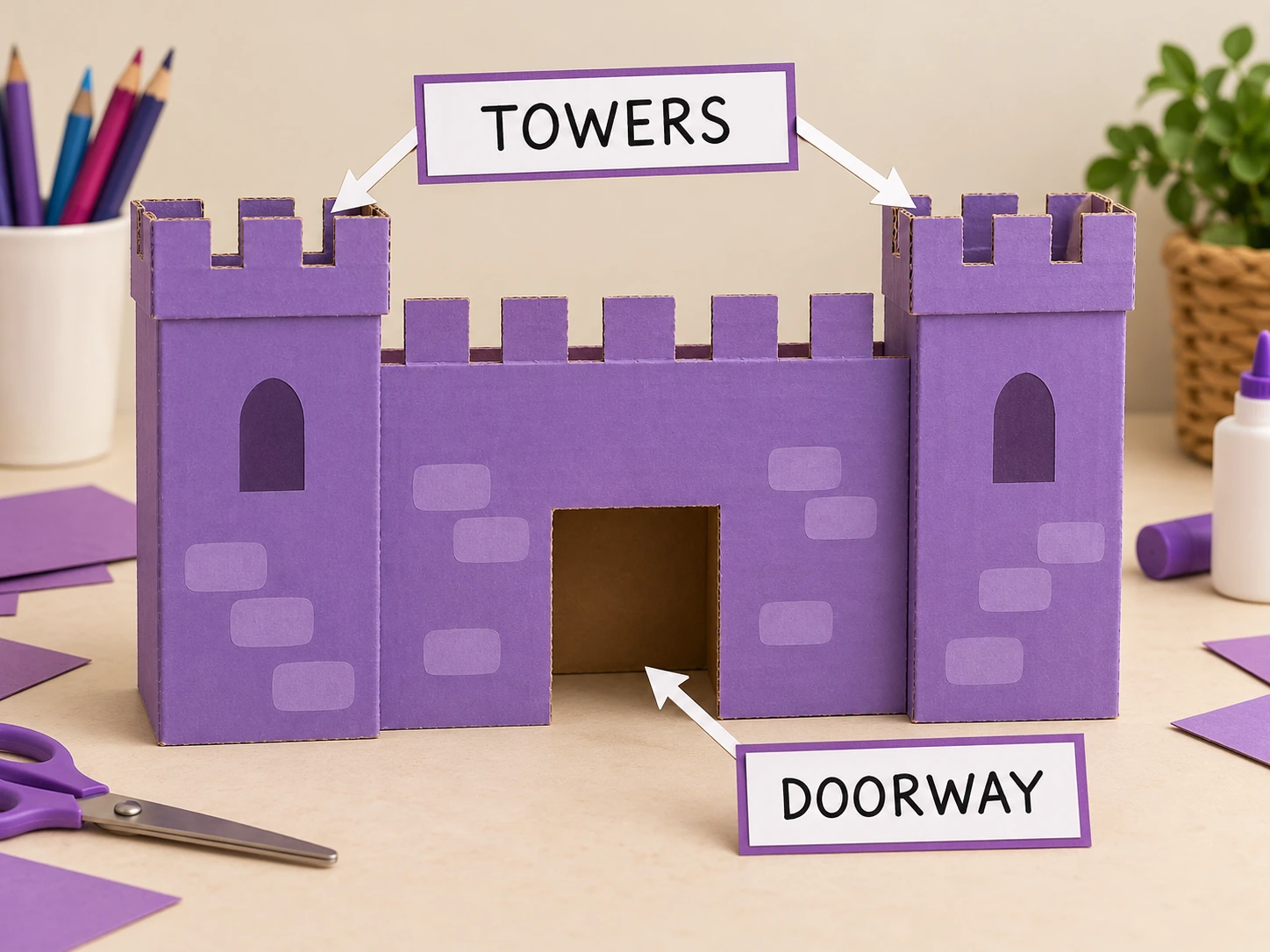
A classroom tower survey
For a possible school activity, give pupils separate copies of Castle Grid Building and invite them to find a pair of tower tops that deserve comparison. They point or explain before drawing. A teacher demonstrates checking one height difference on spare paper while keeping the printed reference available.
In this imagined classroom example, classmates do not need identical starting points or the same amount of completed work. Watch whether a child checks the reference before adding a doorway or joining the lower wall. A brief note about preserving one stepped roof detail is more specific than labelling the entire castle good or poor.
Doorways belong to their own building: Castle Grid Building
The first Castle Grid Building castle has a small lower doorway. Other models place or shape their internal details differently, including a wider lower doorway in the last design. Ask the child to find the actual endpoints of the chosen detail rather than drawing a memorised arch or adding decorative windows.
The picture theme may naturally prompt stories about people inside. Welcome those stories aloud, and offer another surface for invented rooms, banners or guards. Within Castle Grid Building, the supplied line plan remains the reference. Separating storytelling from added marks lets imagination coexist with an exact visual comparison task.
Five construction games for another kind of practice: Castle Grid Building
Exchange a tower-height brief: Castle Grid Building
Build two towers of different heights. Describe their relationship to a partner who has another set of blocks. Keep the original visible while they reproduce it. Relate the comparison to Castle Grid Building's uneven roof levels without requiring another detailed pencil copy.
Run a battlement repair shop: Castle Grid Building
Make a stepped strip model with one section placed too high in its copy. Invite the child to find the changed step and suggest a repair. Reverse the roles. The aim is collaborative inspection, so an error becomes useful information rather than a reason for criticism.
Tell a doorway delivery story: Castle Grid Building
A toy messenger needs to identify the correct doorway on two clearly different building plans. Children describe which plan matches a clue. This roleplay brings location words into conversation while leaving Castle Grid Building's printed drawing requirements unchanged.
Arrange a castle-part display
Sort loose construction pieces into roof, wall and doorway groups, then combine them into an original design. Ask which group supplies a chosen landmark. The activity makes part-to-whole planning tangible and welcomes invention beyond the reference-based worksheet.
Compare a plan with an embellished picture: Castle Grid Building
Put an exact simple model copy beside a decorated castle drawing. Discuss what each activity allowed. A matching reference rewards correspondence; free art welcomes new flags and windows. Giving both a valued place helps a child understand why Castle Grid Building asks them to omit additions.
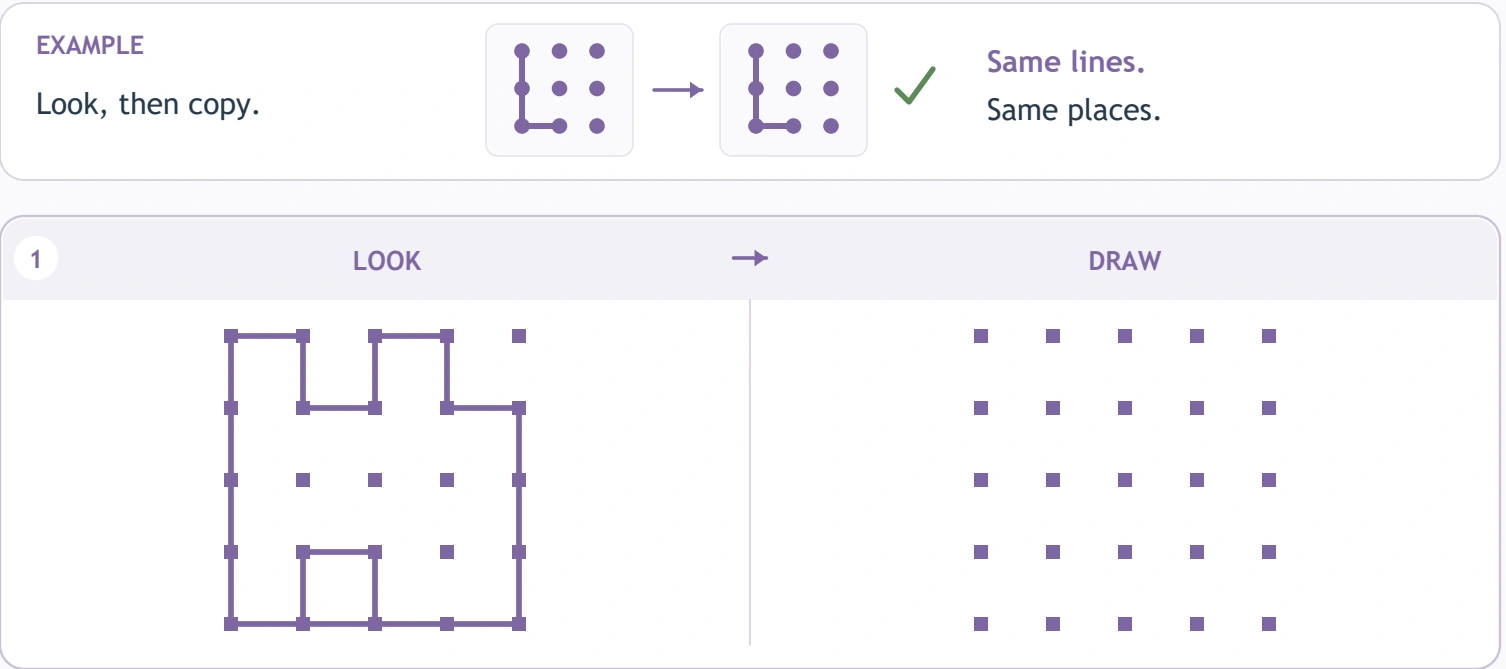
Correct one architectural difference at a time: Castle Grid Building
Likely Castle Grid Building slips include equalising unequal towers, skipping a roof step, extending a doorway to another row or joining a low wall too high. Point to the first changed relationship and compare its anchor positions. Avoid asking a child to erase an entire building when one local correction explains the mismatch.
A more elaborate castle is not automatically a closer copy. Keep feedback tied to the plan, such as noticing a carefully preserved lower entrance. If repeated erasing causes fatigue, stop the small drawing and discuss the intended repair using blocks. A clear explanation remains valuable even when the paper version waits until later.
Make the next visit a chosen building job
The recognisable castle may give Castle Grid Building a playful purpose, especially for children who enjoy building stories. Offer a small choice: inspect a tower corner or locate a doorway. A manageable decision can make the task feel less like facing a complete intricate outline at once.
Use observations such as “You checked the lower wall before joining it.” Invite another short building job on a later day, mixed with blocks, movement and open drawing. Regular opportunities do not require finishing every panel at every return. Stop with enough energy to describe one discovery comfortably, rather than working until a favourite theme becomes tiring.
Choose a PDF and check the castle margins: Castle Grid Building
The free download retains the supplied Castle Builders original. The separate clean Castle Grid Building file is served through the premium option for accounts with qualifying active membership. It removes the website watermark, domain references and promotional advertisements, preserving every building model, instruction and student field needed for the activity.
The native package panel leads to all thirty clean worksheets in the $3 collection. Obtain the edition permitted by your account. Print on US Letter at Actual Size, or set the scale to 100%, and inspect the border before confirming. Use Castle Grid Building's PDF for printing so the fine tower and doorway anchors retain their intended spacing.
More model-reading choices for adults: Castle Grid Building
Compare Castle Grid Building with Path Copy Thinking. After Castle Builders, try Drawing Size Choices. For Castle Builders, consider Shape Border Journeys.
To accompany Castle Grid Building, adults may browse NAEYC information about learning through family play or explore PBS Parents' everyday activity ideas. These educational websites are optional independent resources; their inclusion does not imply endorsement or add materials to the collection purchase.
Popular Worksheets
Printable resources families and teachers are downloading now.
 Free
 Free
 Free
 Free