
Shape Border Journeys: 6 Brilliant Around-the-Edge Games
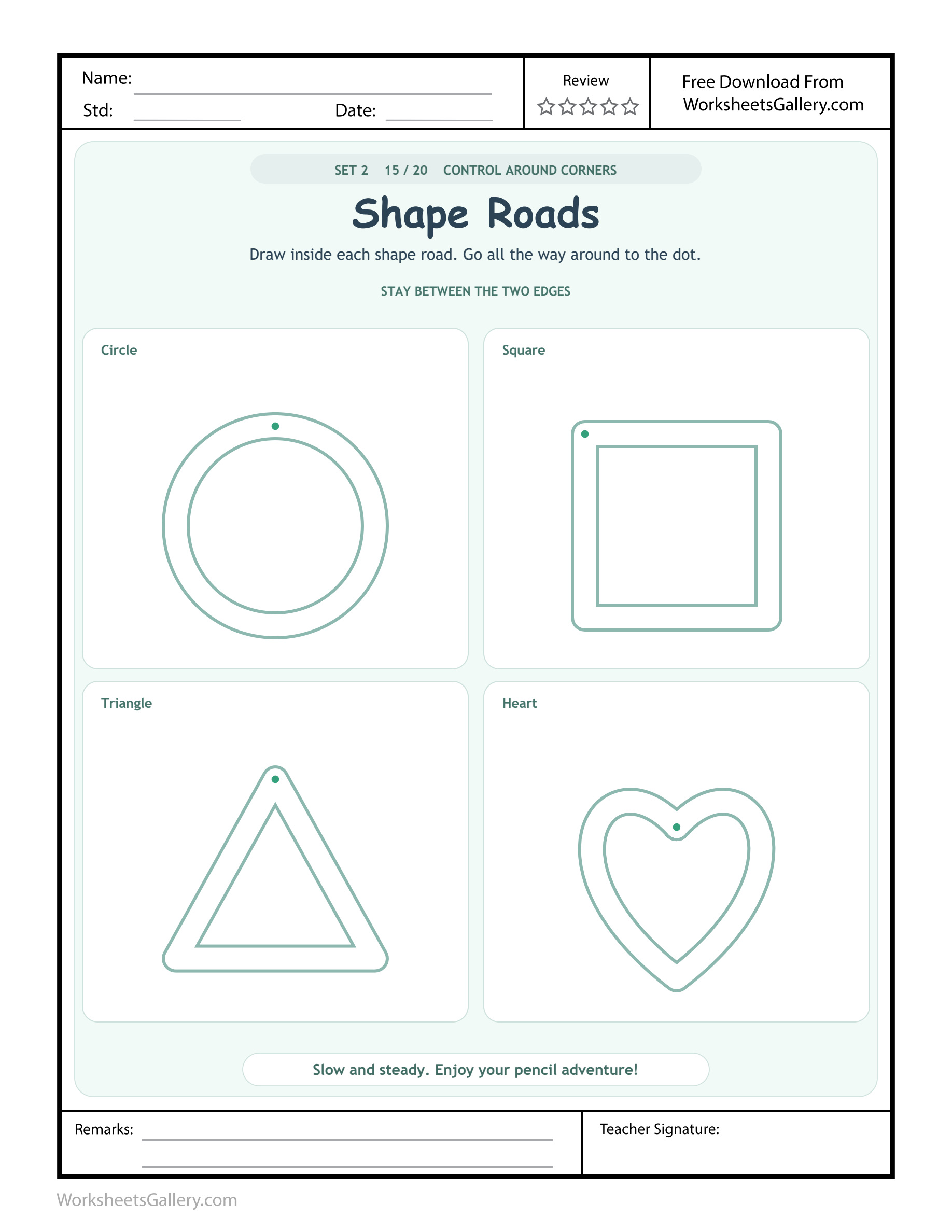
A closed shape road shares the workshop with other routes. Get the circle, square, triangle and heart circuits as part of the $4 clean collection. The merged file contains all twenty supplied worksheets.
A road can go all the way around a shape and bring its traveller back to the beginning. Shape Border Journeys explores that idea with a circle, square, triangle and heart. On the Shape Roads worksheet, children around three to six draw between an inner and outer edge, starting at the green dot and returning to it. There is no central dotted route to copy. Shape Border Journeys gives the pencil a space to steer through, with curves and corners changing the movement while the two boundaries keep the task visible.
Shape Border Journeys combines a channel with a return
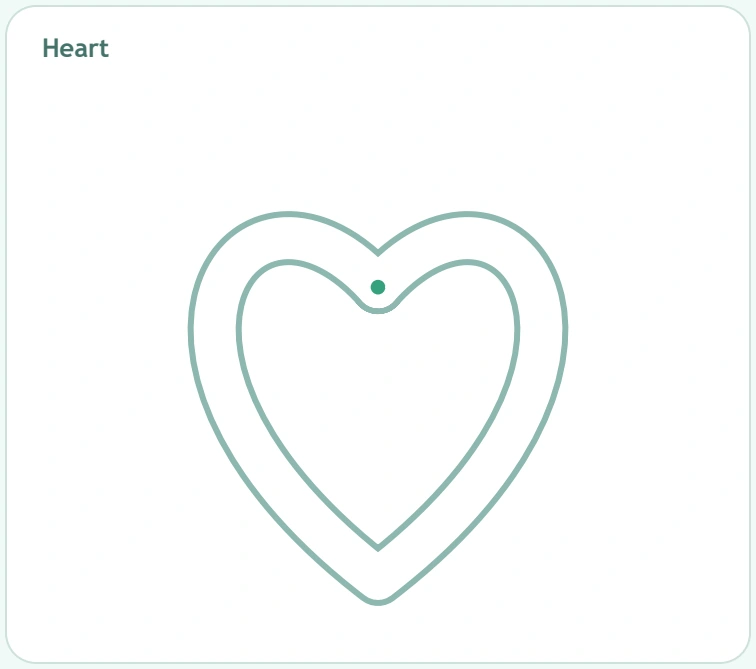
Each panel contains two related outlines with a road-like space between them. The child's line belongs inside that channel rather than on one of its edges. Shape Border Journeys asks for a complete trip around the shape and back to the dot. The green marker serves as both beginning and return place.
Point to that marker before inspecting the whole route. Shape Border Journeys does not use a separate gold finish ring in these panels. Bringing another worksheet's endpoint rule onto this sheet can confuse the intention, so read its own instruction and follow the visible information supplied here.
The circle changes direction without a corner
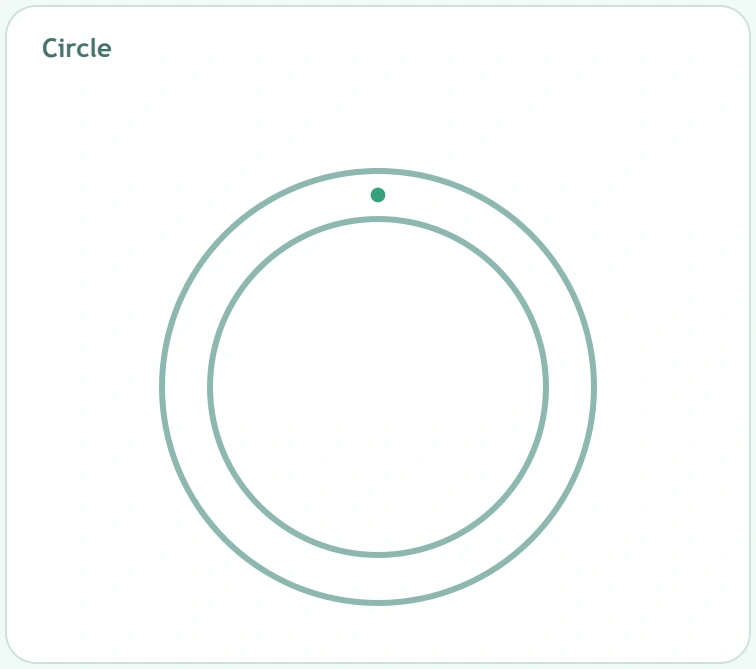
The circular road offers a continuously changing curve around the centre. Shape Border Journeys asks the child to keep room from both boundaries while travelling through that curve. A route can sit slightly nearer one edge in places without needing to be an exact mathematical midline.
Try a finger tour above the page and notice when the starting dot comes back into view. Shape Border Journeys makes that return part of the plan. The related bubble-circle closing activity gives another reason to discuss where a rounded movement begins and ends, with a different kind of printed guide.
Eli's Shape Border Journeys delivery comes home
Eli tells his grandmother that a toy parcel needs to visit every side of a square town. They look at the square panel and find its dot. Shape Border Journeys gives them an area to travel through rather than a line that must be traced precisely. Eli points around all four sides before choosing a pencil route.
At one corner, his line approaches the inner boundary. They inspect that small location together. Shape Border Journeys lets Eli explain that the next side goes in a new direction. He slows, turns and continues until the dot is reached again, then invents the parcel's arrival story instead of immediately starting another panel.
Six things a trip around the edge can show
- Two-boundary awareness: Shape Border Journeys gives a visible channel to remain within.
- Direction adjustment: a child responds differently to a circle's curve and a square's corner.
- Whole-route attention: the trip continues beyond one interesting side toward the return point.
- Closure planning: Shape Border Journeys keeps the beginning relevant to the eventual finish.
- Spatial vocabulary: inside, outside, around and back describe relationships visible on the page.
- Self-explanation: the child can identify a bend or corner that influenced their steering choice.
Look for a particular decision rather than judging the drawing by uniform spacing. An uneven route may still show a child noticing both edges and making a deliberate change to stay in the channel.
Four Shape Border Journeys routes with different demands
| Shape road | A feature worth inspecting | Shared goal |
|---|---|---|
| Circle | A continuous curved channel | Travel around and return to the dot. |
| Square | Changes between side directions | Remain between the two outlines. |
| Triangle | Sloping sides and pointed changes | Keep the complete route in view. |
| Heart | Rounded shoulders, upper dip and lower point | Find the start again after the journey. |
Shape Border Journeys offers four choices, not four compulsory tasks for one sitting. The child can choose an appealing shape and explain one part of its route before deciding whether another trip would be welcome.
Make the square's change of direction understandable
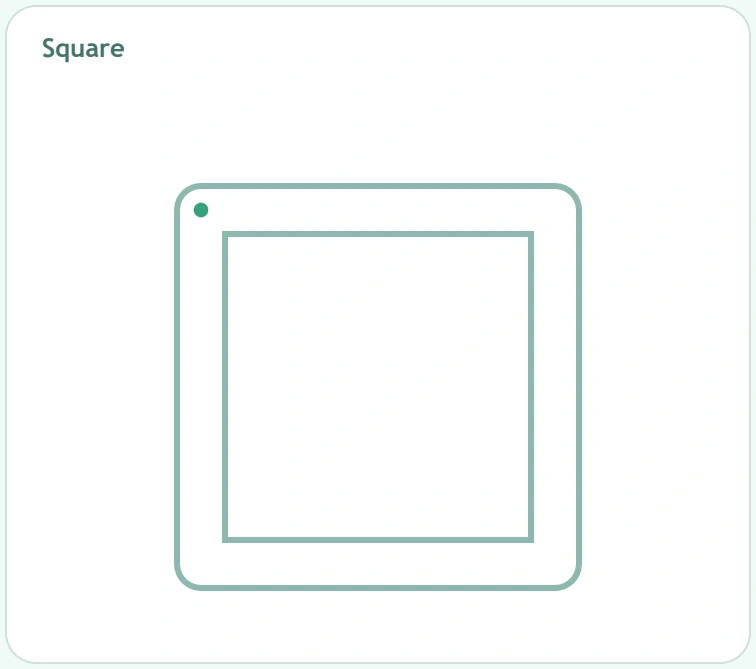
The square road changes direction at its corners. Shape Border Journeys gives the child space to negotiate that change inside the channel. There is no need to demand a perfectly sharp drawn vertex if a curved turn remains sensibly between the boundaries.
Ask where the next side goes before the pencil reaches a corner. Shape Border Journeys can include a looking pause at that point. The shape-builder comparison of sides and corners offers another context for noticing these features when a whole trip around a road is more than the child wants today.
Prepare one home journey with a clear beginning
Settle the page on a stable drawing surface and let the child select a shape. Find the dot, inspect the two edges and point around the route before drawing. Shape Border Journeys becomes clearer when the child sees the whole channel rather than only the small area under the pencil tip.
Use a tool whose line leaves room to see both boundaries. Shape Border Journeys can become hard to inspect if a broad marker fills the road. An adult may demonstrate a similar channel on separate paper, but should leave the child's original route area available for their own steering decisions.
A classroom shape tour with one remembered feature
A teacher invites children to choose a shape town and describe one place where its road changes. Some choose a square corner; others notice the heart's upper dip. Shape Border Journeys can begin with those observations while each child uses an individual copy for drawing.
After a route, ask which feature needed the most looking. Shape Border Journeys gives the child something specific to point to, without comparing the whole result with a classmate's line. A teacher can record a phrase about the chosen corner or curve and use that interest to plan a later drawing invitation.
The triangle changes direction through sloping sides
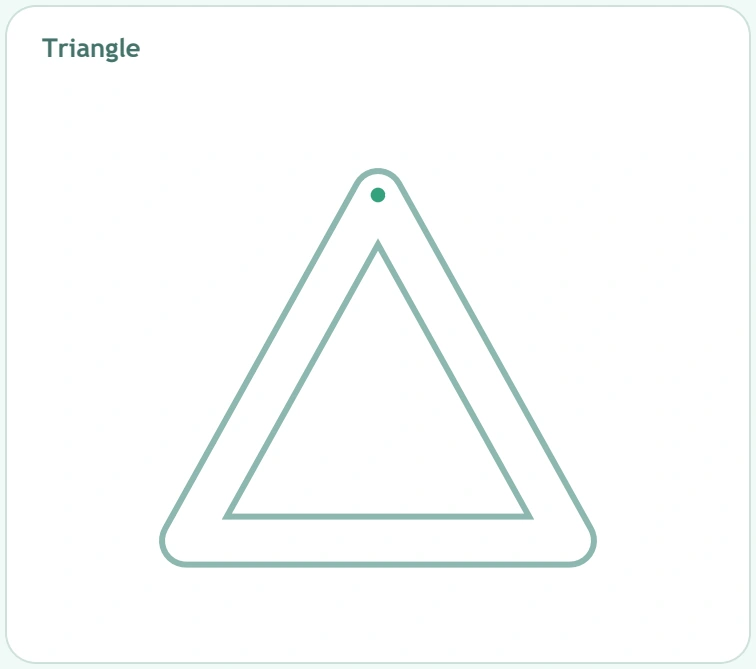
The triangular road has a different overall journey from the square or circle. Shape Border Journeys asks the child to notice where each sloping side leads and where the next turn belongs. Inspect the upper region before beginning so the route's pointed change does not come as a surprise.
The triangle-tent resource supplies a related exploration of slants and closed forms. Shape Border Journeys adds a channel between two edges, leaving room to choose a path inside it. Make that difference visible when moving between the two activities.
Six travel games with a returning route
Deliver around a frame
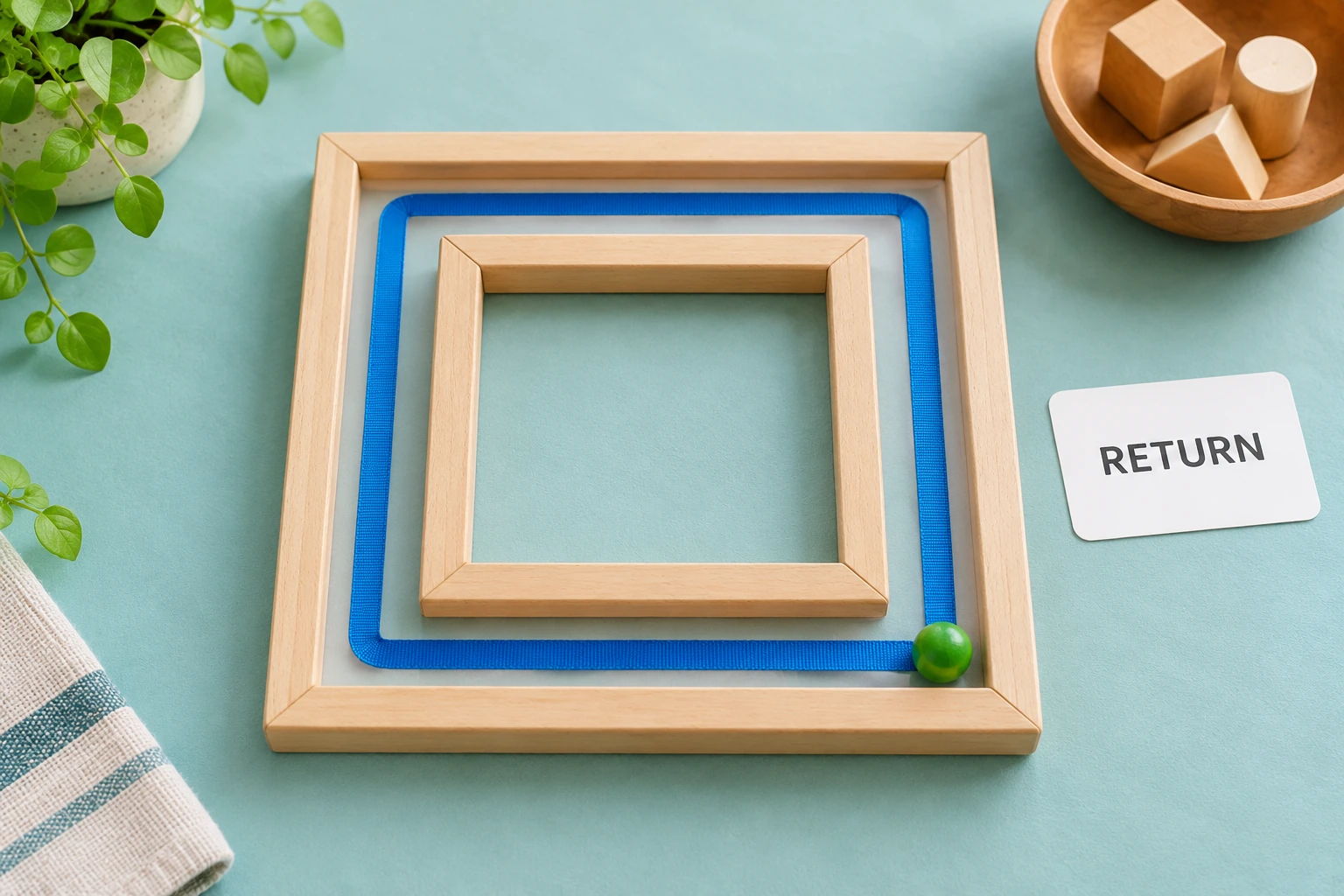
Lay a ribbon inside a broad square frame channel and let a toy parcel travel around it to a named start. Shape Border Journeys offers a pencil-sized version afterward. Keep the route completed and visible so the child can inspect what a return means before creating a line of their own.
Be a corner lookout
One person moves a toy slowly while the other points to an approaching direction change. Swap jobs after a short trip. Shape Border Journeys can lend its square or triangle as a comparison, but the lookout game can remain with large physical props when that is the more appealing scale.
Name a curved neighbourhood
Give different parts of a completed circular road pretend names and tell a trip around them. Shape Border Journeys can follow when the child wants a drawn tour. The names should support the story without covering the worksheet edges or creating extra required stopping points.
Find the return landmark
Put a readable START card beside a completed homemade route and ask the child when a toy reaches it again. Shape Border Journeys uses its green dot as that landmark. The game can clarify returning without adding a separate finish marker to the original printable.
Compare two acceptable road lines
On separate paper, draw two completed routes within the same broad channel. One sits slightly nearer an edge, but both remain inside. Shape Border Journeys can inspire the discussion that a useful route need not be an exact central line. Ask what makes each journey workable.
Report a traveller's favourite turn
After a pretend trip, the child tells a visitor which turn was memorable and why. Shape Border Journeys gives a visible reference if the child wants to point. The report can be the end of the activity, leaving another shape town for a later visit.
The heart asks for more than a rounded loop
The heart road includes broad shoulders, an inward dip and a lower pointed area. Shape Border Journeys asks the child to respond to those features while keeping the line inside the channel. Point to one change before drawing rather than describing the entire outline in a long set of instructions.
If the child smooths the heart into a simple loop, compare that result with the channel's shape. Shape Border Journeys can prompt another look at the upper dip or lower turn. The purpose is to notice what the printed road does, not to criticise the child's freely drawn hearts made in another context.
✎ Common shortcuts can bypass the road
Tracing only an outer edge, drawing across the centre, or stopping after one side changes the invitation. Shape Border Journeys keeps the road between two boundaries and asks for the whole trip. Ask the child to show where their route went before deciding which cue would help.
Use inside the road, all the way around when a brief reminder is useful. Shape Border Journeys does not require identical clearance at every point or repeated erasing after one boundary touch. Inspect that location, discuss the intended direction and let the child choose whether another attempt is interesting.
A manageable route for ages three to six
Some children will enjoy a finger tour before a pencil attempt. Others may want to compare several complete routes. Shape Border Journeys offers those possibilities without tying the number of finished panels to age. A stable page, comfortable tool and unobstructed view of both edges are useful supports.
Revisit the shape that prompted a question, or offer another one when the child wants a different journey. Shape Border Journeys can remain a choice rather than a repeated demand for a neater circle. A spoken explanation about a corner may be a satisfying return in itself.
Keep real drawing purposes alongside road play
A returning route can become a map, a pretend delivery or a story about going home. Shape Border Journeys supplies one setting for that conversation, while the child's own drawings can explore other ideas. Listen to the meaning they give the mark as well as watching its movement.
For additional family reading, the NAEYC family writing article discusses everyday support. Age-four literacy material is collected at PBS Parents. Shape Border Journeys can be one brief experience among those meaningful opportunities.
Save the clean Shape Border Journeys sheet
The free sample is the original branded worksheet. To obtain the clean Shape Border Journeys file, use the membership premium option with the account holding a current eligible plan. The site checks access before providing the protected PDF. Save it and inspect all four complete channels in the print preview.
The premium Shape Border Journeys edition removes the website credit and domain. Its learning page carries no watermark or printed advertising, and the original road geometry remains intact. Keep the full border within your printer's available area. The native package card connects to the $4 twenty-page collection. The green dot is the place to find again.
Popular Worksheets
Printable resources families and teachers are downloading now.
 Free
 Free
 Free
 Free