
Arctic Alphabet Route: 5 Brilliant Mitten Mail Games
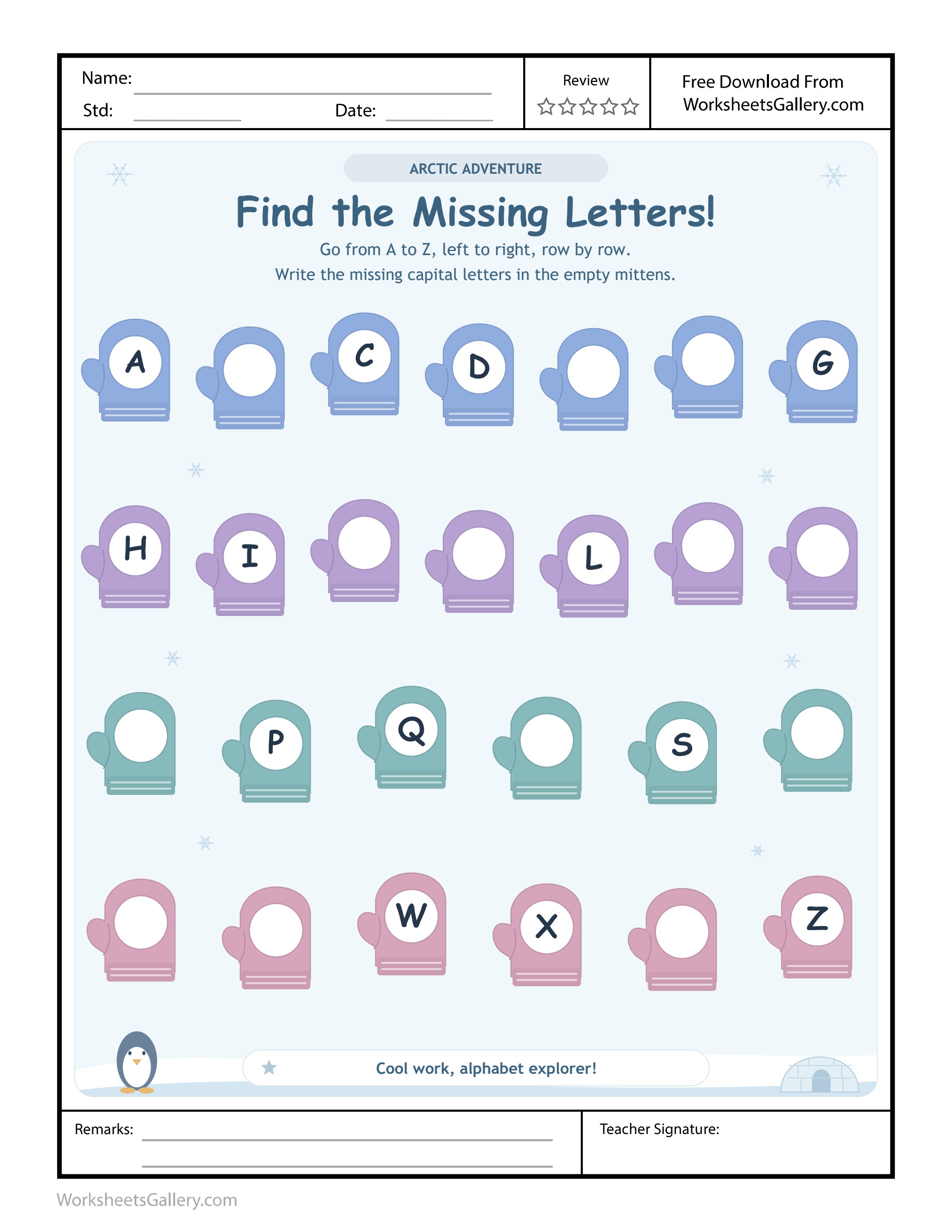
The next letter sometimes lives on the next line. Arctic Alphabet Route turns that small page movement into a mitten-mail journey, with thirteen missing capitals to deliver across A–Z. Children follow the supplied letters, pause at empty mitten centers, and keep the alphabet going when their finger returns left. One especially useful stretch travels from L through M, N and O to P, crossing a row boundary along the way. Explore it with a finger, a few letter cards and a patient partner before expecting every capital to be written.
✉️ Arctic Alphabet Route delivers across a line break
Edda reaches the end of the second row and looks for the next printed letter. Her grandfather follows her finger as it returns to the left side below. Three missing capitals sit between L and P: M and N finish one row, and O begins the next. Arctic Alphabet Route gives them a reason to slow down and ask where the same sequence continues.
Their pretend post office needs no map of real polar habitats. The worksheet's winter decorations set a playful scene. On Arctic Alphabet Route, the actual task is identifying and recording capital letters in order. Describe the scenery as make-believe winter mail, keeping the alphabet route separate from lessons about where particular animals live.

Set the Arctic Alphabet Route address book
Lay out a capital alphabet strip, an ordinary pencil and a firm writing surface. For Arctic Alphabet Route, a few loose capital cards can be useful when a learner understands a name but needs help forming its shape. Decide whether this session will involve speaking, selecting or writing. The child can change response method when attention or hand comfort changes.
The sheet contains twenty-six positions arranged as seven, seven, six and six. Arctic Alphabet Route starts at the upper left and moves across each row before returning left below. Thirteen capitals are printed and thirteen are absent. Mitten cuffs and decorative marks do not add positions. There are no dotted letters to trace and no requirement to match an animal with its initial sound.
First deliveries on Arctic Alphabet Route
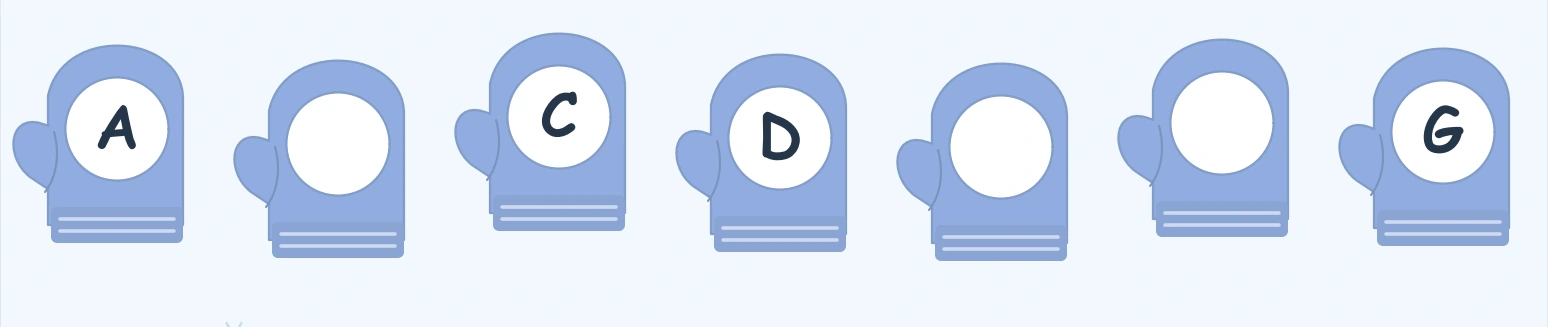
The first row covers A–G. A, C, D and G are supplied; B, E and F need to be added. Arctic Alphabet Route begins with an isolated gap, then later asks for two consecutive missing capitals before G. Ask the learner to touch E's place and F's place separately while naming both. A two-letter answer still needs two distinct positions.
An adult reference can stay beside the pencil rather than directly in front of the child. The complete missing groups for Arctic Alphabet Route are B E F / J K M N / O R T / U V Y. Use the list to verify a response after the learner has tried nearby clues. It is not a script that needs to be read aloud before starting.
At the Arctic Alphabet Route sorting counter
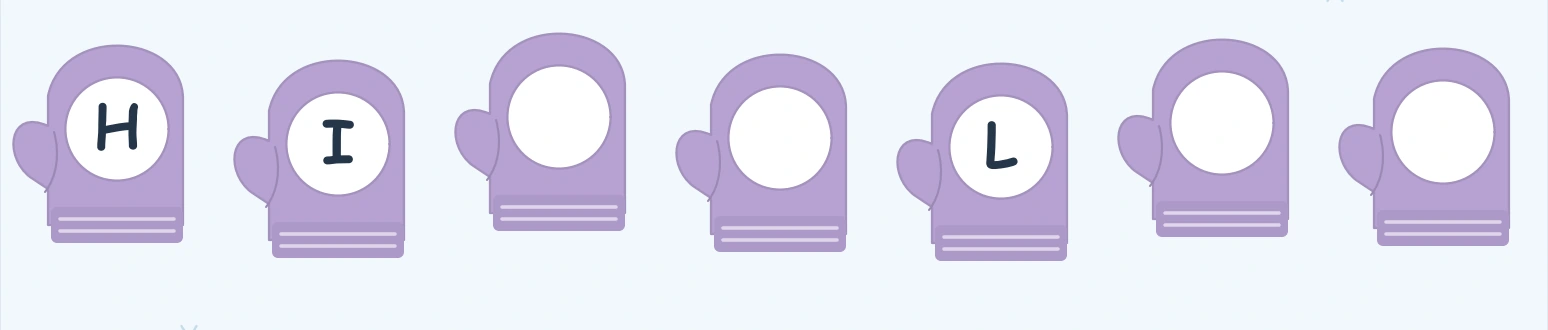
H and I open the second row, with L printed after two missing places. J and K connect I to L; M and N follow L to the row end. On Arctic Alphabet Route, a finger can pause beside L while the learner rehearses L–M–N–O–P. Then move along the actual page positions, including the return to the next row for O.
Avoid asking a child to leap from L straight to the next printed anchor P without accounting for the openings. Arctic Alphabet Route makes those three places visible, but a hurried eye can skip one. Lay M, N and O cards alongside the corresponding mittens before writing. Remove one card at a time if that helps the child preserve the intended order.
The crossing that Arctic Alphabet Route makes visible
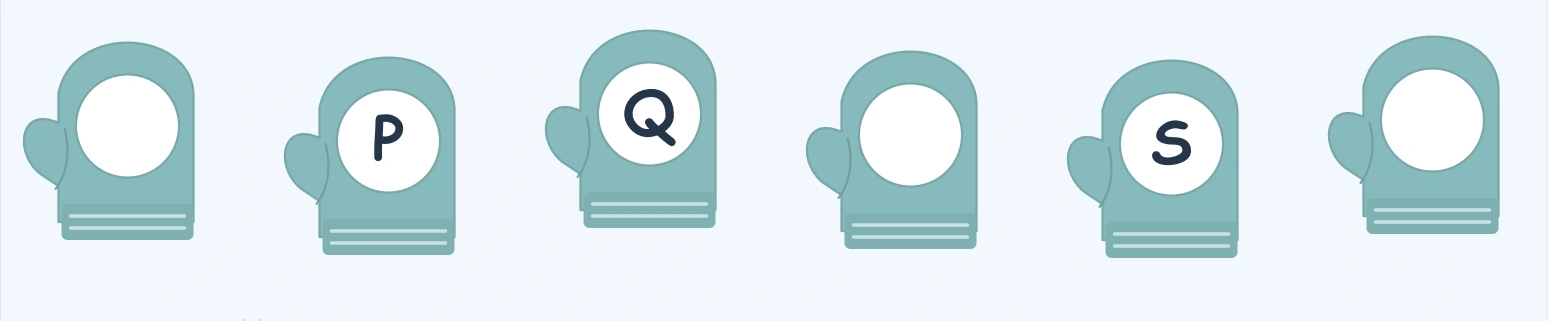
Row three runs O–T, with P, Q and S already shown. O starts the line, R sits between Q and S, and T completes it. Arctic Alphabet Route has only six mittens here. When a child expects seven because the preceding rows had seven, touch the six actual positions and identify T as the row ending. Continue to U below without inventing another mitten.
| Mail stop | Where the letter goes | Useful check |
|---|---|---|
| M | First opening after L, on row two. | Read L–M with separate touches. |
| N | Last mitten of row two. | Keep it between M and O. |
| O | Leftmost mitten of row three. | Confirm that printed P comes next. |
| P | Second mitten of row three, already supplied. | Use it to test the entire L–P run. |
The crossing is a page-navigation challenge within an alphabet task. Arctic Alphabet Route does not require children to memorize a new route for every row. A consistent fingertip return lets the learner concentrate on the next capital instead of wondering which direction the pictures should be read.
Six Arctic Alphabet Route observations worth collecting
Arctic Alphabet Route and a continuing sequence
M, N and O remain consecutive even though the paper places them on two lines. This gives a child a concrete example of an alphabet relationship surviving a layout change. Listen for the continuing names while watching where the pointing finger lands.
Arctic Alphabet Route and purposeful eye movement
The child looks from a gap to a nearby anchor, then returns to the writing place. Such deliberate movement can be observed without demanding a perfectly finished sheet. A small paper marker may support the current row when the full page feels visually busy.
Arctic Alphabet Route and small memory stretches
Rehearsing L–M–N–O–P gives the learner a short run to hold while checking three openings. Offer the sequence in manageable pieces if necessary. The printed endpoints remain available; the goal is reasoning with support, not proving that references are unnecessary.
Arctic Alphabet Route and hand organization
Keeping the page steady while placing a capital inside a mitten calls for controlled movement. Watch effort and comfortable reach as well as the resulting shape. The writing area can accommodate a clear capital that is larger than the printed examples.
Arctic Alphabet Route and explanatory language
“This O starts the next row” combines a letter name with a location. Let a child communicate that idea in words or by pointing between N and P. An adult can model location language while accepting a shorter response from the learner.
Arctic Alphabet Route and recoverable uncertainty
A missed letter can be found by checking the neighboring capitals. Give the learner time to discover the mismatch. A calm revision shows that uncertainty can lead to another useful look, rather than making an erased mark the main event of the lesson.
Arctic Alphabet Route at a home post office
Grandfather becomes the mail carrier while Edda is the sorter. He asks for the letter after L; she finds M and lays it beside the correct mitten. Then they exchange roles. Arctic Alphabet Route supports a two-person routine in which the child can check an adult's delivery as well as receive help with her own.
At home, start with one selected run, speak the capitals, locate their mittens, and record only the agreed choices. Arctic Alphabet Route can be completed over more than one sitting. Keep a loose marker at the return point if you stop between rows, but read the adjacent capitals again when you resume. The marker remembers a location, not the answer.
- Place the alphabet strip where it can be consulted comfortably.
- Offer a capital card if selecting is easier than writing today.
- Leave printed letters uncovered while testing a proposal.
- Describe the clue the learner used before suggesting another task.
- End with a short run the child can explain confidently.
Arctic Alphabet Route for a classroom delivery team
Pair a pointing role with a naming role at the literacy table. One child indicates the next mitten while the other proposes a capital; switch before another small run. Arctic Alphabet Route works best when both can see the row beginning. A teacher can sit beside the pair and listen for the exact crossing that requires help.
During independent observation, note whether a child reaches O by continuing after N or by starting the entire alphabet again. Both can lead to a correct answer on Arctic Alphabet Route, but the observations suggest different next prompts. Offer a nearby anchor for the second strategy and see whether the child can continue from that point on another turn.
Five Arctic Alphabet Route games after the delivery
-
1. Arctic Alphabet Route with labeled mail
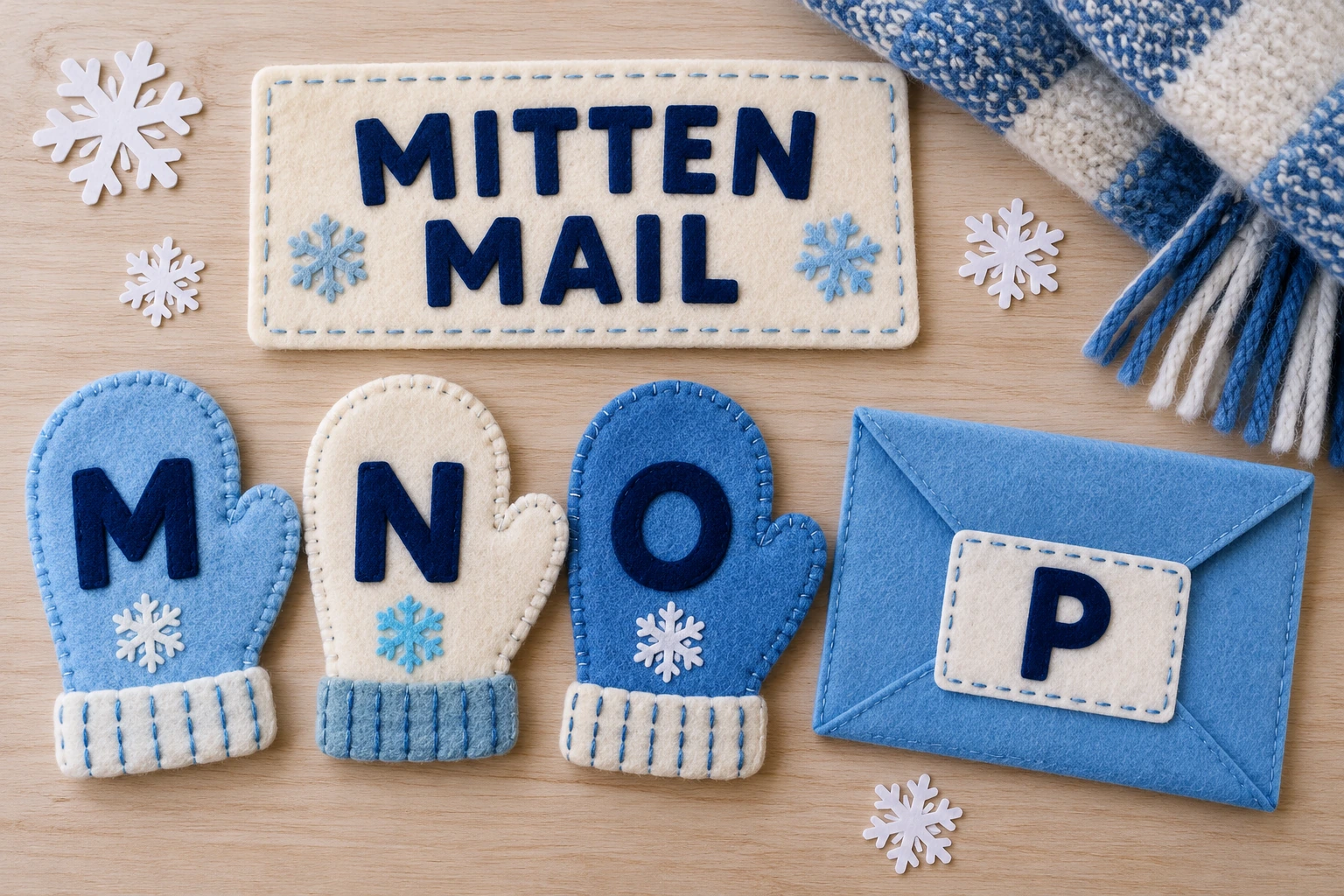
Prepare mittens marked M, N and O and an envelope marked P. Lay them across two short rows so M and N finish the first. Ask the child to deliver O before reaching P. Compare that movement with the worksheet crossing, then let the learner arrange a new short mail route.
-
2. Arctic Alphabet Route with a pointing baton
Use a thick crayon as a table pointer, keeping its tip away from other people. Pass it after saying each capital in E–F–G. The partner with the pointer indicates the matching mitten or letter card. Bringing the crayon to rest between turns gives each name a distinct moment.
-
3. Arctic Alphabet Route at the wrong address
Put O after L in a short card line and ask the sorter to inspect the delivery. Supply M and N among a few visible cards. The child can repair the route and explain what had been skipped. Keep the deliberate mistake playful and easy to reverse.
-
4. Arctic Alphabet Route as a folding story
Fold scrap paper into two shelves and place letter cards along both. Tell a tiny story in which the mail carrier turns toward the next shelf but keeps naming the alphabet. The learner controls the return movement. Use a short known sequence so story details do not crowd out the letter task.
-
5. Arctic Alphabet Route with a final receipt
Write RECEIVED on a paper receipt and place it beside Z. Ask the child to lead a toy from W through X, Y and Z, touching every capital. The toy receives the receipt after the route has been checked. This revisits the ending without requiring another full worksheet sitting.
Last-row checks on Arctic Alphabet Route
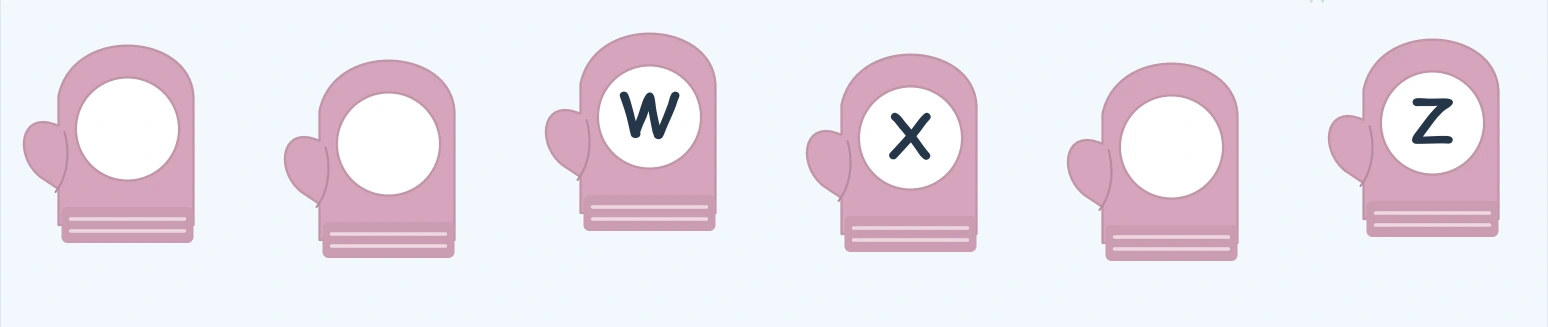
U and V are missing before W and X, while Y is missing before Z. Arctic Alphabet Route ends with Z supplied, giving the learner a final visible anchor. Point to the two opening mittens separately; a child who remembers U–V may still need help assigning one name to each place.
If O is called zero, refer to its alphabet neighbors N and P. If a learner writes lowercase j, confirm the intended name before showing capital J. Arctic Alphabet Route includes barred I as a printed capital, so use its letter context if the shape is confused with a numeral. Repair one misunderstanding at a time and keep the rest of the route available.
Readiness and return visits for Arctic Alphabet Route
Children around four to six may use this page with differing levels of assistance. Look for interest in capital names and willingness to follow a short sequence, rather than expecting age alone to determine readiness. Arctic Alphabet Route can also be explored orally by a younger interested child while an adult handles the recording.
For regular practice, revisit one row transition during a relaxed moment, then let the child choose a familiar delivery. Arctic Alphabet Route need not be finished on a timer. A small success such as finding O after a row return can be named specifically. “You kept the alphabet going when the line changed” tells the learner what worked.
Keep useful resources beside Arctic Alphabet Route
For a separate model of a middle capital, open M tracing and writing practice. The letter Z activity gives the final capital a different kind of attention. If controlling a pencil path is the next need, choose the introductory five-line worksheet before adding more sequence gaps.
Adults can consult alphabet-learning background at Reading Rockets and NAEYC's guidance on family writing experiences. Select an idea that fits the response observed on Arctic Alphabet Route, with room for the child's interests and preferred way of answering.
Print the Arctic Alphabet Route edition you choose
The free original includes the uploaded worksheet's website branding. For a clean no-watermark PDF, use the premium download while signed in with an eligible active membership. The premium Arctic Alphabet Route copy removes the website name and branding; its printable activities contain no added ads. Membership controls appear on the webpage separately from the worksheet itself.
Save your chosen Arctic Alphabet Route PDF and set the printer to US Letter. In the print preview, confirm that all four rows and the outer border are visible, using page fitting if needed. Print one copy of Arctic Alphabet Route first, then prepare further sheets only after checking readability. The first delivery can be a single well-considered capital.
Popular Worksheets
Printable resources families and teachers are downloading now.
 Free
 Free
 Free
 Free